

According to Serbian Economist, Montenegro recorded 2.73 million tourist arrivals and 15.37 million overnight stays in 2025, according to published statistics.
Tourists from Serbia (23.4%) and Russia (16.4%) lead the way in terms of overnight stays. They are followed by Bosnia and Herzegovina (8.1%) and Germany (4.6%). Ukraine ranked fifth, with Ukrainian tourists accounting for 4.3% of all overnight stays, the same as tourists from Turkey. Next in the statistics is the United Kingdom (4.1%).
https://t.me/relocationrs/2390
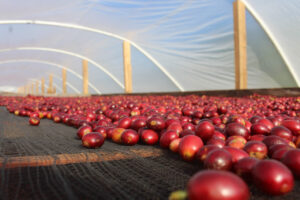
FEST COFFEE MISSION plans to issue series B corporate bonds worth UAH 200 million in 2026, with yields pegged to the US dollar, company founder Andriy Khudo announced on his Facebook page.
According to him, the bond issue is seen as a tool for further development of the coffee business amid the transformation of the Ukrainian coffee market and the growth of the share of local roasting.
Khudo noted that over the past year, the share of Ukrainian roasting in the market has grown from approximately 48% to 55%, while imports of ready-roasted coffee are gradually declining and imports of green beans, on the contrary, are increasing. According to his assessment, Ukraine is gradually moving from a model of purchasing finished products to a model of domestic value creation.
According to the founder of FEST COFFEE MISSION, the company works exclusively with specialty Arabica beans, which are rated 82 points and above on the Specialty Coffee Association scale. Purchases are made on a direct trade model, i.e., directly from farmers without intermediaries.
According to published data, the company cooperates with more than 200 farmers in more than 12 countries where Arabica is grown. FEST COFFEE MISSION has offices in six countries and warehouses in Ukraine, Poland, Turkey, Switzerland, and Argentina. The total storage capacity for green beans is almost 1 million kg.
According to Khudo, by the end of 2025, the company’s share in the total import of green Arabica coffee to Ukraine was 12%, and in the specialty Arabica segment, it was about 80%. At the same time, 82% of imported beans are sold on the Ukrainian market, and the company’s customers include about 200 Ukrainian roasters, which, according to the company’s estimates, corresponds to approximately 80% of their total number in the country.
He also recalled that in 2024, the company had already issued Series A bonds worth UAH 100 million. The new Series B issue is intended to be a continuation of the strategy of scaling the business through expanding international presence, strengthening quality control, and developing the customer base.
The company also states that it is investing not only in grain imports but also in the development of industry infrastructure. In particular, FEST COFFEE MISSION owns, according to its data, the only laboratory in Ukraine certified by the Coffee Quality Institute, participates in professional market training, and in January 2026 initiated the All-Ukrainian Filter Coffee Day, which was joined by about 300 coffee shops and roasters.
Thus, the company is positioning the future bond issue as an opportunity to raise capital for further growth amid structural changes in the Ukrainian specialty coffee market.

On March 5, 2026, a closed VIP event entitled “Trust as Capital: Reputation that Works in Real Estate” was held in Kyiv at the Creator City residential complex, organized by CREATOR CITY, the development company Creator-Bud, and the DMNTR media group.
The event brought together leading representatives of the development market, investors, architects, building material manufacturers, and industry experts for an open discussion about one of the key values of the modern market: trust.
The main part of the evening was a panel discussion on reputation as a strategic asset, moderated by Dmytro Struk, development director at Creator-Bud. The discussion was attended by Yulia Dementieva, Product Director at Creator-Bud Kyiv, Igor Ilchyshen, founder of the investment and development company Arha Group, Yaroslav Korniyachenko, Founder and CEO of Vlasne Misto, Eduard Suprunov, Head of the B2B Department at LG Electronics Ukraine, Andriy Trukhan, CEO of Smart Development, Dmytro Karpilovskyi, full-time investor and co-founder of Ukraine Multifamily Club, Anna Iskierdo, architect, co-founder and creative director of AIMM, Serhii Datsiv, CEO of MIROPLAST LLC (WDS TM), and Oleksandr Muratov, CEO of Designloft and Shishka project.
The experts discussed reputation as a strategic asset for developers, which directly affects investment attractiveness, buyer confidence, and long-term brand value. Key topics included tools for restoring and strengthening customer trust, transparency of development processes as a factor in investment attractiveness, the role of architecture, construction quality, and service in brand formation, as well as practical case studies of companies that turn reputation into a competitive advantage.
The panel discussion was preceded by a press conference entitled “The media as a driver of trust: how the media shapes reputational capital in the real estate sector.” The moderator was Olena Koval, founder of the OK_PR communications agency. The discussion was attended by Vitaliy Borul, CEO of Credo Development, Yevgen Bokiy, commercial director of UDP, Oleksandr Stepanitsa, commercial director of HutJet, Oleksandr Koval, CEO of Martynov Real Estate, Roman Yavorsky, commercial director of IT-Enterprise, Oleg Nagorny, deputy director of the department of technical standards and services of Public Broadcasting, Kirill Vereshchagin, owner of Sharks Agency and marketing partner of Premier Development, and Lyudmila Chumak, executive director of Kreator-Bud.
The discussion focused on the role of the media in building trust in developers, the responsibility of journalism in covering the real estate market, and the importance of systematic communication between business and society. Participants emphasized that reputation is no longer shaped solely by the product—it is built through open communication, publicity, and transparency.
The event became a platform for professional dialogue between key players in the Ukrainian real estate market, the media, and investors. After the discussion, participants continued their communication in a networking and buffet format, discussing new opportunities for cooperation and future projects. Interviews with guests were also filmed, which the organizers plan to publish on their websites.
In today’s market conditions, trust is becoming one of the main assets of a developer, and its formation is the result of systematic work by businesses, architects, the media, and society.
Interfax-Ukraine is the information partner of the event.
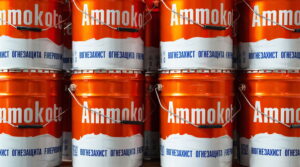
The Ukrainian Steel Construction Center Association consistently advocates for the dissemination of information in the public sphere that complies with the principles of objectivity, fact-checking, and professional ethics.
Objective and balanced information promotes trust between market participants, reduces risks for businesses, and supports the development of the industry as a whole.
Recently, a number of media outlets have published articles about Kovlar Group LLC, a manufacturer of fire-resistant materials and a member of the Ukrainian Steel Construction Center Association. Given the public response, the Association considers it appropriate to emphasize the importance of careful fact-checking and adherence to professional standards when preparing such materials.
The dissemination of information without proper confirmation can damage the business reputation of companies and affect the stability of the industry’s participants.
The Association calls on journalists, the professional community, and the public to adhere to standards of journalistic ethics, verify sources, and rely on documented data.
The Ukrainian Steel Construction Center supports the development of fair competition and the stable functioning of industry participants as part of Ukraine’s economy.

Only a third of active companies in the country submitted their reports
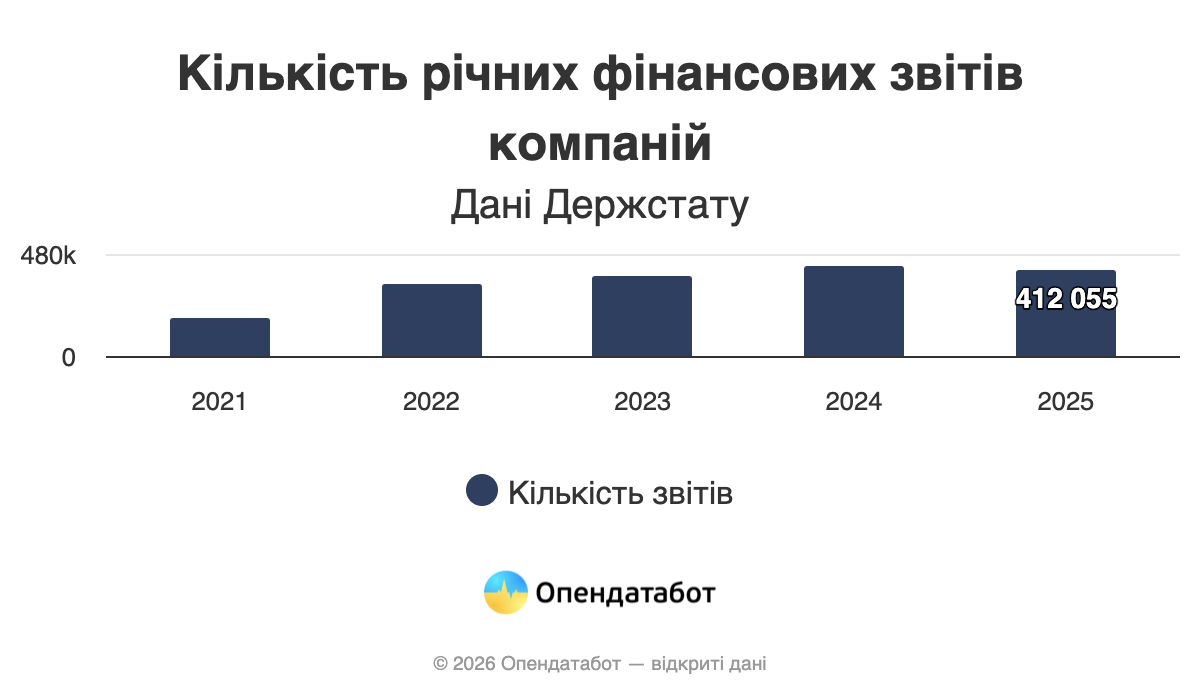
Almost half a million financial reports for the past year were submitted by Ukrainian businesses on time. This is 30% of the 1,374,026 companies registered in the country as of the end of last year.
Every year, fewer and fewer companies submit their financial reports on time. This is probably due to the fact that at the beginning of the full-scale invasion, the obligation to submit reports was canceled. However, even the reinstatement of responsibility for this data has not improved the situation: 412,055 reports have been submitted so far, which is 4% less than last year.
“Financial reporting is not a formality, but the basis of transparent business. It allows partners, customers, and the business itself to see the real state of the company, its position in the market, and its potential for growth. It is the openness of data that builds trust and new opportunities for cooperation — and this is much more important than any penalties for failure to submit reports,” comments OpenDataBot CEO Alexey Ivanov.
As a reminder, from July 5, 2025, enterprises, institutions, and organizations will once again be required to submit state statistical and financial reports. Data for previous periods could be clarified until the beginning of October last year.
Revenue shows the company’s income from all types of activities and characterizes its place in the market, while net profit shows whether the business model is profitable.
To check any business in OpenDataBot, enter the name or code of the enterprise in the search bar at the top of the page and go to the company’s page.
https://opendatabot.ua/analytics/financial-reporting-2025
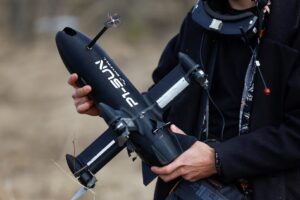
The US and Qatar are negotiating the possible purchase of Ukrainian interceptor drones designed to destroy Shahed-type strike UAVs, amid growing interest among allies in cheaper air defense systems, Reuters reports.
According to the agency, the talks concern, in particular, SkyFall’s P1-SUN interceptor. A company representative told Reuters that deliveries are only possible with the “green light” from the Ukrainian government and on condition that the export does not reduce Ukraine’s ability to defend itself.
Reuters notes that SkyFall’s production capacity allows it to produce up to 50,000 interceptors per month, and potential exports without harming Ukraine’s needs are estimated at 5,000-10,000 units.
The effectiveness of this class of air defense systems is confirmed by Ukrainian statistics: according to the Ukrainian military, in February, 70% of drones shot down in and around Kyiv were destroyed by interceptor drones.
The cost of interceptors is significantly lower than traditional air defense systems. Reuters reports that SkyFall sells the P1-SUN to the Ukrainian military for approximately $1,000 (depending on the configuration), while PAC-3 missiles for the Patriot system can cost up to $4 million per unit.



