

Copper rose to a record high on Tuesday amid concerns over a shortage of the metal outside the U.S.
The price of three-month copper futures on the London Metal Exchange (LME) rose to $14,617 per metric ton, breaking the previous record set the day before. Since the start of this year, futures have risen 16%.
The most actively traded copper contracts on the Shanghai Futures Exchange rose 1.3% on Tuesday to 110,620 thousand yuan ($16,484) per metric ton, while during trading, prices rose to a high of 110,890 yuan per metric ton, the highest level since January 30.
Physical copper shipments continue to be redirected to the U.S., exacerbating shortages in markets outside the country, according to analysts at the Chinese brokerage firm Everbright Futures.
The flow of metal to the U.S. is driven by expectations that the country will impose tariffs on copper imports starting in 2027.
Copper inventories at Comex warehouses rose last week to a record 695,624 thousand metric tons. At the same time, an outflow of the metal is being recorded at warehouses registered with the LME, as well as with the Shanghai Futures Exchange.
The spot price of copper on the LME continues to exceed the price of the three-month contract, signaling limited supply of the metal in the short term.
Three-month zinc futures on the LME rose 0.54% to $4,005 per metric ton. Earlier, their price had climbed to a four-year high of $4,035 per metric ton.
Earlier, the Experts Club information and analytical center released a video on global copper production and leading producing countries – https://youtube.com/shorts/_h8iU50z8C0?si=a-XkgGEfeUxseQNa
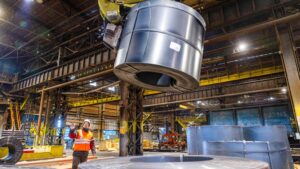
The Zaporizhzhia Metallurgical Plant “Zaporizhstal” reduced its rolled steel output by 19.1% in January–August of this year compared to the same period last year—to 1,488,700 metric tons from 1,839,300 metric tons.
According to the company’s press release, steel production for the first eight months of the year totaled 1,681,700 metric tons (compared to 2,105,500 metric tons in January–August 2025), while pig iron production totaled 1.816 million metric tons (compared to 2,339,200 metric tons).
In August, Zaporizhstal produced 42,400 metric tons of pig iron and 46,200 metric tons of steel, and shipped 45,000 metric tons of rolled steel, whereas in the previous month it produced 301,200 metric tons of pig iron, 284,900 metric tons of steel, and shipped 243,700 metric tons of rolled steel.
“The significant decline in production was the result of a hostile attack on August 11, 2026, which damaged the power facilities and infrastructure of Metinvest’s Zaporizhzhia enterprises, including the main and auxiliary blast furnace production facilities of the plant. This led to a complete shutdown of Zaporizhstal.” The
Russian army attacked the shut-down Zaporizhstal again on August 27, 2026, targeting equipment in the blast furnace shop, power and transportation infrastructure, and open areas. “This is yet another indication that Russian troops are systematically striking civilian industrial infrastructure and the people who work there,” the press release states.
As previously reported, in 2025, Zaporizhstal increased its rolled steel output by 15.2% compared to the previous year—to 2,794,600 metric tons from 2,426,700 metric tons. Steel production totaled 3,212,200 metric tons (compared to 2,890,800 metric tons in 2024), and pig iron production totaled 3,567,800 metric tons (compared to 3,106,300 metric tons).
In 2024, Zaporizhstal increased its rolled steel output by 18.1% compared to 2023—to 2,426,700 metric tons from 2,054,700 metric tons—and its steel output by 17.2%, to 2,890,800 metric tons, and pig iron by 14.2%, to 3,106,300 metric tons.
“Zaporizhstal” is one of Ukraine’s largest industrial enterprises, whose products are in high demand among consumers both in the domestic market and in many countries around the world.
“Zaporizhstal” is a joint venture of the ‘Metinvest’ Group, whose major shareholders are PJSC “System Capital Management” (71.24%) and Smart Steel Limited (23.76%). “Metinvest Holding” LLC is the management company of the “Metinvest” Group.
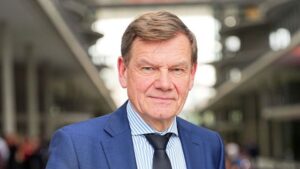
German Foreign Minister Johann Wadephul suggested that German authorities could help Ukraine identify Ukrainian men of draft age residing in Germany by using data on registration, residence permits, and social benefit receipts.
Wadeful made this statement in an interview with Bild deputy editor-in-chief Paul Ronzheimer, published on the evening of September 8.
Wadeful supported the position of Christian Social Union leader Markus Söder that Ukrainian men of draft age in Germany should return to Ukraine.
“We know who lives here, who, for example, receives social benefits, who is registered here, and who has residency status,” said the German foreign minister.
According to Wadepul, based on this information, the Ukrainian authorities could directly contact the men in Germany and inform them of the need to report for military service.
At the same time, the minister specifically emphasized that the return of Ukrainians to their country must take place “without coercion”.
At this time, there have been no reports regarding the adoption by the German federal government of a corresponding mechanism, a list of the data to be transferred, or the legal procedure for transferring it to Ukraine.
The issue affects a significant number of people. According to the German government’s official response to a parliamentary inquiry, as of the end of October 2025, there were 328,363 male Ukrainian citizens in the country between the ages of 18 and 60. At the same time, the government specifically emphasized that these statistics include Ukrainians who were living in Germany even before the start of the full-scale war, and that the German authorities do not have information on how many of these men are actually subject to Ukrainian military service.
Germany remains the EU country with the largest number of Ukrainians under temporary protection. According to Eurostat, as of June 30, 2026, 1.286 million people in Germany had this status, or 29.2% of all recipients of temporary protection from Ukraine in the European Union.
The debate over men of draft age in Germany has intensified in recent months. Representatives of part of the ruling coalition advocate creating economic and administrative incentives for their return to Ukraine. However, Wadeful’s statement is one of the most concrete proposals from a high-ranking German official regarding the use of registration data already available to the state.
Original source: Johann Wadeful’s interview with Bild on September 8, 2026. Bild – Johann Wadeful’s interview

The Finnish company Happy Nordic Living Oy plans to implement two projects in the Kyiv region—to build a factory for the production of prefabricated wooden structures and to create a pilot residential complex for residents of the region who have been affected by Russian attacks, as well as internally displaced persons (IDPs), according to a Wednesday report on the website of the Kyiv Regional Military Administration.
Natalia Gavatyuk, Deputy Head of the Kyiv Regional State Administration, held a meeting with Timo Mikkonen, CEO of Happy Nordic Living Oy, and his team, during which the parties discussed the prospects for implementing the investment project and the next steps for its launch.
According to the report, the plant is expected to create approximately 400 jobs: “Currently, sites in the region’s industrial parks are being considered for the production facility. This approach will allow for the necessary infrastructure to be prepared more quickly and for the project to move forward.”
At the same time, the company is considering the possibility of creating a pilot housing complex in the Kyiv region for residents of the region who have been affected by Russian attacks, as well as internally displaced persons (IDPs).
During the meeting, the parties agreed on mechanisms for further trilateral cooperation between the Kyiv Regional State Administration, Happy Nordic Living Oy, and consulting partner UVT GROUP to prepare a roadmap for the project.
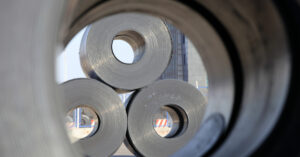
According to preliminary data, Ukrainian steelmakers reduced their production of total rolled steel by 15.6% in January–August of this year compared to the same period last year, down to 3.592 million metric tons.
According to information from the “Ukrmetallurgprom” association, 269,500 metric tons of rolled steel were produced in August, 382,700 metric tons in July, 599,800 metric tons in June, 537,800 metric tons in May, in April—460,800 metric tons, in March—544,500 metric tons, in February—390,300 metric tons, and in January—406,400 metric tons.
In 2025, Ukraine’s steel companies increased their production of general-purpose rolled steel by 4.8% compared to 2024, reaching 6.521 million metric tons.
In 2024, Ukraine increased its production of general-purpose rolled steel by 15.8% compared to 2023—to 6.222 million metric tons from 5.372 million metric tons. In 2023, total rolled steel production rose by 0.4% to 5.372 million metric tons, while in 2022, it fell by 72% to 5.350 million metric tons.
In 2021, before the war, 19.079 million metric tons of rolled steel were produced, or 103.5% of the 2020 level.
METALLURGY, PRODUCTION, ROLLED STEEL, UKRAINE, UKRMETALLURGPROM
The IDS Ukraine Group of Companies has restructured its logistics, reorganized distributor territories, and increased the number of transportation partners by 30% by incorporating small carriers and sole proprietors, said Marco Tkachuk, CEO of IDS Ukraine.
“Shelling poses additional challenges, as it destroys our partners’ logistics centers and warehouses. We have to constantly change routes and deliver water directly to stores more often. We’ve increased the number of partners by 30% by bringing in small carriers and sole proprietors who own several vehicles,” he said in an interview with the “Interfax-Ukraine” news agency.
When asked about the main challenges facing the company, aside from logistics and rising fuel prices, Tkachuk cited migration and, as a result, a decline in consumption. Declining household incomes and migration trends have forced the company to seek new business channels, which is why it was decided to launch the B2B platform e-Morshynska, which accounts for 10% of sales in traditional retail through direct ordering without the involvement of sales agents.
In addition, staffing remains a challenge. According to Tkachuk, because the reservation system covers only half of the employees, there is an acute shortage of drivers.
To improve planning amid uncertainty, IDS Ukraine is in the final stages of implementing an ERP system for inventory management, he added.
IDS Ukraine is a Ukrainian group of companies founded in 1996. It owns the “Morshynska,” “Myrhorodska,” “Alaska,” and “Aqua Life” brands. The group includes the Morshyn “Oscar” Mineral Water Plant, the Mirgorod Mineral Water Plant, the distribution company “IDS,” and the water delivery operator “IDS Aqua Service.”



