

The state-owned enterprise “Medical Procurements of Ukraine” (MPU) purchased medical supplies worth nearly 8.2 billion hryvnias over the first eight months of 2026, which accounts for 83% of the medical supplies designated for procurement this year.
As reported by MZU in a press release, as of early September, the largest portion of funds was allocated to the procurement of drugs and medical devices for the treatment and care of patients, specifically: medications for children and adults with cancer—184 items totaling 2 billion hryvnias; innovative medicines procured through managed access agreements (MAA)—32 items totaling 1.9 billion hryvnias, medications and medical devices for the treatment of cardiovascular diseases—105 items totaling 1.1 billion UAH; medical devices to support blood donation—122 items totaling 817.9 million UAH; and medications for children and adults with hemophilia—29 items totaling 541.7 million UAH.
In total, in 2026, the Ministry of Health is set to procure 813 items, including those purchased with funds from donors via the UNITED24 fundraising platform. Over the past 8 months, the Ministry of Health has delivered 760 items of medicines and medical devices to the regions, purchased with funds from this year’s and last year’s budgets.
In addition, the Ministry of Health reports that from January through August, hospitals purchased nearly 21.1 billion UAH worth of medical supplies through the Prozorro Market electronic catalog—the medical section of which has been administered by the Ministry since 2019—which is 30.2% more than during the same period in 2025.
The average savings over the first eight months of 2026 for purchases made through Prozorro Market amounted to 12.77% of the expected procurement cost, and in total, buyers saved 3.1 billion UAH.
During January–August 2026, 2,633 contracting entities purchased medical supplies through Prozorro Market, and 1,530 qualified suppliers submitted their offers in the catalog.
HOSPITAL, MEDICINE, Ministry of Health, PROCUREMENT, Prozorro Market

Imports of goods into Ukraine from January through August 2026 increased by 26% in monetary terms compared to the same period in 2025—from $52.6 billion to $66.3 billion, according to data from the Telegram channel of the State Customs Service (SCS) of Ukraine.
Exports, however, despite a 4% increase in January–July, slowed in January–August and remained nearly at last year’s level—$26.6 billion compared to $26.6 billion last year.
Meanwhile, taxable imports totaled $46.8 billion, accounting for 71% of the total volume of imported goods.
“The tax burden per kilogram of taxable imports in January–August 2025 was $0.6/kg,” the agency added.
The largest volumes of goods were imported into Ukraine from China ($19.6 billion), Poland ($6.3 billion), and Germany ($4.4 billion).
The largest exports from Ukraine went to Poland ($3.2 billion), Turkey ($2.1 billion), and Germany ($1.7 billion).
Of the total volume of goods imported in January–August 2026, 73% consisted of machinery, equipment, and transportation vehicles—$29.9 billion (customs clearance of these goods generated 168.1 billion UAH in budget revenue, accounting for 29% of customs revenue), chemical industry products—$9 billion (74.9 billion
UAH was paid to the budget, or 13% of customs revenue), and fuel and energy products—$9.5 billion (197 billion UAH was paid, accounting for 34% of customs revenue).
The top three most exported goods from Ukraine were: food products—$15.4 billion; metals and metal products—$2.7 billion; and machinery, equipment, and transportation vehicles—$2.4 billion.
In the first 8 months of 2026, customs clearance of exports subject to export duties generated 1.1 billion UAH in revenue for the budget, compared to 174.2 million UAH during the same period last year.
As previously reported, since July of this year, operations at the ports of “Greater Odesa” and their terminals have become significantly more difficult due to intensified attacks on ships and port infrastructure.

New 2-megawatt solar power plant has begun operating on the grounds of the Chernobyl Nuclear Power Plant and will supply electricity to critical infrastructure, Ukraine’s First Deputy Prime Minister for Energy, Denys Shmyhal, announced on Wednesday.
“This in-house power generation makes the Chernobyl NPP more resilient and less dependent on external power supplies, and is one of the essential conditions for nuclear and radiation safety,” he wrote on his Telegram channel.
In particular, the new solar power plant will supply electricity to the “New Safe Confinement,” radioactive waste management facilities, and spent nuclear fuel storage facilities.
The total budget for the project to construct the solar power plant on the Chernobyl site exceeds $825,000. It was made possible thanks to support from UNDP and the governments of Lithuania and Japan. Specifically, Lithuania provided 7,296 solar panels and 17 grid-connected inverters as part of its humanitarian aid, while UNDP, with funding from Japan, provided additional equipment and oversaw the installation and commissioning of the plant.
Each year, the plant will generate over 2 million kWh of clean electricity, which accounts for 5% of the industrial site’s annual consumption and will save approximately $365,000 per year.
“We will direct the savings toward the modernization, replacement, and upgrading of critically important equipment necessary for the safe decommissioning of the Chernobyl NPP,” Shmyhal noted.
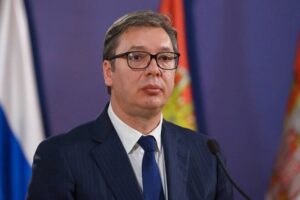
The Serbian business publication Parametar has prepared an interesting analysis of the parliamentary elections in Serbia. President Aleksandar Vučić has called for early parliamentary elections on October 25. Serbia has 250 parliamentary seats to fill, but in essence, the campaign is turning into a choice between preserving the current model of government and attempting a political reset.
The main favorite is the “Aleksandar Vučić—United Serbia” bloc centered around the SNS. Vucic himself is running as a candidate for prime minister. According to the Serbian media outlet Parametar, his campaign will focus on stability, infrastructure development, investment, economic growth, and the argument that the country must not return to a period of political instability.
For the first time, the main competitor is not a traditional party, but the Student List, which emerged from the protests following the tragedy in Novi Sad. Its main themes are corruption, government accountability, the independence of institutions, and bringing new people into politics. The movement’s slogans are as simple as possible: “Students Will Win” and “Either Serbia or the Mafia.”
Part of the opposition has already decided to support the students, but there will be no single anti-government list. Running separately are the pro-European “European Serbia,” the “People’s Serbia” bloc, Ivica Dačić’s Socialists, and several national-conservative and sovereigntist groups.
The campaigns of the two main power centers are also divided by fundamentally different emotional agendas. According to sociologist and co-founder of Active Group Aleksandar Pozniy, Vučić will build his campaign primarily around the theme of stability—reminding voters of economic growth, large-scale infrastructure projects, an influx of investment, and the overall progress Serbia has made in recent years. This strategy aims to convince voters that a change in government carries the risk of losing the country’s hard-won achievements. The Student List, on the other hand, will appeal to the long-standing demand for fighting corruption and reforming the political system, contrasting the current elite with new faces unaffiliated with traditional parties. Thus, the election may largely turn into a clash between two basic formulas—“stability and economic results” versus “a change in power and the cleansing of institutions.”
That is precisely why the key question will be what voters deem more important: preserving economic and political stability or the demand for profound systemic change.
Parties representing national minorities will traditionally form a separate segment. A special electoral system applies to minorities: they are not required to clear the general 3 percent threshold, and when seats are allocated, their results are adjusted using a special coefficient. At the start of the campaign, the Union of Vojvodina Hungarians (SVM), the Bosnian parties SPP and SDA, representatives of the Albanian and Romani populations, and a number of small regional groups are expected to participate. Their composition may still change before the registration deadline.
Polling data so far is conflicting. Faktor Plus gives the SNS about 47% and the Students’ Party about 32%. An earlier CRTA poll showed the opposite picture—about 45% for the Students’ Party versus 36% for the SNS.
On international betting platforms, Vučić currently appears to be the clear favorite, but there is still a month and a half until the election, and the final list of candidates is still taking shape.
Read more at Parametar.rs.
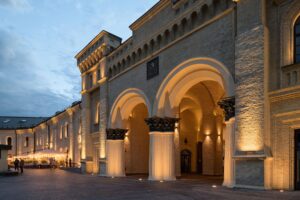
The SEPTEMBER FEST 2026 urban festival, previously scheduled for September 18 at the A-STATION venue in Kyiv, has been rescheduled for November 5, 2026. The event will take place at the “Parkovy” Exhibition and Convention Center in conjunction with the UBC Congress in the format of SEPTEMBER FEST + UBC, according to the DMNTR media group, which is organizing the festival.
The decision to reschedule was made following the introduction of new restrictions in Kyiv on mass gatherings due to the deteriorating security situation.
On September 7, the Kyiv Defense Council voted to temporarily ban entertainment and sports events in open areas, as well as in buildings and structures lacking shelters capable of accommodating the expected number of participants. The new rules take effect at 12:00 a.m. on September 10, the Kyiv City State Administration announced on September 9.
“In light of the decision by the Kyiv Defense Council and the announcement by Mayor Vitali Klitschko, starting September 10, entertainment and mass events in open areas and in premises without appropriate shelters are temporarily prohibited in the capital. Therefore, we are postponing the September Fest urban festival to November 5 and will hold it jointly with the UBC Congress at the “Parkovy” Exhibition and Convention Center—in the format of SEPTEMBER FEST + UBC,” the organizers announced.
According to DMNTR, the festival’s announced program, speakers, and concert lineup remain unchanged.
SEPTEMBER FEST 2026 was previously planned as an open-air event. The festival is positioned as a professional platform for representatives of the development sector, architecture, city governments, investment companies, and related industries. Over 150 speakers were announced for the professional program.
Key topics of the event include the development of Ukrainian cities, architecture and real estate development during the war, post-war reconstruction and revitalization of territories, investments in real estate and infrastructure, the labor shortage in construction, the digitalization of the industry and BIM technologies, energy independence, the design of public spaces, and the creation of a modern urban environment.
Previously announced international participants in the professional program include Christos Passas, Design Director at Zaha Hadid Architects; British industrial designer Ross Lovegrove; and German designer Konstantin Grcic. The Ukrainian portion of the program will feature developers, architects, investors, mayors, and chief city architects, as well as representatives of government agencies and industry organizations.
The organizers expect that combining SEPTEMBER FEST with the UBC Congress will allow them to preserve the professional and cultural components of the festival in a new, safer format and bring together representatives of the development, architectural, investment, and urban communities under one roof.
The general sponsors of SEPTEMBER FEST + UBC are A Development and “Creator-Bud.” The organizer is the DMNTR media group.
The new date is November 5, 2026.
Venue: “Parkovy” Exhibition and Convention Center, Kyiv.
Additional information from the organizer: 077 777 25 47.
“Interfax-Ukraine” and Open4Business are the official media partners of SEPTEMBER FEST 2026.
Official announcement from the Kyiv City State Administration regarding restrictions on mass events dated September 9, 2026: Kyiv City State Administration
ARCHITECTURE, DEVELOPMENT, DMNTR, FESTIVAL, KYIV, SEPTEMBERFEST
American missionary and philanthropist Kim Kio Yok, who has been working in Ukraine for more than 30 years, said that probable fraud occurred during the purchase of a house in Kyiv for the activities of the charitable foundation and Grace church, as a result of which the organization lost the ability to fully provide assistance to internally displaced persons, pensioners and other vulnerable categories of the population.
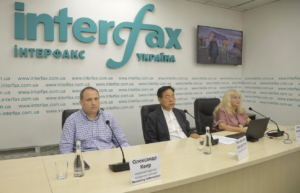
As Oleksandr Keer, managing partner of the law firm Revealing Information, said during a press conference at the Interfax-Ukraine agency, in 2022 Kim Kio Yok agreed to purchase a building in Kyiv’s Darnytskyi district, but instead of the main sale and purchase agreement, an agreement on the intention to conclude such an agreement was signed. According to the lawyer, at the time the agreement was concluded, the real estate was pledged due to debts of the previous owner’s family, and the initial payment amounted to $30,000.
“In 2022, $30,000 was transferred as a deposit and confirmation of the genuine intention to purchase this property. From 2022 until today, the amount of funds received increased from $30,000 to $400,000; in fact, 21 agreements were concluded to postpone the deadlines for concluding the main sale and purchase agreement. The last two additional agreements were concluded when the party no longer even had the ability to sell the property because it did not own it,” Keer said at a press conference at the Interfax-Ukraine agency on Wednesday.
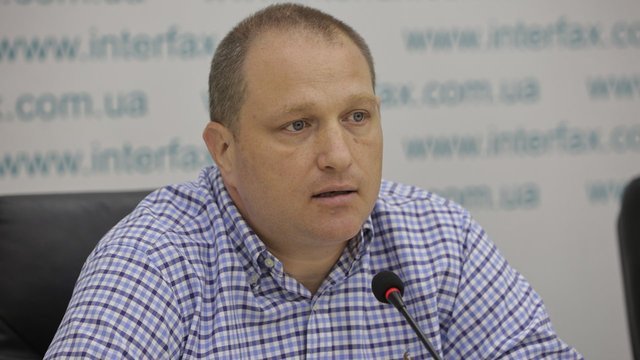
According to him, because of the outstanding previous obligations of the person who was supposed to sell the house, ownership of the real estate passed to creditors, making it impossible to fulfill the original agreements. At the same time, the lawyer claims that Kim Kio Yok effectively transferred almost the entire agreed value of the property but did not receive ownership of it.
Keer said that after the philanthropist approached them, the lawyers initially tried to resolve the situation through negotiations and mediation, but they were unable to reach an agreement with the other party. After that, submissions to the police and prosecutor’s office were prepared, as well as civil lawsuits concerning the disputed agreements and the return of the funds.
“When Mr. Kim approached us, the first thing we proposed was to hold negotiations and mediation in order to clarify the circumstances and try to reach an agreement. In response to repeated attempts to hold such a meeting, we were told that there were no grounds or purpose for it. After that, we prepared statements to the police and prosecutor’s office, as well as civil lawsuits regarding the return of the funds,” he added.
Keer noted that, according to the assessment of the injured party, the case has prospects in court because the transfer of funds and changes to the agreements were documented by signed agreements. He also said that for some time the philanthropist actually used the building, invested funds in improving it and purchased equipment, but now, according to his representatives, does not have access to this property.
He noted that the prosecutor’s office of the Darnytskyi district had opened criminal proceedings and that a pre-trial investigation was ongoing. The lawyer also positively assessed the court’s prompt response to the appeal by representatives of the injured party, but noted that since May the case has not yet resulted in a notice of suspicion or the submission of an indictment to the court.
For his part, Kim Kio Yok said that he came to Ukraine from California 33 years ago and during that time was engaged in religious, educational and charitable projects. After the start of the full-scale war, together with like-minded people, he helped people whose homes had been damaged, distributed food packages and firewood, and also organized free meals for internally displaced persons in Kyiv.
“We helped Ukrainians who suffered greatly during the full-scale war: we found damaged houses, helped rebuild them, provided people with food packages and firewood so that they could survive the winter. In the building in the Darnytskyi district, we served hot lunches to between 150 and 200 internally displaced persons. Because of this situation, in recent months people have been unable to receive the assistance that we provided before,” Kim Kio Yok said.
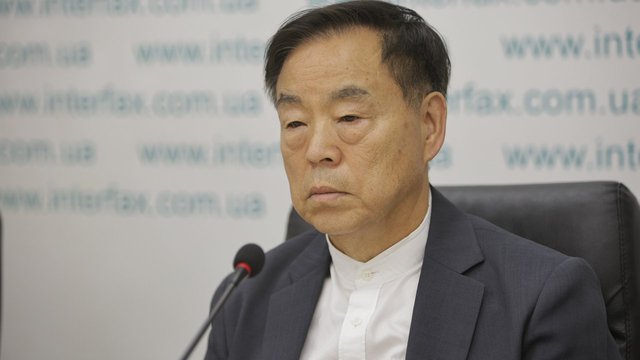
Kim Kio Yok, American missionary and philanthropist, injured party in the criminal proceedings
The missionary said that, as a U.S. citizen, he sent an official letter to the U.S. Embassy in Ukraine and contacted the U.S. consul.
“We sent an official letter to the U.S. Embassy. They responded and are showing interest in this case because I am a U.S. citizen. I also contacted the U.S. consul with a request to help me in this situation,” Kim Kio Yok said.
According to him, people who previously regularly received assistance continue to call representatives of the organization and ask when the free lunches and other programs will be resumed. The missionary stressed that he intends to remain in Ukraine and continue his charitable activities.
Kim Kio Yok noted that the organization operates not only in Kyiv. Over 33 years of its activities, centers have been established in various cities of Ukraine, including rehabilitation programs for people with drug and alcohol addiction. The Grace gymnasium, which includes a kindergarten and education through the 11th grade, also operates, while the building purchased in Kyiv was planned to be used, among other things, for educational projects.
“I am now 75 years old, and even during the war I want to help Ukrainians and serve them with love. We appeal to law enforcement agencies, the police and the prosecutor’s office: help us so that we can work again on the territory of Ukraine. We have dedicated our lives to serving Ukraine and the Ukrainian people,” he said.
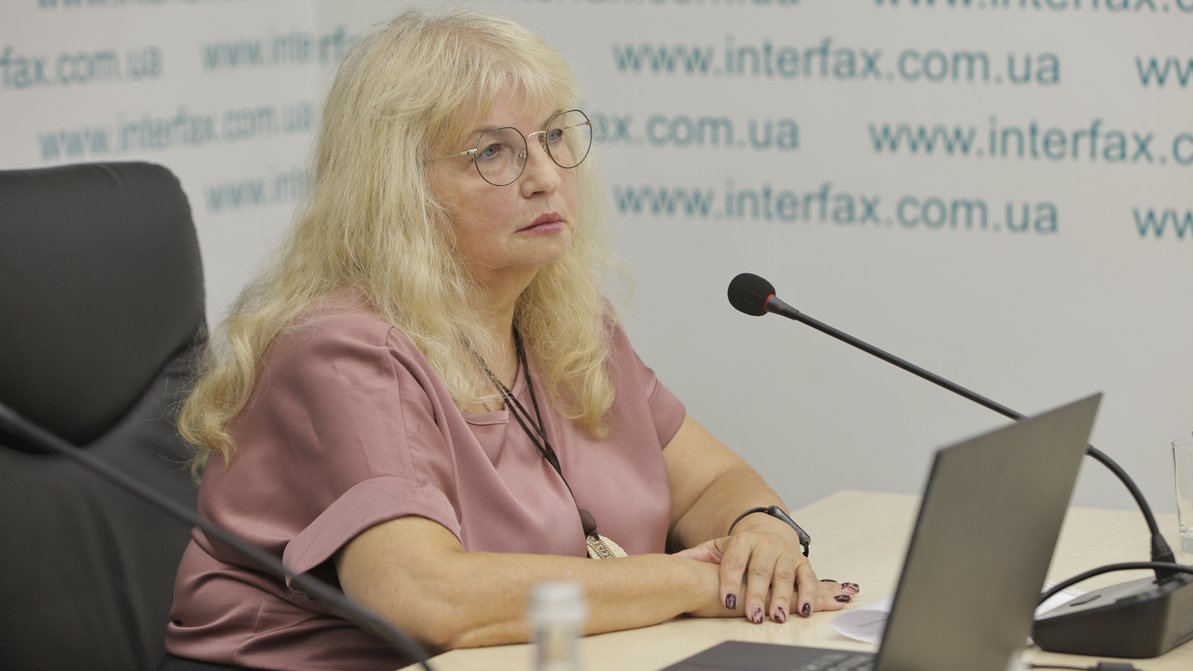
For her part, Viktoriia Khliebnikova, a volunteer with the charitable foundation, noted that the consequences of the conflict surrounding the building concern not only the foundation itself, since professional kitchen equipment purchased specifically to provide free meals to people remained inside the premises.
“For us, this story is very painful because this is not a question of the house, the equipment or the money. The most painful thing is that we cannot help people to the full extent, as we did before. The professional equipment was purchased not for business and not to make a profit – it was purchased for charitable activities, to feed people,” Khliebnikova said.
She noted that during widespread electricity outages, such meals were of particular importance to people who were unable to cook food at home. At present, according to her, the team is seeking to regain access to its property and resume its work.
“People are waiting, they meet me on the street and every time ask when we will start helping again. We want to return to normal work, prepare lunches, help elderly people, children and families who have lost their defenders at the front,” the volunteer added.
For his part, Pastor Kim Shine, vice president of the international Grace mission, who joined the press conference from the United States, said that the American organization financially supported the activities of Kim Kio Yok and his family in Ukraine and helped with the purchase of the premises. According to him, after the start of the full-scale war, the mission offered the missionaries the opportunity to return to the United States for security reasons, but they decided to stay.
“When they said that they had found a building where they could support elderly people and prepare food for displaced persons, we decided to provide financial assistance for its purchase. Now we are appealing to the Ukrainian authorities so that this case is resolved in accordance with the law and the activities can continue,” Kim Shine emphasized.
CHARITY, fraud, INTERFAX-UKRAINE, KYIV, MISSIONARY, UNITED STATES



