
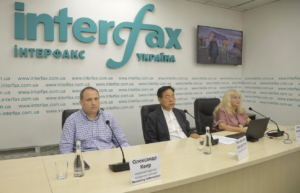
American missionary and philanthropist Kim Kio Yok, who has been working in Ukraine for more than 30 years, said that probable fraud occurred during the purchase of a house in Kyiv for the activities of the charitable foundation and Grace church, as a result of which the organization lost the ability to fully provide assistance to internally displaced persons, pensioners and other vulnerable categories of the population.
As Oleksandr Keer, managing partner of the law firm Revealing Information, said during a press conference at the Interfax-Ukraine agency, in 2022 Kim Kio Yok agreed to purchase a building in Kyiv’s Darnytskyi district, but instead of the main sale and purchase agreement, an agreement on the intention to conclude such an agreement was signed. According to the lawyer, at the time the agreement was concluded, the real estate was pledged due to debts of the previous owner’s family, and the initial payment amounted to $30,000.
“In 2022, $30,000 was transferred as a deposit and confirmation of the genuine intention to purchase this property. From 2022 until today, the amount of funds received increased from $30,000 to $400,000; in fact, 21 agreements were concluded to postpone the deadlines for concluding the main sale and purchase agreement. The last two additional agreements were concluded when the party no longer even had the ability to sell the property because it did not own it,” Keer said at a press conference at the Interfax-Ukraine agency on Wednesday.
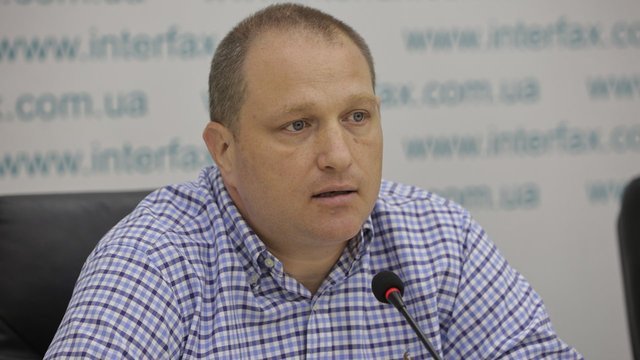
According to him, because of the outstanding previous obligations of the person who was supposed to sell the house, ownership of the real estate passed to creditors, making it impossible to fulfill the original agreements. At the same time, the lawyer claims that Kim Kio Yok effectively transferred almost the entire agreed value of the property but did not receive ownership of it.
Keer said that after the philanthropist approached them, the lawyers initially tried to resolve the situation through negotiations and mediation, but they were unable to reach an agreement with the other party. After that, submissions to the police and prosecutor’s office were prepared, as well as civil lawsuits concerning the disputed agreements and the return of the funds.
“When Mr. Kim approached us, the first thing we proposed was to hold negotiations and mediation in order to clarify the circumstances and try to reach an agreement. In response to repeated attempts to hold such a meeting, we were told that there were no grounds or purpose for it. After that, we prepared statements to the police and prosecutor’s office, as well as civil lawsuits regarding the return of the funds,” he added.
Keer noted that, according to the assessment of the injured party, the case has prospects in court because the transfer of funds and changes to the agreements were documented by signed agreements. He also said that for some time the philanthropist actually used the building, invested funds in improving it and purchased equipment, but now, according to his representatives, does not have access to this property.
He noted that the prosecutor’s office of the Darnytskyi district had opened criminal proceedings and that a pre-trial investigation was ongoing. The lawyer also positively assessed the court’s prompt response to the appeal by representatives of the injured party, but noted that since May the case has not yet resulted in a notice of suspicion or the submission of an indictment to the court.
For his part, Kim Kio Yok said that he came to Ukraine from California 33 years ago and during that time was engaged in religious, educational and charitable projects. After the start of the full-scale war, together with like-minded people, he helped people whose homes had been damaged, distributed food packages and firewood, and also organized free meals for internally displaced persons in Kyiv.
“We helped Ukrainians who suffered greatly during the full-scale war: we found damaged houses, helped rebuild them, provided people with food packages and firewood so that they could survive the winter. In the building in the Darnytskyi district, we served hot lunches to between 150 and 200 internally displaced persons. Because of this situation, in recent months people have been unable to receive the assistance that we provided before,” Kim Kio Yok said.
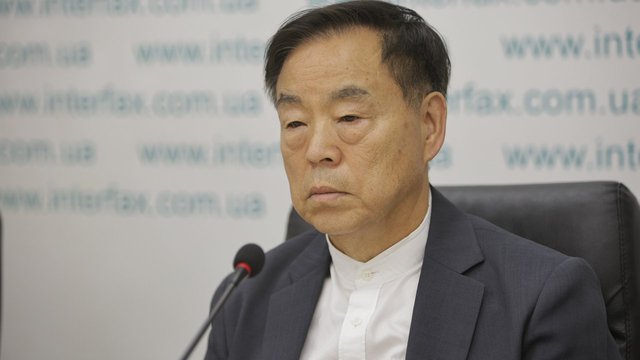
Kim Kio Yok, American missionary and philanthropist, injured party in the criminal proceedings
The missionary said that, as a U.S. citizen, he sent an official letter to the U.S. Embassy in Ukraine and contacted the U.S. consul.
“We sent an official letter to the U.S. Embassy. They responded and are showing interest in this case because I am a U.S. citizen. I also contacted the U.S. consul with a request to help me in this situation,” Kim Kio Yok said.
According to him, people who previously regularly received assistance continue to call representatives of the organization and ask when the free lunches and other programs will be resumed. The missionary stressed that he intends to remain in Ukraine and continue his charitable activities.
Kim Kio Yok noted that the organization operates not only in Kyiv. Over 33 years of its activities, centers have been established in various cities of Ukraine, including rehabilitation programs for people with drug and alcohol addiction. The Grace gymnasium, which includes a kindergarten and education through the 11th grade, also operates, while the building purchased in Kyiv was planned to be used, among other things, for educational projects.
“I am now 75 years old, and even during the war I want to help Ukrainians and serve them with love. We appeal to law enforcement agencies, the police and the prosecutor’s office: help us so that we can work again on the territory of Ukraine. We have dedicated our lives to serving Ukraine and the Ukrainian people,” he said.
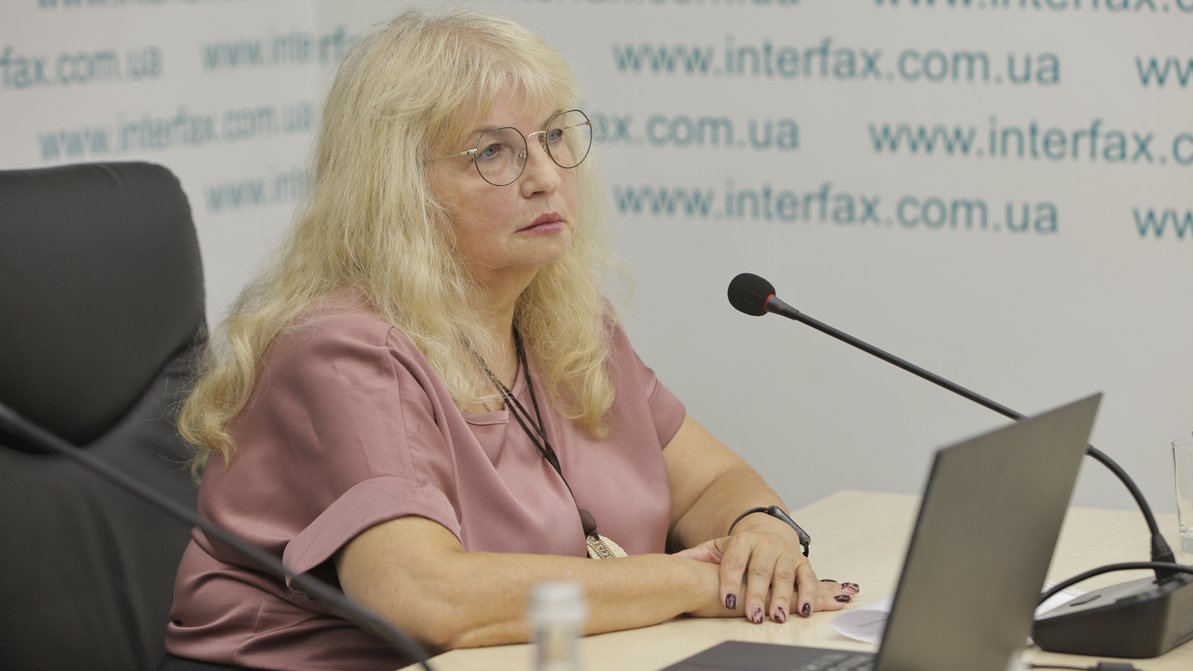
For her part, Viktoriia Khliebnikova, a volunteer with the charitable foundation, noted that the consequences of the conflict surrounding the building concern not only the foundation itself, since professional kitchen equipment purchased specifically to provide free meals to people remained inside the premises.
“For us, this story is very painful because this is not a question of the house, the equipment or the money. The most painful thing is that we cannot help people to the full extent, as we did before. The professional equipment was purchased not for business and not to make a profit – it was purchased for charitable activities, to feed people,” Khliebnikova said.
She noted that during widespread electricity outages, such meals were of particular importance to people who were unable to cook food at home. At present, according to her, the team is seeking to regain access to its property and resume its work.
“People are waiting, they meet me on the street and every time ask when we will start helping again. We want to return to normal work, prepare lunches, help elderly people, children and families who have lost their defenders at the front,” the volunteer added.
For his part, Pastor Kim Shine, vice president of the international Grace mission, who joined the press conference from the United States, said that the American organization financially supported the activities of Kim Kio Yok and his family in Ukraine and helped with the purchase of the premises. According to him, after the start of the full-scale war, the mission offered the missionaries the opportunity to return to the United States for security reasons, but they decided to stay.
“When they said that they had found a building where they could support elderly people and prepare food for displaced persons, we decided to provide financial assistance for its purchase. Now we are appealing to the Ukrainian authorities so that this case is resolved in accordance with the law and the activities can continue,” Kim Shine emphasized.
CHARITY, fraud, INTERFAX-UKRAINE, KYIV, MISSIONARY, UNITED STATES
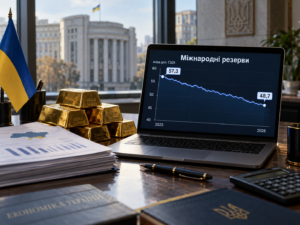
Ukraine’s international reserves amounted to $48.7 billion at the end of August 2026, which is approximately $8.6 billion, or 15%, less than at the beginning of the year, according to an analysis by the Experts Club information and analytical center.
As of January 1, reserves stood at a record level of $57.3 billion, and by the beginning of February they had risen to $57.7 billion. After that, they declined for four consecutive months: to $54.8 billion as of March 1, $52 billion as of April 1, $48.2 billion as of May 1, and $45.7 billion as of June 1.
The main factors behind the decline were significant foreign exchange interventions by the National Bank, government debt payments, and uneven inflows of international financial assistance.
The situation changed sharply in June, when Ukraine received large tranches of external financing. Reserves increased by 12.1% over the month — to $51.27 billion. About $11.3 billion was credited to the government’s foreign currency accounts, including $6.82 billion from the EU and almost $4.5 billion through the World Bank.
In July, reserves remained almost unchanged, but in August they again decreased by approximately $2.5 billion, or 5%, to $48.7 billion.
In August, the NBU sold about $4.82 billion on the foreign exchange market, while $927.3 million was credited to the government’s foreign currency accounts. Ukraine also directed $721.8 million toward servicing and repaying government debt in foreign currency and paid $258.2 million to the IMF.
Net international reserves declined even more sharply over the month — by 6.9%, to $33.8 billion.
At the same time, the current level of reserves remains approximately 5.8% higher than a year ago, when they stood at about $46 billion as of September 1, 2025.
Experts Club founder and economist Maksym Urakin previously emphasized that the absolute size of reserves should not be regarded as a guarantee of currency security.
“Reserves at the level of $51.2 billion remain a significant foreign exchange buffer, but the absolute figure itself should not create an impression of complete protection. The sustainability of reserves depends on the regularity of international financing, the volume of NBU interventions, debt payments, and the economy’s ability to increase export revenues,” Urakin noted.
According to the NBU, the current level of reserves remains sufficient and provides financing for approximately four months of future imports.
According to “Serbian Economist”, Montenegro expects to join the European Union as a full and equal member and does not agree to a model under which new member states would be granted limited rights, Minister of European Affairs Maida Gorčević stated on September 9.
According to her, Podgorica is prepared to adopt additional safeguards against a potential democratic backslide following EU accession, but does not want to become a “second-class member” with limited voting rights or other temporary restrictions.
Various models for future enlargement are currently being discussed within the European Union, including the possibility of temporarily restricting certain rights of new members regarding the budget, foreign policy, or the exercise of the veto. Gorčević emphasized that Montenegro is prepared to accept the strictest mechanisms for monitoring the rule of law, but considers the equality of members to be a fundamental condition.
At the same time, Podgorica is trying to dispel Brussels’ concerns about possible vetoes in advance. Gorčević stated that Montenegro has no intention of using the veto as a tool for exerting pressure and sees itself rather as part of a group of small and predictable EU members, such as Slovenia, Malta, or the Baltic states.
Montenegro remains the most advanced candidate for EU accession in the Western Balkans. Negotiations have been ongoing since 2012, and all 33 negotiation chapters have been opened. Following the closure in July of the chapters on competition and the customs union, the number of provisionally closed chapters reached 18.
The government expects to close the remaining chapters by the end of 2026 and is aiming for EU accession in 2028. Back in the spring, Gorčević stated that the country’s goal is full membership, rather than an interim or simplified form of integration.
For Ukraine, Podgorica’s position is also of interest as a potential precedent. If Brussels does indeed decide to impose transitional restrictions on new EU members regarding the right of veto or other powers, such a model could potentially be applied to other Western Balkan countries that join later. This model could also be applied to other EU candidate countries.
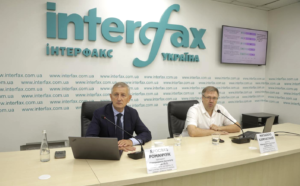
Ukrainians demonstrate strong demand for freedom of speech, personal autonomy and protection of private property, while at the same time, on issues of economic and social policy, a significant part of society expects an active role from the state, according to the results of the nationwide sociological study “Values of Freedom in Ukraine,” presented by the International Liberty Institute (ILI).
According to the study, 85% of respondents supported citizens’ right to criticize the authorities without fear of persecution, while 67% supported guaranteeing freedom of expression even for views that may be considered unacceptable or offensive. Almost half of respondents – 49% – opposed internet censorship even under wartime conditions, while 57% opposed punishment by the state for statements or opinions if they do not pose a direct physical threat.
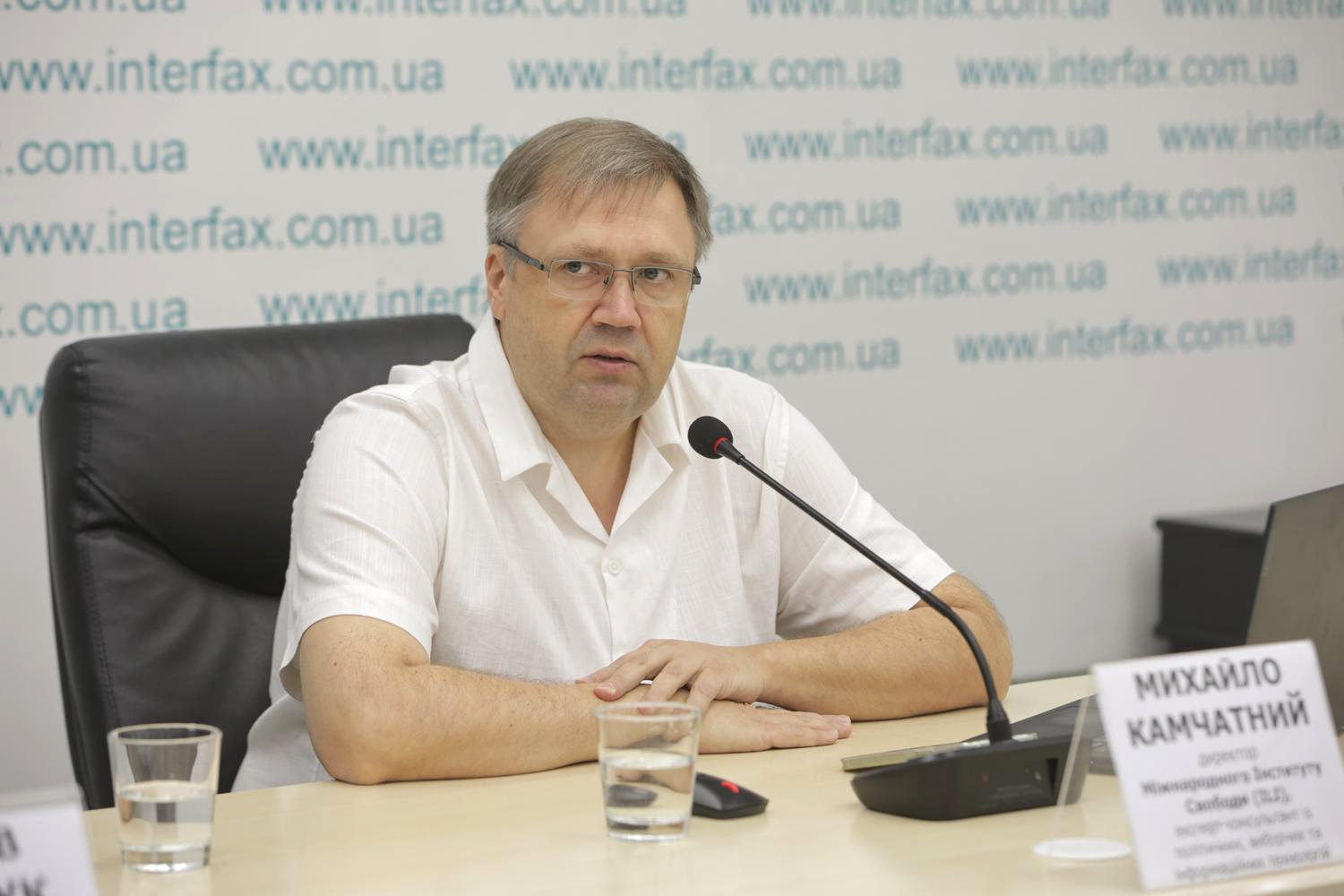
“Almost 85% of Ukrainians, if we combine the responses ‘completely agree’ and ‘rather agree,’ support the right to publicly criticize the authorities without fear of persecution. At the same time, around two-thirds believe that freedom of speech should be guaranteed even for views that are perceived as wrong or offensive. For us, this is one of the clearest indicators of society’s demand for personal freedom,” Director of the International Institute for Liberty Mykhailo Kamchatnyi said at a press conference at the Interfax-Ukraine agency on Wednesday.
Another 68% of respondents opposed a situation in which the majority can impose its values on a minority. ILI believes that the combination of these indicators demonstrates a clear demand for limiting state interference in the sphere of personal beliefs and expression.
At the same time, respondents’ ideological self-identification proved to be significantly less liberal. A total of 52% primarily defined themselves as free individuals with their own values who are personally responsible for their lives, while 31% primarily identified themselves as citizens of Ukraine. Only 13% described themselves as supporters of liberal or libertarian views, while 46.5% gravitate toward ideologies that envisage a more active role for the state. Almost half – 48% – reported that their political and ideological beliefs had changed or been formed under the influence of the war and its consequences.
A separate section of the study concerned language policy. According to the data presented, 65% of respondents named Ukrainian as their native language, 23.6% identified themselves as bilingual, and 11% named Russian as their native language. At the same time, 76% supported the mandatory use of the Ukrainian language in the public state sphere, while about two-thirds agreed that people should have the right to communicate in their native language in public life without state restrictions.
The human right to self-defense also received considerable support. About half of respondents supported the right to legally carry weapons for self-defense, while around 80% supported the right to use them to protect life and private property in the event of an unlawful intrusion into a home.
More than 80% of respondents agreed that even during martial law the authorities should not go beyond the limits established by the Constitution. A total of 53% supported a substantial revision of the current Constitution or the adoption of a new one. Some 77% of respondents agreed that closing media outlets or blocking internet resources may be justified only if cooperation with the enemy or coordination of military strikes has been proven.
One of the most sensitive issues was the principle of staffing the Armed Forces. A total of 46% of respondents supported an exclusively professional or voluntary army, while almost half favored a mixed model combining a professional contract-based core with mandatory training for young people in peacetime. The traditional mobilization model was supported by 3% of respondents, while more than 80% approved attracting professional military personnel through high salaries and benefits.
“We see that the traditional mobilization model does not enjoy citizens’ support – only around 3% of respondents chose it. Instead, society is much more oriented either toward a professional volunteer army or toward a mixed model with a professional core and training of citizens in peacetime. More than 80% also support attracting military personnel through competitive salaries and a system of benefits,” Kamchatnyi said.
In the economic part of the study, society proved to be significantly more polarized. A total of 44% of respondents supported an expanded role for the state in the economy and in providing social services, including 29% who took the strongest position in favor of active state regulation. At the same time, 44% of respondents said that they rely primarily on their own efforts to ensure their well-being, while 43.5% expect the state not to interfere with their personal risks.
ILI President Yaroslav Romanchuk, in turn, drew attention to the fact that Ukrainians’ attitudes toward private property and entrepreneurship are more market-oriented than their formal ideological self-identification. In particular, 69% of respondents demonstrated an understanding of the concept of private property, while almost 70% agreed with the statement that excessive bureaucracy and regulation hinder business development.
“Ukrainians as a whole do not reject private property – on the contrary, in many responses we see an understanding that a private owner manages an enterprise more efficiently than a manager appointed by the state. This is fundamentally important for future economic policy: the country’s strategic development should not automatically mean the dominance of state ownership. Private initiative, competition and protected owners’ rights are needed,” Romanchuk stressed.
He also linked problems in the business environment to excessive discretionary powers granted to officials.
“When an official, law enforcement officer or inspector is given the opportunity to interpret a vaguely written rule at their own discretion, a source of discretion arises, and with it a corruption risk. Almost 70% of respondents directly say that excessive bureaucracy and regulation are a brake on business development. Therefore, laws must be as clear as possible and leave as little room as possible for arbitrary interpretation,” the ILI president added.
According to Romanchuk, the results regarding knowledge of economic concepts also indicate the need to update economic education. A total of 46% of respondents had heard or read about Marxism, 12% about monetarism, and 4% about the Austrian School of Economics. A free-market economic model without state intervention was chosen as the most desirable for Ukraine by 18%, a model of active state regulation by 10%, and socialism by 6.5%.
Romanchuk separately advocated preserving and developing the institution of FOP individual entrepreneurship as a form not only of taxation, but also of self-employment and entrepreneurial culture. He noted that microbusiness should be regarded as an important component of citizens’ economic and social independence.
In the social sphere, the ILI president called for a transition toward more targeted assistance that would take into account not only a person’s current income, but also savings, assets, health status and other criteria of need. In his opinion, after the war, the issue of combining the state’s substantial social obligations with the need to preserve conditions for business development will become one of the key issues for fiscal policy.

“Ukraine will have to find a balance between the needs of people who will require social support and rehabilitation and the economy’s ability to finance this. If social obligations are formed without taking into account the tax burden that business is capable of bearing, we will get neither investment nor modernization. Therefore, assistance must be as targeted and transparent as possible and tied to the real needs of a specific person,” Romanchuk stressed.
He also advocated developing alternatives to an exclusively state pension system and making broader use of funded mechanisms, while in education and healthcare he called for competition between public and private service providers. According to Romanchuk, a market model in these sectors does not imply the state’s complete withdrawal from financing, but primarily a change in the mechanisms for distributing funds and greater accountability of providers for results.
During the discussion following the presentation, Romanchuk separately drew attention to the connection between freedom, responsibility and the quality of legal institutions.
“Freedom does not exist without responsibility. If the right to private property formally exists, but no one bears responsibility for violating it, then in practice that property is not protected. The same applies in other areas: a right works only when there is a clear mechanism of responsibility for its violation,” he summarized.
The study covered issues of personal freedom, the state and politics, the economy, the social sphere, private property and entrepreneurship, taxes, elections, military service, education, healthcare, pension provision, individual responsibility and social solidarity.
New Image and Marketing Group conducted the sociological survey in July 2026 at the request of the International Liberty Institute. A total of 1,600 respondents who were living in Ukrainian government-controlled territory at the time of the study took part in the online survey.
FREEDOM OF SPEECH, ILI, PERSONAL RESPONSIBILITY, PRIVATE PROPERTY, SOCIOLOGY, UKRAINE

The agricultural holdings TAS Agro, IMC, and Eridon do not plan to reduce their winter wheat acreage, while HarvEast intends to decrease grain crops in favor of sunflowers and soybeans, company representatives reported during a survey at the 17th International Conference “Effective Management of Agricultural Companies” (LFM 2026).
Oleg Zapletnyuk, CEO of “TAS Agro,” noted that the company will maintain its wheat acreage, as this crop plays an important role in crop rotation: wheat is the primary preceding crop for rapeseed. According to him, rapeseed currently accounts for the bulk of the company’s revenue and liquidity.
“TAS Agro” has already completed sowing the planned 15,000 hectares of rapeseed and is continuing to sow wheat. At the time of the survey, approximately 35% of the planned acreage had been sown, Zapletnyuk noted.
The IMC agricultural holding also has no intention of reducing its wheat acreage. Its CEO, Oleksandr Verzhikhovsky, reported that the company plans to plant 2,700 hectares of wheat.
Serhiy Krolevets, the owner of “Eridon,” said that due to unfavorable weather conditions, the company has practically abandoned rapeseed planting. The company plans to plant wheat at roughly the same level as last year, although work is currently being carried out in dry soil while awaiting rainfall.
Meanwhile, the HarvEast agricultural holding plans to reduce the acreage planted with wheat and corn in favor of sunflowers and soybeans. CEO Dmytro Skornyakov explained this by the need to ensure the business’s economic stability in the coming season.
“… Oilseeds are currently much more profitable, and we will increase sunflower and soybean acreage while reducing corn and wheat,” he said.
Maria Osyka, Director of Strategic Development at the Agroprosperis agricultural group, announced plans to plant 10,000 hectares of seed wheat and 55,000 hectares of rapeseed.
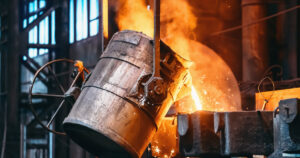
Ukrainian steelmaking companies reduced pig iron production by 14.8% in January–August of this year compared to the same period last year, down to 4.350 million metric tons.
According to data from the “Ukrmetallurgprom” association, 257,100 metric tons of pig iron were produced in August, 432,200 metric tons in July, 670,600 metric tons in June, 634,400 metric tons in May, in April—554 thousand metric tons, in March—690.2 thousand metric tons, in February—561.9 thousand metric tons, and in January—549.9 thousand metric tons.
In 2025, Ukraine’s steel companies increased pig iron production by 11.2% compared to 2024, reaching 7.884 million metric tons.
In 2024, Ukraine increased pig iron production by 18.1% compared to 2023, reaching 7.090 million metric tons. In 2023, pig iron production fell by 6.1% to 6.003 million metric tons, and in 2022, it fell by 69.8% to 6.391 million metric tons.
In 2021, before the war, 21.165 million metric tons of pig iron were produced, or 103.6% of the 2020 level.



