
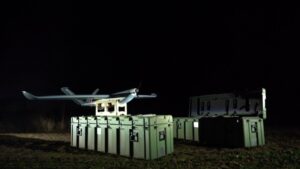
As part of Rinat Akhmetov’s Steel Front military initiative, Metinvest provided the 1st Corps of the National Guard of Ukraine (NGU) Azov with a batch of drones worth UAH 214 million, with total assistance for the year reaching UAH 600 million.
According to a statement released by the group on Wednesday, Akhmetov’s Steel Front military initiative delivered another large batch of drones to the 1st Corps of the NGU Azov. The cost of the equipment delivered is 214 million hryvnias. This delivery was the next stage in the Metinvest Group’s systematic support for the corps in 2025.
It is specified that the total amount of aid to the Azov Corps during the year reached UAH 600 million. The funds were used to provide the most critical technological solutions for the front line, as well as logistical and technical support for the units.
‘In 2025, we continued to support the 1st Corps of the National Guard of Ukraine ’Azov” in areas that are critical for combat operations: electronic warfare, UAVs, communications, as well as logistical and technical support. The total amount of this assistance is UAH 600 million,‘ said Alexander Vodoviz, Head of the Office of the CEO of Metinvest.
In turn, the 1st Corps of the National Guard of Ukraine ’Azov” emphasised that this support is very important, as modern warfare requires constant and rapid updating of the technological base.
‘In 2025, the requirements for equipment have increased significantly. REBs, drones, and secure communications determine the success of operations and save the lives of our soldiers,’ said Ivan Ignatiev, deputy commander of the corps for logistics.
Since the start of the full-scale war, Metinvest has reportedly delivered more than 1,500 UAVs to various units of the Ukrainian Armed Forces. Recently, another batch of ‘birds’ was received by the 27th Military Unit of the Ukrainian Ground Forces. The shipment included 200 FPV drones, 30 DJI Mavic FMC drones and 20 DJI Mavic 3T drones with thermal imaging cameras. Earlier, the Azov special forces brigade of the National Guard of Ukraine received a large shipment of vehicles and equipment worth UAH 40 million from Metinvest.
In total, over the course of a year and a half of full-scale war, Metinvest has allocated UAH 2 billion to support the Ukrainian army as part of Rinat Akhmetov’s Steel Front military initiative.
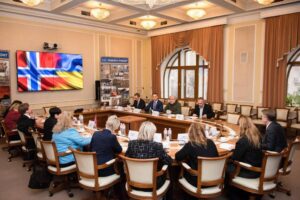
Foreign Minister Espen Barth Eide, who is visiting Kyiv, announced the allocation of 4 billion kroner in aid to Ukraine, which will be directed to the energy sector and the functioning of the Ukrainian state.
“Today in Kyiv, it is 16 degrees below zero. We can only imagine how cold it is when the electricity disappears, often for six hours at a time. This is money that Ukraine desperately needs and needs now. Several times a week, Russia attacks the infrastructure that provides electricity to ordinary people in Ukraine. Ensuring that Ukrainians can keep warm, cook food and live their lives more or less as usual is very important for them to be able to continue to endure this war. A war they are fighting on behalf of all of us,” Eide said.
It is noted that Norway is in constant dialogue with the authorities in Kyiv and other stakeholders regarding the distribution of Norwegian support to the energy sector. The goal is to meet Ukraine’s needs and share the risks. It is important to support energy production and strengthen the resilience of the energy sector.
‘It is necessary to finance the purchase of gas that can be delivered quickly. At the same time, it is necessary to repair damaged infrastructure and purchase spare parts,’ Eide explained.
Norway’s contribution will be channelled through partners such as the European Bank for Reconstruction and Development (EBRD) and the European Energy Community, which aims to extend the EU’s internal energy market to third countries such as Ukraine. This has been agreed with other key donors.
The official exchange rate on Monday was 1 Norwegian krone to 4.2606 hryvnia (or about $0.1).

The Swedish government plans to significantly increase aid to Ukraine, to at least SEK 10 billion in 2026, and in this regard is gradually phasing out development aid to five countries: Zimbabwe, Tanzania, Mozambique, Liberia, and Bolivia.
According to the Swedish government’s official website, in June 2025, the government decided to redirect Swedish aid and allocated approximately SEK 1.7 billion from the aid budget to provide additional support to Ukraine and for vital humanitarian measures around the world.
“We are at a decisive moment in European history. Ukraine is under pressure both at the negotiating table and on the front lines. To increase support for Ukraine, we need to make difficult priorities. Therefore, Sweden is gradually phasing out development aid to Zimbabwe, Tanzania, Mozambique, Liberia, and Bolivia,” said Minister for Aid and Foreign Trade Benjamin Dusa.
Due to the termination of bilateral strategies, embassies in Bolivia, Liberia, and Zimbabwe are being closed. Diplomatic relations with these countries remain important and will be maintained, for example, through accreditation from another country in the region.
It is specified that humanitarian aid is not affected by the termination of development aid, and Sweden continues to be one of the world’s largest donors of humanitarian aid and long-term development cooperation worldwide.
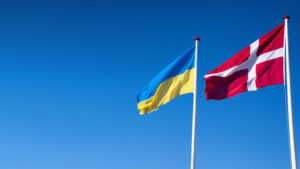
The Danish government plans to cut the amount of aid provided to Ukraine by almost half, according to Danish public broadcaster DR (Danmarks Radio).
“In response to a request from the Defense Committee, Defense Minister Troels Lund Poulsen said that Denmark will provide 9.4 billion kroner next year. Last year, we provided 16.5 billion kroner, and the year before that, almost 19 billion kroner,” the report said.
Earlier, in 2023, a broad majority in the Danish parliament agreed to create the Ukraine Fund. This is an economic framework that determines how much aid Denmark will provide to Ukraine. To date, Denmark has provided Ukraine with more than 70 billion in military aid.
Denmark is currently the country that has provided Ukraine with the most support as a percentage of GDP. Therefore, according to Simon Kollerup, spokesperson for the Social Democratic Party on defense issues, it is “natural” that support is being reduced.
“We decided to be one of the countries that provided the most extensive support at the beginning of the war. I also think it is fair to say that this support is somewhat more than what one might expect given the size of our country. Therefore, I think it is quite natural that support is gradually decreasing,” he said.
Kollrup also noted that it has not yet been decided politically whether support will remain reduced, despite current decisions.
“I think we will allocate more money than is currently planned. Does this mean that we will necessarily be at the forefront, as we were before? I’m not sure,” he said.
He pointed out that politicians had long ago decided to create a model for the Ukraine Fund, where most of the billions were spent during the first three years of the war. And that the time will soon come for other countries to contribute to this fund.
“We are a small country with a healthy economy and a high capacity for decision-making, so we were actually able to find the funds in our economy to provide significant support at the beginning. But I also believe that there is room for other countries to come on the scene,” Kollrup explained.
In turn, Stinus Lindgren, defense spokesman for the Radical Left party, said that now is not the time to reduce support for Ukraine.
“The problem is that we haven’t allocated new funds for a long time. If we think it’s so important to support Ukraine, and I hear that all parties say so, then right now we need to sit down in parliament and make sure we have the money ready,” he said.
He clarified that he considers the amounts allocated in previous years to be sufficient.
“I believe that we should return to the level we were at in previous years,” he said.
Lindgren added that Ukrainians have been under intense pressure on the battlefield recently. The Kremlin claims that the strategically important city of Pokrovsk, which has been the scene of fierce fighting for a long time, has finally fallen into Russian hands.
“If you look at the situation in Ukraine right now, it is critical. Now is not the time to lower our ambitions. Neither in Denmark nor internationally,” he concluded.
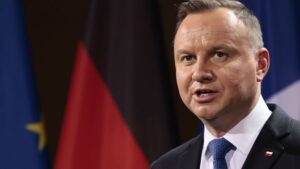
President of Poland Andrzej Duda has stated the need to end the war in Ukraine with a just and lasting peace and emphasized the importance of transatlantic ties, the Polish President’s Office reports.
“Every day we bear the risks of war on our shoulders. The war in Ukraine must end. It must end in a just and lasting peace. Maintaining ties between the United States and Europe is fundamental,” Duda said.
He expressed doubt that increased aid to Ukraine from European countries would be able to compensate for the cessation of US aid, and called on Ukrainian President Volodymyr Zelenskyy to return to talks with the US side on continued support.
“President Zelensky must return to the negotiating table at any cost and as soon as possible, because it is in his interest that Ukraine survives this war. In my opinion, Ukraine will not survive without the support of the United States,” the Polish president said.
According to him, there is nothing to indicate that Europe will change its behavior and provide large-scale assistance to Ukraine. “Perhaps the whole of Europe will radically change its previous behavior and suddenly stand firmly and unanimously against Russia and provide Ukraine with exceptionally large-scale assistance that will allow it to continue to defend and fight. Perhaps it will provide such assistance and Ukraine will not be conquered by Russia, and secondly, this war will end happily for Ukraine. However, after what Europe has done in this regard, there is absolutely nothing to indicate this. If anyone can force Russia to end the war, it is the United States of America,” the president said.
Duda is also convinced that if an agreement is concluded between the US and Ukraine on minerals, “Ukraine will become strategic for the interests of the United States, and I am convinced that they will protect it.”
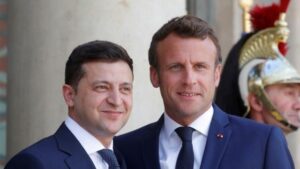
On Friday, June 7, Emmanuel Macron and Volodymyr Zelenskyy will sign two agreements to provide Ukraine with €650 million in loans and grants, in particular to support local authorities and critical infrastructure, the Elysee Palace said on Wednesday, Le Monde reports.
The first agreement will reportedly provide the French Development Agency with “€400 million in loans and €50 million in grants until 2027” to “expand its activities in Ukraine” by providing support in the energy and transport sectors, in particular “to develop administrative capacity.”
The second agreement concerns the creation of a “support fund” for critical infrastructure, which will be invested with €200 million euros “to support French companies in future tenders (…) in the energy, transport, water and sanitation, health and agriculture sectors”.
It is noted that “these funds will be used to finance large projects, strengthen or replace failing energy infrastructure” as it is the object of special attention from Moscow.



