

According to “Serbian Economist”, a South Korean consortium led by Incheon International Airport Corporation has withdrawn from the process of awarding a 30-year concession to operate the international airports in Podgorica and Tivat.
On July 18, the Montenegrin government announced that it had received an official letter stating the consortium’s withdrawal from further participation in the process. The reasons for the South Korean side’s decision have not yet been disclosed. The government stated that it does not intend to completely abandon the idea of bringing in a private operator, but will not agree to terms that could conflict with the public interest.
Incheon had been considered the winner of the tender. In April 2026, the Montenegrin government decided to proceed with signing a concession agreement with the South Korean consortium. The proposal called for a one-time payment to the state of 100 million euros, an annual transfer of 35% of the airports’ gross revenue, and approximately 300 million euros in mandatory investments over 30 years. The total financial benefit for the state was estimated at over 1 billion euros.
The investment program was to include terminal expansions, modernization of runway and apron infrastructure, implementation of new passenger service systems, and increases in airport capacity. However, the draft agreement was criticized for lacking a detailed breakdown of the €300 million in investments by individual phases and for making part of the work contingent on the state resolving property issues.
Incheon’s withdrawal poses several risks for Montenegro. The main one is a further delay in the modernization of airports that are strategically important for tourism. An increase in passenger traffic without the expansion of terminals and aprons could exacerbate queues, infrastructure overload, and seasonal disruptions, especially in Tivat.
The country also risks losing out on the planned one-time payment of 100 million euros and delaying the attraction of 300 million euros in private investment. A repeat tender or negotiations with another bidder could take a long time, and new financial terms may prove less favorable.
Reputational uncertainty is another negative factor. If the selected investor withdraws after the government has already made its decision, this could raise questions among other international operators regarding the terms of the tender, legal certainty, and the speed of approval for major infrastructure projects in Montenegro.
In June 2025, Serbian Finance Minister Sinisa Mali stated that Belgrade was interested in managing the airports in Podgorica and Tivat and was prepared to offer significant investments. However, Montenegrin authorities reported at the time that no official bid had been received from Serbia as part of the ongoing tender process.

European airports and airlines have called on the European Commission to urgently intervene in the launch of the new Entry/Exit System (EES). In an open letter, ACI EUROPE, Airlines for Europe, and IATA stated that the system’s implementation has reached a “critical point” and is already causing serious disruptions at airports.
The EES is a new digital system for controlling the Schengen Area’s external borders for citizens of non-EU countries. It replaces passport stamps and records entry, exit, or refusal of entry. When crossing the border, the system collects passport data, a facial photo, fingerprints, and the date and location of the border crossing. The system became fully operational on April 10, 2026, following a phased rollout that began in October 2025.
The problem is that, in practice, biometric registration takes longer than expected. According to ACI EUROPE, A4E, and IATA, since the full launch of the EES, wait times at border control during peak periods have already reached five hours. This leads to flight delays, missed connections, strain on staff, and situations where passengers are stranded at the border while planes depart without being fully occupied.
Industry organizations warn that the situation could worsen in July and August: European airports are expecting approximately 40 million more passengers than in the previous two months. The risk applies not only to the largest hubs but also to smaller airports in popular tourist destinations, where border infrastructure is physically unable to handle the flow of passengers.
The aviation industry is asking the European Commission to allow Schengen Area countries to fully or partially suspend the EES in July and August if passenger traffic exceeds border control capacity. Starting in September, it is proposed to establish a permanent flexibility mechanism to temporarily disable the EES in exceptional situations and revert to standard checks in accordance with the Schengen Code, including passport stamps.
Airports and airlines are not calling for the abolition of border controls. They recognize the importance of the EES for security but believe the system must operate without disrupting transportation logistics or the tourist season. Among the unresolved issues, they cite a shortage of border guards, instability of the IT platform, the unreadiness of self-service kiosks and ABC gates, as well as the poor performance of the pre-registration app.
The EES was intended to make EU borders more digital and secure, but in the summer of 2026, it became an additional source of delays. If the European Commission does not grant airports greater flexibility, the tourist season could face long lines, missed flights, and a reputational blow to European tourism.

According to Serbian Economist, Montenegro’s President Jakov Milatović has called for a suspension of the process to transfer the airports in Podgorica and Tivat to a concession, stating that the current model could cost the state hundreds of millions of euros.
A statement from the President’s Office notes that the government is implementing the concession procedure for Aerodromi Crne Gore based on a model developed back in 2019, even though the value of the airports and passenger traffic have increased significantly since then. Milatović believes that the current process does not reflect the true value of the assets, does not protect the state’s interests, and leaves airport employees without sufficient guarantees.
The President’s Office has sent a request to Montenegro’s Ombudsman for an urgent legal and financial analysis of the concession. The statement emphasizes that this concerns strategic infrastructure, and that, according to Milatović’s assessment, the government is attempting to shift responsibility for the controversial decision onto parliament.
Montenegrin authorities had previously proposed transferring the airports in Podgorica and Tivat to a 30-year concession to the South Korean Incheon Airport Consortium. The government claims that upon the concession’s expiration, all infrastructure will remain state-owned, and the total benefits from the deal could exceed EUR 1 billion.
According to the government, the terms of the deal involve investments in the reconstruction and development of airport infrastructure, the construction of new terminals, and the modernization of existing facilities. Supporters of the concession believe that without a major foreign operator, the airports will not be able to quickly reach a new level of service and capacity.
Milatović, on the other hand, insists that the new deal must take into account the current value of the assets. According to the State Property Agency, the value of Aerodromi Crne Gore is approximately EUR264.4 million, which is nearly double the previous 2018 valuation.
The president proposes revising the terms of the deal. Among the parameters that, according to his office, should be included in a fair concession model are a minimum one-time payment of at least EUR200 million, a mandatory increase in passenger traffic of at least 7% per year, investments of at least EUR300 million, the preservation of existing employee rights, and a guarantee of no technological surplus in the first five years.
Milatović also warned that a poorly structured concession could lead to a reduction in the number of flights, higher airfare prices, and employee layoffs.
The airports in Podgorica and Tivat have different economic significance. Podgorica is the main business and administrative hub, while Tivat is critical for tourist traffic to the coast, including Budva, Kotor, Herceg Novi, and other resort areas. Therefore, the concession issue concerns not only airport management but also the entire model of tourism development, investment, and the country’s transport accessibility.
https://t.me/relocationrs/2819

Ukrzaliznytsia, in cooperation with Moldovan authorities, is launching a trial logistics service to Chisinau International Airport—on April 13, the route of Train No. 351 (Kyiv–Chisinau) will be extended to Revaca Station, located near the airport.
According to the company, a free shuttle will be provided for passengers at Revaka Station to transport them to the airport terminal.
Ukrzaliznytsia noted that the test run is intended to demonstrate the feasibility of a stop near the airport, and if there is significant demand, Revaka could become a permanent stop on Train No. 351’s route.

Low-cost airline Wizz Air has officially resumed operations at Suceava “Ștefan cel Mare” International Airport in north-eastern Romania, which is the closest international airport to Ukraine.
According to the airline’s statement, two Airbus A321neo aircraft are based in Suceava, and more than 130,000 seats have been added for the 2025/26 winter season. Starting this week, Wizz Air is launching seven new routes from Suceava to Bologna, Milan-Bergamo, Venice, Karlsruhe/Baden-Baden, Birmingham, Larnaca and Brussels-Charleroi, and from January 2026, it will increase the frequency of flights to Dortmund to four times a week.
With the new destinations, Wizz Air now offers 13 routes from Suceava to six European countries – in addition to the cities mentioned above, there are flights to Vienna, Rome, London, Memmingen and Milan Malpensa.
The airline positions Suceava as the closest international airport for Ukrainian passengers: the airport is located near the border, and there are numerous bus services from Chernivtsi, with the journey usually taking 2-3 hours, sometimes up to 1.5 hours with minimal queues at the Porubne-Siret checkpoint. Ticket prices start at around 400 UAH.
According to industry experts, the development of the base in Suceava expands the range of cheap flights to EU countries for Ukrainian residents while Ukrainian airports remain closed to regular flights due to the full-scale war.
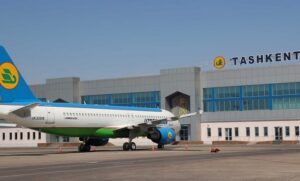
The Nikkei Asia news portal reported that the Japanese company Sojitz will invest in the construction of a new international airport in Tashkent.
According to the publication, Sojitz will start implementing the project this year. The construction is part of the company’s $1 billion infrastructure investment.
The Tashkent airport will be built in partnership with the Saudi company Vision Invest on the basis of a public-private partnership. Sojitz plans to invest tens of billions of yen, or hundreds of millions of dollars, in the project. The company has previously participated in international airport projects in Kumamoto and Okinawa prefectures, as well as on the islands of Palau.
“The project for a new airport in Uzbekistan was approved in August 2025. According to the plan, its opening is scheduled for 2028. The new airport will be able to handle up to 20 million passengers per year and provide more than 40 takeoffs and landings per hour, making it the largest in Central Asia,” the article notes.
Sojitz also plans to participate in other infrastructure projects in Uzbekistan. Together with the Turkish company Ronesans International, it plans to build a large 800-bed hospital, a 1 GW wind farm, and a 1.6 GW thermal power plant in Samarkand.
According to Nikkei Asia, Uzbekistan is the largest country in the region with a population of 37 million. Annual GDP growth exceeds 6%, and tax breaks and incentives are available for foreign investors. The corporate tax rate is 15%.
“As of October 2024, 54 Japanese companies are operating in Uzbekistan, twice as many as in 2019. In June, Sojitz opened its first official office in Tashkent,” the publication notes.
The article also notes that other Japanese companies are actively developing infrastructure projects in Uzbekistan. For example, Toyota Tsusho, through its subsidiary Eurus Energy Holdings, is exploring a site for a 500 MW wind farm and has signed an agreement with NEC to build data centers. Marubeni, in partnership with the UAE, is implementing a project to build a wastewater treatment plant.
In addition, Nikkei Asia reports that Uzbekistan is in talks with Japan’s Ministry of Economy, Trade, and Industry to expand cooperation in the extraction of mineral resources, particularly those of strategic importance.



