

Moutai (“Maotai,” a subspecies of China’s traditional baijiu spirits) has topped the global alcoholic beverage rankings for the eighth consecutive time, according to an annual study by Brand Finance.
The brand, owned by Kweichow Moutai Co. Ltd. is valued at $49.7 billion, with its value increasing 16% over the year.
Two more Chinese brands – Wuliangye ($30.3 bln, +5.4%) and Xinghuacun Fen Wine ($8.4 bln, +68%) – ranked second and third.
The fastest growing brands were tequila producers – Mexican 1800 ($424m, +111.5%) and US Casamigos ($934m, +108.5%). Tequila has been outpacing all other spirits in terms of market growth for several years now, notes Henry Farr, deputy director of Brand Finace.
The first place among beer brands in the world took Heineken: its value has increased by almost 10% – up to $7.6 billion. Corona Extra, which headed the list last year, fell to the second position, due to a less significant increase – by 6% to $7.4 billion. The third place was retained by Budweiser – the brand has added in value of almost 20%, reaching a mark of $6.7 billion.
The fastest growth in the beer and beer drinks segment was demonstrated by Chinese brands Zhujiang ($680 mln, +44%) and Tsingtao ($2.1 bln, +39%). Unlike other companies, Zhujiang Brewery did not increase the cost of its products, offering customers an optimal price-quality ratio. This increased demand for its products from young and price-sensitive consumers. Tsingtao’s success is due to the revision of its business model: in 2022, the brand owner opened more than 250 beer houses and presented a new customer-oriented strategy, according to Brand Finance.
In the category of “wine and champagne” the most expensive brand for the third time in a row became Moet & Chandon. Its value is estimated at $1.3 billion, which is 10% less than last year.
Its closest competitor – Chinese Changyu – on the contrary, managed to show a positive dynamics of 33% (up to $1.2 billion) and rise by two positions at once over the year. Despite the fact that this brand is little known in Western countries, Brand Finance experts do not rule out that in the future it may lead the rating due to the growth of the already voluminous wine drinks market in China.
The third line in the wine and champagne segment with an indicator of $1 billion was taken by the American brand Chandon (+8%).
The fastest growing brand in this category was Penfolds ($659 mln, +48%). The Australian company Treasury Wine Estates, which owns the brand, is currently making efforts to increase its global awareness and market share. Thus, the 2022 collection for the first time includes not only Australian, but also French and Californian wines.
Ministry of Economy and Trade has developed a draft resolution of the Cabinet of Ministers “On Amendments to the Annex to the Resolution of the Cabinet of Ministers of Ukraine No. 957 of October 30, 2008”, which provides for an increase in the minimum wholesale and retail prices for certain types of alcoholic beverages.
According to information on the website of the Ministry of Economy, the current size of the minimum wholesale and retail prices for alcoholic beverages was established by the relevant Cabinet of Ministers’ resolution No. 748 in September 2018, except for retail prices for sparkling wines and carbonated wine drinks.
“The changes that have occurred in the socio-economic and tax spheres, in particular, the growth of the expenditure component of prices (raw materials, components, energy, labor costs, etc.), as well as the change of excise tax rates for alcoholic beverages on March 1, 2022, have led to the fact that the size of minimum prices does not correspond to the real costs of economic entities for the production and sale of alcoholic beverages and requires adjustment,” – noted in the explanatory note to the document.
The new resolution proposes to increase the size of minimum wholesale and retail prices for certain types of alcoholic beverages depending on the code of products from the UKTVED, including retail prices for vodka and liquor products to increase by 13%, whiskey, rum and gin – by 25%, cognac (brandy) – by 11-12%.
The rates for wine products, in particular, ordinary (non-sparkling) wines will be increased by 62%; for cider, perry, wines, vermouth and other fermented beverages (including mixtures of fermented beverages and mixtures based on fermented beverages), the actual strength of which is higher than 1.2% of volumetric units of ethyl alcohol, but not higher than 22% of volumetric units of ethyl alcohol – by 61-71%; for sparkling wines and carbonated wine drinks – by 28%.
Notes to the Decree will be supplemented with a new paragraph, according to which the minimum retail price for wine products (except for cider and perry (without added alcohol), fermented drinks obtained exclusively as a result of natural fermentation of fruit, berry and fruit-berry juices, with alcohol content not exceeding 8.5% of volume units (without added alcohol) in Tetra-Pak and Bag in box packaging will be determined as a derivative of the approved minimum price for the corresponding products in glass containers with a capacity of 0.7 liters, in other containers with a capacity of 0.7 liters.
All changes in the descriptions of goods and their grouping by codes according to UKTVED will be harmonized with the Tax Code of Ukraine.

The Cabinet of Ministers of Ukraine at a meeting on Friday roughly doubled the fee for excise tax stamps for alcoholic beverages, tobacco products and liquids used in electronic cigarettes to cover costs associated with their production, storage and sale, the Finance Ministry said.
According to its release, the stamp for alcoholic beverages went up from 16 kopecks to 35 kopecks, for tobacco, electronically heated tobacco products (TIEN) and liquids used in e-cigarettes – from 9 kopecks to about 16 kopecks.
The cost of the excise tax stamp has not changed since 2014, the Ministry of Finance pointed out.
As reported, the Verkhovna Rada in January 2023 adopted in the first reading of the Eurointegration bills № 8286 and № 8287 on the introduction of electronic excise stamps for alcoholic beverages, tobacco products and liquids used in e-cigarettes. These legislative initiatives are implemented to ensure control over the turnover of excisable products.

The authorities of Amsterdam, meeting the wishes of the citizens, are tightening the rules for the use of drugs and alcohol on the streets, which have long attracted visitors with its freedom of morality.
In May, cannabis smoking will be banned outdoors in the Red Light District due to complaints from residents who are disturbed by the mess made by tourists. In addition, sex workers will begin to stop working and close their establishments at 3 a.m. Also from 2 am on Fridays and Saturdays restaurants and bars will be closed and from 1 am will be stopped to let new visitors in the quarters of the Old Town of Amsterdam.
So far, the sale of alcohol in the red-light district is prohibited from four in the morning from Thursday to Sunday. In addition the authorities will now require the owners of the stores at this time to remove alcohol from the windows, and in general from sight. It is already illegal to drink alcohol in most public places in Amsterdam.
Current Dutch law criminalizes the possession, production and sale of drugs. However, law enforcement authorities do allow cannabis to be sold in coffee shops, subject to strict rules. In particular, these establishments must not disturb public order and do not attract foreign drug dealers.
In addition, the Amsterdam city council will launch a campaign in the spring aimed at discouraging tourists from the city who come here specifically for alcohol, drugs and sex.
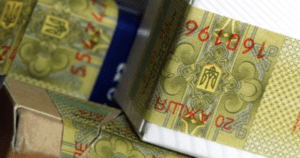
Ministry of Finance of Ukraine has submitted a proposal to the Cabinet of Ministers to increase the fee per excise tax stamp for alcoholic beverages to UAH 0.3205 from the current UAH 0.1926, and for tobacco products, tobacco-containing products for electric heating (TCHE) and e-cigarette liquids to UAH 0.1484 from UAH 0.091.
According to the text of the relevant government decree, which is available to the news agency Interfax-Ukraine, increase in price of excise stamps is necessary to compensate printing companies for the cost of their production and storage.
The Ministry of Finance in an explanatory memorandum to the draft decree states that the last time the cost of excise stamps for alcoholic beverages and tobacco products was revised more than 8 years ago and now their established value does not correspond to the actual cost of production.
For example, according to the stamp manufacturer, in 2022 alone, its costs for electricity for production are up 74% over 2021, 17% for heat, 107% for heating, 106% for hot water, and 6% for security.
“Prices per ton of paper in 2022, according to the commercial proposals of the National Bank of Ukraine, has already increased by more than 200%, and will increase in 2023 by at least 32.2% (since 2014, the price has increased 4.8 times),” the explanatory note to the draft resolution states.
In addition, the increase in the cost of energy and other resource components makes the issue of compensating the producer of stamps for the costs associated with their storage and sale relevant.
According to the document, 1.9 billion excise stamps for tobacco products and 0.56 billion stamps for alcoholic beverages will be produced by the end of 2022. At the same time for the first 9 months of this year 2.07 billion excise stamps were produced for the above products (2.91 billion in 2021).
Thus, the adoption of the draft decree would require next year for the Ukrainian producers and exporters of alcoholic beverages 71.6 million UAH (0.56 billion pieces * 0.1279 UAH) of additional costs, and for tobacco products – 108.3 million UAH (1.9 billion pieces * 0.057 UAH).

Imports to Ukraine of foreign alcoholic products labeled “Cognac”/”Cognac” have been suspended since November 1, 2022, as this name no longer meets the technical conditions for this drink, provided for by the Ukraine-EU Association Agreement.
As reported on the website of the Ministry of Agrarian Policy and Food of Ukraine on Tuesday, this agreement, which entered into force on September 1, 2017, provides for mutual protection between the countries of a certain number of geographical indications (GI) in Ukraine, among which there is Cognac.
Thus, from November 1, the use of the name “Cognac” / “Cognac” in Ukraine for products originating from third countries no longer meets the technical requirements for the production of the drink “Cognac” and is now prohibited on the territory of Ukraine.
It is recalled that on January 24, 2022, as a result of the adoption of new regulations that include GI protection, the name “Cognac” / “Cognac” was included in the customs register, which is a prerequisite for the introduction of GI protection on the territory of Ukraine.
In addition, a transitional period has been established so that importers can change the labels on their products to comply with this GI. The transitional period has been extended until October 31, 2022 (inclusive), taking into account the aggression of the Russian Federation and the imposition of martial law in Ukraine.
“Starting from November 1, 2022, the Ukrvinprom Corporation, together with the National Interprofessional Bureau of Cognac, is responsible for the protection of the State Institution Cognac in the country and abroad and will take the necessary measures against products imported and presented under the name Cognac / Cognac “if they do not meet the technical conditions established for this GI in accordance with the Association Agreement signed between the EU and Ukraine,” summed up the Ministry of Agrarian Policy.



