
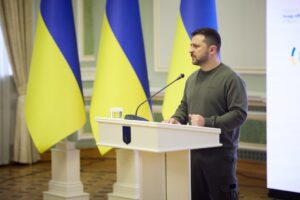
Ukrainian President Volodymyr Zelenskyy accepted letters of credence from the newly appointed ambassadors of Bulgaria, Estonia, India, and Germany and congratulated them on the start of their missions in Ukraine.
“He discussed diplomatic efforts to bring about peace and the importance of supporting Ukraine amid intensified Russian shelling and preparations for winter,” according to the president’s Telegram channel.
According to reports, they discussed shared priorities: the development of trade and economic relations and specific areas of cooperation—“everything that can make our nations stronger.”
“I am grateful to all partners who are truly helping Ukraine,” Zelenskyy emphasized.
Ukrainian President Volodymyr Zelenskyy continues to overhaul the diplomatic corps, a process that is gradually extending to include not only countries in the European Union and the Western Balkans but also nations in Asia and the Middle East.
On August 6, the president dismissed four ambassadors at once: Vasyl Kyrylych in Croatia, Volodymyr Shkurov in Albania, Oleg Gerasymenko in Montenegro, and Markiyan Chuchuk in Pakistan.
The relevant personnel decisions were formalized by decrees No. 709/2026–No. 712/2026.
According to the Experts Club think tank, the simultaneous replacement of the heads of four diplomatic missions appears to be part of a broader restructuring of Ukraine’s foreign policy apparatus, rather than an isolated personnel move.
As early as May 18, Zelenskyy had spoken of the need for “replacements and adjustments” within the diplomatic corps, and on July 15, he explicitly stated that he was discussing with First Deputy Head of the Office of the President Serhiy Kyslytsya and Minister of Foreign Affairs Andriy Sybiga a list of Ukrainian ambassadors who needed to be replaced.
The rotation began even before a series of decisions were made in August. Specifically, on June 26, the president dismissed the Ukrainian ambassadors to Oman, Cyprus, Vietnam, and Cambodia. At the same time, new appointments were made to other diplomatic posts.
Thus, this represents a gradual renewal of Ukraine’s network of diplomatic missions over the course of several months.
Three of the four ambassadors had served for more than six years
The length of the diplomats’ tenures also suggests that the August decisions should be viewed primarily in the context of rotation.
Vasyl Kyrylych was appointed Ukraine’s ambassador to Croatia on December 24, 2019, and served in Zagreb for more than six and a half years.
Volodymyr Shkurov took the helm of the Ukrainian Embassy in Albania on April 13, 2020, and also served for over six years.
Markiyan Chuchuk was appointed Ukraine’s ambassador to Pakistan on April 17, 2020. His diplomatic mission lasted over six years.
Oleg Gerasymenko headed the Ukrainian Embassy in Montenegro starting May 4, 2022—a little over four years.
The very fact that three of the four diplomats held their posts for such a long time is further evidence supporting the theory of a planned personnel rotation. The published decrees do not specify the reasons for the dismissals.
It is particularly telling that three of the four August decisions concern Southeast Europe—Croatia, Albania, and Montenegro.
Experts Club notes that the importance of this region for Ukrainian diplomacy has grown significantly.
Croatia is a member of the EU and NATO and remains one of Ukraine’s steadfast partners. Croatia’s experience with postwar reconstruction, demining, the return of the population, and the integration of territories following the conflicts of the 1990s is also important for Kyiv.
Albania is also a NATO member and actively supports Ukraine in international forums. Tirana hosted one of the previous summits in the “Ukraine–Southeast Europe” format.
Montenegro presents another area of interest. It is a NATO member and, at the same time, the most promising candidate for EU accession among the countries of the Western Balkans. Therefore, relations with Podgorica are becoming important for Kyiv in the context of its own European integration.
On July 15, Kyiv hosted the fifth “Ukraine–Southeast Europe” summit, attended by representatives from Albania, Croatia, and Montenegro. The participants reaffirmed their support for Ukraine and the need to expand regional cooperation.
Against this backdrop, the nearly simultaneous replacement of three Ukrainian ambassadors to Balkan countries may indicate Kyiv’s desire to inject additional momentum into this direction.
Of the three Balkan appointments, Montenegro may prove to be the most interesting.
Podgorica expects to conclude negotiations on accession to the European Union and become one of the next new EU members. For Ukraine, which is also negotiating membership, Montenegro’s experience could be of practical value.
In addition, Ukraine is gradually building a separate network of relations with countries in the Adriatic region—Croatia, Montenegro, Albania, and neighboring Serbia.
The most recent example is Zelenskyy’s official visit to Belgrade on August 8 and his talks with Serbian President Aleksandar Vučić, during which they discussed free trade, energy, agriculture, Ukraine’s recovery, and political cooperation.
Thus, the Balkans are gradually transforming from a secondary focus of Ukrainian diplomacy into an independent regional track.
The replacement of the ambassador to Pakistan presents a completely different challenge.
Islamabad is important to Ukraine as one of the largest centers in South Asia and a representative of the so-called Global South. Pakistan’s population is approaching 250 million; the country wields significant regional political influence and is a nuclear power.
At the same time, Pakistan’s foreign policy is based on a complex system of relations with China, the United States, Turkey, Saudi Arabia, India, Russia, and the Gulf states.
For Ukraine, expanding ties with Pakistan could be significant in several areas at once—food trade, industry, international organizations, and building support for Kyiv among Asian nations and the Muslim world.
As Ukraine’s foreign policy increasingly shifts away from focusing exclusively on the EU and the U.S., embassies in countries such as Pakistan, India, the Gulf states, Indonesia, and African nations are gaining greater importance.
That is precisely why replacing the ambassador in Islamabad after a mission lasting more than six years appears to be a logical part of the renewal of Ukraine’s Asian policy.
The August dismissals are likely not the end of the process.
As early as July 15, Zelenskyy publicly spoke about forming a “pool of ambassadors” slated for replacement. This suggests that new personnel decrees may be issued in the coming weeks.
At the same time, the current diplomatic rotation coincides with more extensive personnel changes in Ukraine’s government system, which took place in July and affected the government, security agencies, and other state institutions.
According to Experts Club, what matters most will not be the number of diplomats dismissed, but who Kyiv appoints to replace them.
If key posts are filled not only by career diplomats but also by former ministers, representatives of the Office of the President, economic negotiators, or prominent public figures, this could signal Ukraine’s transition to a model of so-called “political diplomacy,” in which embassies are assigned more specific economic, investment, and negotiating tasks.
As of August 10, 2026, presidential decrees appointing new Ukrainian ambassadors to Croatia, Albania, Montenegro, and Pakistan have not been published.
Experts Club believes that future appointments will provide a clearer understanding of the logic behind the current rotation.
If diplomats with significant European and economic experience are sent to Zagreb, Tirana, and Podgorica, this will confirm a strengthening of the Balkan focus. The appointment to Islamabad of a specialist in Asian affairs, trade diplomacy, or relations with the Global South, in turn, could signal an expansion of Ukraine’s activities beyond its traditional circle of Western partners.
Overall, the current rotation signals a transition of Ukrainian diplomacy to a new phase: after four years of full-scale war, embassies are now expected not only to secure international support for Ukraine but also to work toward EU membership, the country’s recovery, exports, attracting investment, and forging long-term regional alliances.
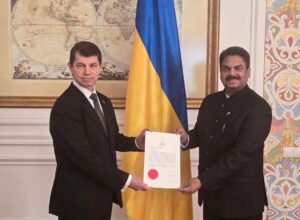
Oleksandr Mishchenko, Ukraine’s Deputy Minister of Foreign Affairs, accepted copies of the credentials from Anjani Kumar, the newly appointed Ambassador of the Republic of India to Ukraine. According to the press service of the Ukrainian Ministry of Foreign Affairs, the parties emphasized the importance of further developing bilateral cooperation and maintaining regular political dialogue at all levels.
The Deputy Minister emphasized Ukraine’s expectations that India play a more active role in promoting the restoration of a just and lasting peace in Ukraine and in holding the aggressor state accountable for the crimes it has committed.
“The parties discussed the agenda for upcoming high-level events, particularly in the context of implementing the agreements reached during Indian Prime Minister Narendra Modi’s visit to Ukraine on August 23, 2024,” the statement reads.
Special attention was paid to the development of interparliamentary cooperation and the further strengthening of collaboration in the humanitarian sphere. The parties also discussed ways to intensify bilateral economic cooperation and restore positive momentum in contacts between business representatives of the two countries.
“Following the meeting, the parties agreed to continue active cooperation and promote the further development of Ukrainian-Indian relations in areas of mutual interest. Oleksandr Mishchenko wished the Ambassador of the Republic of India success in his diplomatic mission in Ukraine and the achievement of significant results for the benefit of both countries and their peoples,” the Ministry of Foreign Affairs added.
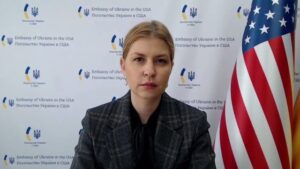
Ukrainian President Volodymyr Zelenskyy has signed a decree relieving Olga Stefanishyna of her duties as Ukraine’s Ambassador Extraordinary and Plenipotentiary to the United States.
The corresponding decree, No. 696/2026, has been published on the president’s website.
In a Facebook post, Stefanishyna announced that she had decided to step down as Ukraine’s ambassador to the United States due to personal circumstances.
“This is my own decision, dictated by personal circumstances that I have mentioned previously,” she noted.
According to Stefanyishyna, representing Ukraine in Washington during a full-scale war was the greatest honor of her life.
At the same time, the diplomat emphasized that the main tasks she came to Washington to accomplish have been fulfilled. In particular, she said, she succeeded in increasing U.S. arms supplies and maintaining support for Ukraine amid changes in the U.S. political landscape, enshrining that support in law, and shifting Ukraine’s role “from a country that receives aid to a country in which investments are made and whose technologies are purchased.”
Stefanyishyna also stated that she would comment separately and publicly on issues that have recently been raised in the media, and assured that she would continue to work for the benefit of Ukraine “wherever she can be of use.”
Olga Stefanyishyna was born on October 29, 1985, in Odesa. In 2008, she graduated from Taras Shevchenko National University of Kyiv with a degree in international law and as an English translator; in 2016, she received a specialist degree in finance and credit from Odesa National Economic University.
From 2006 to 2007, she worked in private legal practice. Since 2007, she has worked at the Ministry of Justice of Ukraine, where she held positions in departments responsible for European integration and international law. From 2017 to 2019, she headed the Office for European and Euro-Atlantic Integration at the Secretariat of the Cabinet of Ministers of Ukraine.
In June 2020, the Verkhovna Rada appointed Stefanyishyna as Deputy Prime Minister for European and Euro-Atlantic Integration of Ukraine and included her in the National Security and Defense Council.
In 2021, Stefanyishyna was appointed to the Political Council of the “Servant of the People” party.
In 2024, the Verkhovna Rada appointed Stefanyishyna as Minister of Justice of Ukraine following the dismissal of Denys Malyuska. She retained her position as Deputy Prime Minister for European and Euro-Atlantic Integration.
In July 2025, Stefanyishyna lost her positions as Minister of Justice and Deputy Prime Minister following the resignation of Denys Shmyhal’s government. Subsequently, President Volodymyr Zelenskyy appointed her as the President of Ukraine’s Representative for the Development of Cooperation with the United States, and in August 2025, as Ambassador Extraordinary and
Ambassador Extraordinary and Plenipotentiary of Ukraine to the United States.
On July 23, 2026, Zelenskyy announced that he had offered Yulia Svyrydenko the position of U.S. Ambassador to Ukraine.
AMBASSADOR, DIPLOMACY, Stefanyishyna, UKRAINE, UNITED STATES
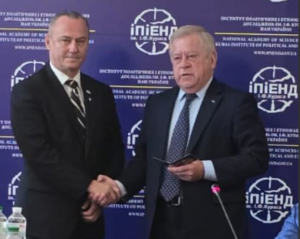
Eduard Burash, Transcarpathia’s Ambassador to Slovakia, has become an advisor to Anatoliy Kinakh, President of the Ukrainian Union of Industrialists and Entrepreneurs (USPP), on issues of trade, economic, and investment cooperation between Ukraine and the Slovak Republic, Eduard Burash himself told Open4Business.
Burash is actively involved in organizing humanitarian aid for the Zakarpattia region and other regions of Ukraine.
In his new capacity as advisor to the USPP president, Burash has already participated in a meeting of the Council on the Reconstruction of Ukraine, which operates as part of the global organization of world leaders Lives Amplified. The meeting took place at the I.F. Kuras Institute of Political and Ethno-National Studies.
Eduard Burash has been involved in the development of Ukrainian-Slovak cooperation for many years. He is the ambassador of Zakarpattia to Slovakia; previously, he served as an advisor to the Prime Minister of Slovakia on cross-border cooperation with Ukraine, an advisor to the Slovak Ombudsman on child protection, and the authorized representative of the city of Košice for the development of cross-border cooperation with Uzhhorod and Zakarpattia Oblast. Burash also heads the FEMAN association and has been a long-time organizer of the Days of Ukraine in Košice. In addition, for over 10 years he has been the organizer of the Days of Ukraine in
Košice, which have featured meetings, conferences, and events involving Ukrainian and Slovak entrepreneurs.
The Ukrainian Union of Industrialists and Entrepreneurs is a nationwide public organization that brings together representatives of business, industry, entrepreneurial structures, and employers. The organization is headed by former Prime Minister of Ukraine Anatoliy Kinakh.
ADVISOR, AMBASSADOR, PRESIDENT, SLOVAKIA, Transcarpathia, UUIE, Едуард Бураш
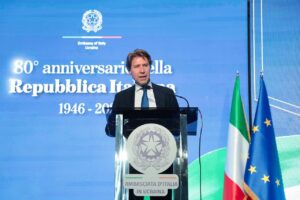
Italy has been, is, and will remain by Ukraine’s side in its struggle for freedom, sovereignty, and a European future, stated the Italian Ambassador to Ukraine during a reception marking the 80th anniversary of Italy’s independence.
The event took place in Kyiv at the Parkovy Exhibition and Convention Center and was attended by representatives of the Ukrainian government, the diplomatic corps, the Italian community, the business sector, and embassy partners.
At the beginning of his speech, the ambassador called on those present to observe a moment of silence in memory of those who lost their lives in a war they did not choose.
The diplomat recalled that 80 years ago, Italians were emerging from fascism, war, and occupation and had to answer a fundamental question: what kind of country they wanted to be after what they had endured.
“They understood in the most concrete way what is lost when freedom is taken away. And it was from this understanding, not from an abstract idea, that our Republic was born,” said the ambassador.
He emphasized that the Italian Constitution rejects war, and in 1946, women voted for the first time—not as a concession, but as a fundamental act in the creation of a new state.
“For Italians in 1946, freedom was not a gift—it was an achievement won at the cost of sacrifice,” the diplomat noted.
According to him, today’s Ukraine reminds Italy of its own historical experience.
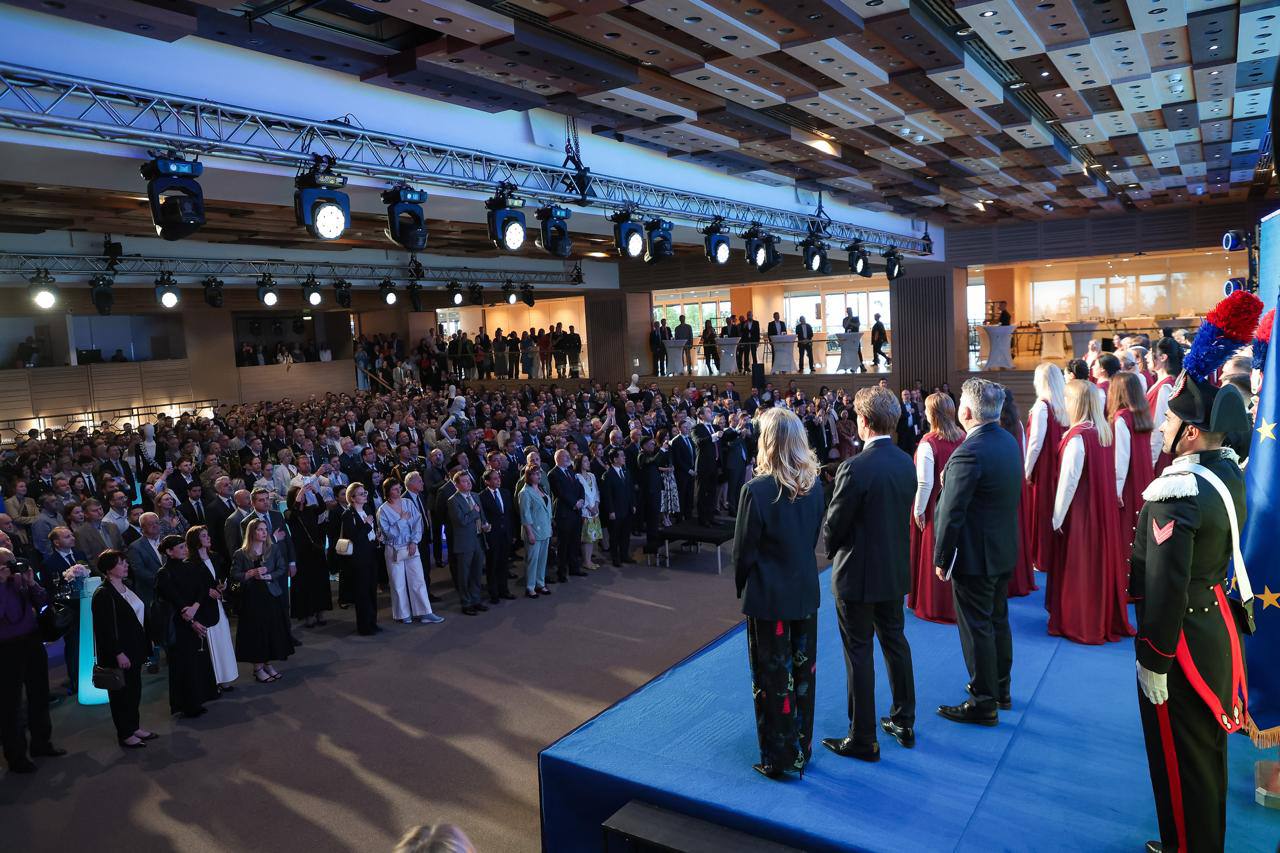
“Like our grandfathers and fathers, you are going through a moment when freedom ceases to be just a word and becomes a choice. A daily, concrete, and costly choice. A choice that is reaffirmed day after day, under bombs, with a sense of dignity that those who are not here can hardly even imagine,” the ambassador said.
He emphasized that Ukraine is defending not only itself but also principles that are important for all of Europe.
“Ukraine is not only defending itself; it is fighting for what concerns us all: for the principle that brute force cannot be an argument. For the fact that sovereignty is not up for debate. For the fact that a people has the right to choose its own future,” the diplomat stated.
The ambassador emphasized that these very principles form the foundation of the Italian Republic, which is why Italy has supported Ukraine from the very first day of Russian aggression.
“Italy has stood by you from the very first day of Russian aggression—not out of generosity, but out of consistency and deep commitment to our values,” he said.
The diplomat assured that Italy will continue to support Ukraine on the political, economic, military, and humanitarian levels, and will also make efforts to ensure that Ukraine takes its rightful place in the European Union.
He thanked Ukrainian partners for their cooperation and friendship, the Italian community in Ukraine for representing Italy with dignity, Italian government officials in Ukraine for their work, and the sponsors who made the celebrations possible.
The ambassador also noted that in the evening, the Independence Monument on Independence Square in Kyiv is illuminated in the colors of the Italian tricolor.
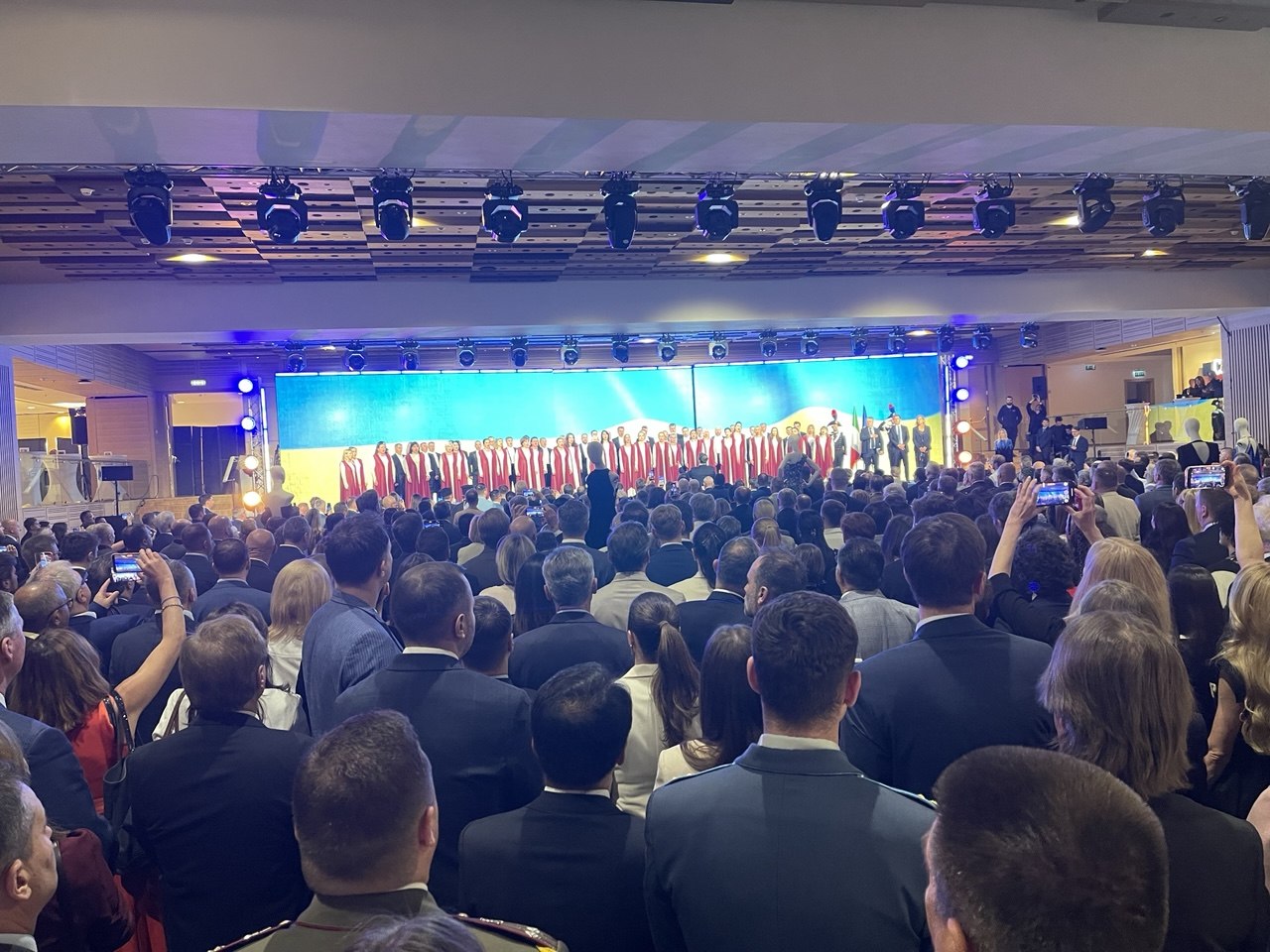
“That column, reminiscent of the columns the ancient Romans erected in memory of great feats, is illuminated tonight in our colors. As a sign of great respect, but above all as a recognition of the deep commonality of our values,” he said.
The diplomat dedicated a separate part of his speech to Leon Ginzburg, who was born in Odesa and became one of the most prominent intellectuals of anti-fascist Italy.
“In one person, he was both Ukrainian and Italian. In one person, he embodied everything we are talking about tonight,” the ambassador noted.
He quoted Ginzburg’s words: “You have your wings. I don’t know exactly how big they are, but you have them. Try to take flight. You won’t fall. And even if you do fall, you will learn to fly as you fall.”
“Ukraine has already spread its wings. The world knows this. Italy is and will remain by its side as Ukraine flies toward the peaceful and prosperous future it deserves,” the ambassador said.
Italy recognized Ukraine’s independence on December 28, 1991, and diplomatic relations between the two countries were established on January 29, 1992. According to the Italian Embassy, the Italian Embassy in Kyiv was opened that same year, and since the early 2000s has been located on Yaroslaviv Val Street. The Embassy of Ukraine in the Italian Republic was established in Rome in 1993.



