
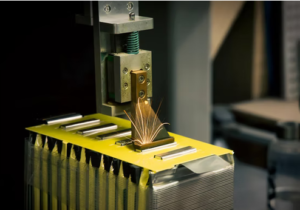
According to “Serbian Economist”, the Chinese company Reliance plans to invest 100.5 million euros in the construction of a high-tech battery manufacturing plant in the Serbian city of Indija; the project is expected to create about 250 jobs, Serbian President Aleksandar Vučić announced on August 20.
According to him, the plant will produce batteries for unmanned aerial vehicles, autonomous vehicles, robots, household appliances, and other devices.
“We are talking about a high-tech company, one of the world’s best in the production of batteries for drones, autonomous vehicles, robots, household appliances, and other devices,” the publication Danas quoted Vučić as saying, citing his interview with Radio and Television of Serbia (RTS).
A framework agreement with the investor is expected to be signed in late August 2026, and construction work could begin as early as late October.
Vucic clarified that Reliance was one of 14 companies with whose representatives the Serbian side held talks during his most recent trip to China.
Judging by the name and the product profile described by the president, this refers to Jiangsu Reliance New Energy Technology Co., Ltd., which operates under the Reliance Battery brand. However, the Serbian authorities have not yet publicly disclosed the full legal name of the investor in the Indija project.
According to Reliance itself, the company was founded in Changzhou, China, in November 2021 and specializes in the development and production of high-power cylindrical lithium-ion cells. It manufactures 21700 and 46-series cells based on NCA and LFP, and conducts research into semi-solid-state and solid-state batteries as well as dry-electrode technology.
The company explicitly lists drones, eVTOLs, humanoid and logistics robots, power tools, household cleaning equipment, electric motorcycles and bicycles, automobiles, backup power systems, and specialized equipment among the applications for its batteries.
Thus, if the project is implemented, India will gain another high-tech manufacturing facility related to the electrical engineering industry. The city has already established a large industrial cluster between Belgrade and Novi Sad. In particular, in April 2025, Europe’s first factory of the Japanese company JFE Shoji, worth over 50 million euros, began operations here; it manufactures motor cores for home appliances and the automotive industry.
The Toyo Tire Serbia plant also operates in Inji, and in 2026, the Japanese company began construction here on a new European research and development center worth 29 million euros.
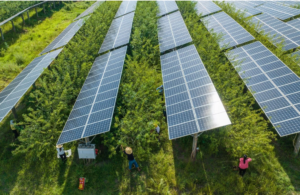
China will gradually introduce a consumption tax on lithium and lithium-ion batteries, as well as solar cells, which have been exempt from taxation since 2015, according to the Xinhua News Agency.
Mercury-free, nickel-metal hydride, lithium, and lithium-ion batteries, as well as vanadium flow batteries, will be taxed at a rate of 2% starting September 1, 2026. Starting in September 2027, the rate will increase to 4%.
For photovoltaic, or solar, cells, a 2% tax will take effect on April 1, 2027, and will also be raised to 4% starting in April 2028.
The new rules were announced by China’s Ministry of Finance, the General Administration of Customs, and the State Taxation Administration.
The introduction of the tax could increase the production costs of batteries and solar cells in China. If manufacturers pass on the additional costs entirely to buyers, selling prices could rise by approximately 2% in the initial phase and up to 4% once the rate is fully implemented.
However, the actual price increase will depend on competition, corporate profitability, and contracts with buyers. Chinese manufacturers may absorb part of the costs themselves to avoid losing market share in both domestic and foreign markets.
The changes will potentially affect the cost of electric vehicles, energy storage systems, and solar power plants, as batteries and photovoltaic modules are among the key components of such projects. At the same time, due to the high proportion of other costs, the price of a finished electric vehicle or solar power plant will not necessarily increase by the full 4%.
Some promising technologies will remain temporarily exempt from the tax until December 2028. These include sodium-ion and solid-state batteries, fuel cells, as well as perovskite, tandem, and gallium arsenide solar cells.
China currently levies a 4% consumption tax on most battery products. At the same time, lithium and lithium-ion batteries, as well as solar and fuel cells, have been exempt since 2015.
This policy has facilitated rapid expansion of production capacity and helped Chinese companies become global leaders. However, the excess supply has simultaneously intensified price competition and reduced profitability for some manufacturers.
Analysts at Citic Securities estimate that the tax changes could generate an additional 45 billion yuan, or about $6.6 billion, in revenue for the Chinese government.
Following the announcement of the new rules, shares of solar cell manufacturer Longi Green Energy Technology rose 2.1%, JinkoSolar’s rose 4%, and those of CATL, the world’s largest battery manufacturer, rose 4.6%.
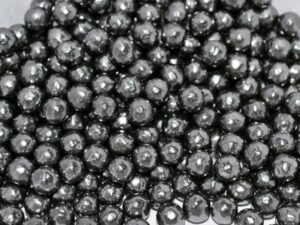
In January–June 2026, Ukraine reduced imports of lead and lead products by 74.4% compared to the same period last year, down to $1.027 million.
According to customs statistics, imports of lead and lead products in June totaled $68,000.
Exports of lead and lead products for January–June of this year rose by 9.2% to $4.872 million, and in June, they totaled $1.054 million.
As previously reported, in 2025, Ukraine increased its imports of lead and lead products by a factor of 3.3 compared to 2024, reaching $7.801 million. Exports of lead and lead products in 2025 decreased by 17.8% to $9.377 million.
Lead is currently used primarily in the production of lead-acid batteries for the automotive industry. In addition, lead is used in the manufacture of bullets and certain alloys.
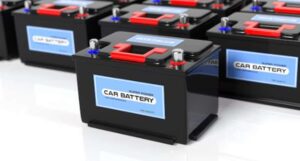
Imports of electric batteries and separators to Ukraine in January–March 2026 increased 3.8-fold compared to the same period in 2025—to $833.9 million, according to data from the State Customs Service.
The main supplier of these products in the first quarter was China, from which $736.8 million worth of batteries were imported, accounting for 88.4% of total imports. Products were also supplied from the Czech Republic ($19.7 million) and Taiwan ($11.9 million).
In January–March of last year, the largest suppliers were China with a 79.2% share, Bulgaria with 5.3%, and Taiwan with 3.8%.
In March 2026, battery imports increased 4.4-fold compared to March 2025, but decreased by 8.6% compared to February of this year—to $282 million.
At the same time, battery exports from Ukraine over the three-month period totaled $11.4 million, compared to $11 million a year earlier. The main export destinations were Poland — $3.3 million, France — $2 million, and Germany — $1.7 million.
As reported, at the end of July 2024, Ukraine exempted imports of electric generator equipment and batteries from customs duties and VAT. By the end of 2025, battery imports into Ukraine had grown by 55% compared to 2024—to $1.48 billion.
Source: https://expertsclub.eu

According to Serbian Economist, the authorities in Subotica have issued a permit for preparatory work prior to the construction of a mega-factory for the production of lithium-iron-phosphate (LFP) batteries.
The investor in the project is ElevenEs d.o.o. Subotica. The permit obtained relates specifically to site preparation—soil preparation, demolition of existing structures, and creation of ancillary infrastructure. A separate permit will be required for the construction of the production and auxiliary facilities themselves.
According to published data, the complex is planned on cadastral plot 36916/1 (Donji Grad) on a 178,001 sq. m. plot of land privately owned by the investor. The total gross area of the future facilities is stated at 24,607 square meters. The preliminary cost of preparatory work is estimated at 116.55 million dinars (excluding VAT), and work can begin after the decision comes into force and notification of the start of work is submitted.
The project for a mega LFP battery plant in Subotica, previously referred to as the first factory of its kind in Europe, was announced in 2023. According to earlier estimates, the total investment could amount to around €1 billion, and employment could reach around 1,000 people. In the first phase of hiring, ElevenEs planned to hire approximately 350 employees. At the same time, in 2025, industry reports also mentioned a target investment of EUR 700 million in two phases and about 1,000 jobs in the context of a declaration of support signed by the company with representatives of the European Commission and the Serbian Development Agency.
The declared capacity of the plant in Subotica is 1-2 GWh per year (depending on the production program), with a daily output of 3,000-8,000 batteries (depending on the type). The plan is to produce prismatic LFP blade cells (with side terminals), without nickel and cobalt, for stationary energy storage systems (wind, solar, etc.) and electric transport, including buses and trucks.
The project is important for Serbia’s economy as it integrates the country into the European energy storage supply chain, a segment that is accelerating along with the growth of renewable energy and electric vehicles. LFP technology is generally considered by the market to be a more affordable and thermally stable alternative to nickel and cobalt batteries, which increases the attractiveness of local production for mass applications and energy systems.
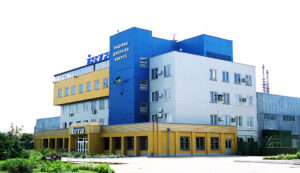
Battery manufacturer Ista-Center JSC (Dnipro) ended 2022 with a loss of UAH 12.78 million, while in 2021 the net profit was UAH 154.85 million, according to preliminary data. According to the information for the agenda of the general meeting of SA’s shareholders, which is scheduled for April 19, published in the NCSSM’s disclosure system, by the beginning of this year the company had a small undistributed profit (UAH 0,027 mln).
The shareholders plan to cover the loss incurred last year at the expense of the profit of the previous years.
According to the publication, for 2022, the company decreased its current liabilities 4.5 times to UAH 6.88 mln, while long-term liabilities decreased 10% to UAH 2.59 mln.
Ista Center’s assets decreased by 11.3% during the year, to UAH 268.62 mln, mainly due to the reduction in total accounts receivable by 2.5 times, to UAH 17.6 mln, and cash to UAH 0.14 mln instead of UAH 3.84 mln.
The equity capital of the JSC by the beginning of 2023 amounted to UAH 256,35 mln, the authorized capital – UAH 128,17 mln.
The agenda of the meeting includes, in particular, the issues of re-electing the supervisory board and auditing commission, approval of the main activity (production of batteries and accumulators) and plans for 2023.
“Ista-Center, which has been operating since 1995, is one of the plants producing starter batteries of Ista group in Dnipro (the other is DOZ Energoavtomatika).
According to the company’s financial report for 2021, which was published on its website February 1 this year, its net profit then increased 21-fold to 154.85 mln hryvnia, while its net income fell 16% to 173.62 mln hryvnia.
At that, 36.5% out of sold 195.1 thsd conventional batteries were exported, including 25.78% – to the former CIS countries, 10.08% – to EU countries (except Poland).
The company also reported about mastering the production of polypropylene-cased batteries for the needs of the Ministry of Defense.
The company has not yet announced the results of its activities in 2022.
At the beginning of 2022, the company employed about 130 people.



