

According to Serbian Economist, the American conservative organization CPAC (Conservative Political Action Conference), which has close ties to the U.S. Republican Party and President Donald Trump’s political circle, will hold the first CPAC Balkans conference in Belgrade from November 18 to 21, 2026. Serbian President Aleksandar Vučić will be the keynote speaker at the event.
This will be the first time the conference is held in Southeast Europe, and it will bring together conservative politicians, representatives of civil society organizations, experts, and supporters of right-wing political movements from the Balkan states. The organizers intend to discuss issues of national sovereignty, economic policy, free enterprise, traditional values, and international cooperation.
One of the central themes will be energy security in the Balkan region. According to CPAC, increased supplies of American energy resources could help diversify energy imports and reduce the Balkan states’ dependence on individual suppliers.
The organizers view the United States as a potential partner for countries in the region in ensuring energy independence. Discussion of this issue is of particular importance for Serbia, which continues to diversify its natural gas supply sources and develop energy cooperation with foreign partners.
CPAC Chairman Matt Schlapp stated that the organization welcomes the holding of the first Balkan conference in Serbia. He highlighted the role of Aleksandar Vučić in developing strategic cooperation between Belgrade and Washington and expressed satisfaction with his upcoming speech.
According to Schlapp, conservative political movements have achieved significant success in North and South America, as well as in Japan. The organizers expect that hosting CPAC Balkans will help expand the international networks of European conservative organizations.
CPAC has already held international conferences in Hungary, Japan, Brazil, Mexico, Australia, Israel, Argentina, Paraguay, Poland, the United Kingdom, and Italy. The Belgrade meeting will mark the next step in expanding the organization’s international network.
The choice of Serbia as the conference venue reflects the desire of American conservative circles to expand their political presence in the Balkans and strengthen ties with the leadership of countries in the region.
The names of the remaining participants and the detailed conference program have not yet been published. The organizers promise to release them in the coming weeks.
CPAC is not a U.S. government agency or an official body of the Republican Party, although its events are traditionally attended by leading figures from the American political right, including Donald Trump.

According to the Serbian business media outlet Parametar, the Ukrainian chain of frozen prepared foods stores, Multi Cook, has launched operations in Serbia. The first store opened in Belgrade at Dunavska 2.
The chain’s founder, Volodymyr Matviychuk, announced the entry into the Serbian market.
“Serbia is our newest country on the Multi Cook map. Today, Multi Cook is much more than just a franchise. It is a global Ukrainian product,” the entrepreneur wrote.
The Multi Cook product line features frozen, home-style semi-prepared foods: varenyky, pelmeni, pancakes, syrniki, cutlets, stuffed cabbage rolls, and other ready-to-cook dishes.
Multi Cook was launched in 2022 and is linked to the history of the well-known Ukrainian chain “Galya Baluvana.” It was founded in Lutsk in 2018. Later, the co-owners began developing international projects independently: Matviychuk focused on Multi Cook, while Alla and Oleksandr Teliga focused on the Wesoła Pani brand.
In 2025, Matviychuk announced his departure from the “Galya Baluvana” brand and the further development of his own brands: Multi Cook, GABAR, and MultiBar.
Currently, Multi Cook has over 270 stores in Europe, the U.S., Canada, the U.K., and other countries. Some locations operate under the MultiBar brand—in this format, customers can not only purchase products but also order ready-to-eat meals.

According to “Serbian Economist”, Wizz Air will open an operational base at Pristina International Airport in November 2026, stationing one Airbus A321neo aircraft with a capacity of 239 passengers there. The company plans to launch three new routes from Pristina.
Wizz Air has been operating flights from Pristina since 2017. The opening of a full-fledged base means that the aircraft and crew will be permanently based at the airport.
The Belgrade base is under threat
At the same time, Wizz Air continues its dispute with Serbian aviation authorities over changes to the rules governing foreign carriers.
In March 2026, the Serbian Civil Aviation Directorate adopted amendments to the regulations governing the issuance of permits to foreign airlines for international commercial operations.
According to Wizz Air’s interpretation, the new rules will not allow EU-registered carriers to maintain their current model of basing aircraft and crews in Belgrade, under which work shifts and flight rotations begin and end in Serbia.
Wizz Air Communications Director András Rado stated in June that unless the rules are changed, the company will be forced to close its base at Belgrade Airport in November. He emphasized, however, that the carrier does not want to leave.
Serbia’s Civil Aviation Directorate rejected the accusations, stating that no carrier is prohibited from operating flights between Serbia and EU countries. According to the regulator, the amendments do not restrict the right to operate flights but rather clarify the rules, which are the same for all foreign airlines.
As of mid-July, no final decision had been reached.
The closure of the Belgrade base would not necessarily mean a complete halt to Wizz Air’s flights to Serbia. The company could theoretically continue some flights using aircraft based in other countries. However, such a model typically results in fewer destinations, less convenient schedules, and limited opportunities to increase flight frequency.
Serbia does not recognize Kosovo’s independence, declared in 2008, and officially considers it an autonomous province of Kosovo and Metohija within the Republic of Serbia.
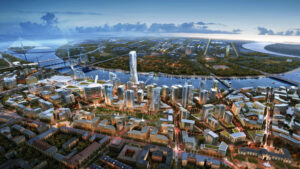
According to Serbian Economist, based on the latest data for the first quarter of 2026, Belgrade’s office market remains one of the most stable in Southeast Europe: vacancy rates are low, rents are rising, new supply is limited, and the bulk of future construction is concentrated in New Belgrade.
According to CBS International / Cushman & Wakefield, no new office buildings were completed in Belgrade during the first quarter of 2026, and the total modern office stock remained at 1.457 million square meters. Approximately 120 thousand square meters are currently under construction, of which about 47 thousand square meters are expected to be completed by the end of 2026. About 65% of the stock under construction is Class A.
The vacancy rate remains moderate at 5.53% for the market as a whole. This is a comfortable level for landlords and an indication that the market is not overheated by new supply.
Rental rates for Class A offices in Belgrade in the first quarter of 2026 ranged from 16.5 to 18.5 euros per square meter per month, while rates in the best prime-class buildings exceeded 19 euros per square meter per month. For Class B offices, the range was 12–14 euros/sq. m per month.
Key trend: Tenants are willing to pay more for new, energy-efficient, and well-located buildings, especially in New Belgrade. At the same time, older and lower-quality properties are not seeing the same price momentum.
In the first quarter of 2026, take-up totaled 23.09 thousand square meters. This is a modest figure for the start of the year, and the structure of demand indicates more cautious behavior on the part of tenants. Transactions of up to 500 square meters dominated the market, and the average transaction size decreased from 740 square meters at the end of 2025 to 608 square meters in the first quarter of 2026.
In its forecast for the SEE market, CBRE notes that Belgrade’s office stock grew by approximately 7% in 2025, and further expansion will proceed gradually, primarily in New Belgrade. Notable projects in the pipeline include Delta Tower, Panorama Office, Afi City Zmaj North and East, West Gate, and others.
It is important to note the difference in methodologies: CBS/Cushman & Wakefield estimates Belgrade’s total modern office stock at approximately 1.46 million square meters, while CBRE, in a separate report on Q1 2026, cites more than 1.104 million square meters of modern speculative office space. The discrepancy stems from the fact that companies may account for their own buildings, mixed-use projects, speculative stock, and the total modern stock in different ways.
Belgrade is not following the pattern seen in many Western markets, where office vacancy rates rose sharply after the pandemic. The reasons are different: a smaller volume of older institutional office stock, limited new supply, a concentration of demand in modern buildings, and the continued importance of the office for the IT sector, the financial sector, service companies, and international corporations.
The main risk is not an overall surplus of office space, but potential localized pressure on rental rates in certain new projects if several large properties enter the market simultaneously.

According to Serbian Economist, the Ukrainian short film “Tvoja kuća je i moja kuća” / “Your Home Is My Home” by director Denis Kireev has been selected for the competition program of the first U30 Film Festival, which will take place June 4–7, 2026, at the Belgrade Youth Center.
According to the festival program, the Ukrainian film will be screened on June 6 as part of the competition block, with screenings beginning at 6:00 p.m.
The U30 Film Festival is a new international short film festival dedicated to young filmmakers. The festival’s name reflects two key criteria of the program: films must not exceed 30 minutes in length, and projects must represent the younger generation of filmmakers, specifically those under 30 years of age.
The competition program of the first festival will feature 11 films from Serbia, Montenegro, Spain, Ukraine, and Poland.
The program brings together narrative, documentary, and animated works of various genres and approaches.
In addition to the competition program, the organizers have arranged for audiences to meet with the filmmakers after the screenings. On the final day of the festival, there will be a retrospective of short fiction films by Serbian director Danilo Stanimirović, a member of the jury for the first U30 Film Festival, after which the jury will announce the festival’s best film.
Admission to all festival programs is free; however, due to limited seating capacity, visitors must obtain free passes in the central lobby of the Youth Center one hour before the start of the program.
BELGRADE, Denis Kireev, short films, U30 Film Festival, Ukrainian cinema
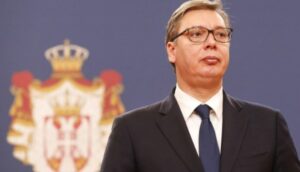
According to Serbian Economist, Serbian President Aleksandar Vučić published an op-ed for the American television network Fox News, in which he presented Serbia as a country ready for a closer partnership with the US, and stated that Donald Trump’s policies are viewed in Belgrade not as a threat, but as an opportunity for stability and economic development.
In the column, Vučić contrasted the attitude of some European elites toward Trump with the mood in Serbia. He wrote that “contempt” for the America First philosophy has spread from Brussels to Berlin, whereas Serbia sees it as an opportunity for a more pragmatic policy focused on results, security, and economic growth.
Vucic emphasized that Serbia, despite the painful memory of the 1999 NATO bombings, has in recent years become one of the few corners of Europe where sympathy for the U.S. has grown. According to him, reflexive anti-Americanism—which he believes has spread throughout much of Europe—is rarely found in the country today.
Separately, the Serbian president described his experience interacting with Trump and his team during his first presidential term. According to Vučić, his meetings at the White House following difficult negotiations left him with the impression that Serbia’s position was listened to without prejudice or arrogance. He also wrote that the image of Trump as an “aggressive bully” did not match his personal experience of interacting with him.
The column’s key political thesis is that Serbia’s European path should not mean distancing itself from the U.S. Vucic stated that for Belgrade, the path to Brussels “does not require distancing from Washington,” and that Serbia’s special relationship with the U.S. could be an asset for the stability and growth of the entire European continent.
The economic section of the text was built around the idea of Serbia as a modern and strategically important partner for the West. Vučić noted that Serbia is one of Europe’s most dynamic economies, with GDP growth exceeding that of the Eurozone, and is becoming a hub for future technologies—from data centers to supply chains for electric vehicles.
He gave special attention to the lithium agenda. According to the president, Serbia has the second-largest lithium reserves in Europe, and this resource is key to Western industrial independence. Vucic also emphasized that Serbia is not seeking aid, but rather “deals” that secure supply chains, accelerate energy independence, and create jobs.
This is an important signal for the Serbian economy. Belgrade is attempting to position the country not only as an EU candidate and a regional player in the Western Balkans, but also as a potential component of American and European industrial strategy. In this context, lithium, energy, infrastructure, IT, data centers, and manufacturing for the electric vehicle industry are not separate projects but part of Serbia’s broader geo-economic agenda.
Vucic also effectively urged Washington to reconsider its view of the region. He stated that it is time for the U.S. to stop viewing the Balkans through the lens of the 1990s and to pay attention to Serbia as the largest economy in the Western Balkans, an “anchor of stability,” and a country that remembers its friends.
The most striking part of the column was the invitation to Trump to visit Belgrade. Vucic noted that no American president has visited the Serbian capital in over half a century since Richard Nixon’s visit in 1970, and stated that if Trump were to come to Belgrade, he would receive “a welcome the likes of which Europe hasn’t seen since Nixon.”



