
The international forum “Rebuilding Ukraine: Security, Opportunities, Investment” will take place on October 22–23, 2026, in Bucharest, Romania, at the ROMEXPO exhibition center, Pavilion C2. The event will bring together representatives of government agencies from Ukraine, Romania, and other European countries, as well as international financial organizations, investors, the business community, and experts.
The forum is organized by the Romanian think tank New Strategy Center in partnership with the Romanian Chamber of Commerce and Industry. The academic partner of the event is the University of Agronomic Sciences and Veterinary Medicine in Bucharest (USAMV).
According to the updated program, 31 thematic panel discussions are scheduled over the course of two days, focusing on attracting international capital for Ukraine’s reconstruction, the development of transportation and energy infrastructure, industrial cooperation, defense technologies, food security, and cross-border cooperation.
One of the forum’s key focuses will be a discussion of Romania’s role as a regional logistics and investment hub for Ukraine’s reconstruction. In particular, participants will examine the prospects for developing transport corridors between Ukraine, Romania, and Moldova, expanding the capacity of Danube ports, and creating new rail and road routes between the Baltic and Black Seas.
Special attention will be given to investment opportunities in Ukrainian regions. The program includes special presentations on projects in the Kyiv, Zakarpattia, Ivano-Frankivsk, Vinnytsia, Chernivtsi, Odesa, and Kherson regions. Representatives of local authorities, regional development agencies, and the business community will discuss attracting foreign investors, implementing infrastructure projects, and developing cooperation with Romanian partners.
On October 22, the main focus will be on economic recovery, financing, and investments. Participants will examine mechanisms for attracting private capital, opportunities offered by international development banks, support programs for Ukrainian businesses, and prospects for the restoration of residential and industrial infrastructure.
Among the announced participants for the first day are Gennadiy Chizhikov, President of the Ukrainian Chamber of Commerce and Industry; Marina Khlistun, Executive Director of UkraineInvest; Kateryna Glazkova, Executive Director of the Union of Ukrainian Entrepreneurs; and representatives of the European Investment Bank, the German development bank KfW, Japan’s JBIC, Poland’s BGK, and other international financial institutions.
As part of the discussion on financing reconstruction, a remote address by a representative of the Ukrainian government is scheduled. Separate panels will be dedicated to the development of the agricultural sector, ensuring global food security, the modernization of the energy sector, and the development of renewable energy sources.
Also on October 22, there will be a presentation of the “Together for Ukraine” platform, initiated by the New Strategy Center to foster cooperation and support for Ukraine.
Human capital issues will be the subject of a separate discussion featuring Ella Libanova, director of the M.V. Ptukha Institute of Demography and Social Studies of the National Academy of Sciences of Ukraine. Participants will discuss challenges related to the return of Ukrainian citizens from abroad, staffing the economy, and training specialists for reconstruction.
On October 23, the forum’s program will focus on security challenges, the development of the defense industry, energy resilience, and cross-border cooperation.
In particular, panel discussions are planned on international security guarantees for Ukraine, the prospects for ending Russian aggression, the use of unmanned systems, and the development of joint production of defense products by Ukrainian and European companies.
Participants in the discussion on security guarantees will include Igor Zhovkva, Advisor to the President of Ukraine on Foreign Policy; Kiril Petkov, former Prime Minister of Bulgaria; and representatives from the United States, Japan, and European think tanks.
A separate session will be dedicated to the reintegration of veterans and the utilization of their professional potential in economic recovery. Among the participants listed is Ruslan Prykhodko, Ukraine’s Deputy Minister for Veterans’ Affairs.
The energy segment on the second day will include discussions on preparing the Ukrainian power grid for the winter season, protecting critical infrastructure, cooperation in the Black Sea region, and prospects for involving international companies in energy projects. Among the announced participants are representatives of Naftogaz of Ukraine, OMV Petrom, ROMGAZ, Japan’s JICA, and other energy companies and organizations.
Issues related to the participation of Romanian businesses in Ukraine’s reconstruction will play a significant role in the program. A special panel will be dedicated to financial instruments, institutional support, and opportunities for implementing joint investment projects.
The forum’s concluding discussions will address the prospects for post-war security in Europe, the development of defense-industrial cooperation, Russia’s international responsibility, and mechanisms for compensating Ukraine for damages caused by the war.
The organizers note that the forum’s goal is to create a practical platform for dialogue between Ukrainian and international companies, financial institutions, and representatives of government agencies and local authorities. Particular emphasis is placed on identifying specific investment opportunities and forming partnerships aimed at Ukraine’s long-term economic recovery.
The New Strategy Center is an independent Romanian think tank specializing in security, defense, foreign policy, energy, and regional cooperation. The organization hosts international conferences and expert events dedicated to strategic challenges in the Black Sea region and Central and Eastern Europe. This forum continues a series of events on Romania’s role in Ukraine’s recovery, organized by the New Strategy Center in 2023 and 2025.
The detailed forum program and information about the participants are available on the event’s official website.
Open4Business is a media partner of the event.
Bucharest, INVESTMENT, RECONSTRUCTION, ROMANIA, UKRAINE, ЧИЖИКОВ

The Spotlight International Light Art Festival will take place in Bucharest from October 9 to 11, 2026, bringing together artists and art studios from seven countries. The 10th anniversary festival will transform the central street of Calea Victoriei into a large-scale gallery of light and digital art.
Sixteen artists from Romania, Switzerland, France, Australia, Italy, Austria, and the United Kingdom will participate in Spotlight 2026. They will present 19 projects, including interactive light installations, new media art, immersive projects, and large-scale video mapping.
The theme of the tenth Spotlight will be “Playground.” According to the organizers’ vision, the city center will be transformed into a space for experimentation, where visitors interact with light, architecture, and new technologies, and familiar buildings and public spaces take on a completely different visual appearance.
Calea Victoriei will traditionally serve as the central venue. In 2026, the route has been expanded—it will run from the Radisson Blu Hotel to the intersection of Calea Victoriei and Splaiul Independenței. Individual events will also take place at ARCUB, Hanul Gabroveni, Mega Mall, and Promenada Mall. The total area of the festival space on Calea Victoriei will exceed 7,000 square meters.
One of the highlights of the program will be six large-scale video-mapping shows. Projections will appear on the facades of the Odeon Theater, the Telephone Palace, the Novotel Hotel, the National Military Club, the Corinthia Grand Hotel du Boulevard Bucharest, and the National Museum of Art of Romania.
Another 13 immersive installations will be placed along Calea Victoriei. Some of them will respond to visitors’ movements, blending the city’s physical space with digital images and lighting effects.
The scale of the festival can also be gauged by its technical specifications. Spotlight will require over 300 metric tons of equipment, 11 projection structures and towers, 20 laser video projectors, and over 200 light sources. Kilometers of cable and fiber-optic lines are also being used to set up the light installations.
Spotlight has been held in Bucharest since 2015 and was the first light art festival of this scale in Romania. According to the organizers, the event attracts over 300,000 visitors annually. The festival is organized by the Bucharest City Hall through the ARCUB Municipal Cultural Center.
In this anniversary year, Bucharest will also host the annual meeting of the International Light Festivals Organisation (ILO). On October 10, leaders and representatives of international light festivals, artists, and industry experts will gather at ARCUB—Hanul Gabroveni. Concurrently, on October 10–11, Spotlight Talks will take place under the theme “Light, Art & the City,” where, among other topics, the use of artificial intelligence in light installations will be discussed.
The festival will open on October 9 at 9:00 p.m. and run until 11:00 p.m. On October 10 and 11, the installations will be on view from 7:00 p.m. to 11:00 p.m. Admission to Spotlight 2026 is free.

A political debate has erupted in Bucharest over the name of a new park in the capital’s 4th Sector after local authorities proposed naming it after U.S. President Donald Trump and then put the matter to an online vote.
The proposal concerns the expansion of Tudor Arghezi Park on Metalurgiei Boulevard. Initially, Daniel Beluță, mayor of Bucharest’s 4th Sector, proposed naming the new section of the park “Donald J. Trump,” citing the 250th anniversary of U.S. independence and the symbolism of the Romanian-American partnership. Following public criticism, he suggested that residents choose a name through an online poll.
The list of options included the names of Western and European politicians, among them Donald Trump, Joe Biden, Barack Obama, Maia Sandu, Emmanuel Macron, Jacques Chirac, François Mitterrand, Václav Havel, Helmut Kohl, and Angela Merkel. According to Digi24, Maia Sandu held a commanding lead in the early stages of voting: after approximately 4,000 votes, she had garnered about 60%, while Trump had 16% and Barack Obama had 15%.
However, by the end of the online poll, the situation had changed. Mayor Daniel Băluță announced that, based on the results of the vote, the new section of the park would be named Donald J. Trump. According to HotNews, more than 28,000 people voted for this option, and a total of over 116,000 people participated in the vote on the names of the park and the ice arena. The next step should be the approval of the name by the local council of Sector 4.
Romanian media note that the vote was accompanied by controversy. Opposition representatives from the USR pointed to possible violations and drew attention to a sharp increase in the number of votes in favor of Trump on the night before the poll closed. According to HotNews, one of the USR’s advisors claimed that there were about 30,000 votes by Saturday evening, but by Sunday morning, the number had risen to about 70,000.
Thus, the initial reports of Maia Sandu’s lead were accurate only for the early stage of voting. According to the latest reports from Romanian media, Donald Trump emerged as the ultimate winner of the online poll, although the result still requires administrative approval.
The story garnered widespread attention because it turned the question of naming a district park in Bucharest into a symbolic debate about Romania’s foreign policy priorities, its relationship with the U.S. and Moldova, and the role of public consultations in local politics.
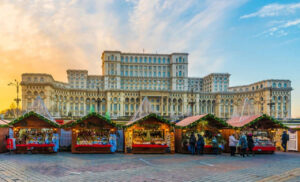
The Bucharest authorities plan to introduce a tourist tax of €2 per night for each visitor to the city from 2026.
The tax will be levied on tourists staying in hotels and hostels, as well as in apartments rented through booking platforms, including Booking and Airbnb.
According to city hall estimates, revenue from the new tax could reach 15 million lei per year. The funds raised are planned to be used to develop tourist infrastructure, promote Bucharest as a tourist destination, and improve services for visitors to the city.
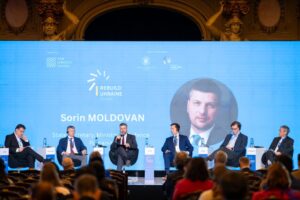
Participants in the panel discussion “Security Perspectives for 2026: Possible Developments” at the Ukraine Recovery Forum in Bucharest concluded that 2026 is shaping up to be a potential strategic turning point for Euro-Atlantic security against the backdrop of the ongoing war in Ukraine, the vulnerability of transatlantic ties, and growing pressure on the EU to strengthen its defense capabilities and strategic autonomy.
The discussion was moderated by Antena 3 CNN journalist Radu Tudor. The panel included Sorin Moldovan, State Secretary of the Romanian Ministry of National Defense; Vadym Halaychuk, First Deputy Chairman of the Verkhovna Rada Committee on EU Integration; Paul Coyer, Professor at the Institute of World Politics (USA), Nico Lange, Senior Research Fellow at the Munich Security Conference, and Shigeo Mutsushika, Executive Director of the Kazankai Foundation and Honorary Professor at Shizuoka University (Japan).
According to the speakers, Europe’s security environment in 2026 will be determined by a combination of several factors: the Russian Federation’s ongoing full-scale invasion of Ukraine, the fragmentation of transatlantic unity, and growing competition between major powers, including the use of hybrid instruments. Against this backdrop, Europe, in their opinion, should play a “more mature strategic role” – not only in the defense sphere, but also in industrial and energy policy.
“European states can no longer take security for granted – they need their own capabilities that will complement, not replace, the transatlantic partnership,” Lange said.
The participants paid particular attention to the stability of the Black Sea region and the resilience of NATO’s eastern flank, which were identified as key pillars of the European security architecture. It was emphasized that maintaining and strengthening support for Ukraine—military, economic, and political—will remain a decisive factor in deterring Russia and preventing further destabilization of neighboring regions. In this context, particular attention was paid to the risks associated with hybrid threats – cyberattacks, sabotage against critical infrastructure, and information operations.
Following the discussion, the panel concluded that structural changes in the security environment require deeper coordination between European states, accelerated investment in critical capabilities, and the adaptation of defense doctrines to new operational realities. Continued support for Ukraine, active use of Western economic and legal instruments—including the possible use of frozen Russian assets—and strengthening of the transatlantic partnership were identified as necessary prerequisites for maintaining regional stability and establishing a sustainable European security order.
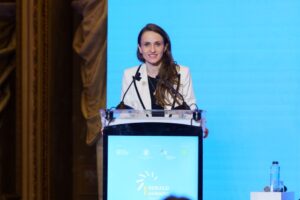
Bucharest. At the forum “Rebuilding Ukraine: Security, Opportunities, Investments,” during a panel discussion, experts from the business and financial sectors stated that only a limited number of Romanian companies are currently ready to participate in large-scale projects to rebuild Ukraine, while access to financial instruments and risk-sharing mechanisms remains a key prerequisite for their more active involvement.
The panel was moderated by Cristina Chiriac, president of the National Confederation of Women Entrepreneurs of Romania (CONAF). The discussion was attended by Teodora Preotias, Director of European Funds Administration at the Romanian Bank for Investment and Development, Mihai Daraban, President of the Romanian Chamber of Commerce and Industry, and Viorel Manole, Executive Director of the Romanian Defense Industry Association PATROMIL.
The participants noted that the market for projects to rebuild Ukraine is currently largely structured by international financial institutions, which have high requirements for corporate governance, compliance, and risk management. According to them, a significant number of Romanian companies do not have sufficient operational capacity to act as main contractors and are forced to limit themselves to the role of subcontractors in supply chains.
“Participation in large projects requires access to credit lines, guarantees, and risk-sharing mechanisms, which are mostly administered by international financial institutions. Without this, many of our companies simply cannot enter into such contracts directly,” Preotasa noted during the discussion.
Experts emphasized the need to create an official Romanian-Ukrainian information platform that would consolidate data on available tenders, donor requirements, and opportunities for business participation. They also called for the development of a national strategy to support companies operating or planning to operate in the Ukrainian market in conditions of heightened political and security risks, including state guarantees and investment insurance instruments.
A separate discussion focused on the possibility of locating part of strategic production capacities in Romania or other safe neighboring countries to ensure continuity of production and logistics. According to Manole, such an approach could strengthen the contribution of national industry to the reconstruction of Ukraine while minimizing security risks for investors. He had previously publicly noted the potential of locating Ukrainian defense production in Romania as an element of bilateral cooperation.
Following the discussion, the participants concluded that Romanian companies have significant potential in Ukraine’s reconstruction projects, but its implementation depends on the coordination of state institutions, the availability of financial instruments, and close cooperation with international partners and financial organizations.
The forum “Rebuilding Ukraine: Security, Opportunities, Investments” is being held on December 11-12 in Bucharest under the auspices of the Romanian Ministry of Foreign Affairs and the Ukrainian Ministry of Foreign Affairs and is organized by the New Strategy Center. According to the organizers, more than 30 panel discussions and parallel sessions are planned over two days with the participation of representatives of governments, international organizations, the private sector, financial institutions, and experts from Europe, North America, and Asia. The topics of the panels cover security and defense, infrastructure, financing and investment, green energy, digitalization, human capital, and cross-border cooperation.



