
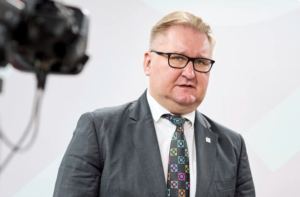
Ukrainian President Volodymyr Zelenskyy has appointed Taras Kachka as Ukraine’s representative to the European Union and the European Atomic Energy Community by presidential decree.
Decree No. 1034/2026 was published on the President’s website on Friday.
To Lam, General Secretary of the Central Committee of the Communist Party of Vietnam and President of Vietnam, while on a working visit to the United States, actively participated in high-level events as part of the 81st session of the UN General Assembly, whose general debate began on September 22, 2026.
This is his second high-level visit to the United States and the UN following the reshuffling of Vietnam’s leadership, which took place following the 14th National Party Congress and the elections to the National Assembly for the 2026–2031 term.
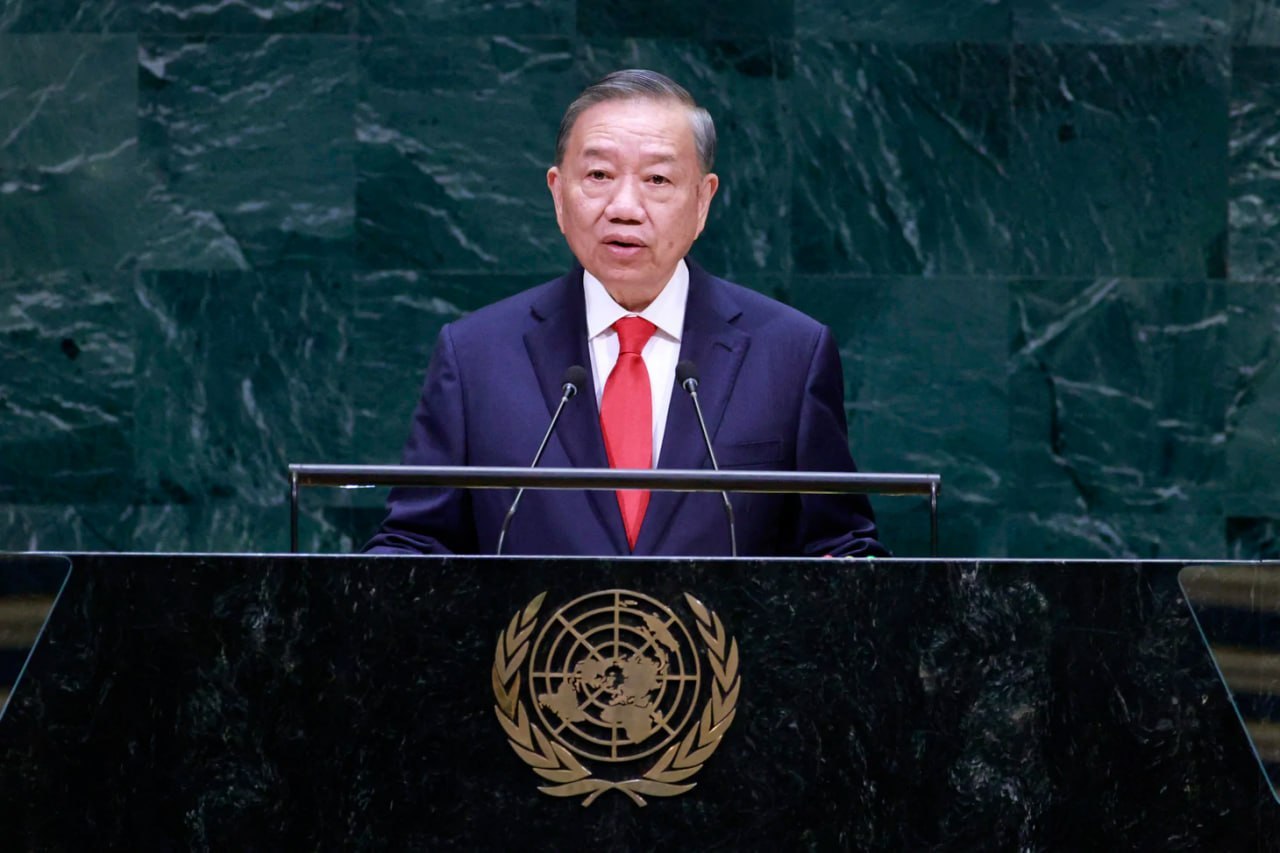
On the sidelines of the UN General Assembly, To Lam held a series of bilateral meetings with leaders of other countries, including Australian Prime Minister Anthony Albanese, Thai Prime Minister Anutin Charnvirakul, Turkish President Recep Tayyip Erdoğan, Fijian President Ratu
Naikama Lalabalavu, Timor-Leste President José Ramos-Horta, Swiss President Guy Parmelin, Finnish President Alexander Stubb, Ghanaian President John Mahama, Bhutanese Prime Minister Tsering Tobgay, President of Mongolia Ukhnaagiin Khurelsukh, as well as with representatives of Tanzania and the Holy See.
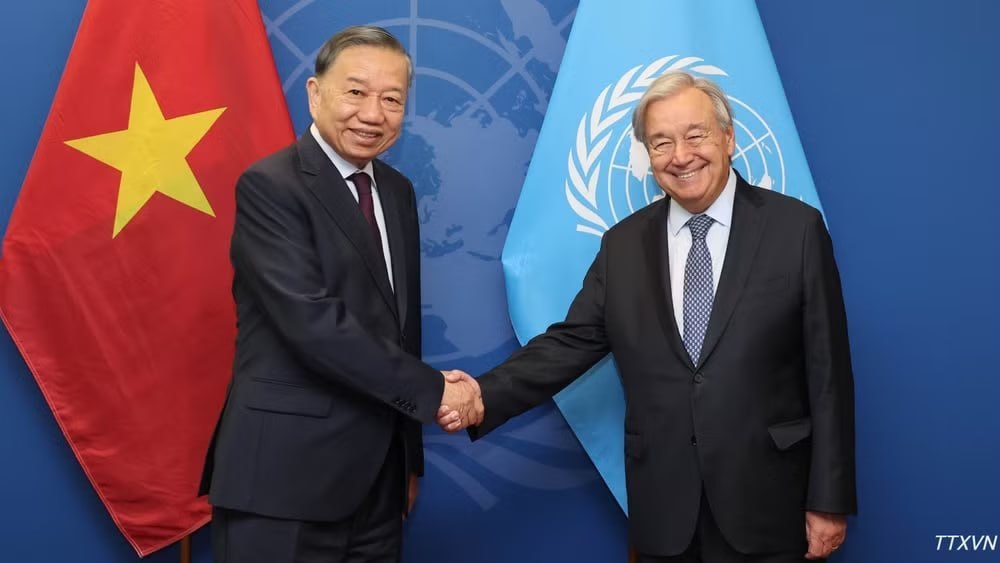
The Vietnamese leader also met with UN Secretary-General António Guterres and the President of the 81st session of the UN General Assembly, Khalilur Rahman.
This visit marked a historic milestone for Vietnamese diplomacy.
Since joining the UN in 1977, Vietnam has transformed from a country in need of international aid for post-war reconstruction into an active participant in multilateral diplomacy, increasingly engaging in the resolution of global issues.
The country has twice been elected as a non-permanent member of the UN Security Council (in 2008–2009 and 2020–2021) and is currently a member of the UN Human Rights Council (2026–2028).
A landmark event in 2026 was Vietnam’s first-ever chairmanship of the Review Conference of the Treaty on the Non-Proliferation of Nuclear Weapons and the 36th Meeting of States Parties to the United Nations Convention on the Law of the Sea.
Hanoi has reaffirmed its status as a reliable partner that makes a significant contribution to peacebuilding processes and regional integration, particularly through its active participation in ASEAN and preparations for its chairmanship of APEC in 2027.
According to Vietnam’s position, the United Nations must retain its central role in the international system, and international issues should be resolved through dialogue, cooperation, and in accordance with international law. It is precisely this support for multilateralism, along with the desire to become more actively involved in addressing global issues, that constitutes one of the key messages of To Lam’s current participation in the General Assembly.
Vietnam seeks to develop international cooperation and wants to have a more significant voice in addressing global challenges.
During his address at the general debate on September 22, To Lam articulated the country’s clear position on managing global change and strengthening the international order.
The Vietnamese leader identified building trust among nations, based on unconditional respect for the UN Charter and international law, as the top priority.
He emphasized the need to reject the use of force and called for resolving any disputes exclusively through peaceful means via dialogue.
The president noted that while changes in the world order are an objective historical process, conflicts and confrontations are not inevitable; at the same time, the main task of leaders is to channel competition so that it does not escalate into open war.
To Lam also supported efforts to modernize the UN’s structure (in particular, the General Assembly, the Security Council, and the Secretariat). He stressed that the reformed system must better take into account the interests of developing countries and give them a real voice in shaping international rules.
The Vietnamese leader expressed clear support for the principle of peaceful dispute resolution, particularly in the East (South China) Sea based on the 1982 UNCLOS Convention, and also expressed support for the “two-state” solution to the Palestinian-Israeli conflict and called on the U.S. to lift sanctions against Cuba.
In his speech, the Vietnamese head of state also emphasized equitable access to scientific advances, artificial intelligence, and digital technologies. According to him, a monopoly on data and digital infrastructure could create a new technological divide between wealthy and poor nations; therefore, technological progress must be accompanied by a culture of security and digital ethics.
He called for the establishment of inclusive and transparent principles for technology governance so that they would narrow the gap between countries rather than create new conflicts.
To Lam emphasized that any future strategies must place people at the center of development. Vietnam expressed its readiness to actively share its own successful experiences in the areas of poverty alleviation, sustainable agricultural development, and adaptation to climate change.
A particular focus of the trip was relations with the United States. Since the normalization of diplomatic relations in 1995, the two countries have evolved from former adversaries to a Comprehensive Strategic Partnership, established in September 2023. Cooperation today encompasses political dialogue, trade and investment, science and technology, education, defense and security, energy, as well as addressing the consequences of war and humanitarian issues.
During meetings in New York, To Lam reaffirmed that Vietnam views the United States as one of its strategically important partners and is committed to making the Comprehensive Strategic Partnership more stable, substantive, and practical. The current engagements—particularly with representatives of Congress, the trade and economic community, and the American business sector—demonstrate the parties’ commitment to filling this partnership with concrete projects in the areas of trade, investment, technology, and infrastructure.
Thus, To Lam’s participation in the 81st session of the UN General Assembly clearly demonstrates the combination of multilateral and bilateral approaches in Vietnamese diplomacy.
On the one hand, the country seeks active engagement in addressing global issues within the UN framework; on the other, it focuses on deepening practical cooperation with strategic partners, primarily the United States.
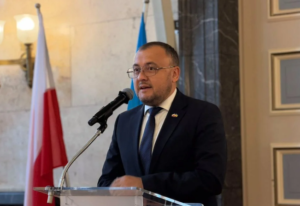
On September 23, 2026, the Honorary Consulate of Ukraine officially opened in Katowice, Poland, and will be located at ul. Wita Stwosza 2.
According to the Consulate General of Ukraine in Kraków, the opening ceremony was attended by Vasyl Bodnar, Ukraine’s Ambassador to Poland; Oresta Starak, Ukraine’s Consul General in Kraków; Luiza Gananya, Ukraine’s Honorary Consul in Katowice; Silesian Voivode Marek Wujcik, Marshal of the Silesian Voivodeship Wojciech Saluga, and Katowice Mayor Marcin Krupa.
The event was also attended by representatives of the diplomatic corps, local government bodies, and the Ukrainian community.
Vasyl Bodnar, Ukraine’s Ambassador to Poland, stated that the opening of the Honorary Consulate is an important step in the development of cooperation between Ukraine and the Silesian Voivodeship.
“We expect that the Honorary Consulate will become a close partner to the Ukrainian community, support Ukrainian citizens, and at the same time contribute to the development of contacts between Ukraine and the Silesian Voivodeship,” Bodnar noted.
He also thanked Honorary Consul Luiz Ganani for his willingness to carry out this mission, and the authorities of the Silesian Voivodeship and the city of Katowice for their support of Ukraine.
The consulate is expected to promote the development of Ukrainian-Polish interregional cooperation, expand contacts with local authorities, businesses, and civil society organizations, and provide support to Ukrainians living in the Silesian Voivodeship.
The Silesian Voivodeship is one of Poland’s largest industrial and economic regions, and Katowice is its administrative center. The opening of the Ukrainian Honorary Consulate creates an additional platform for the development of regional, economic, cultural, and humanitarian ties between Ukraine and Poland.
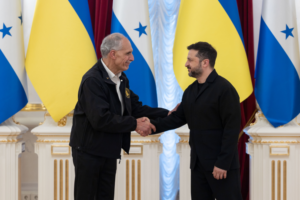
Ukraine and Honduras have signed a “roadmap” for deepening bilateral cooperation for 2026–2029, Ukrainian Foreign Minister Andriy Sibiga announced.
“The signing of a ‘roadmap’ to deepen cooperation between Ukraine and Honduras for 2026–2029 was an important step in strengthening our relations,” he wrote on social media platform X.
Sibiga reported that he had met with Honduran Foreign Minister Mirey Agüero de Corrales following her visit to Kyiv as part of the Honduran president’s delegation.
According to him, the parties agreed on the importance of expanding economic and business ties.
Sibiga thanked Agüero de Corrales for her attention to Ukraine and noted that her visit to Kyiv allowed her to see the consequences of the Russian war firsthand and strengthen mutual understanding between the two countries.
He specifically emphasized Honduras’s position on the illegal activities of the “shadow fleet,” particularly the need to end the practice of registering ships under the Honduran flag.
The parties also discussed the need to restore freedom of navigation in the Black Sea, the protection of Ukrainian ports, global food security, and the unimpeded export of Ukrainian agricultural products.
Sibiga briefed his counterpart on efforts to establish an International Commission for the Settlement of Claims and other international initiatives aimed at ensuring accountability and justice.
The ministers also discussed cooperation on the return to Ukraine of children abducted and deported by Russia, as well as practical steps to intensify these efforts.
According to Sibiga, Ukraine counts on Honduras’ continued support in its efforts to achieve a comprehensive and lasting peace.
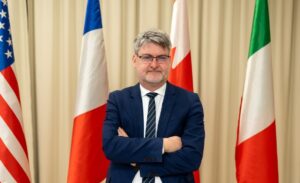
French diplomat Gaël Vésier, who served as Ambassador Extraordinary and Plenipotentiary of the French Republic to Ukraine from 2023 to 2026, has been awarded an international prize in the field of diplomacy as part of the 30th anniversary nationwide “Person of the Year 2025” program.
Gaël Vésier was born in 1972. He graduated from ESSEC Business School and Sciences Po, the Paris Institute of Political Studies, and also holds a degree in history. He began his diplomatic career at the French Ministry of Foreign Affairs in 1997.
Throughout his career, Vésier has served twice at the Permanent Mission of France to the European Union in Brussels, where, among other roles, he served as spokesperson and headed the press office. He also worked at the Permanent Mission of France to the United Nations in New York and held a number of positions at the headquarters of the French Ministry of Foreign Affairs.
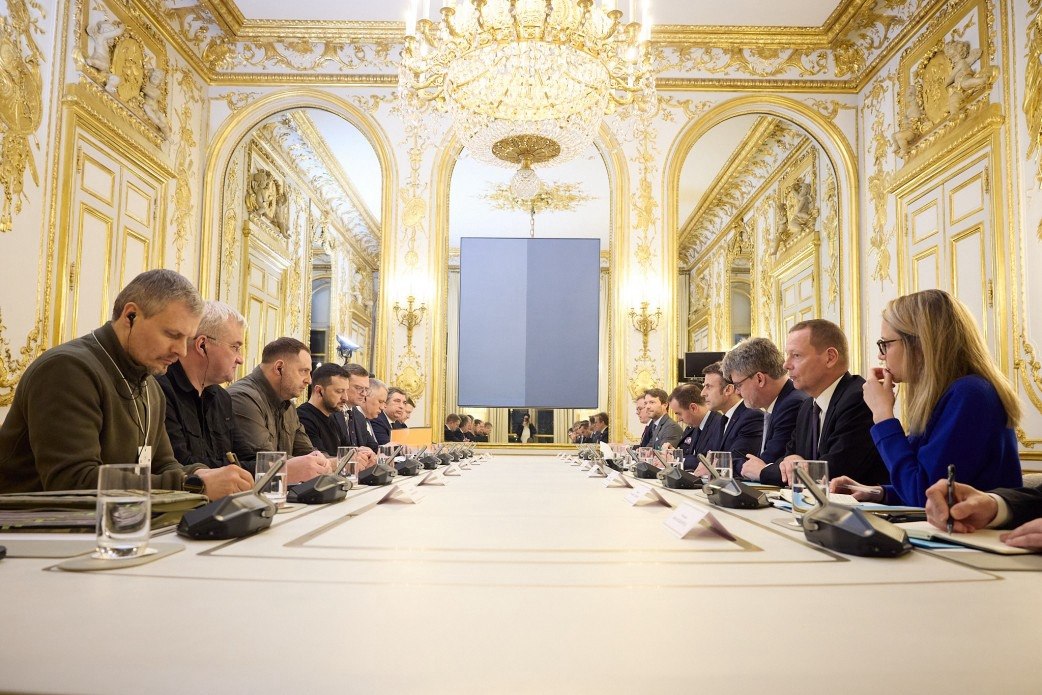
From 2004 to 2005, Vésier served as a technical advisor in the office of French Prime Minister Jean-Pierre Raffarin and was responsible for relations with EU countries, the Balkans, and Eastern Europe. From 2017 to 2019, he headed the offices of the ministers and state secretaries for European affairs Marielle de Sarnez, Nathalie Loiseau, and Amélie de Montchalin.
Prior to his appointment to Kyiv, Vésière served as France’s ambassador to Croatia from 2019 to 2023. On August 20, 2023, he officially took office as France’s ambassador to Ukraine.
His diplomatic mission in Ukraine concluded in July 2026. During a farewell meeting, Ukrainian Foreign Minister Andriy Sybiga highlighted Vesier’s contribution to strengthening the Ukrainian-French strategic partnership, deepening political dialogue, defense cooperation, and coordination between the two countries on the international stage.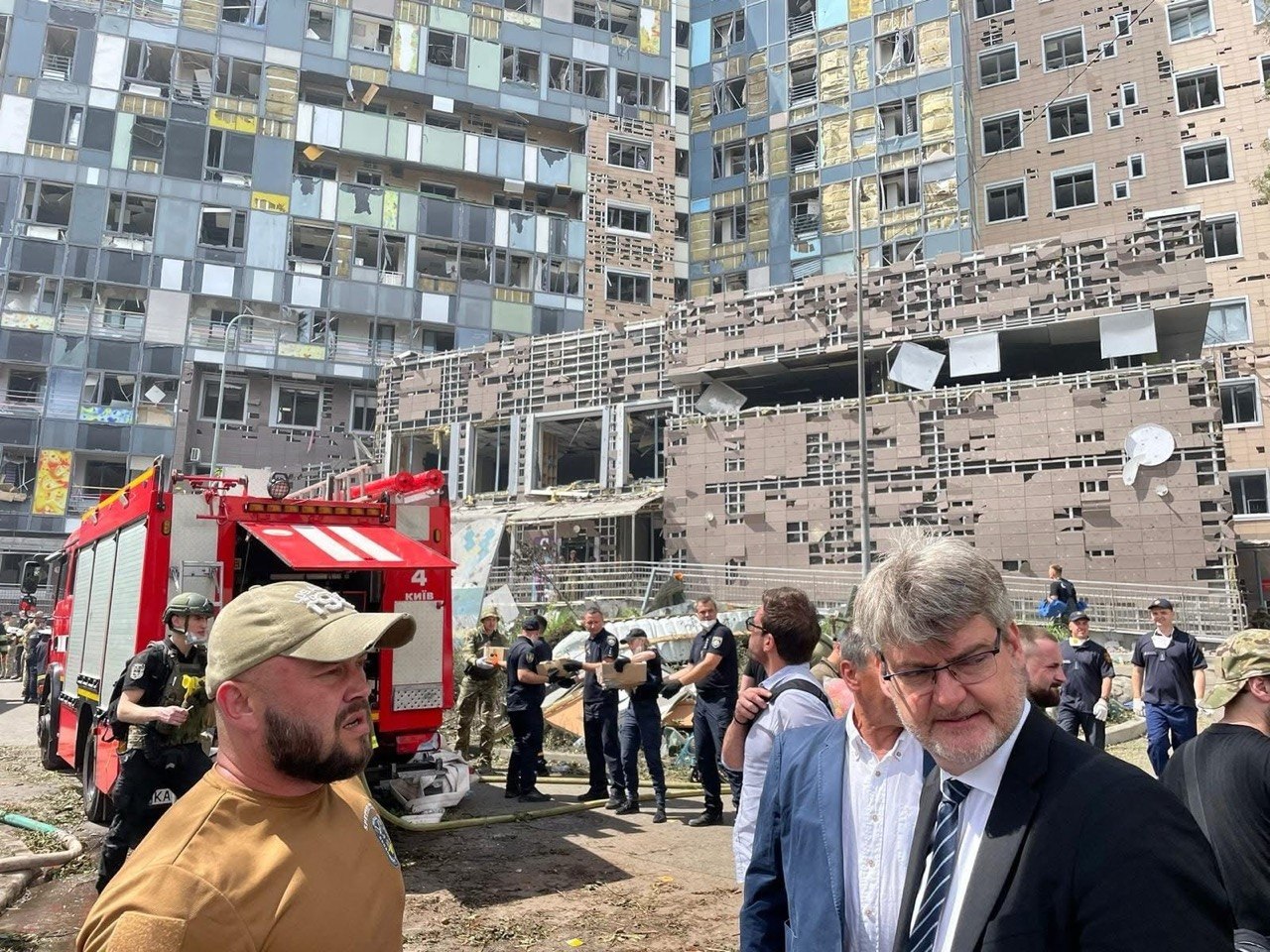
Effective July 17, 2026, Vesier was appointed director of the Crisis Response and Support Center at the French Ministry of Europe and Foreign Affairs. The corresponding decree by French President Emmanuel Macron was signed on July 9.
Brice Rocfay has become the new Ambassador Extraordinary and Plenipotentiary of France to Ukraine; on July 30, 2026, he presented his credentials to Ukrainian President Volodymyr Zelenskyy.
Gaël Vésier is a recipient of French state honors, including the National Order of Merit. Throughout his diplomatic career, he has specialized primarily in European politics, international security, and France’s relations with Central and Eastern European countries.
Open4business – information partner
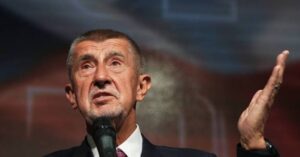
Czech Prime Minister Andrej Babiš stated that current developments in the international situation could lead the world into World War III, and called on Europe to pay more attention to a diplomatic resolution of Russia’s war against Ukraine.
Babiš made these remarks on September 17 while delivering the opening address at the IISS Prague Defense Summit 2026 in Prague. The Czech government and the conference organizer—the International Institute for Strategic Studies (IISS)—have confirmed that the speech took place.
“I’m not afraid to say this out loud. The path the world is currently on does not lead to security. It leads straight to the gates of hell. It is leading us toward World War III,” Babiš said, according to the Czech news agency ČTK.
According to the Czech prime minister, the European security debate focuses too much on the military aspect and not enough on finding a diplomatic solution. He noted that Europe, together with the United States, must push for direct negotiations between Ukrainian President Volodymyr Zelenskyy and Russian President Vladimir Putin with the aim of ending the war.
At the same time, Babiš emphasized that he considers Russia an aggressor. As reported by the Czech press, the prime minister stated that Putin’s actions are “completely unacceptable,” but diplomacy, in his view, must remain one of the main tools for ending the war.
Babiš also drew attention to the duration of the war. According to him, as of September 17, Russia’s full-scale aggression against Ukraine had been ongoing for 1,666 days—99 days longer than World War I. The prime minister stated that the wars in Ukraine and the Middle East have not only military but also serious economic consequences, including rising costs for energy and food, as well as pressure on European industry.
At the same time, Babiš did not advocate abandoning efforts to strengthen Europe’s defense; rather, he proposed creating a joint European missile defense system called Euro Patriot. Under his plan, European countries could pool their industrial and technological capabilities—similar to the creation of Airbus—and develop their own system to defend against ballistic missiles and drones.
“We must learn from the war in Ukraine and seek solutions, first and foremost in the area of defense against ballistic missiles,” the Czech prime minister said. In his view, such a project would simultaneously strengthen Europe’s contribution to NATO and create additional opportunities for the European defense industry, including the Czech defense sector.
The IISS Prague Defense Summit is taking place in Prague from September 16–18, 2026. It is attended by political and military leaders, representatives of international organizations and the defense industry, as well as experts. The main topics of the conference are the development of European defense capabilities, military mobility, arms procurement, missile defense, and the future of transatlantic cooperation.



