

Ukraine and the European Union have agreed on further economic integration and regulatory convergence in a number of areas.
A joint statement by the leaders of Ukraine and the EU, adopted at the end of the summit in Brussels, says.
“We looked forward to further enhancing economic integration and regulatory approximation within the framework of the Association Agreement in the following fields: on digital, we took note of the on-site assessment of the implementation of Ukraine’s commitments in the AA/DCFTA. We also discussed the EU’s engagement in further supporting Ukraine and its institutions in approximation with and gradual implementation of the EU Digital Single Market acquis and institutional capacities, to fully benefit from the Association Agreement. We agreed to prepare by the end of 2020 a joint working plan for co-operation between EU and Ukraine on electronic trust services with a view to a possible agreement which must be based on approximation to the EU legislation and standards,” the statement reads.
The leaders welcomed progress on the update of the Annexes on telecommunication, environment, climate and financial cooperation of the Association Agreement. “Welcoming Ukraine’s ambition to approximate its policies and legislation with the European Green Deal, we stressed the importance of progress in Ukraine’s commitments in the areas of climate change, environment, marine ecosystem, education, energy, transport and agriculture, building on existing established sectoral dialogues, and agreed on a focused dialogue on the necessary steps in these areas,” the statements says.
In addition, they acknowledged the importance of fully complying with DCFTA commitments, notably in the areas of intellectual property rights, public procurement, trade defence, and sanitary and phytosanitary standards with a view to building an open and predictable business and investment climate in Ukraine. “We agreed to further discuss and review the ways to improve DCFTA implementation in order to further develop and facilitate bilateral trade,” the leaders said.
They also welcomed the launch of the pre-assessment on Ukraine’s preparedness on an Agreement on Conformity Assessment and Acceptance of Industrial Products.
The EU also welcomed Ukraine’s willingness to associate to the incoming EU’s Research and Innovation Framework Programme Horizon Europe and EU4Health Programme, which will be a significant enabler for green and digital post-COVID recovery.
“We recalled the importance and reaffirmed our commitment to concluding the Common Aviation Area Agreement at the earliest possible date,” the statement notes.
What is more, the EU reaffirmed Ukraine’s role as a strategic transit country for gas and welcomed the agreement on gas transit to the EU after 2019. “We underlined the importance of pursuing the modernization of the Ukrainian national gas transmission system and further cooperation on strengthening European energy security. We stressed the importance of Ukraine’s cooperation with the EU, with a view to its integration with the EU energy market based on effective implementation of the updated Annex XXVII of the Association Agreement as well as coordination of further steps for the integration of gas and electricity markets,” it says.
The parties also agreed to improve connectivity between Ukraine, the EU and other countries of the Eastern Partnership with a view to facilitating trade, further developing safe and sustainable transport links and supporting people-to-people contacts.
“We welcomed the participation of Ukraine in EU programmes and underlined the importance of Erasmus+ for education, training, youth and sport and Creative Europe for culture. We looked forward to intensifying the relevant cooperation in the framework of current and future programmes,” the leaders said.
Ukraine signed a memorandum with the European Union of understanding and a loan agreement between Ukraine, the National Bank of Ukraine (NBU) and the EU on the country’s receipt of macrofinancial assistance in the amount of EUR 1.2 billion.
On the Ukrainian side, the documents were signed by Finance Minister Serhiy Marchenko and NBU Governor Kyrylo Shevchenko.
Since 2015, Ukraine has received from the European Union, as well as from EU member states, about EUR 18 billion of assistance, which is many times higher than the amount of financial assistance provided to Kyiv by the United States in the form of loan guarantees in the amount of $1 billion, Special Adviser to the President of the European Commission on relations with Ukraine, former European Parliament deputy from Germany Elmar Brok said.
“The United States has given 1 billion on loan… The European Union has given 11 billion on loan in runs, another 3 billion has been given via international financial institutions [EUR], and alone Germany has given 1.4 billion [EUR]. So, let’s say altogether the European Union member states have given at least EUR 18 billion in the last five years. That is the real figures,” Brok said in an interview with Interfax-Ukraine, commenting on accusations against the EU and, in particular, Germany and France that they are not providing enough assistance to Ukraine which was voiced during a telephone conversation between the presidents of Ukraine and the United States, Volodymyr Zelensky and Donald Trump.
At the same time, the European politician emphasized that a substantial part of the EUR 18 billion provided to Ukraine by the European Union and its members are grants, while Washington does not provide anything to Kyiv for free.
Brok also recalled that in addition to the amount he mentioned, the European Union also provided other assistance to Ukraine, which is stated in the agreements between Kyiv and Brussels, such as the Association Agreement and the FTA and the visa-free regime between the parties.
“The United States has not given such agreements. Look, the EU gives twenty times more to Ukraine than the Americans,” the special adviser to the president of the European Commission said on relations with Ukraine.
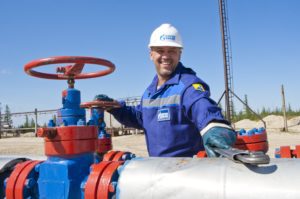
Russia’s Gazprom has boosted gas transit to the European Union through the territory of Ukraine by 25%, by 60 million cubic meters per day, JSC Ukrtransgaz has reported.
This is related to a halt for repairing two lines of Nord Stream.

Head of the European Union Delegation to Ukraine Hugues Mingarelli has said he doesn’t see any threats to the visa-free regime between Ukraine and the EU.
Mingarelli said that he didn’t see any threats, but Ukraine must adhere to its obligations. He said about this at the event of the European business association “New 5 year challenge: Expectations. Hopes. Concerns” on Thursday in response to a question whether he sees any threats to the visa-free regime between Ukraine and the EU.
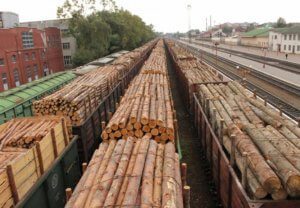
The European Union has called on Ukraine to lift the moratorium on the export of round timber, as well as introduce administrative and institutional reforms and ensure the functioning of an efficient and transparent administrative system. “The EU encouraged Ukraine to continue fighting vested interests in order to improve the business and investment climate and eliminate swiftly trade irritants, such as the wood export ban,” according to the statement following a meeting of the Council of the Ukraine-EU Association, held in Brussels.
“Particular focus should be on effective and timely implementation of the Deep and Comprehensive Free Trade Area, and to further facilitate trade and eliminate technical barriers to trade, including as regards customs procedures, technical regulations, sanitary and phytosanitary systems as well as food safety reform, public procurement and the protection of intellectual property rights,” the report says.
“The Ukrainian side reaffirmed its commitments to technical regulation reform, notably the need to speed up adoption of sectoral and horizontal legislation, including in the area of market surveillance,” it says.
The EU pointed out that “Ukraine shall comply with all prerequisites set out in the AA/DCFTA including incorporating the relevant EU acquis into its legislation, making the administrative and institutional reforms and providing the efficient, effective and transparent administrative system, which are indispensable prior to starting ACAA [Agreement on Conformity Assessment and Acceptance of Industrial Products] negotiations,” it said.



