
In July 2026, the National Bank of Ukraine imposed a fine of 16.1 million UAH on Raiffeisen Bank JSC for a series of violations of anti-money laundering and counter-terrorism financing laws.
Among the violations identified by the regulator were inadequate customer due diligence and failure to apply a risk-based approach, as well as deficiencies in risk management during the implementation and use of information products and technologies, particularly when conducting transactions without direct contact with the customer.
The NBU also identified instances of untimely reporting of threshold financial transactions to the authorized state body and shortcomings in providing information and documents in response to the regulator’s requests.
In addition to the fine, Raiffeisen Bank received a written warning. It pertains, in particular, to the verification of customers and ultimate beneficial owners falling under the PEP category, internal documents regarding financial monitoring, updating information in customer questionnaires, and the transmission of information about payers.
Raiffeisen Bank has been operating in Ukraine since 1992, initially under the name Bank Aval. Since 2005, the bank has been part of the Austrian Raiffeisen Group. According to the ownership structure as of January 1, 2026, Raiffeisen Bank International AG holds 68.21% of the Ukrainian bank’s shares, while the European Bank for Reconstruction and Development holds 30%. Natalia Gurina is the chair of the bank’s board of directors.

In July 2026, the National Bank of Ukraine (NBU) imposed a fine totaling 42.545 million UAH on JSC “Ukrainian Capital Bank” for violating financial monitoring and foreign exchange supervision regulations.
The regulator imposed the main fine of 40.545 million UAH for the improper organization and conduct of initial financial monitoring. Specifically, the NBU identified shortcomings in the bank’s application of a risk-based approach, its assessment of customer risks, and its internal documents regarding financial monitoring and customer due diligence. The bank also did not always provide information and documents in a timely and complete manner in response to requests from the inspection team.
An additional fine of 2 million UAH was imposed for violations of foreign exchange legislation. According to the NBU, the bank improperly carried out foreign exchange supervision, failed to ensure a comprehensive analysis of documents related to certain foreign exchange transactions, and did not identify the indicators of such transactions as required by regulations.
In addition, “Ukrainian Capital” received two written warnings. One relates to additional due diligence on customers who are politically exposed persons (PEPs), the automation of certain procedures, and the completion of customer questionnaires. The second concerns the late submission of and errors in statistical reports on foreign exchange transactions.
The NBU announced the imposition of these enforcement measures on August 7, 2026. In total, in July, the regulator imposed sanctions for violations in the areas of financial monitoring and foreign exchange legislation on two banks and 19 non-bank financial institutions.
Ukrainian Capital Bank has been operating in the Ukrainian market since 1992 and was originally registered as Zakarpattia Bank; it has used its current name since 1996. The NBU classifies it as a privately owned bank. According to the regulator, as of February 1, 2026, the bank’s assets totaled 3.079 billion UAH, liabilities amounted to 2.874 billion UAH, and capital stood at 204.7 million UAH. The NBU lists Serhiy Belashov, Liliana Belashova, Daria Zlidar, and Nataliia Kiva as major shareholders. Yevhen Chechyl serves as chairman of the board.
BANK, financial monitoring, FINE, foreign exchange supervision, NBU
The Antimonopoly Committee of Ukraine (AMCU) announced that it had uncovered a long-standing cartel conspiracy in the capital’s household waste collection services market, as well as the manipulation of the results of a 2021 tender for the procurement of these services, and decided to fine the municipal enterprise (ME) “Kyivkomunservice” and eight other companies a total of 313.3 million UAH.
According to the AMCU, “Kyivkomunservice,” Altfater Kyiv LLC, “Volodar–Roz” LLC, “Kyivspetstrans” PJSC, “Kramar Recycling” LLC, “Celtic” LLC, and “Spetskommuntechnika” LLC divided the market among themselves as part of a cartel agreement, thereby restricting other companies’ access to it.
For this, on July 31, the Committee’s board fined them a total of over 175.8 million UAH and ordered them to cease the aforementioned violations.
In another decision on the same day, the Board imposed a fine on the same municipal enterprise and four other companies from the previous list (Altfater Kyiv LLC, Volodar–Roz Firm LLC, “Celtic” LLC and “Spetskommuntechnika” LLC), as well as “Profpererobka” LLC and “Kramar Eco” LLC, for 137.5 million UAH for distorting the results of a 2021 tender—held pursuant to an order from the Kyiv City State Administration—to select a contractor for household waste collection services.
“It has been proven that the participants did not compete with one another for the right to perform the contract but had agreed in advance on the division of roles, resulting in the victory of one of them and the safeguarding of the economic interests of the others,” the AMCU stated in a press release on its website. According to the committee, proceedings in both cases began in June 2025.
In 2025, the municipal enterprise “Kyivkomunservice” increased its revenue by 4% to 875.3 million UAH, while its net profit decreased by 18.5% to 48.7 million UAH.

Ukrainian legal entities are required to submit information on their vehicles to the TCC and the SP twice a year, even if the company does not have any vehicles or other equipment on its balance sheet.
As explained by the Zhytomyr Regional TCC and SP in response to a request from OpenDataBot, if a company has no vehicles, it must submit a so-called “zero” report.
Information on the availability and technical condition of vehicles and equipment must be submitted annually no later than June 20 and December 20. This requirement is stipulated in the Regulations on Military Transport Obligations, approved by Cabinet of Ministers Resolution No. 1921.
Failure to submit the information or missing the deadlines may result in a fine of between 34,000 and 59,500 UAH for company officials.
However, not every violation necessarily results in a fine. An official may provide evidence of valid reasons for the delay, such as medical treatment, a business trip, or caring for a person with a disability.
In the Zhytomyr region in 2026, four companies received such resolutions; however, in all cases, the reasons for the delay were deemed valid, so no fines were imposed.
OpenDataBot recommends that companies verify in advance who exactly is designated as responsible for submitting the information and retain proof of its timely submission.
Primary sources: OpenDataBot, Regulations on Military Transport Obligations No. 1921, and Article 210-1 of the Code of Administrative Offenses.
ENTERPRISE, FINE, REPORT, TCK, TRANSPORT
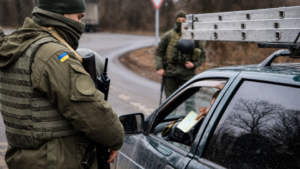
During the first five months of 2026, Ukrainian companies were fined over 7 million UAH for failing to submit or for late submission of transportation data to the Territorial Mobilization and Social Support Centers.
According to OpenDataBot, which cites information from the Ukrainian Armed Forces’ Land Forces Command, 263 penalty orders were issued between January and May. The total amount of fines imposed was 7.057 million UAH.
Of this amount, 6.652 million hryvnias—or 94%—have already been paid voluntarily by the companies or collected by force into the budget.
In total, since 2014, 1,047 Ukrainian companies have received rulings for failing to submit information on their vehicles. Notably, 87% of all sanctions were imposed after the start of the full-scale war.
The rulings are issued against company officials responsible for submitting the information. These may include directors, accountants, or other employees entrusted with these duties.
Companies are required to report twice a year to the TCC and the SP on the availability and technical condition of their vehicles and equipment.
Original source: OpenDataBot – “7 million UAH in fines imposed on businesses this year for failing to submit information on vehicles to the TCC”, published on July 29, 2026.

In June 2026, the National Bank of Ukraine imposed sanctions on “I Lombard” LLC for violations of financial monitoring and foreign exchange laws, the regulator announced on July 7. The total amount of the fines was 4.196 million UAH.
The company received the main fine—4.096 million UAH—for improper organization and conduct of initial financial monitoring.
According to the NBU, the violations concerned the development and implementation of internal documents, customer verification, the application of a risk-based approach, additional measures regarding politically exposed persons, as well as the provision of information and documents upon request by the National Bank.
“I Lombard” was fined an additional 100,000 UAH for violating the procedures for conducting currency exchange transactions. In particular, the NBU noted the absence in internal documents of procedures for coordination between separate divisions when conducting currency exchange transactions, as well as the failure to collect remaining foreign currency balances from the cash register of a structural division.
In addition, the company received written warnings for improper maintenance of customer records and for conducting foreign exchange transactions with non-resident individuals involving the granting and repayment of loans, as well as the payment of interest in hryvnia, without the appropriate license from the NBU.
“I Lombard” LLC is a non-bank financial institution registered in Ukraine. The NBU included the company in the State Register of Financial Institutions and issued it a license to provide financial services in October 2023.



