

According to Fixygen, the British fintech startup Revolut has launched the EURR, a stablecoin pegged to the euro, Bloomberg reports, citing a company statement. The issuer of the EURR is Bridge, a company owned by the American firm Stripe. Bridge will also own and manage the assets backing this stablecoin.
Initially, it will be available to a limited number of Revolut customers in Denmark, Poland, and Portugal, and later this year, the startup plans to expand access to other markets in the European Economic Area (EEA).
EURR will be integrated into the Revolut app and will allow users to exchange euros for cryptocurrency—and vice versa—directly on the blockchain.
The company calls this launch the first step in its stablecoin strategy, which includes the launch of tokens pegged to other currencies as well.
“Revolut started by eliminating hidden fees and barriers to currency exchange,” the company said in a statement. “Now we’re doing the same with cryptocurrency.”
The financial news and analysis platform Finance Magnates, citing official documents, reports that EURR was launched on August 20 and is marketed as Revolut Euro. According to the report, the stablecoin is available in the Revolut retail app and on the Revolut X cryptocurrency exchange. As of Tuesday, only 374 EURR were in circulation, backed by reserves of 374 euros.
Revolut was founded in 2015 in London by Mykola Storonskyi (a graduate of the Moscow Institute of Physics and Technology and the Russian Economic School) and Vladislav Yatsenko. The company serves over 80 million retail and 800,000 business customers worldwide. It operates as a bank in more than 30 countries.
In 2024, Revolut became Europe’s most valuable private tech company, with a valuation of $45 billion, and last year it reaffirmed this status by increasing its valuation to $75 billion.
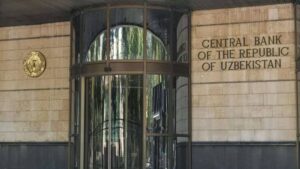
According to Fixygen, the Central Bank of Uzbekistan is exploring the possibility of introducing a wholesale central bank digital currency (CBDC), while also testing stablecoins and intending to continue reducing the state’s share in the banking sector.
Representatives of the regulator made these statements at the Silk Road Finance & Technology Forum 2026, which is taking place in Tashkent from August 24–26. The forum was organized by the Central Bank of Uzbekistan and the Global Finance & Technology Network (GFTN). More than 6,000 representatives from 74 countries are participating.
Nodirbek Achilov, Deputy Chairman and Member of the Board of the Central Bank, stated that the regulator is analyzing international experience with wholesale CBDCs, including both successful and unsuccessful projects.
Unlike a retail digital currency, which could potentially be used by the general public for everyday payments, a wholesale CBDC is intended primarily for settlements between banks and other financial institutions. Among the potential benefits of such an instrument, Achilov cited increased security and efficiency in interbank settlements.
The central bank is also testing a stablecoin system in a special regulatory regime in collaboration with Uzbekistan’s National Agency for Prospective Projects. A decision on further scaling up the project is planned to be made after the completion of research and an assessment of the financial market’s reaction. The topic of stablecoins, central bank digital currencies, and the tokenization of real assets is one of the distinct themes of the forum’s program.
At the same time, the Central Bank plans to continue privatization and reduce the state’s presence in the banking system. Central Bank Governor Timur Ishmetov stated that over the past few years, the state’s share in the sector has decreased from approximately 85% to 60%. “We will continue this trend,” Ishmetov said.
Official Central Bank statistics show that as of June 1, 2026, banks with state participation accounted for about 63% of the banking system’s assets, 66% of the loan portfolio, and 59% of capital. Total assets of commercial banks amounted to 984.4 trillion sum.
The regulator is also preparing to publish a strategy for foreign exchange interventions. According to Ishmetov, the Central Bank’s operations in the foreign exchange market are not aimed at keeping the sum exchange rate at a specific fixed level. Interventions, in particular, are related to gold purchases and the regulation of the money supply.
The Central Bank intends to continue maintaining a flexible, market-oriented exchange rate and to present plans for further liberalization of capital account transactions. “We are ready to be more open and transparent,” Ishmetov noted.
In addition, the Central Bank has prepared a three-year roadmap for reforming banking regulation following the Financial Sector Assessment Program (FSAP) conducted by the IMF and the World Bank. The regulator plans to align requirements with the international Basel III standards and transition banks to reporting under International Financial Reporting Standards (IFRS). The Silk Road Finance & Technology Forum is being held in Uzbekistan for the first time. The organizers cite positioning the country as a regional hub for financial technology in Central Asia as one of the forum’s goals. Specific sessions of the forum are dedicated to digital assets, payment infrastructure, artificial intelligence, cross-border payments, tokenization, and CBDCs.

TAScombank is launching a new mobile app for individual customers in August 2026; development costs have already exceeded $2 million, according to the bank’s chairman, Volodymyr Dubey.
According to him, the final cost of the project has not yet been determined, as work on the app is still ongoing.
“We haven’t been developing our apps for the past two years because we’re transitioning to a new one. There’s no point in investing money in an old app that runs on an outdated platform,” Dubey said in an interview with Liga.net.
The new app is also intended to be part of the bank’s preparations for the implementation of Open Banking, which could intensify competition among banks and expand customers’ ability to use the services of multiple financial institutions simultaneously.
TAScombank previously developed sportbank as a separate digital brand for retail customers. In its final year of operation, the project became self-sustaining and began to generate a small profit, and the bank’s investment in it has almost completely paid off, Dubey noted.
He estimated the cost of launching a full-fledged fintech project, including app development, at at least $10 million.
According to the National Bank, as of June 1, 2026, TAScombank, with total assets of 56.45 billion UAH, ranked 15th among Ukraine’s 58 solvent banks.
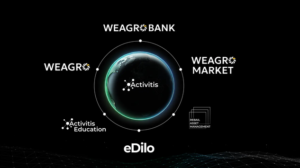
Ukrainian fintech company Activitis plans to raise $85 million for its WEAGRO, eDilo, and WEAGROBANK digital financial ecosystem development project, in addition to its own $15 million contribution, and estimates the project’s internal rate of return (IRR) at 48.3%.
According to a correspondent for the “Interfax-Ukraine” news agency, the company presented its project at the event “From Recovery to Competitive Advantage: Why Ukraine’s ICT and Telecommunications Sector Is Attractive for Investment,” organized by BDO Ukraine on the sidelines of the Ukraine Recovery Conference (URC 2026) in Gdańsk last week.
It is noted that the project is already in the implementation phase and is included in the list of projects on the investment portal prepared by the Kyiv School of Economics in cooperation with the Ministry of Economy, Ecology, and Agriculture, with support from UK International Development.
According to the presentation, over the next three years, Activitis plans to provide financing to suppliers and buyers using the B2B Buy Now Pay Later (BNPL) model, attract 3,000 active users of its digital banking service for farmers, issue over 10,000 business cards for micro, small, and medium-sized enterprises, and increase the share of cross-border supply chain financing to 20% of its loan portfolio.
The company identifies approximately 1 million micro, small, and medium-sized enterprises in Ukraine as the project’s target audience.
During the presentation, an Activitis representative expressed the belief that the recovery of the Ukrainian economy will largely depend on the availability of rapid financing for small and medium-sized businesses, which traditionally have limited access to credit resources.
“Ukraine’s true recovery will not begin with ten large deals. It will begin with millions of small ones,” he noted.
According to the company representative, its primary target clients are businesses that face difficulties accessing traditional credit due to a lack of sufficient collateral or the complexity of banking procedures; the company aims to streamline the financing decision-making process as much as possible and conduct it online without paper-based documentation.
As previously reported, the WEAGRO platform was launched in March 2024 as an agricultural financing service for farms with land holdings of 50–750 hectares and suppliers of material and technical resources. It enables farmers to purchase seeds, crop protection products, fertilizers, equipment, and other resources with deferred payment, while suppliers receive payment immediately upon closing the deal.
The eDilo service was launched in March 2024 and is positioned as Ukraine’s first B2B “Buy Now Pay Later” (BNPL) service for small and medium-sized businesses. It allows companies to pay for goods and services in installments, while the supplier receives payment immediately upon conclusion of the agreement. The service works with companies across various industries, including retail, construction, healthcare, HoReCa, and manufacturing.
In October 2025, Activitis and Piraeus Bank announced the creation of WEAGROBANK—a digital banking service for farmers that operates on Piraeus Bank’s banking infrastructure.
Activitis was founded in 2013 and specializes in lending and factoring services. The company reports that its loan portfolio totals $115 million, its equity is $28 million, and more than 5,000 businesses have used its services.

The International Finance Corporation (IFC) is implementing the “Digital Finance Future Ukraine” advisory project in Ukraine with an estimated total budget of $2.83 million, aimed at developing digital financial services and attracting private capital, according to the corporation’s website.
According to the IFC, the project aims to expand access to financing for the general public and small and medium-sized businesses by promoting digital financial services as part of Ukraine’s recovery efforts.
The project involves collaboration with government agencies, financial institutions, fintech companies, as well as participants in the venture capital and private equity markets.
It is noted that the project, approved by the IFC on May 6, 2026, consists of three components.
The first component aims to align Ukrainian legislation and the regulatory environment in the field of digital financial services with European Union standards.
The second component is aimed at modernizing financial infrastructure and attracting private capital to the fintech sector, in particular through the development of open banking, venture capital, and direct investments.
The third component is designed to promote cooperation, innovation, and regional integration of the fintech market, as well as to provide its participants with the tools and knowledge needed to expand digital financial services and broaden access to capital.
The project is expected to be completed by March 31, 2030.
According to data on the IFC website, since the start of the full-scale invasion, the amount of financing provided by the corporation in Ukraine had reached $2.8 billion as of February 2026; in particular, over $1 billion was mobilized from partners and donors.

September 24, 2024, Kyiv – As part of the Access2Finance conference, after the panel discussion “Sources of Financing for Small and Medium-Sized Businesses (SMEs)”, an important event took place – the signing of a memorandum of cooperation between the Ukrainian Association of Fintech and Innovation Companies (UAFIC) and the Entrepreneurship Development Fund.
The memorandum was signed by Rostyslav Dyuk, Chairman of the Board of UAFIC, and Viktor Katrenych, Deputy Chairman of the Board of the Entrepreneurship Development Fund. The purpose of the agreement is to strengthen cooperation between the organizations to support regional economic development and strengthen the position of small and medium-sized enterprises (SMEs) in Ukraine.
The memorandum pays special attention to supporting veteran and women-owned businesses, which is one of the key aspects of social responsibility. The parties also intend to promote the implementation of the principles of sustainable development and ESG (environmental, social and governance criteria), which are important for ensuring sustainable economic growth and increasing the competitiveness of Ukrainian entrepreneurs.
The parties agreed on joint initiatives aimed at increasing SMEs’ access to finance, promoting regional economic activity, and introducing the latest technological solutions for business development.
“The signing of this memorandum is an important step for UAFIC towards expanding opportunities for small and medium-sized enterprises in Ukraine. It is important that as part of our cooperation we will focus on supporting veteran and women-owned businesses, which are the basis for creating a more inclusive and sustainable economy. In addition, the implementation of ESG principles will be a key aspect for increasing the competitiveness of Ukrainian enterprises,” said Rostyslav Dyuk, Chairman of the UAFIC Board.
“For the Fund, the top priority is to support Ukrainian business, especially in such difficult times. In addition, this is exactly the period when it is necessary to involve businesses in the implementation of ESG standards and further develop in this direction for the successful implementation of economic activities. That is why we are pleased to sign a memorandum with UAFIC to jointly support entrepreneurs in our country,” said Viktor Katrenych, Deputy Chairman of the Board of Ford Entrepreneurship Development.
The signing of this memorandum is an important step in strengthening Ukraine’s economy, improving the business climate and supporting entrepreneurship that meets the principles of sustainable development.
The memorandum was signed at the Access2Finance conference, which was supported by the USAID Project Investing for Business Sustainability.
COOPERATION, Entrepreneurship Development Fund, FINTECH, MEMORANDUM



