
Switzerland is investing approximately $36 million (30 million Swiss francs) in the development of a competitive and sustainable private sector in Ukraine as part of the “CORE: Competitiveness for Ukraine’s Recovery 2026–2031” program, with Ukrainian businesses and organizations receiving the majority of these funds in the form of grants.
According to the Ministry of Economy and Environment of Ukraine following the program’s presentation in Kyiv on November 4, funding is provided through the Swiss State Secretariat for Economic Affairs (SECO), and the program is implemented by a consortium of Helvetas and NIRAS in cooperation with the International Labor Organization (ILO).
Grant support is provided under four main components: the development of regulatory solutions and public-private dialogue; the development of priority economic sectors and business associations; co-investment grants for the modernization of small and medium-sized enterprises (SMEs); and the improvement of labor policy and labor productivity.
In addition, the program provides for the launch of the “Strategic Advice Window,” which will provide the Ministry of Economy and Environment, business associations, and SMEs with access to international and Swiss experts. Most of the grant funds will be allocated based on the results of competitive selection processes following preliminary consultations with potential applicants.
As noted, the CORE program is part of a broader support package for Ukraine from Switzerland totaling 5 billion Swiss francs through 2036 (of which 1.5 billion francs are earmarked for 2025–2028). The parties signed a memorandum on the implementation of the initiative in Davos in January 2026.
The Canadian Institute of Ukrainian Studies (CIUS) at the University of Alberta is celebrating its 50th anniversary. During this time, the institute has awarded at least 1,742 research honors, grants, and scholarships. Of these, 883—or about 51%—were awarded to Ukrainian scholars and institutions.
To mark the anniversary, the institute will host an international symposium titled “Recentring the Humanities: Ukraine and the World” (Recentring the Humanities: Ukraine and the World). It will take place October 28–30, 2026, in Edmonton, with the option to participate online upon prior registration.
Among the confirmed participants are Oleksandra Matviychuk, director of the Center for Civil Liberties; Refat Chubarov, chairman of the Mejlis of the Crimean Tatar People; historians Serhii Plokhy and Yaroslav Hrytsak; philosopher Volodymyr Yermolenko; and Metropolitan Borys Gudziak.
Participants will discuss how Ukraine’s experience—particularly its resistance to Russian aggression—is shaping international debates on history, human rights, democracy, and cultural identity.
A highlight of the symposium will be a lecture by Metropolitan Boris Gudziak titled “The World Has Never Been So Ukrainian: Challenges and Opportunities for the Global Ukrainian Community.” It will take place on October 28 at the Horowitz Theater at the University of Alberta to mark the 25th anniversary of the Bohdan Bociurkiw Memorial Lecture Series.
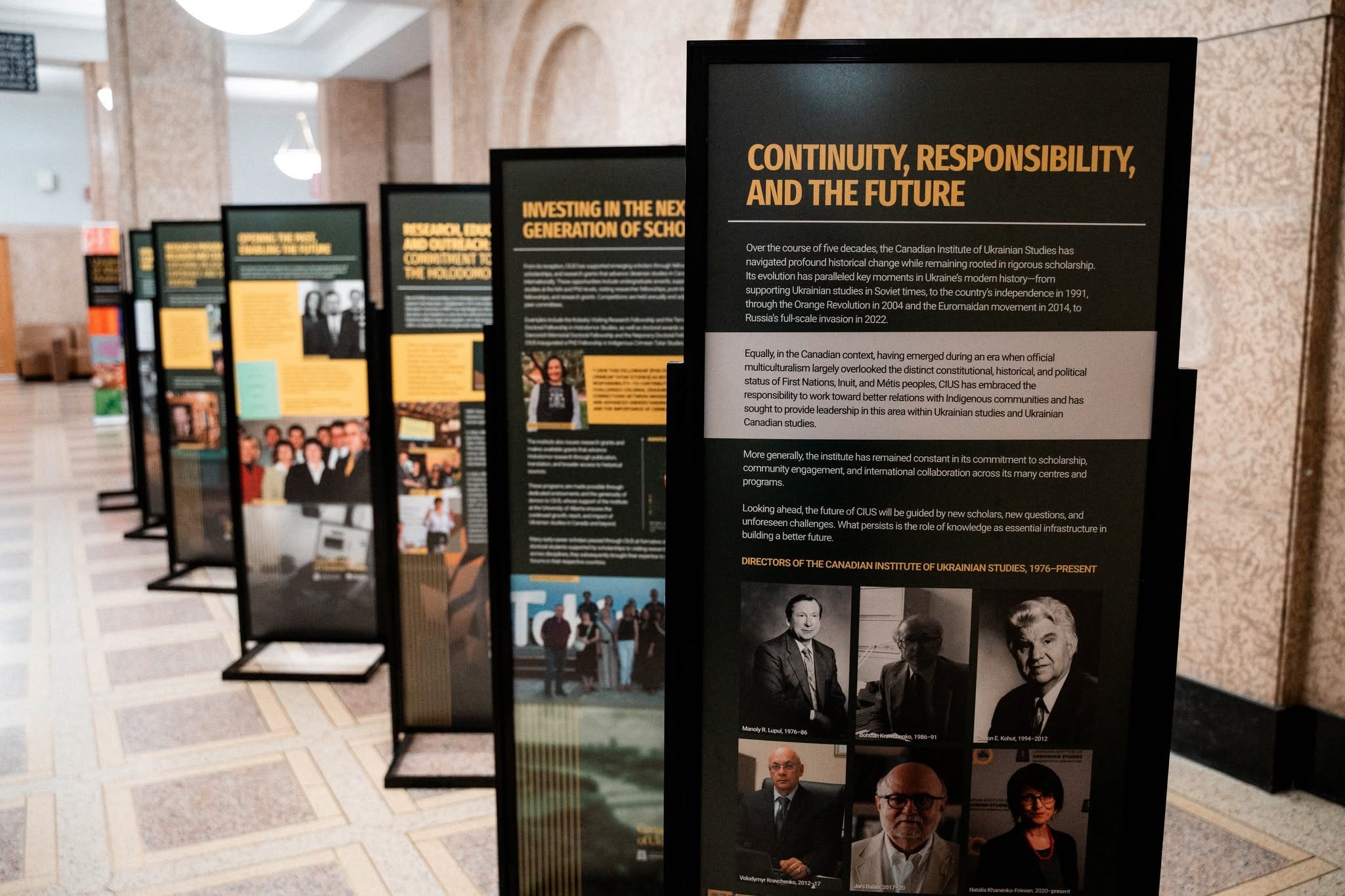
The program will be complemented by exhibitions on the history of the Ukrainian Canadian Institute of Studies (UCIS), the connection between George Orwell’s work and the Holodomor, and childhood on the Canadian prairies in the 1930s.
The symposium will open on October 28 at the University of Alberta. The main discussions on October 29–30 will take place at the Edmonton Convention Center.
The CIUS’s contribution to the development of Ukrainian humanities cannot be overstated: the CIUS currently comprises 11 research centers and programs. They study the Holodomor, medieval and early modern Ukrainian history, contemporary social processes, the Ukrainian language and methods of teaching it, as well as the history of Ukrainians in Canada and other countries.
One of the key areas of focus concerns the history of Ukrainian statehood. The Petro Yatsyk Center for Ukrainian Historical Studies, led by historian Frank Sysyn, is working on fundamental historical projects. The Institute also supports research on Baturyn, the former capital of the Hetmanate, as well as the publication and preservation of its historical heritage.
Crimean Tatar studies constitute a separate area of focus. Over the past two years, the KIUS has allocated more than half a million Canadian dollars—from its own funds and external grants—to their development. This work helps to present the history of Crimea through the lens of the peninsula’s indigenous people and to counter Russian imperial interpretations.
Among the institute’s long-term projects is the English-language Internet Encyclopedia of Ukraine. It provides an international audience with scholarly, verified information on Ukrainian history, culture, and society. Through the Petro Yatsyk Program for the Study of Contemporary Ukraine and other academic initiatives, KIUS supports Ukrainian researchers, their publications, and international scholarly exchanges.
History and Interesting Facts
KIUS was founded in 1976 with the support of the provincial government, the University of Alberta, and the active participation of the Ukrainian community in Canada. Its mission is to study the history, language, culture, and society of Ukraine, as well as the Ukrainian experience beyond its borders.
The institute made its first payment to an institution in Ukraine in 1987–1988. The Central Scientific Library in Kyiv received $1,000 for catalogs of its newspaper collections.
As early as 1989–1990, the KIUS hosted nearly 100 scholars from Ukraine. The Institute became one of the hubs through which Ukrainian researchers established contacts with the academic community in North America. As early as 1989–1990, the KIUS hosted nearly 100 scholars from Ukraine. The Institute became one of the hubs through which Ukrainian researchers established contacts with the North American academic community. After 1990, Ukraine accounted for approximately 60% of all the Institute’s research awards, grants, and scholarships.
Cooperation also encompassed legislative reforms and the development of democratic institutions. Through the KIUS, a legislative project worth 4 million Canadian dollars was implemented from 1996 to 2000, and the CULIP program, worth approximately 4 million, was carried out from 2000 to 2003. A significant portion of the funding for both initiatives was provided by the Canadian International Development Agency (CIDA). Other areas of support included the Petro Yatsyk Program in Lviv, worth 1 million Canadian dollars, and a project to ensure the transparency of the 2004 elections, worth 250,000 Canadian dollars.
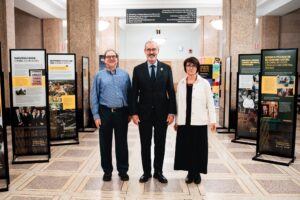
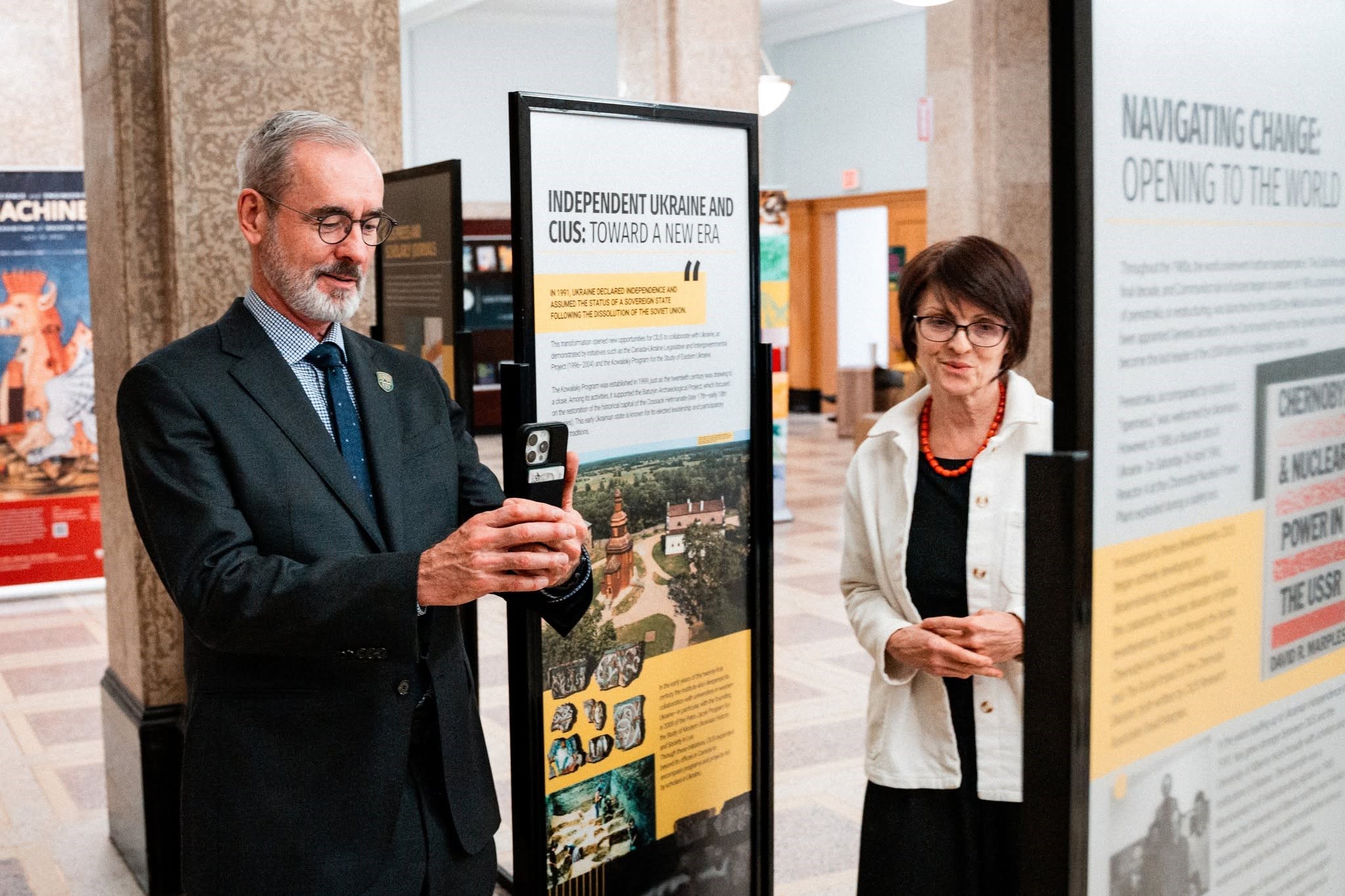
Natalia Hanenko-Friesen, Director of the Canadian Institute of Ukrainian Studies, and Serhiy Tsipko, Deputy Director for Research, gave a tour of the exhibition dedicated to the 50th anniversary of CIUS to Bill Flanagan, President of the University of Alberta
Natalia Hanenko-Friesen, Director of the Canadian Institute of Ukrainian Studies, leads a tour of the exhibition dedicated to the 50th anniversary of CIUS for Bill Flanagan, President of the University of Alberta.

According to Relocation, the Irish government is extending the Vacant Property Refurbishment Grant program—which provides financial support for the restoration of vacant and derelict homes—through 2026. The program offers up to €50,000 to cover the cost of renovating residential properties and up to €70,000 for properties in a state of disrepair.
According to the official website of Ireland’s Department of Housing, Local Government, and Heritage, the program covers cities, small towns, and rural areas.
The main goal of the initiative is to return residential properties that have been unoccupied for a long time to use and to increase the supply of affordable housing.
To qualify for a grant, the building must have been constructed before 2008 and have remained vacant for at least two years.
The applicant must confirm ownership of the property or provide documentation proving that they are in the process of acquiring it.
The renovated housing may be used as a primary residence or rented out in accordance with the program’s terms.
The standard grant is up to €50,000. If the property is officially recognized as derelict and unfit for use, the applicant may be eligible for an additional €20,000.
However, the amount of compensation depends on verified expenses, the type of work, and the assessment by local authorities. The stated maximum amount does not guarantee automatic approval of the full funding amount.
In 2026, Ireland also expanded support for the conversion of former commercial and public buildings into residential properties.
For projects involving the creation of multiple apartments in such properties, the maximum grant can range from €90,000 to €110,000, depending on the technical condition and the number of new residential units.
A separate program, the Vacant Above the Shop Grant, is aimed at converting vacant spaces above operating stores and other commercial properties into apartments.
Under this initiative, total financial support can reach €140,000, including assistance with project preparation and professional consulting, provided that the relevant criteria are met.
Unlike Italian municipalities, Ireland does not sell homes for a nominal price. Its model provides funding for the renovation of property that has already been purchased or a property the applicant plans to buy.
At the same time, participation in the program is not limited exclusively to Irish citizens, though it requires meeting established criteria. Grants are provided to individuals, while registered companies and developers are not eligible for the standard Vacant Property Refurbishment Grant program.
For foreign buyers, the legality of long-term residence in Ireland remains a separate issue. Purchasing real estate and receiving a grant do not replace the necessary immigration permits.
The government program has been in effect since July 2022 and is gradually expanding. It is implemented by local authorities with the support of the Irish government.

Starting October 16, 2026, Ukraine will temporarily suspend the acceptance of applications for government grants to establish and develop orchards, berry farms, vineyards, and greenhouse operations.
According to EastFruit, agricultural producers planning to take advantage of government support this year may submit an application through October 15.
The acceptance of applications is scheduled to resume in the first quarter of 2027. Funding to continue the program has been allocated in next year’s state budget.
According to data provided by EastFruit, 61 decisions have already been made in 2026 to award such grants totaling 300 million UAH.
Specifically, 40 decisions totaling 170 million UAH relate to the establishment and development of orchards, berry farms, and vineyards. Another 21 decisions totaling 130 million UAH were approved for the development of greenhouse farming.
To date, 34 grants for projects in the fields of fruit growing, berry farming, and viticulture have been fully funded, totaling 137 million UAH. Another 19 grants totaling 123 million UAH have been funded for the development of greenhouse operations.
The state-supported projects call for the creation of 428.4 hectares of new perennial plantings and 31.5 hectares of modular greenhouses.
Their implementation is also expected to create 282 permanent and 5,518 seasonal jobs.
Farmers who do not manage to submit their applications by October 15 (inclusive) will be able to apply for a grant once the application period reopens in 2027.
The 2026 state support program for horticulture and greenhouse farming provides grants of up to 7 million UAH per project, but not exceeding 70% of the project’s cost. For enterprises in de-occupied and frontline territories, the share of state funding may reach 80%. Applications are submitted through the “Diya” portal.
agricultural sector, GRANT, greenhouse, HORTICULTURE, UKRAINE

Foreign workers, entrepreneurs, and digital nomads legally residing in Portugal can receive government financial support of more than EUR5,000 when relocating to inland areas of the country under the Emprego Interior MAIS program, according to data from the Portuguese Institute for Employment and Vocational Training (IEFP).
The program is available to workers who relocate to specific inland municipalities in Portugal to take a job, move their existing professional activities there, start their own business, or continue working remotely.
The base payment in 2026 is EUR 3,759.91 for workers with permanent employment contracts, as well as for those who create their own job or start a company. For fixed-term employment contracts lasting at least 12 months, the base payment is EUR 2,685.65.
In addition, the government pays 20% of the base amount for each family member moving with the recipient, as well as up to EUR805.70 for the transportation of personal belongings.
For example, an employee with a permanent contract who is relocating with one family member can receive EUR 5,317.59: EUR 3,759.91 in basic assistance, EUR 751.98 in family allowance, and EUR 805.70 for moving expenses. Therefore, the actual amount of assistance may exceed 5,000 EUR, and for larger families, it may be even higher.
EU citizens, citizens of the European Economic Area, and Swiss citizens, as well as third-country nationals legally residing in Portugal, are eligible for this assistance. The IEFP specifically notes that the program also applies to foreigners with temporary protection status. Thus, provided they meet the other conditions, Ukrainians residing in Portugal with the appropriate legal status may also take advantage of the program.
To receive support, you must relocate your permanent residence to an inland region of Portugal for at least 12 months. If you are starting a new job, the move must take place within 180 days before or after you begin working or start your own business. The salary under an employment contract must not be lower than the national minimum wage.
If the contract is for a fixed term, its duration must be at least 12 months. The program also allows applicants to open a small company with up to 10 employees or to create their own job. If the applicant establishes a commercial company, they must own more than 50% of its capital and voting rights.
A separate category is provided for foreign digital nomads. Foreign nationals who legally reside in Portugal, work remotely for an employer or client outside the country, and relocate to an inland region are eligible for assistance. For them, professional activities must have begun after January 1, 2022, and their income must be at least equal to Portugal’s minimum wage.
Payment is made in two stages. The first 60% of the approved amount is transferred after the application is accepted and the required documents are submitted; the remaining 40% is paid in the 13th month after starting work, establishing a business, or relocating the workplace.
Applications are submitted through the government portal iefponline. As of August 2026, the application period is open and will continue until the program’s funding is exhausted. The application must be submitted no later than 180 days after the start of the employment contract, the establishment of a business, or the relocation of the workplace.
The Emprego Interior MAIS program is part of Portugal’s policy to attract workers and entrepreneurs to the country’s inland regions, which are facing population outflow and labor shortages. It does not automatically apply to any move to Portugal—the new place of residence and, depending on the situation, the place of work must be located within a municipality or parish included by the IEFP in the list of inland areas.

Oschadbank has announced the launch of the “Green Farming in the Horticulture Sector” program, under which Ukrainian fruit growers will be able to receive grants of up to 10,000 euros and preferential bank financing to implement climate-resilient technologies. The program is officially scheduled to launch on July 22, 2026.
Natalia Butkova-Vitvitska, a member of Oschadbank’s board responsible for micro, small, and medium-sized businesses, announced the bank’s participation in the program during her presentation on July 15 at the Ukrinform press center.
The agro-industrial sector is one of the key drivers of the Ukrainian economy: it accounts for 17–19% of the country’s GDP and accounts for 41% of Ukrainian exports, and more than 70% of agricultural producers are small and medium-sized farms. The program is specifically designed to support this segment, helping Ukrainian fruit growers invest in modern technologies and increase the competitiveness of their farms.
“Oschadbank is one of the leaders in implementing the principles of sustainable financing in the micro, small, and medium-sized business segment. We are systematically expanding Ukrainian entrepreneurs’ access to modern financial instruments that help them invest in climate-resilient technologies. Today, Oschadbank’s loan portfolio in the agricultural sector exceeds 17.7 billion UAH and accounts for over 53% of the MSME business division’s loan portfolio. “The ‘Green Farming in Horticulture’ program will provide Ukrainian horticulturists with additional opportunities to modernize production and develop their farms,” noted Natalia Butkova-Vitvitskaya, a member of Oschadbank’s Management Board responsible for micro, small, and medium-sized businesses.
Sustainable financing is one of the key areas of development for Oschadbank’s MSME business division. The bank is consistently expanding its partnership programs with international financial institutions and introducing financial instruments that help Ukrainian entrepreneurs invest in projects related to energy efficiency, decarbonization, and the adoption of climate-resilient technologies.
Program Participation Requirements
The program launches on July 22, 2026. Until then, potential participants can review the program’s terms and prepare the necessary documents.
Program participants will be eligible to receive:
– a grant of up to 10,000 euros;
– a grant covering up to 20% of the outstanding principal balance of the loan;
– financing for investment projects, including through the government’s “Affordable Loans 5-7-9%” program, with a term of up to 5 years;
– the opportunity to submit an application within 30 calendar days after the program’s launch.
Detailed program terms are available at: https://bdf.gov.ua/programs/zelene-fermerstvo-v-haluzi-sadivnytstva/.
The “Green Farming in Horticulture” program is being implemented as part of the “Preparing Eastern Partnership Countries for the European Green Deal (PROGRESS)” project, which is being carried out on behalf of the German Federal Government’s International Climate Initiative (IKI). It combines grant support and preferential bank loans to introduce climate-resilient technologies in horticulture.
agricultural sector, FARMING, GRANT, HORTICULTURE, OSCHADBANK



