
The Estonian Ministry of Foreign Affairs announced the allocation of EUR340,000 to help Ukrainians living near the front lines cope with damage to energy infrastructure caused by Russia’s ongoing attacks.
As the Ministry of Foreign Affairs emphasized, Estonia’s aid will help families heat their homes and prepare their livestock for winter, improve the thermal insulation of shelters for internally displaced persons, and purchase mobile emergency response centers for Ukrainian rescue workers. The aid will be delivered through the Ministry of Foreign Affairs’ long-standing humanitarian partners: the non-governmental organization Mondo, the Estonian Refugee Council, and the Estonian Rescue Association.
“Putin still hopes that attacks, cold, and darkness will break the Ukrainians’ resistance. We will not let that happen. As a result of Russia’s ongoing aggression, Ukrainians are facing yet another harsh wartime winter. With the onset of cold weather, people across the country will have to contend with power and heating outages and worry about how to keep their homes warm,” emphasized Foreign Minister Margus Tsahkna.
“The situation is particularly difficult near the front lines, where the need for assistance is greatest due to the fighting. As Estonians, we know very well what a cold winter means. That is why we are directing our aid first and foremost to where it is needed most—to families trying to cope in their own homes, to people forced to flee their homes because of the war, and to rescue workers who come to the aid of others even in the most difficult circumstances,” added Tsahkna.
Estonia is providing the non-governmental organization Mondo with 160,000 euros to help shelters for internally displaced persons near the front lines in the Sumy, Dnipropetrovsk, and Kharkiv regions prepare for winter. Thirteen shelters will be supplied with heating equipment and materials, and two of them will also undergo repairs and improvements to their thermal insulation. Thanks to Estonia’s support, approximately 860 internally displaced persons—primarily the elderly, people with disabilities, women, and children—will have warm housing this winter.
The Estonian Refugee Council will receive EUR160,000 to support families living near the front lines in the Kharkiv, Dnipropetrovsk, and Zaporizhzhia regions. The funding will help families heat their homes and cover the costs of maintaining livestock throughout the winter, as livestock farming is an important source of livelihood for many. The project is co-financed by the European Commission’s Directorate-General for Civil Protection and Humanitarian Aid (DG ECHO).
The Estonian Rescue Association will receive EUR 20,000 to purchase equipment for two mobile emergency aid stations for rescuers from the State Emergency Service of Ukraine (SES). The mobile emergency aid stations will provide people in crisis zones with a place where they can warm up, access electricity, and, if necessary, receive psychological support.

As of June 2026, approximately 3.9 million people in Ukraine remain internally displaced, according to a report by the International Organization for Migration (IOM).
“Although the proportion of internally displaced persons has remained at about 12% of the population since 2023, the report shows that the longer displacement lasts, the more difficult it is for families to meet their basic needs. Nearly seven out of ten internally displaced persons have been away from home for more than two years. This indicates the increasingly protracted nature of displacement in Ukraine,” the report states.
At the same time, people continue to be forced to leave their homes: in January–June of this year alone, approximately 132,000 people were forced to flee.
“Stable displacement figures should not be interpreted as a sign of stable living conditions. Many displaced families are depleting their savings, cutting back on essential expenses—including healthcare—and moving to less suitable housing in an effort to meet their basic needs. Long-term support remains essential to help people regain stability and make informed and voluntary decisions about their future,” said Dejan Keserović, Deputy Head of the IOM Mission in Ukraine.
According to the report, 87% of displaced families were forced to resort to at least one coping strategy to manage their situation. Most commonly, people spent their savings (75%), reduced their use of utilities (59%), and cut back on healthcare expenses (53%). One in five households also reported moving to lower-quality housing, and 17% reported being behind on rent payments.
Safety remains the main criterion in people’s decisions about the future: 82% of internally displaced persons indicated that they would like to return home only after hostilities have ceased. At the same time, an increasing number of people are considering the possibility of integrating into the communities where they currently live: the proportion of those interested in local integration rose from 51% in March to 58% in June 2026. This underscores the need to provide support to displaced families where they are, while also monitoring the risks of premature or unsafe returns.
Approximately 2.15 million people, or 56% of all internally displaced persons in Ukraine, come from territories that were fully or partially occupied at the time of the survey. They are more likely to face protracted displacement, significant hardships, and more limited opportunities for return.
“The report’s findings show why emergency assistance alone is not enough. People need long-term support in the areas of housing, livelihoods, access to healthcare, protection, and other essential services. This will help them make informed and voluntary decisions—whether to integrate where they currently live, move to another location, or safely return home when conditions permit,” IOM emphasized.
The report is based on the latest survey of the Ukrainian population, conducted by IOM from April 23 to June 30, 2026, with support from the Humanitarian Fund for Ukraine, the European Union, and the governments of Canada and Sweden.
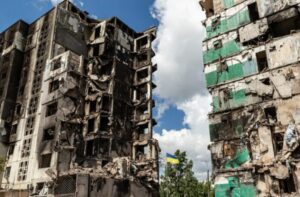
The Cabinet of Ministers approved a resolution that will allow internally displaced persons who lived in the temporarily occupied territories to receive assistance of up to UAH 2 million to purchase a new home, according to the Ministry of Community and Territorial Development.
“We are launching a new support mechanism that will allow thousands of Ukrainians whose homes remain in the temporarily occupied territories to purchase their own homes. This is not just about housing — it is about regaining a sense of home, stability, and security. We already have agreements with international partners for $180 million. These are the first 3,700 families who will receive payments. We continue to work to ensure that every Ukrainian family affected by Russian aggression has access to state assistance,” said Deputy Prime Minister for the Restoration of Ukraine — Minister of Community and Territorial Development Oleksiy Kuleba.
The voucher will be provided as part of the expansion of the “eReconstruction” program developed by the Ministry of Development. The amount of assistance is up to UAH 2 million per person or family. The state will issue housing vouchers — electronic documents that will be stored in the State Register of Damaged and Destroyed Property.
The voucher can be used to purchase an apartment or house (or invest in its construction); pay the first installment or repay a mortgage.
Previously, internally displaced persons whose homes remained in the temporarily occupied territories could not take advantage of existing compensation programs. This was due to the inability to inspect the housing. Now, the state offers a separate form of support that allows them to purchase new homes in safer regions.
Initially, the program will be available to IDPs who have combatant status and persons with disabilities resulting from the war.
The program will start two months after the resolution is published. From then on, applications for assistance can be submitted through the “Dія” app, and later at administrative service centers or notaries. Verification will be carried out automatically through state registries. The application review period will be no more than 30 days.
Applications will be reviewed by commissions at local government bodies or military administrations.
The program may be financed from the state budget, international aid, loans and grants from partners, as well as possible reparations from the Russian Federation in the future.
It is specified that those who have other housing in the territory controlled by Ukraine (except for those where hostilities are taking place) or have already received monetary compensation or housing from the state will not be eligible for assistance under this program. Applications from persons who are under sanctions or have criminal records will also not be considered.

The Ministry for the Reintegration of Temporarily Occupied Territories reported that 6,570 places of compact residence for IDPs have been equipped in Ukraine at present.
“In Ukraine, 6,570 places of compact residence for IDPs (internally displaced persons) have been equipped, and the state continues to increase their number. It is easier for the authorities to provide educational, medical and other services for those living in them. The organization of work with our migrants is entrusted to local and regional authorities, however, in close cooperation with the central ones,” the press service of the ministry said in a statement.
It is noted that for people who were forced to move, modular cities were deployed in five regions, 25 of these towns were built by the Polish government.
“Of course, this is not enough, and therefore, negotiations are now underway with international donors and governments of other countries on the possible attraction of investments. On behalf of the President of Ukraine, a project is being developed to build such housing in the regions. investors, and this should be done before spring,” the message says.
The World Bank will soon provide Ukraine with a $100 million loan to help internally displaced persons (IDPs), World Bank Regional Country Director for Eastern Europe Arup Banerji has said.
He said in an interview with Interfax-Ukraine that given the acute need for central budget financing, the World Bank is currently focusing on providing quick and immediate assistance, which, in turn, can help the population, especially the most vulnerable groups of the population. First, very soon we will allocate another $100 million to help internally displaced persons, he said.
Banerji added that the World Bank continues to provide assistance in the healthcare, infrastructure and energy sectors under existing projects.
We are also exploring opportunities for cooperation with other bilateral development partners (for example, Italy, Japan and the United States) who are very interested in attracting PEACE (Project Support to Public Expenditure to Sustainable Public Administration in Ukraine) loan and funding others types of confirmed budget expenditures, the World Bank regional director noted.
Specific items have not yet been agreed, but will certainly include additional payments to internally displaced persons and other vulnerable groups in Ukraine, Arup Banerji added.
HELP, IDPS, LOAN, WORLD BANK
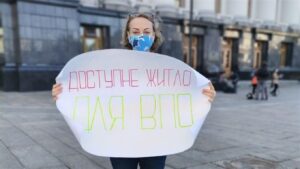
The State Fund for Support of Youth Housing Construction announced the purchase of housing for further leasing to internally displaced persons (IDPs) from large families whose housing was destroyed as a result of Russian aggression.
As reported in the release, a total of 100 apartments are being purchased: in Kyiv and Chernihiv regions, 35 each, in Sumy 20 and Zhytomyr 10.
Housing, renovated and furnished, can be purchased from individuals and legal entities-owners of such housing.
The minimum total area of housing is 31.5 square meters, maximum – 94.5 square meters.
As reported, by Resolution of the Cabinet of Ministers No. 495 of April 29, 2022, the procedure for the buyout, construction of housing for the purpose of transferring to internally displaced persons for temporary residence was approved.
The State Youth Housing Fund can purchase ready-made housing, provided that the cost of acquiring 1 square meter of the total area of housing (taking into account all mandatory payments paid by the buyer when purchasing housing) does not exceed the marginal cost.
The marginal cost is calculated based on the indirect cost of housing construction in the regions of Ukraine determined by the Ministry of Regional Development and increased for: cities – regional centers, cities of regional significance with a population of more than 300,000 people and settlements located in areas adjacent to the borders of cities – regional centers – 1.75 times; other settlements – 1.5 times.
For example, in February 2022, the Ministry of Regional Development approved an indirect cost for Zakarpattia region of UAH 13,892/square meter, and for Kyiv – UHA 18,704/square meter. This means that the marginal cost of housing ready for occupancy, which can be paid by the state or communities, in Uzhgorod is UAH 24,311/square meter, in Kyiv it is UAH 32,732/square meter.



