

The Ukrainian Embassy in the Republic of Poland reminded that the Special Law on Assistance to Ukrainian Citizens of March 12, 2022, will cease to be in force on March 5.
“All key mechanisms of temporary protection have been transferred to systemic laws, primarily to the Act of June 13, 2003, on granting protection to foreigners on the territory of the Republic of Poland. The stay of a beneficiary of temporary protection is recognized as legal until March 4, 2027,” the embassy said in a statement on its Facebook page.
It is noted that for this period, the stay is recognized as legal if the person: entered Poland after February 24, 2022, as a result of armed conflict; received a PESEL number with UKR status; does not have temporary protection provided by another EU member state.
The embassy added that for persons who already had a PESEL number with UKR status at the time of the entry into force of the law of January 23, 2026, this status remains valid.
“UKR status is now regulated by the Population Registration Act (Ustawa o ewidencji ludnosći). An application for a PESEL number with UKR status must be submitted in person to any commune authority within 30 days of arrival. A photograph and fingerprints must be attached to the application… Until August 31, 2026, persons who have been granted UKR status on the basis of an application are required to confirm their identity with a foreign passport (if a passport was provided). If this requirement is not met, the status will be changed to NUE (which does not grant the right to legal residence or any social assistance from the state),” the diplomatic mission warned.
It is reported that persons with temporary protection now have access to medical care on terms similar to those of Polish citizens. Full access to medical services is provided if you have medical insurance and pay contributions to ZUS. People without insurance are entitled to free assistance only in cases of immediate threat to life and health, during pregnancy and the postpartum period, and until the age of 18.
Changes will be made to the provision of accommodation in collective accommodation centers.
“The Minister of Internal Affairs may provide accommodation and meals (in a collective accommodation center or financial assistance) according to the following rules: a maximum of 60 days from the date of first entry into Poland (for new arrivals); in total, no more than 12 months during the entire period of temporary protection. This limit is cumulative (total) — all time spent in the centers since 2022 is taken into account,” the statement said.
For vulnerable groups, collective housing with meals is provided by the Minister of Social Welfare. Vulnerable groups include: persons with disabilities (moderate/severe disability, as well as their caregivers); persons aged 60+ (women)/65+ (men) without a Polish pension, who are not working and do not have adult children receiving alimony; pregnant women or mothers with children under 12 months of age; persons from abroad who are under the care of institutions/families; persons who have just been discharged from hospital after hospitalization lasting at least 7 days and paid for by the NFZ.
It is reported that a special transition period is in effect until June 30, 2026: the voivode may allow everyone who already lives there to remain in the center (even if the 12-month limit has long been exceeded). This period has been introduced to give people time to finish the school year and find permanent housing. After June 30, 2026, persons who do not belong to vulnerable groups will lose their right to free accommodation in collective accommodation centers.
“Educational assistance 800+ and other family benefits are provided under the general conditions applicable to foreigners — that is, provided that the guardian is professionally active and the child fulfills their school obligations. The authority to supervise and control the expenditure of assistance for children from the foreign care system is entirely vested in the county authorities. In case of violation of the conditions, payments may be suspended,” the embassy informs.
Temporary protection is not granted and/or is terminated if the person: has a permanent residence permit, long-term EU resident status, temporary residence permit, refugee status, etc. (applies to all EU countries); has applied for international protection; has been granted temporary protection in another EU country; is a citizen of an EU member state; has provided false information or forged documents; has entered under the local border traffic regime.
Temporary protection is also terminated in the event of departure from Poland for a period exceeding 30 days, written refusal of protection, or acquisition of another legal status.
Temporary protection is valid until March 4, 2027. Further decisions on the extension or change of the legal stay of Ukrainian citizens in Poland are within the competence of the Government of the Republic of Poland.

US President Donald Trump said in a speech at the World Economic Forum in Davos that he expects to sign a law regulating the structure of the cryptocurrency market, which will cover Bitcoin in particular, in the near future. According to him, the administration is striving to ensure that the US remains the “crypto capital of the world.” Trump also recalled that he had previously signed the GENIUS Act and added that Congress is working “very diligently” on a new set of rules for crypto assets, which he “hopes to sign very soon.”
Trump’s statements were accompanied by increased volatility in the cryptocurrency market: according to industry publications, Bitcoin initially fell after the comments from Davos, but then partially recovered and returned to levels around $90,000 as investors assessed the signals regarding regulation and the overall news background.
CRYPTO MARKET, DAVOS, LAW, TRUMP, USA
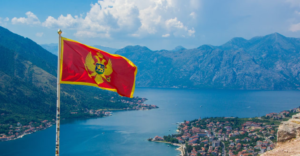
According to Serbian Economist, Montenegro is tightening the requirements for obtaining and extending temporary residence permits (TRPs) for foreigners on two popular grounds: property ownership and business management. The law on amendments to the Law on Foreigners has been published in Službeni list Crne Gore (No. 3/2026).
In the parliamentary amendments that became part of the final text, the minimum ‘cost’ of a property for a residence permit on the basis of real estate ownership is set at no less than €150,000. The decision of the tax authority (the basis for property tax) is indicated as confirmation, and the rule does not apply to citizens of the EU, EEA and Switzerland.
It is noteworthy that the government’s initial proposal set a higher threshold of €200,000 and was linked to the tax authority’s assessment; it was this level that had previously sparked debate in the business community and among real estate market participants.
The authorities have reformatted their approach to extending residence permits for entrepreneurs and executive directors. The relevant parliamentary committee noted that the government had made amendments removing the requirement for Montenegrin citizens to be employed as a condition for extension and replaced it with the need to provide proof of paid tax obligations in the minimum amount of €5,000 per year.
The ‘real estate – residence permit’ link remains in place, but there is now a clear price filter that may shift demand to properties priced at €150,000 and above, especially in coastal and central municipalities. At the same time, the risk of imbalance for the north of the country, where prices are lower, was previously highlighted in parliamentary discussions as a sensitive issue for the regions.
For small businesses, the new model looks more predictable: instead of formal hiring, a measurable criterion of ‘taxes not less than €5,000’ is introduced, which potentially lowers barriers for companies without the need to expand their staff, but strengthens fiscal discipline.
Reference: the government explained the package of amendments as necessary for further alignment with EU migration regulations.

Updated rules for producers of grapes and wine products have been in force in Ukraine since January 1, 2026, they are approved by the law “On grapes, wine and wine products” (#3928-ІХ), adopted by the Verkhovna Rada on August 22, 2024. The law introduces updated rules for producers of grapes and wine products, establishes modern requirements for the cultivation of grapes, production, labeling and circulation of wine, and brings the Ukrainian system closer to European standards.
One of the key elements of the document is the protection of geographical indications – classification according to the European model, according to which a clear division of wines by origin into wines with protected appellation of origin (PAO) and wines with protected geographical indication (PGI) is introduced. Clear rules have been established for the official recognition and protection of geographical indications, allowing producers to secure regional brands and guarantee consumers authentic quality.
An important tool for streamlining the industry will be the creation of the Viticulture and Wine Registry: the state is introducing a unified information system where all grape plots, grape production and viticulture products will be registered. This will guarantee full traceability of the product from the vine to the store shelf.
In addition, the said law provides for simplification of conditions for small winemakers, which will stimulate the development of the craft segment and gastrotourism.
At the same time, Ukraine introduces strict requirements to the label: the information that must be available to the consumer is clearly regulated, which prevents falsification of wines.
The law updates the terms and classification of wine products, establishes quality standards and labeling requirements. It defines the procedure for state control and general principles of development of the winegrowing and winemaking industry.
The Verkhovna Rada adopted in the second reading and as a whole draft law No. 13200 ‘On Mentoring,’ which introduces the institution of individual and corporate mentoring for children aged 10 and older and young people from vulnerable groups.
As explained by the relevant committee, mentoring currently covers a very narrow circle of children, and there is a lack of clear mechanisms for organising mentoring – from the selection and training of mentors to support, accounting and control. The new law is intended to expand the circle of mentoring recipients and standardise procedures.
The document provides for two forms of mentoring – individual and corporate, establishes requirements for mentors (in particular, age 21 and Ukrainian citizenship), launches a social service for organising mentoring and defines the entities that organise and control the process. Mechanisms for accounting, monitoring, support and state supervision in the field of mentoring are also being introduced.
According to information from the materials for the second reading, an age threshold of 10 years has been set for children, and the mentoring agreement is to be tripartite: mentor, parents or legal representatives of the child and social service provider. Mentoring is only possible with the consent of the legal representatives and the child themselves.
Commenting on the adoption of the law to Interfax-Ukraine, lawyer Oleksiy Shevchuk emphasised the novelty of the mechanism for older children.
‘The key point is that it is not necessary to establish guardianship or custody for children aged 10 and older,’ he said.
The law will come into force after it is signed by the president and officially published in accordance with the established procedure.
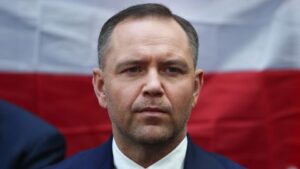
Polish President Karol Nawrocki has signed a law on “aid to Ukrainian citizens” aimed at regulating the future status of Ukrainians living in Poland, his office said.
According to the head of the president’s office, Zbigniew Bogucki, this law is the “last” in the framework of special assistance to Ukrainians. It extends the legal stay of Ukrainian citizens who have fled the war until March 4, 2026, and links the right to receive social assistance to criteria such as employment or children’s education in Polish schools.
“The decisions laid down in this law effectively put an end to tourism from Ukraine at the expense of Polish taxpayers,” Bogucki said at a press conference. He stressed that with the adoption of the law, Poland intends to “move to normal conditions” by applying the same rules to Ukrainian citizens as to other foreigners residing in the republic.
The main provisions of the law
• Extension of the period of legal stay in Poland under temporary protection status until March 4, 2026.
• Restriction of access to benefits: payments will depend on the availability of work or education for children. Exceptions are provided for parents of children with disabilities.
• Strengthening control over the use of the “special assistance” mechanism and clarifying the legal status of Ukrainians in Poland.
• The desire to reform the assistance system so that it eventually approaches a standard migration system.
Lawmakers in the president’s office say that further continuation of this scheme is impossible, and now Ukraine and Poland must move towards more sustainable regulation of the stay, employment, and integration of Ukrainians.
According to media reports, there are at least 1.5 million Ukrainian citizens in Poland in 2025.
Source: http://relocation.com.ua/polish-president-signs-law-extending-aid-to-ukrainians-until-march-4-2026/



