
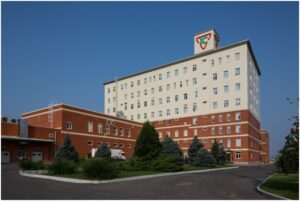
Bringing pharmaceutical production into compliance with European requirements demands significant investments from Ukrainian pharmaceutical manufacturers, which could lead to higher production costs, according to Anatoliy Reder, CEO of the pharmaceutical company “Interchem.”
“We are operating within the paradigm that our country is currently moving toward—alignment with European requirements. We must understand that compliance with European standards, EU directives, and the principles and approaches currently in effect in Europe will require significant additional investments from us—in production, regulatory processes, research, and so on. In other words, this involves enormous additional costs in order to meet, within a relatively short period of time, the requirements that are currently the norm in the European Union. With a gradual transition to these requirements, it must be acknowledged that production costs will rise significantly,” he said in an interview with the “Interfax-Ukraine” news agency.
As Reder noted, compliance with European standards—particularly those incorporated into Ukraine’s law on medicinal products—will automatically require additional investments, which will inevitably lead to price increases.
“We need to speak openly about this. You can’t make pills out of thin air. If additional controls are needed, additional costs will be incurred. Today, we monitor every batch of manufactured products throughout their entire shelf life—something that wasn’t required before—and this involves hundreds and thousands of manufactured batches and, consequently, enormous costs. The additional control points in production required of us by European Union legislation—this means additional equipment, additional laboratory staff, and additional production processes—represent objectively large-scale investments. These costs will inevitably lead to price increases,” he stated.
The pharmaceutical company “JSC Galichpharm” (Lviv) produced 3.934 million packages of finished pharmaceutical products in the second quarter of 2026, worth approximately 981.424 million UAH.
According to the company’s disclosure in the National Securities and Stock Market Commission (NSSMC) disclosure system, the average cost per package of medicines is 213.18 UAH for injectables, 52.11 UAH for infusions, 117.25 UAH for liquids and syrups, and 52.6 UAH for tablets.
Galichpharm’s total revenue for the second quarter of 2026 amounted to 354.394 million UAH. Total exports reached 115.4 million UAH, or 48.3% of total sales.
Currently, the company supplies products to the Ukrainian market and exports them to Kazakhstan, Uzbekistan, Latvia, Australia, and other countries.
As previously reported, “Galichpharm” (Lviv) produced 22.098 million packages of medicines in 2025 and sold finished products worth 1.774 billion UAH. The company then reported a net loss of 1.151 billion UAH, compared to a net profit of 13.705 million UAH in 2024 (-39% compared to 2023).
As previously reported, in May 2025, the Commercial Court of Lviv Oblast opened bankruptcy proceedings against the pharmaceutical manufacturer JSC “Galichpharm” based on claims filed by LLC “Sky-Development” in the amount of 479.262 million UAH. On April 21, 2025, Sky-Development LLC acquired from JSC “Bank Finansy i Kredit” the rights to claims against JSC “Galichpharm” under loan agreements and security agreements.
The investment company “Sky-Development” won an open auction organized by the Deposit Guarantee Fund for Individuals and acquired the claims of the insolvent JSC “Bank ‘Finansy i Kredit’” under ten loan agreements with leading Ukrainian pharmaceutical companies: JSC “Galichpharm” and JSC “Kyivmedpreparat.” According to Sky Development, the total amount of its claims exceeds 3.5 billion UAH.
For their part, “Kyivmedpreparat” and “Galichpharm” stated that the information disseminated by Sky Development Investment Company is “inaccurate, manipulative, and shows signs of a deliberate attempt to discredit the companies’ operations.” In particular, both companies denied having “multi-billion debts” to “Sky Development.” The pharmaceutical companies characterized the statements by “Sky Development” LLC as “an attempt to illegally and artificially create non-existent creditor debt for a possible future hostile takeover of the companies.”
EXPORTS, Galichpharm, MANUFACTURING, MEDICINES, PHARMACEUTICALS

Pharmacy sales of drugs in Ukraine from January through June 2026 increased by 19.52% in monetary terms compared to the same period last year, reaching nearly 97.918 billion UAH.
According to a report by Business Credit to the Interfax-Ukraine news agency, citing research findings, sales of medicines in volume terms also rose—by 4.9%, to nearly 418.711 million packages.
The weighted average retail price of pharmaceuticals for the first half of the year was 233.85 UAH per package, which is 13.96% higher than the figure for January–June 2025.
Thus, the pharmaceutical segment demonstrated growth not only due to higher prices but also thanks to an increase in the number of packages sold. This distinguishes it from the pharmacy market as a whole, where sales in physical terms declined by 5.8% over the six-month period.
In the first quarter of 2026, pharmaceutical sales rose by 13.9% in monetary terms—to over 48.426 billion UAH—and by 4.85% in volume terms—to nearly 211.947 million packages.
In 2025, Ukrainian pharmacies sold medicines worth 170.318 billion UAH, which is 12.79% more than the previous year. The volume of sales then decreased by 0.2% to 808.546 million packages.
Ukrainian pharmaceutical manufacturers expect the government to facilitate the launch of tools for 2D verification of medicines in Ukraine.
As Petro Bagriy, president of the Association of Ukrainian Drug Manufacturers (AULU), told the “Interfax-Ukraine” news agency, this specifically involves facilitating pharmaceutical manufacturers’ access to software that will allow them to verify pharmaceutical products using a 2D code compatible with European systems, as well as the introduction of certain tax incentives for the purchase of the necessary equipment.
Bagriy noted that these issues were discussed during the most recent working meeting of members of the newly established “National Organization for the Verification of Medicines” (NOVLM).
“There is a provision in the new law on medicines stipulating that 2D coding of medicines must be operational in Ukraine by 2028. Such verification is one of the tools for combating counterfeit medicines. Ukraine is integrating into the EU, where this is a mandatory requirement, as only medicines verified by a 2D code are permitted for sale within the EU. Moreover, when exporting their medicines, Ukrainian pharmaceutical manufacturers label their products with 2D codes. But this is expensive; it requires significant investment in equipment and the renovation of packaging facilities,” he said.
The president of the Association of Pharmaceutical Manufacturers of Ukraine (AVLU) believes that not only pharmaceutical manufacturers but also distributors, pharmacies, and healthcare facilities that purchase medicines should participate in the launch of the system.
“We want to build a completely transparent system that will fully satisfy all participants, discriminate against no one, and provide equal rights and opportunities. In addition, it is important for the system to be fully integrated into the EU. We are discussing the possibility of engaging a software developer who will support the 2D verification—specifically, the one who developed it for EU countries—so that our product is fully integrated into all EU markets,” he emphasized.
Bagriy noted that, as a result, the QR codes used in Ukraine will be accepted in Europe, which will help promote Ukrainian medicines in European markets and also simplify the circulation of imported medicines in Ukraine.
“For example, ‘Farmaka,’ which will apply its code to its products, will find it easier to sell them in European pharmacies, and ‘Sanofi’ products will be easier to verify in Ukraine,” explained the president of the AULU.
He noted that “there is an initiative to exempt equipment imported for the implementation of the 2D-coding program for medicines from import duties and VAT.”
In addition, Bagriy reported that the Ministry of Health “is helping to negotiate a preferential price for the software in order to facilitate the financing of this project.”
“We have made a request, and the Minister of Health has promised us support so that we can gain access to software that has already been developed in the EU and be able to use it at a discounted price,” he said.
The president of the Association of Pharmaceutical Companies of Ukraine noted that the pilot system is scheduled to launch on January 1, 2027, and the system is expected to be fully operational as of January 1, 2028.
As previously reported, five pharmaceutical industry associations have registered the “National Organization for the Verification of Medicines” (NOVLM) to prevent and combat the circulation of counterfeit medicines in Ukraine in cooperation with European counterparts and the European Organization for the Verification of Medicines.
Total drug sales at gas stations accounted for less than 0.1% of the retail market; experts surveyed by Interfax-Ukraine believe this segment has a negligible impact on the retail pharmaceutical market.
“As of today, 260 licenses have been issued, with more than a third of them in Kyiv and the surrounding region. This accounts for 1% of the total number of pharmacies on the market. These are more like pharmacy kiosks than pharmacies at gas stations,” said Iryna Horlova, CEO of the analytical and consulting firm Support in Market Development (SMD).
She noted that the law permits these retail outlets to sell only a specific list of limited over-the-counter medications, primarily pain relievers, nasal drops, and cold remedies.
“Since this accounts for 1% of the total number of pharmacies and potentially about 0.05% of the pharmaceutical market’s turnover, the opening of these pharmacies has had no impact and will have no impact on the country’s pharmaceutical market,” she said.
At the same time, Gorlova noted that “prices are regulated by law.”
“Last year, the National Price Catalog was introduced, which sets a price cap for each registered drug item; pharmacies are not allowed to sell it for more than that. Therefore, prices at gas station pharmacies cannot be higher than at regular pharmacies and will not affect price changes in any way,” she said.
At the same time, according to Gorlova, despite the fact that “this initiative brings Ukraine closer to other developed countries where the sale of medicines at gas stations is permitted, unfortunately, these initiatives will not help make medicines more accessible to rural regions, as was intended, but will increase their accessibility and convenience for drivers and their passengers.”
For his part, Dr. Serhiy Sur, a pharmaceutical scientist, also noted that “the authorization to sell medicines at gas stations has not yet had any impact on the market.”
“According to results from April 2026, medicines were sold at only 260 gas stations, and the total volume of sales amounted to just 354,000 UAH. The average turnover per location was 4,700 UAH per month. For comparison, sales of over-the-counter medicines in the retail market (across 18,000 pharmacies) totaled 5.167 billion UAH as of April 2026. Accordingly, the average turnover for this category of drugs per pharmacy was approximately 283,000 UAH per month. In other words, sales of over-the-counter drugs at gas stations as of April 2026 accounted for less than 0.007% of their sales in pharmacies,” he said.
According to Sura’s estimates, the sale of medicines at gas stations also did not affect pharmaceutical manufacturers’ product ranges due to insignificant sales volumes. “Drug manufacturers have no need to change their product ranges for this sales channel,” he said.
At the same time, he noted that there is currently no available analytical data on price differences for the same drugs at gas stations and in pharmacies, but the cost of drugs at gas stations, just as in pharmacies, must not exceed the maximum retail prices listed in the National Price Catalog.
“Theoretically, expanding the channel for selling medicines at gas stations could create additional opportunities for patients to access over-the-counter drugs, especially in certain situations—while traveling or outside standard pharmacy hours. At the same time, from a practical standpoint, one should not expect this channel to drive significant sales growth compared to volumes sold through the pharmacy network. Gas stations will remain a niche channel with a limited product range and a specific consumption model. Thus, this can only be seen as a selective addition to the existing sales structure, rather than a significant transformation of it,” he concluded.
Sur also noted that “there is no uniform approach to the sale of medicines at gas stations across EU countries”: in some countries, their sale is permitted only through pharmacies, while others allow sales outside of pharmacies, specifically at gas stations. However, this applies exclusively to a limited list of over-the-counter medications, typically intended for treating mild conditions that do not require complex diagnosis and pose a low risk to the patient’s health. Furthermore, such activities are accompanied by regulatory safeguards: the establishment of special lists, requirements for storage conditions, as well as personnel standards.
International experience, particularly in EU countries such as France and Austria, shows that the range of permitted over-the-counter medications at gas stations is quite limited—approximately 30–50 items. These are medications in small packages (2–4–6 tablets or capsules) and in standard but low dosages, for example, ibuprofen 200 mg.
GAS STATIONS, MEDICINES, over-the-counter drugs, PHARMACEUTICAL MARKET, PHARMACIES
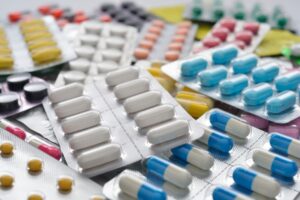
Pharmacy sales in Ukraine for January-February 2025 rose by 8.3% in monetary terms compared to the same period in 2025—to more than 39.014 billion UAH, while in volume terms they decreased by 7.2%—to nearly 176,866 thousand packages, according to data from a study conducted by Business Credit and reported to the agency “Interfax-Ukraine.”
According to the data, the weighted average price of the pharmacy basket in January-February 2026 was 220.58 UAH per package, which is 16.67% higher than during the same period a year earlier.
At the same time, pharmacy sales of medicines during this period increased by 10.8% in monetary terms—to more than 31.396 billion UAH—and by 2.25% in volume terms compared to the same period in 2025, reaching 138 million packages.
The weighted average retail price of medicines for the first two months of 2026 was 227.5 UAH per package, which is 8.5% higher than in January–February 2025.
At the same time, pharmacy sales of dietary supplements in the first two months of 2026 increased by 12.46% in monetary terms, to nearly 4.6 billion UAH, while in volume terms they decreased by 17.3%, to 14.717 million packages. The weighted average price in this segment rose by 35.9% to 309.64 UAH per unit.
As reported, pharmacy sales in Ukraine for 2025 increased by 14.23% in monetary terms compared to 2024—to more than 220.287 billion UAH, while in volume terms they decreased by 2.25%—to nearly 1.135 million packages. The weighted average price of items in the pharmacy basket at the end of 2025 was 194.68 UAH per package, which is 16.86% higher than a year earlier.
At the same time, pharmacy sales of medicines during this period increased by 12.79% in monetary terms—to nearly 170.318 billion UAH—while in volume terms, they decreased by 0.2% compared to 2024, to 808.546 million packages.
The weighted average retail price of medicines at the end of 2025 was 210.65 UAH per package, which is 13% higher than at the end of 2024.
The pharmaceutical company “Farmak” remains the leader in retail sales in 2025 among domestic companies, with sales of nearly 10.978 billion UAH. The top 5 also included the pharmaceutical company “Darnitsa” (7.473 billion UAH), “Kyiv Vitamin Plant” (KVZ, nearly 6.842 billion UAH), ‘Arterium’ (5.975 billion UAH), and “Pharma Star/Acino” (2.9 billion UAH).



