

Bitcoin mining profitability rebounded significantly in August 2026 thanks to a sharp rise in the price of the largest cryptocurrency, but the industry’s economics remain substantially weaker than last year’s levels, according to Fixygen.
According to the monthly Luxor Hashrate Index report published on September 8, the dollar-denominated hashprice—the estimated miner’s revenue per unit of computing power—started August at $31.63 per PH/s per day and ended the month at $39.33, an increase of 24.4%.
This marked the strongest monthly growth in the metric since November 2024. On August 27, the hashprice temporarily rose above $40 for the first time in 220 days.
Bitcoin was the main driver behind the improvement in mining economics. In August, its price rose from $62,889 to $78,312, an increase of 24.5%. The average BTC price for the month increased by 8.7% to $69,263.
The average hashprice for August was $34.63, compared to $31.21 in July, an increase of 10.9%.
However, even after this recovery, profitability remains significantly lower than last year’s levels. The average August hashprice was approximately 32% lower than the 2025 average of $50.68 per PH/s per day.
Relatively stable network difficulty provided additional support to miners. In August, two adjustments nearly offset each other, and the net change amounted to approximately minus 0.34%. The average difficulty was 2% lower than in July.
However, as early as September 5, network difficulty rose by 1.31% as some of the computing power that had previously been taken offline began returning to the network. Luxor notes that mining activity is recovering following the hashrate decline in June and July.
The increase in computing power could once again put pressure on profitability. The more equipment competes for a fixed block reward, the smaller the share of revenue per unit of hashrate.
The situation also remains challenging for less efficient equipment. According to Luxor’s estimates, devices with energy efficiency of 25–38 J/TH generated an average energy yield of about $45 per MWh in August, while the average grid electricity cost was about $48 per MWh. This means that some older equipment remains at or below the break-even point.
As a result, August provided miners with a noticeable respite, but the sustainability of the recovery will depend on three factors at once: Bitcoin prices, network difficulty, and the cost of electricity.
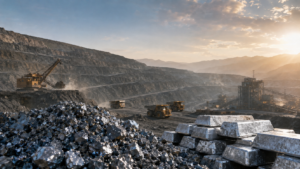
China retained its status as the world’s largest zinc producer at the end of 2025, while Peru and Russia posted the most notable growth among the leading producing countries. Global zinc production returned to growth after several years of sluggish performance, according to the Experts Club information and analytical center.
This is evidenced by data from the U.S. Geological Survey’s (USGS) Mineral Commodity Summaries 2026, published on February 6, 2026, and subsequently updated in May. The USGS describes this report as the earliest comprehensive source of data on global mineral production for 2025.
Largest zinc-producing countries in 2025
According to USGS estimates, the ranking of the leading producers is as follows:
| Rank | Country | Mine production in 2025 | Mine production in 2024 |
|---|---|---|---|
| 1 | China | 4.10 million tonnes | 4.00 million tonnes |
| 2 | Peru | 1.50 million tonnes | 1.27 million tonnes |
| 3 | Australia | 1.10 million tonnes | 1.10 million tonnes |
| 4 | India | 870,000 tonnes | 870,000 tonnes |
| 5 | Mexico | 780,000 tonnes | 773,000 tonnes |
| 6 | United States | 670,000 tonnes | 759,000 tonnes |
| 7 | Bolivia | 500,000 tonnes | 512,000 tonnes |
| 8 | Russia | 430,000 tonnes | 310,000 tonnes |
| 9 | Kazakhstan | 360,000 tonnes | 380,000 tonnes |
| 10 | Sweden | 230,000 tonnes | 239,000 tonnes |
Thus, the ten largest producers accounted for approximately 10.54 million tonnes, or 81% of global mine production, based on the USGS estimate of 13 million tonnes.
China increased production by approximately 2.5% to 4.1 million tonnes and accounted for almost one-third of global mine production. The gap between China and its closest competitors remains enormous: Chinese enterprises mined almost as much zinc as Peru, Australia and India combined.
One of the main changes in 2025 was the increase in mine production in Peru by approximately 18%, to 1.5 million tonnes. The country strengthened its second-place position in the global ranking. The International Lead and Zinc Study Group (ILZSG) linked the growth, in particular, to increased production at the large Antamina polymetallic mine and the recovery of other capacities.
The position of Russia changed significantly. According to USGS estimates, mine production increased from 310,000 tonnes in 2024 to 430,000 tonnes in 2025, allowing the country to move ahead of Kazakhstan and approach Bolivia. One of the key factors was increased production at the new Ozernoye deposit in Buryatia, where concentrate output began in September 2024. The ILZSG also cited the commissioning of Ozernoye as one of the factors behind the growth of European zinc production in 2025.
The United States moved in the opposite direction. U.S. mine production declined by approximately 12%, from 759,000 to 670,000 tonnes. The USGS attributes the decline mainly to lower zinc grades in the ore at the Red Dog mine in Alaska. The mine’s operator, Teck Resources, reported that Red Dog itself reduced zinc production from 555,600 tonnes in 2024 to 462,700 tonnes in 2025.
Why the 2025 ranking does not include separate positions from 11th to 20th
Unlike some previous statistical compilations, the USGS Mineral Commodity Summaries 2026 does not disclose separate country figures beyond tenth place. Their production is combined under the Other countries category, which accounted for approximately 2 million tonnes of zinc in 2025. Therefore, compiling an accurate top 20 exclusively from publicly available USGS statistics would be incorrect. A detailed ILZSG country database exists, but the complete dataset is available by subscription.
At the same time, notable changes occurred among second-tier producers. Mine production grew particularly rapidly in the Democratic Republic of the Congo following the commissioning of the Kipushi mine. Ivanhoe Mines reported that this mine alone produced 203,200 tonnes of zinc in concentrate in 2025, compared with approximately 50,000 tonnes during its start-up period in 2024. Thus, the DR Congo has already approached the production volumes of the group of countries immediately following the top ten.
The ILZSG also noted growth in mine production in 2025 in South Africa, Ireland, Bosnia and Herzegovina and other European countries. Irish mine production recovered following the return of the Tara mine to operation, while additional supply came from new and expanding projects in the DR Congo, Russia and Iran.
Global zinc mine production returned to growth
The USGS estimates global zinc mine production in 2025 at approximately 13 million tonnes, compared with a revised 11.9 million tonnes a year earlier. At the same time, later ILZSG statistics provide a somewhat more conservative market estimate. According to data published by the group on April 23, 2026, global zinc mine production increased by 4.8% in 2025, reaching approximately 12.5 million tonnes. The difference is explained by the timing of the estimates, methodological differences and subsequent data revisions.
The main sources of additional supply were increased mine production in Peru and China, the commissioning and ramp-up to design capacity of new large mines, including Kipushi in the DR Congo and Ozernoye in Russia, as well as the recovery of several European enterprises.
At the same time, the USGS estimates global zinc reserves that are economically recoverable at approximately 240 million tonnes. The largest reserves are concentrated in Australia, with approximately 64 million tonnes, China with 60 million tonnes and Russia with 29 million tonnes. They are followed by Peru with 18 million tonnes and Mexico with 14 million tonnes.
Zinc remains one of the key industrial non-ferrous metals. Its main use is the galvanization of steel to protect it against corrosion, primarily in construction, infrastructure and the automotive industry. Zinc is also used to produce brass, alloys, chemical products and several new energy-storage systems.
CHINA, MINING, PERU, zinc, ZINC MINING

According to Fixygen, the cryptocurrency market ended the week with a partial recovery after Bitcoin fell below the psychological threshold of $60,000, however, the main topics for the industry remained outflows from ETFs, major banks revising their forecasts, intensifying regulatory competition surrounding stablecoins, and miners shifting to the AI data center sector.
At the time of writing, Bitcoin was trading around $62,440, while Ethereum was trading around $1,625. Earlier in the week, BTC fell below $60,000 amid weak demand from institutional investors, outflows from exchange-traded funds, and persistent geopolitical risks.
Data on U.S. spot Bitcoin ETFs served as a key negative signal. According to CoinDesk, citing SoSoValue, the funds recorded $4.5 billion in net outflows in June—the worst month since the launch of such products in January 2024. The previous record low was $3.48 billion in February 2025.
Against this backdrop, Citigroup lowered its 12-month price forecast for Bitcoin from $112,000 to $82,000, and for Ether from $3,175,000 to $2,240,000. The bank attributed the revision to waning investor interest, outflows from ETFs, and a lack of rapid progress in U.S. crypto regulation. Citi also lowered its expectations for net inflows into Bitcoin ETFs from $10 billion to zero.
The week’s regulatory agenda focused primarily on stablecoins. In the UK, the FCA eased its final requirements for stablecoin issuers, lowering the proposed capital reserve from 2% to 1% of the issuance volume. The final rules are set to bring the crypto-asset sector fully under FCA supervision starting in October 2027.
This is an important signal for the global market: jurisdictions are beginning to compete not only for crypto exchanges but also for tokenized payment infrastructure. Following increased U.S. scrutiny of dollar-pegged stablecoins, the UK is attempting to make its own regulations more proportionate so as not to lose companies working with payment tokens.
Another trend of the week is the continued expansion of Bitcoin miners into the AI and data center sectors. Reuters reported that the Hunt and Crow families—both American billionaire families—along with Nasdaq-listed company Empery Digital, have signed an agreement for a $230 million industrial facility with a capacity of 150 MW and plan to convert it into a hyperscale data center. The parties also signed a non-binding letter of intent for a $1 billion lease with a cloud computing company.
Another telling example is Ionic Digital, a company that positions itself as both a Bitcoin miner and an AI infrastructure company, which has filed for a direct listing on Nasdaq. This confirms structural changes in the sector: for some miners, the key asset is no longer so much hash rate as access to electricity, land, substations, and permits for data centers.
For miners, this diversification has been a response to the deteriorating economics of Bitcoin mining following the halving, high network difficulty, and falling BTC prices. Reuters previously noted that crypto miners are increasingly using large energy facilities for artificial intelligence (AI) computing, as mining profitability remains volatile and demand for AI data centers is growing rapidly.
The week also demonstrated a shift in investor sentiment. Following a strong first half of the year for AI-related stocks, part of the market began looking for opportunities to rotate back into Bitcoin after a deep correction. CoinDesk noted that a loss of momentum in the segment of stocks for companies involved in memory and semiconductor manufacturing could raise the question of returning some capital to BTC; however, traders are not yet showing full confidence in the sustainability of the rebound.
From a practical standpoint, the market situation looks like this: Bitcoin has recovered above $60,000 but has not received sufficiently strong institutional validation via ETFs. Ethereum remains under pressure from weaker network activity and lower forecasts, while stablecoins and AI data centers are becoming the most dynamic segments of the crypto infrastructure.
In the coming weeks, key factors for the market will remain the dynamics of inflows and outflows in spot ETFs, macroeconomic expectations regarding U.S. interest rates, regulatory signals regarding stablecoins, and Bitcoin’s ability to consolidate above $60,000. If outflows from ETFs continue, the market may revert to a defensive scenario. If, on the other hand, institutional demand stabilizes, July could be a month of technical recovery following a weak June.

According to Fixygen, major Bitcoin miners are accelerating the repurposing of some of their energy facilities and infrastructure into data centers for artificial intelligence and high-performance computing amid a deteriorating Bitcoin mining economy, Cointelegraph reports.
In this new model, the miners’ key asset is not ASIC equipment—which is unsuitable for AI computing—but rather access to electricity, substations, cooling systems, permits, and ready-to-use sites. It is precisely the shortage of grid-connected power that has become one of the main constraints on the development of AI data centers. The total capacity of AI data centers worldwide reached 29.6 GW by the end of 2025, whereas in 2022 it was less than 1 GW.
Publicly traded mining companies have already concluded a number of major deals in the AI and HPC segments. In particular, in November 2025, IREN signed a five-year agreement with Microsoft for GPU cloud services worth approximately $9.7 billion for a 750-MW campus in Texas. Hut 8 signed a 15-year, $7 billion contract with Fluidstack for the River Bend facility in Louisiana, while Core Scientific expanded its agreement with CoreWeave to $10.2 billion over 12 years.
According to CoinShares, public mining companies have already announced contracts in the fields of AI and high-performance computing totaling more than $70 billion. Companies with such agreements are valued significantly higher by the market: their price-to-earnings ratio for the last 12 months stands at 12.3, compared to 5.9 for miners that remain primarily focused on Bitcoin mining.
Analysts estimate that the share of AI revenue among public mining companies could rise to approximately 70% by the end of 2026, compared to about 30% in the first quarter. This trend is effectively transforming some mining companies into infrastructure operators for the AI market.
Pressure on traditional mining has intensified due to declining margins. According to JPMorgan’s estimates, the average cost of mining a single Bitcoin is about $78,000, and approximately 20% of miners are operating at a loss. Based on current prices, Bitcoin is trading at around $62,500, which is below the estimated average cost of production.
At the same time, the transition to AI is not cheap. According to CoinShares, a typical crypto mining infrastructure costs $700,000 to $1 million per 1 MW, while liquid-cooled AI facilities may require $8–15 million per 1 MW. This increases companies’ debt burden and makes them dependent on large clients—hyperscalers.
For the market, this signals a shift in investment logic within the mining sector. Whereas Bitcoin price, hash rate, and electricity costs were previously the main factors, long-term contracts with AI clients, access to capital, and the ability to quickly repurpose facilities for GPU infrastructure are now becoming increasingly important for some companies.
Publicly traded Bitcoin miners are under pressure following the halving due to the reduction in block rewards, high network difficulty, and Bitcoin price volatility. Expansion into AI and HPC allows them to diversify their revenue, but at the same time shifts their business into the capital-intensive data center segment, where debt, facility commissioning timelines, and customer concentration remain key risks.
AI, BITCOIN, DATA CENTER, HPC, MINING
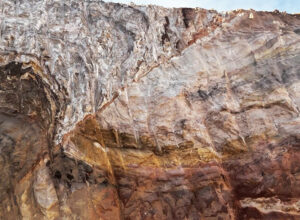
PJSC “Vesco,” controlled by PJSC “System Capital Management” (SCM) through its subsidiary Vesco Limited (Cyprus), saw its net profit drop 4.7-fold in January-March of this year compared to the same period last year—to 46.593 million UAH from 220.620 million UAH.
According to the company’s interim report, which is available to the agency “Interfax-Ukraine,” revenue from ordinary activities for this period fell by 2.4 times—to UAH 272.968 million from UAH 648.604 million.
Retained earnings as of the end of March amounted to UAH 3,190.277 million.
PJSC “Vesko” previously operated in the Sloviansk and Dobropillia districts of Donetsk Oblast. Due to military operations in the areas where its production sites are located, some production processes have been temporarily suspended. The company’s fixed assets are located at storage sites in territory controlled by Ukraine and at work sites.
During the period from January 1 to March 31 of this year, no clay was extracted; exports accounted for 90% of total sales. Sales volumes were supported by warehouse stocks and available extraction capacity. Sales volume for this period decreased by 135,000 tons compared to the same period in 2025, to 77,000 tons.
During the second quarter of 2026, the company does not plan to produce any clay; sales are projected at 104,000 tons of refractory clay.
The company plans to spend UAH 0.5 million in 2026 on technical re-equipment, specifically on software.
According to the annual report, the company reported a net profit of UAH 979.729 million in 2025 (UAH 1.020788 billion in 2024), while revenue from ordinary activities amounted to UAH 3.131770 billion (UAH 3.643114 billion).
In 2025, clay production amounted to 359,000 tons, with exports accounting for 80% of total sales.
In 2025, the company employed more than 709 people (including part-time workers and those laid off during the year), of whom 63% were blue-collar workers, and 37% were managers, specialists, and white-collar employees. The average salary for 2025 was 52,443.90 UAH, compared to 35,915.30 UAH in 2024.
The report notes that the war in Ukraine has significantly impacted the company’s operations. Vesko’s production facilities are located in close proximity to the active combat zone, which poses constant risks to personnel, infrastructure, and logistics processes. The intensification of hostilities in the second half of 2025 complicated the security situation in the region where the company operates and led to a reduction in production and sales volumes. In particular, due to the approach of hostilities to the city of Pokrovsk, shipments from two stations were suspended. Only one station remained for product shipment.
In order to maintain the ability to fulfill contractual obligations, the company is building up product inventories in warehouses outside the combat zone. Despite the Russian Federation’s invasion of Ukraine, the company continued to produce and sell clay throughout 2025. The company is searching for alternative deposits and developing new sales markets to sustain its business.
No clay extraction is planned for 2026; clay sales will be made from inventory in the amount of 542,000 tons.
It is also reported that in 2025, dividends were declared in the amount of UAH 427.403 million (2024 – UAH 200 million). The company’s outstanding dividend liability as of December 31, 2025, was UAH 281.371 million (as of December 31, 2024, it was UAH 316.158 million).
The number of employees as of the end of Q1 2026 was 247, as of the end of 2025 – 297, and as of the end of 2024 – 597.
Private Joint Stock Company “Vesco,” registered in Kyiv, is a leading mining and extraction enterprise and a global supplier of refractory clays with a production chain ranging from raw material extraction to the manufacture of finished products. Main business activity: extraction of sand, gravel, clays, and kaolin.
Vesco Limited (Cyprus) owns 100% of the shares of PJSC “Vesco.” The ultimate beneficial owner is Rinat Akhmetov.
The authorized capital of the PJSC is UAH 57.553 million, and the par value of a share is UAH 0.5.

Australian company European Lithium Limited, listed on the Australian Stock Exchange (ASX) under the ticker symbol “EUR,” announced on Tuesday that it had entered into a binding agreement to acquire 100% of the shares of Velta Holding, an American titanium company that owns production and mining assets of the same name in Ukraine.
“Under the terms of the agreement, European Lithium will acquire 100% of Velta’s issued capital for a total consideration of approximately 173 million fully paid shares of European Lithium, subject to completion of due diligence and satisfaction of customary closing conditions,” the exchange announcement said.
According to ASX data, European Lithium shares fell 6.56% to AUD0.28 per share (about $0.19 per share) at the opening of trading on Tuesday. Once these conditions are met, the shares will be issued and transferred to Velta’s existing shareholders.
“The proposed agreement with European Lithium provides an opportunity to advance a number of development initiatives in Ukraine and the United States that the Group has been preparing over the past decade. These initiatives focus on both horizontal and vertical integration, supporting the transition from a raw material-based model to the production of titanium metal and other critical value-added materials,” said Andrey Brodsky, CEO of Velta Holding, in a statement.
According to ASX data, a total of 1 billion 734 million 351,762 thousand shares have been issued to date, and the company’s capitalization is approximately AUD529 million. European Lithium’s revenue in fiscal year 2025 (ended June 2025) increased to AUD1.13 million from AUD0.7 million in FY2024, while net loss decreased to AUD71.49 million from AUD194.93 million.
“The acquisition of Velta is an important step in expanding European Lithium’s access from lithium to critical and strategic minerals. Titanium is a key material used in the aerospace, defense, medical, and industrial sectors, and Velta’s asset base and technical capabilities provide the company with a platform for future growth,” explained Tony Sage, Executive Chairman of European Lithium, explaining the interest in the deal.
It is also noted that European Lithium is interested in developing an integrated production chain—from the extraction and processing of raw materials to the production of titanium metal powders and finished components, particularly for additive manufacturing, which supports higher margins and a more sustainable business model.
The release notes that despite the ongoing war in Ukraine, Velta Holding maintains support for its export markets and operational stability, but any further expansion of production capacity and investment programs will depend on the current security situation and the fulfillment of the terms of the proposed agreement.
Velta is a titanium company operating primarily in the Kirovograd region in central Ukraine. The group’s assets include ilmenite and titanium ore resources, associated processing facilities, proprietary technologies, and logistics aimed at supplying high-quality titanium materials to global markets. According to Velta Holding’s estimates, it occupies approximately 2% of the global titanium raw materials market.
The holding company is developing the Birzulovskoye deposit, where it launched an enrichment plant in 2012, and has a transshipment complex in neighboring Novomyrhorod, designed to handle approximately 300,000 tons of cargo per year. Velta’s assets also include the Likarovskoye deposit and the leased former Novomirgorodskaya brown coal mine with an area of 30 hectares, where processing facilities for the production of metallic zirconium and hafnium, metallic titanium and titanium products, as well as a transshipment complex with a capacity of more than 1.5 million tons per year.
In the fall of 2025, during a visit to the enterprise by representatives of the US International Development Finance Corporation (DFC) and the US-Ukraine Investment Fund, Velta presented various projects within the framework of building a CRM (Critical Raw Materials) cluster with a total investment of approximately $243 million over four years.
The ilmenite resources of the Birzulovsky deposit according to JORC standards amount to 2.06 million tons, while the Likarovsky deposit, for which JORC standards are currently being approved, has approximately 2.5-2.8 million tons. The deposit also contains 41,000 tons of zirconium, 15 million tons of kaolin, and 17 million tons of clay. Potential production is estimated at 280,000 tons of ilmenite, zirconium oxide – 500 tons, metallic zirconium and hafnium – 10 tons each, finished titanium products – about 30 tons, titanium powders – 1,200 tons, kaolin – 700,000 tons, and clay – 800,000 tons.
Velta Holding also includes the Velta RD Titan research and development center and Velta Medical, a manufacturer of custom titanium implants. The ultimate beneficiaries are Andrei Brodsky (60%), Vadim Moskalenko (20%), and Vitaly Malakhov (20%).
European Lithium Limited is an exploration and development stage mining company focused on lithium assets in Austria, Ukraine, and Ireland, as well as various assets in Australia and a rare earth metals project in Greenland. The release notes that European Lithium currently owns 44.982% of the common shares of US-based Critical Metals, which as of January 26, 2026, are valued at approximately $879.06 million.
At the end of last year, European Lithium’s subsidiary applied for a production sharing agreement on the Dobra lithium deposit in Ukraine, but lost.



