
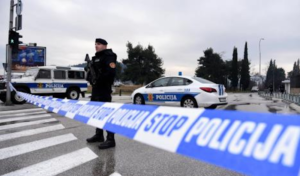
Montenegrin police are conducting a large-scale investigation into more than 50 foreign nationals, most of whom are Ukrainian citizens, who were found in a rented house in the Mareza district of Podgorica together with hundreds of digital devices, specialised equipment and a significant amount of cash, the Serbian Economist Telegram channel reports.
This was reported by the Police Directorate of Montenegro. In addition to Ukrainian citizens, Moldovan and Slovak citizens were among those present in the house.
The operation was conducted on 10 August after law enforcement officers had located and identified the premises in advance. Police seized equipment and other materials that may be relevant to the investigation.
According to the police, several hundred digital devices and items of specialised equipment were found in the building. The amount of equipment seized was so large that a lorry was required to remove it. In addition, a significant amount of money was found, the origin of which is also being investigated.
The police are establishing the grounds for the foreigners’ stay and employment in Montenegro, the nature of their activities and movements, as well as the purpose of the digital equipment discovered. The group’s possible connection to illegal activities is being investigated separately.
The Montenegrin publication Vijesti, citing preliminary investigation data, reported that the group’s possible involvement in online fraud is among the theories under consideration.
The director of the Montenegrin police formed a special operational group to conduct the investigation. It includes specialists in cybersecurity and high-tech crime, financial investigations and money laundering, international police cooperation, as well as matters involving foreigners and migration. Montenegro’s National Security Agency has also joined the investigation, which is being coordinated with the prosecutor’s office.
The police stressed that, due to the complexity of the investigation, they cannot disclose additional details at this stage. After the initial investigative and expert procedures have been completed, the authorities have promised to announce the results of the inquiry.
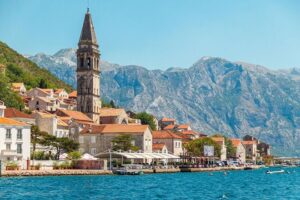
According to Serbian Economist, in the first six months of 2026, Budva welcomed approximately 245,000 tourists, who spent nearly 800,000 nights at the resort, according to preliminary MONSTAT data cited by the Budva Tourism Organization. The number of overnight stays was slightly higher than last year’s.
As of August 7, there were 44,534 registered tourists on the Budva Riviera, of whom 44,143 were foreigners and only 391 were residents of Montenegro. Thus, foreign guests currently account for over 99% of the registered tourist flow. The private sector accommodated 24,888 people, while hotels accommodated 18,525.
Based on the results of the first half of the year, Serbia remains Budva’s largest foreign market, accounting for about 13% of tourist arrivals. The tourism organization also notes growth in the Western European market.
A precise breakdown of current vacationers by nationality is not published, but official data from TO Budva reveals the leading markets.
In group accommodations—primarily hotels—the largest number of tourists currently come from Serbia, Russia, Israel, the United Kingdom, Germany, Bosnia, Poland, Ukraine, and Turkey.
In private apartments and vacation rentals, the breakdown is slightly different: Serbia, Russia, Bosnia, Ukraine, Poland, Germany, Turkey, the United Kingdom, North Macedonia, and Romania lead the way. Thus, Ukrainians currently rank fourth among Budva’s main markets for private accommodations and are among the top ten in the hotel segment.
Despite changes in the structure of international tourism since 2022, the number of Russian tourists also remains high. Russians currently rank second in both group and private accommodations, behind tourists from Serbia.
At the same time, the market structure is becoming more diversified. The role of Israel, the United Kingdom, Germany, and Poland has noticeably increased in the hotel sector, and representatives of Budvanska rivijera, the largest hotel group, also note the presence of guests from the Baltic states, Ukraine, Kazakhstan, Egypt, and China during the current season.
Thus, Budva’s main tourist flow today is driven by Serbia and neighboring countries, Russia and Ukraine, as well as the rapidly growing markets of Western Europe and Israel.
https://t.me/relocationrs/3425
According to Experts.news, Montenegro and Iceland may eventually become members of the European Union at the same time—the possibility of combining the two countries’ accession into a single package is being discussed in Brussels by representatives of the European Commission and European diplomats, Politico reports.
This option is being considered against the backdrop of Montenegro’s rapid progress in membership negotiations and Iceland’s possible return to the European integration process, which was put on hold more than a decade ago. The EU has not yet made a final decision on the countries’ joint accession.
A key event will be the referendum in Iceland on August 29, 2026, in which citizens will have to decide whether the country should resume negotiations on EU accession. The Icelandic parliament approved the referendum in May. If a majority supports resuming negotiations, the outcome will subsequently have to be put to a second referendum—this time directly on the country’s membership in the European Union.
European Commissioner for Enlargement Marta Kos called Iceland a “special case,” as the country is already deeply integrated with the European Union through the European Economic Area and the Schengen Area.
In her assessment, if the referendum yields a positive result, negotiations with Reykjavík could potentially last only one or two years. Kos also stated that the EU is ready to seek special solutions for the issues most sensitive to Iceland, primarily fisheries and agriculture.
This theoretically allows Iceland to catch up with Montenegro and enter the final stretch of negotiations at roughly the same time as Podgorica.
Montenegro is currently the candidate that has advanced the furthest in the EU accession process.
All 33 negotiation chapters have already been opened, and following the EU–Montenegro Intergovernmental Conference on July 14, 18 chapters were provisionally closed. The most recent chapters to be closed were those on competition policy and the Customs Union.
Thus, Podgorica has completed more than half of the process of closing negotiation chapters and expects to conclude negotiations by the end of 2026.
The government of Prime Minister Milojko Spajić has officially set a goal of becoming the 28th EU member state in 2028. The European Union has already begun preparatory work on Montenegro’s accession treaty, and on June 30, the European Commission presented a financial package outlining the budgetary implications of the country’s future membership.
One of Politico’s sources at the European Commission stated that there is a significant likelihood of a joint package being formed for the two countries.
The economic rationale for this option lies in the substantial differences between the two countries.
Iceland is a wealthy economy and, upon accession, would likely become a net contributor to the EU budget. Montenegro, by contrast, due to its relatively low per capita income, would be a recipient of European funding.
According to European diplomats, combining the two countries into a single package could therefore simplify the political coordination of enlargement for current EU members.
Montenegro’s Minister for European Affairs, Maida Gorčević, told Politico that Podgorica is open to the possibility of linking its accession to that of Iceland.
Iceland’s Minister of Foreign Affairs, Torgurdur Katrín Gunnarsdóttir, also called joint accession “absolutely” possible.
However, each country will have to fulfill the membership criteria independently. Merely combining them into a single treaty or political package does not eliminate the need to complete negotiations and secure the consent of all current EU member states.
Despite the high level of economic integration, Iceland’s possible return to the negotiations does not guarantee their smooth conclusion.
For Iceland, control over fishery resources carries significantly greater economic and political weight than it does for most EU member states. The country’s foreign minister has stated that retaining control over fisheries will be one of the fundamental conditions of any future agreements with Brussels.
However, Iceland already applies a significant portion of EU legislation thanks to its membership in the European Economic Area. That is why the process could potentially proceed much faster than for most current candidates.
Montenegro applied for EU membership in 2008, was granted candidate status in 2010, and membership negotiations officially began on June 29, 2012. Currently, all 33 negotiation chapters have been opened, of which 18 have been provisionally closed. Following an acceleration of reforms in 2024–2026, the country became the leading candidate for the next EU enlargement.
Iceland took a completely different path. Following the global financial crisis, it applied to the EU in July 2009, and negotiations began in 2010. By the time negotiations were suspended, 27 negotiation chapters had been opened, 11 of which had been provisionally closed.
After a new government took office in 2013, negotiations were frozen, and in March 2015, Reykjavík asked the European Union to no longer consider Iceland a candidate country. At the same time, the country maintained the closest possible integration with the EU through the European Economic Area and the Schengen Area.
In 2026, the issue of membership returned to the political agenda. Parliament scheduled a referendum for August 29 on whether to resume negotiations.
The format of several countries joining the EU simultaneously is not new. Spain and Portugal joined the Community at the same time in 1986; ten countries joined the EU as part of the 2004 enlargement; and Bulgaria and Romania joined simultaneously in 2007.
If Iceland votes to resume negotiations and is able to quickly resolve contentious issues with Brussels, 2028 becomes, for the first time, a theoretically possible date for the simultaneous accession of Montenegro and Iceland. For now, however, this is a political scenario rather than an approved EU enlargement timeline.
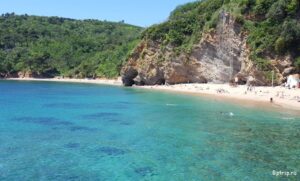
According to The Serbian Economist, Mogren Beach in Budva, Montenegro, took first place in the European Beach Index 2026, compiled by experts from the British service Quotezone.co.uk. It outperformed beaches in Cyprus, Spain, Bulgaria, Greece, and other European countries thanks to its combination of warm sea, affordable prices, and proximity to the airport.
When compiling the index, analysts took into account the average water and air temperatures in July, the number of five-star reviews, the cost of a three-day hotel stay, the minimum price of draft beer, and the distance from the nearest airport. Points were awarded to beaches for each indicator, and the total score determined their final ranking.
The average water temperature near Mogren Beach in July is 25.5 degrees, and the average air temperature is 26.7 degrees. The researchers estimated the average cost of a three-day stay in the Budva area at 194.56 pounds sterling, and the minimum price of draft beer at 1.29 pounds. The distance to the nearest airport is about 22 km. At the time of data collection, the beach had 479 five-star reviews.
Second place went to Nissi Beach in Ayia Napa, Cyprus, which had topped the previous ranking. It outperforms Mogren in terms of temperature: the water here warms up to an average of 27.4 degrees, and the air to 28.9 degrees. However, a three-day stay is more expensive—approximately 318.85 pounds.
Playa de Maspalomas on the Spanish island of Gran Canaria came in third. The beach has garnered over 5,000 five-star reviews, but the average cost of a three-day stay reached 365.97 pounds. Fourth place went to Irakli Beach in Bulgaria, where the lowest price for beer among the ranking’s participants was recorded—0.88 pounds.
Rounding out the top ten were Elafonissi in Crete, Praia da Falésia in Portugal’s Algarve, Zlatni Rat on the Croatian island of Brač, and La Pelosa in Sardinia. Bournemouth Beach in England took ninth place, while Palombaggia in Corsica came in last.
Quotezone representative Helen Rolf noted that tourists are increasingly seeking destinations that combine pleasant weather, picturesque coastlines, and affordable vacation costs. According to the study’s authors, Montenegro was able to outrank more well-known resorts primarily due to relatively low costs and Mogren’s convenient location near Budva.
Data from Tripadvisor, Budget Your Trip, Numbeo, and climate and mapping services were used to calculate the index. Each country was represented by one popular beach, so the ranking reflects a comparison of a specific sample of ten destinations, rather than all of Europe’s beaches.
https://t.me/relocationrs/3395
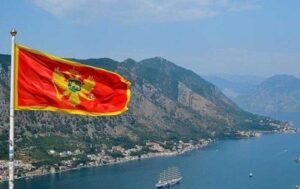
According to “Serbian Economist”, on July 30, the Montenegrin government approved a proposal to establish a mechanism for screening foreign investments that could affect the country’s security and the functioning of critical infrastructure.
The new rules have not yet taken effect. A separate law must be passed for them to be implemented.
Prior approval will be required from investors from countries outside the EU who acquire control or at least 10% of the capital or voting rights in companies operating in strategic sectors.
The review may cover the energy sector, ports, airports, railways, banks, payment systems, telecommunications, media, digital infrastructure, technology, food production, and critical raw materials.
Real estate will be subject to review only if it is associated with strategic facilities or located near critical, military, or government infrastructure. This initiative does not directly apply to ordinary apartment purchases by foreigners.
The government will have the authority to approve a transaction, impose additional conditions, or prohibit it entirely. Potential requirements include restrictions on access to confidential data, disclosure of information about ultimate owners, and sources of funding.
The preliminary review is expected to take up to 45 days. Concluding a transaction without authorization may result in a fine, restrictions on voting rights, or the mandatory sale of the acquired stake.
The initiative is part of Montenegro’s efforts to align its legislation with EU rules. The final terms will be determined after the law is drafted and adopted.
Formally, specific countries are not named in the initiative. However, in practice, the mechanism will be particularly important for investors from Russia, Serbia, and China. All three countries are outside the EU, and their capital is significantly represented in Montenegro’s economy.
The possible adoption of this law will, in one way or another, also affect Ukrainian investors. Ukraine ranks high in terms of the number of companies in Montenegro. According to the latest data from MONSTAT, in 2024 there were 1,069 enterprises with Ukrainian owners operating in the country, accounting for 3.6% of all active companies with foreign capital. This places Ukraine fourth, behind Russia, Turkey, and Serbia.
At the same time, Ukrainian investments are concentrated primarily in real estate and small companies. In 2023, the inflow of such investments amounted to 19.1 million euros, of which 15.2 million euros went toward real estate purchases.
Therefore, the impact of the new rules on Ukrainian businesses is likely to be limited. Routine purchases of apartments and the establishment of small companies should not automatically be subject to review. Permission will be required for investments in strategic sectors or projects related to critical infrastructure.
Source: Government of Montenegro
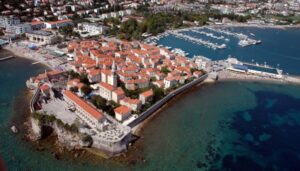
According to Serbian Economist, ancient Roman baths located beneath Church Square next to the Holy Trinity Church in Budva’s Old Town will be opened to visitors for the first time. The archaeological site will be preserved, equipped to receive visitors, and incorporated into the city’s cultural and tourism offerings as part of the international ROMANICA project.
The remains of the baths were discovered after the devastating 1979 earthquake during the restoration of the Old Town. During archaeological excavations in the 1980s, experts led by Professor Mirko Kovačević uncovered bathing pools, the furnace area, and preserved elements of the ancient underfloor heating system.
Despite the research and initial conservation efforts, the site remained closed for decades and was not included in Budva’s tourist itineraries. A stone plaza was later built over the thermal baths, so the ancient part of the city has effectively been hidden from visitors until now.
The project involves further conservation of the authentic remains, creating conditions for tourist access, and implementing digital resources. These resources will be used to show visitors the complex’s original appearance and explain its connection to the Roman maritime and underwater heritage of the Adriatic.
ROMANICA brings together sites of Roman coastal and underwater heritage in Montenegro, Croatia, and Bosnia and Herzegovina. The University of Zadar serves as the lead partner. Other participants in the project include the city of Biograd na Moru, the International Center for Underwater Archaeology in Zadar, the Franciscan Museum of Tomislavgrad, the University of Montenegro, and the municipality of Budva.
The project began on June 15, 2026, and is scheduled to last 24 months. Its total budget is 1.837 million euros.
The project is being implemented as part of the Interreg VI-A IPA cross-border cooperation program “Croatia—Bosnia and Herzegovina—Montenegro” in the area of sustainable and inclusive tourism and culture.
The exact date when the thermal baths will open to visitors has not yet been announced.
Budva is considered one of the oldest urban centers on the eastern coast of the Adriatic. During the Roman period, its port was part of maritime trade routes, and the public thermal baths were used not only for bathing but also as a place of relaxation, meetings, and socializing for residents and travelers.
https://t.me/relocationrs/3337



