
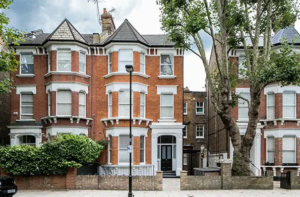
Nearly four out of ten apartments in London that were resold within 12 months as of August 2026, after five to ten years of ownership, were sold for less than their original purchase price. This is according to an analysis by e.surv Chartered Surveyors.
The share of loss-making apartment resales in the British capital reached 39.5%, the highest rate among regions in the United Kingdom. By comparison, among homes owned for the same period, the share of sales below the original purchase price was less than 4%.
In Southeast and East England, approximately one-third of apartments that owners had held for five to ten years were also sold for less than their purchase price. In central and northern England, such transactions accounted for about 20%, while the UK-wide average was slightly more than a quarter. In Scotland, the figure remained below 10%.
According to e.surv’s assessment, price trends for apartments and single-family homes began to diverge noticeably around 2017. Among the factors holding back apartment prices, analysts cite leasehold issues, high service charges, safety concerns regarding buildings, the cost of replacing cladding following the cladding crisis, and rising mortgage costs.
Additional pressure is coming from the general weakening of the London real estate market. According to the e.surv index, the average housing price in the United Kingdom in September 2026 was approximately £328,900, which is 1.5% higher than a year ago. However, London was the only major region to see a year-over-year decline in prices—by approximately 2.3%, to 594,200 pounds
A separate analysis by ValuQ also shows an increase in the number of loss-making transactions in England and Wales. In the first half of 2026, 16.3% of residential properties resold less than five years after purchase were sold for less than their original price. Among apartments, this figure reached 29.5%. The total difference between the purchase price and the resale price of such properties was estimated at approximately £210 million.
It is important to note that this is strictly a nominal comparison of purchase and sale prices. The calculation does not include stamp duty, mortgage interest, real estate agent commissions, renovation costs, maintenance fees, or other owner expenses. Therefore, the actual financial outcome for some sellers may be even worse.
Experts attribute the weak performance of the apartment market primarily to the fact that buyers are increasingly carefully evaluating the ongoing maintenance costs of apartment buildings and potential legal and technical risks. At the same time, demand for single-family homes and townhouses remains relatively more stable.

Perfect Group plans to expand its rental real estate business in Kyiv and transfer some of the apartments in its complexes to professional management by hotel operators.
As the company’s CEO, Oleksiy Koval, stated in an interview with Interfax-Ukraine on September 1, 2026, the first such project is being developed in the LA MANCHE residential complex at 46 Shchekavitska Street in Podil. Forty apartments have been allocated for this income-generating real estate project.
The operator will focus primarily on long-term rentals.
Another project is being developed as part of the Stanford residential complex at 35 Predslavinskaya Street. Here, a separate section is planned for short-term rentals, and Perfect Group is in negotiations with a major professional operator.
The developer also plans to extend some hotel services to the other residents of the residential complexes. These include concierge services, babysitting, children’s playrooms, dog-walking, and other additional services.
According to Koval, after a period of competition among developers based on price, architectural concept, and infrastructure, the next key factor in market competition will be service quality.
For comfort-class housing, the company intends to develop a similar approach through digitalization. Perfect Group is developing an app to facilitate communication between residents and the management company, process requests, and vote on additional services. Its launch is planned for before the end of 2026.
In addition to income-generating real estate projects in Kyiv, Perfect Group is building the VELMY aparthotel in Polyanytsia near Bukovel.
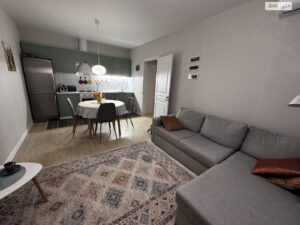
The median price of apartments in Ukraine rose by 3% between January and June 2026—to $61,000—with Uzhhorod nearly catching up to the capital in terms of housing prices, according to an OLX study.
According to the platform’s analytical center, the apartment market in Ukraine showed moderate growth in the first half of 2026. The number of listings increased by 4%, and the average number of responses per listing rose by 3%; the median price of apartments in dollars increased by 3% and stood at $61,090 as of June.
The most significant increase in the price of one-bedroom apartments on the secondary market was recorded in Vinnytsia (+11%), Khmelnytskyi (+9%), as well as Chernivtsi and Zaporizhzhia (both +7%). Price declines were observed in Kherson (-13%), Rivne (-4%), and Kyiv (-3%).
Kyiv has so far managed to retain first place in terms of real estate prices ($75,040 median price for a one-bedroom apartment), followed by Uzhhorod ($74,749) in second place and Lviv ($73,805) in third. The lowest prices were in Kherson ($13,235), Zaporizhzhia ($15,935), and Mykolaiv ($20,217).
In Ukraine’s largest cities, the trend in one-bedroom apartment prices varied by district. The most consistent price growth was observed in Odesa, where apartment prices rose by 2–4% across all districts. The most expensive apartments were in the Primorsky District ($65,449), while the most affordable were in the Peresypsky District ($32,388).
In Kharkiv, the largest increases were recorded in the Industrial (+15%, to $23,678), Slobidskyi (+13%, to $24,363), and Osnovyanskyi (+11%, to $34,403) districts.
In Lviv, most districts also saw an increase in housing prices, with the most significant increases occurring in the Zaliznychny (+12%, to $72,874) and Frankivskyi (+9%, to $75,320) districts.
At the same time, prices in Kyiv mostly remained stable or declined, with the sharpest drop in the Dniprovskyi district (-10%). Pecherskyi remains the most expensive ($163,134), while Desnianskyi is the most affordable ($44,859).
The trend in Dnipro was the most mixed: depending on the district, price changes ranged from +17% in the Soborny district ($43,926) to -22% in the Shevchenkivskyi district ($31,998).

Vietnam’s apartment market has cooled sharply following a period of rapid price growth: developers are facing a decline in transactions, buyer caution, and the need to stimulate sales.
According to local media reports, demand for apartments has dropped significantly amid high interest rates, inflationary pressures, and general geopolitical instability. Vietnam’s Ministry of Construction has also recorded a decline in transaction volumes nationwide, confirming the market’s shift from a phase of frenzied growth to more selective demand.
However, the market’s problem is not limited to a decline in buyer interest. An imbalance in supply persists in Vietnam: in the largest cities, primarily Hanoi and Ho Chi Minh City, there remains a shortage of affordable housing, while a significant portion of new projects falls into the higher-priced segment. Vietnam Investment Review notes that in the first quarter of 2026, Hanoi and Ho Chi Minh City continued to face a gap between supply and demand due to a shortage of affordable apartments.
The most pressing issue remains housing costs. In Hanoi, prices for new apartments continued to rise in the first quarter of 2026, reaching an average of approximately 128 million dong per square meter, while the secondary market has already begun to show signs of a price correction. Developers attribute the price increases to rising costs of construction materials, financing, and land.
In Ho Chi Minh City, the trend is different: after prices rose in 2025, the market began to cool, and in some areas, prices fell by 1–7%, which partially stimulated demand.
The Vietnamese government is trying to curb market overheating and expand the supply of affordable housing. Earlier, Prime Minister Pham Minh Chinh called for accelerating housing construction, simplifying administrative procedures, and developing social housing, as rising prices have made real estate purchases unaffordable for many families.
Additional pressure on the market is being created by the government’s plans to curb speculative demand. In January 2026, Reuters reported that Vietnam was preparing tax measures against speculation in the real estate market, where in 2025 apartment prices rose by 20–30% and land prices by 20–25%.
Thus, the Vietnamese apartment market is entering a more complex phase: prices remain high, there is a shortage of affordable supply, but demand is no longer ready to automatically absorb new properties at any price. For developers, this means the need to revise pricing policies, offer installment plans, discounts, and more realistic purchase terms. For buyers, it presents an opportunity for stronger bargaining positions, especially in the secondary market and in areas where supply is growing faster than demand.

In April 2026, foreign citizens purchased 1,516 residential properties in Turkey, which is 1.1% less than in the same month last year, according to data from the Turkish Statistical Institute (TurkStat).
Foreign buyers accounted for 1.2% of total housing sales in Turkey. Meanwhile, the country’s overall housing market grew in April: according to TÜİK, 126,808 homes and apartments were sold in Turkey, a 2.6% increase compared to April 2025. From January to April 2026, total housing sales amounted to 476,204 units, an increase of 0.5% year-over-year.
Against this backdrop, foreign demand remains weaker than the domestic market. In the first four months of 2026, foreigners purchased 5,681 properties in Turkey, which is 11.6% less than in January–April 2025. Russian citizens remained the largest foreign buyers of Turkish real estate in April. They purchased 263 properties, which is nearly 15% more than in March. However, on an annual basis, their demand is still lower: in April 2025, Russian citizens purchased 276 properties.
Chinese citizens took second place among foreign buyers in April with 110 transactions, while Iranian citizens took third with 100 transactions. These three countries made up the official top three largest buyers according to TÜİK data.
The demand structure reflects a shift in the foreign segment. Russian buyers remain in first place, but their activity is already significantly lower than the peaks of 2022–2023, when demand was fueled by relocation, sanctions, currency risks, and interest in obtaining residency permits through real estate.
At the same time, buyers from Asia, primarily China, are becoming more prominent in the statistics, which may reflect broader investment interest in the Turkish market.
Ukrainian citizens did not rank among the top three largest foreign buyers in April 2026, so their specific numbers are not listed in the TÜİK brief release. For comparison, in April 2025, Ukrainians ranked third among foreign buyers and purchased 120 residential properties in Turkey.
In 2025, Ukrainians remained one of the most significant groups of foreign buyers of Turkish real estate. At the end of the year, citizens of Russia, Iran, and Ukraine were named among the three largest groups of home buyers in Turkey.
For Ukrainian buyers, Turkey remains an important real estate market for residential purposes, relocation, rental, and investment. However, the overall decline in foreign buyer activity indicates that the factors driving demand in previous years—residence permits, citizenship by investment, currency hedging, and relocation demand—no longer have the same impact.
In Turkey’s domestic market in April, activity was driven primarily by local buyers. Sales of new homes rose by 9.6% to 40,306 units, while sales of existing homes fell slightly—by 0.3%—to 86,502 units.
Thus, the Turkish real estate market showed two distinct trends in April: domestic sales are growing, while foreign demand continues to decline. Russians remain the largest group of foreign buyers, but their activity no longer appears frenzied. Ukrainians, who were previously among the leaders, did not make it into the top 3 in April 2026, which may indicate more cautious buyer behavior or a shift in demand toward other markets.

In Kyiv’s primary housing market in 2026, apartments with European-style layouts have effectively become the new standard of demand. According to an analytical study by the development company Intergal-Bud, their share of the demand structure is 60–70% depending on the segment, and in certain comfort+ and business-class projects, it already exceeds 75%.
As the company notes, the trend, which began as early as 2022, became firmly established in 2025–2026. While the share of demand for apartments with European-style layouts was about 38% in 2022 and 52% in 2024, it exceeded 60% in 2025 and continued to grow in the first quarter of 2026.
Changes to the “єОселя” state program, which took effect in February 2026, served as an additional growth factor. The new area standards stipulate 52.5 square meters for a family of 1–2 people plus 21 square meters for each additional family member, while the maximum housing area eligible under the program is significantly limited. If an apartment exceeds the established standard by more than 10%, the buyer effectively loses the opportunity to take advantage of preferential financing or is forced to cover the significant difference in cost on their own.
“Classic layouts with long hallways, large unproductive areas, and small, isolated kitchens are becoming economically unviable. Today, buyers value not the number of square meters, but the lifestyle the apartment offers. A spacious kitchen-living room, separate bedrooms, a minimum of hallways, and thoughtful zoning are no longer just a bonus but a basic requirement. “This is particularly noticeable among families who are buying a home to live in themselves, rather than as an investment,” the study quotes Elena Ryzhova, Commercial Director of Intergal-Bud.
According to the company’s data, among the largest category of first-time homebuyers—people under 40—one in two chooses one- or two-bedroom apartments with open-plan layouts ranging from 38 to 60 square meters. The primary motivation is purchasing a home for personal residence. Buyers over 40 are more likely to choose two-bedroom or ergonomically designed three-bedroom apartments ranging from 65 to 85 square meters, where privacy, separate functional zones, and comfort for the whole family remain key factors.
Intergal-Bud estimates that, for the same floor area, a European-style layout provides 15–20% more usable space compared to traditional layouts, and the space efficiency ratio exceeds 85% versus 65–70% in older housing stock. This also means lower costs for repairs, heating, and maintenance.
At the same time, supply is not yet keeping up with demand. According to the company’s analysts, only one in seven apartments in new buildings fully meets the criteria for a true Euro-style layout—a spacious kitchen-living room, separate bedrooms, no “dead” hallways, and logical functional zoning.
The company believes that apartments with excess square footage and outdated layouts have already fallen out of active demand, while compact and functional European-style layouts continue to sell quickly even in challenging market conditions.
According to Intergal-Bud’s estimates, in 2026–2027 the market may face a shortage of high-quality finished housing specifically in the segment of functional comfort-class apartments, which best align with the new demand structure. The company cites the updated terms of the “єОселя” program, the limited number of new projects, rising construction costs, and accumulated pent-up demand as the main market drivers.
“Intergal-Bud” is one of Ukraine’s largest real estate development companies, operating in the residential real estate market since 2003. The company is implementing projects in Kyiv, Lviv, Chernivtsi, Zhytomyr, Rivne, Uzhhorod, and other cities. The developer’s portfolio includes dozens of residential complexes, and its main focus remains on the construction of comfort-, comfort+, and business-class housing.



