

In April 2026, foreign citizens purchased 1,516 residential properties in Turkey, which is 1.1% less than in the same month last year, according to data from the Turkish Statistical Institute (TurkStat).
Foreign buyers accounted for 1.2% of total housing sales in Turkey. Meanwhile, the country’s overall housing market grew in April: according to TÜİK, 126,808 homes and apartments were sold in Turkey, a 2.6% increase compared to April 2025. From January to April 2026, total housing sales amounted to 476,204 units, an increase of 0.5% year-over-year.
Against this backdrop, foreign demand remains weaker than the domestic market. In the first four months of 2026, foreigners purchased 5,681 properties in Turkey, which is 11.6% less than in January–April 2025. Russian citizens remained the largest foreign buyers of Turkish real estate in April. They purchased 263 properties, which is nearly 15% more than in March. However, on an annual basis, their demand is still lower: in April 2025, Russian citizens purchased 276 properties.
Chinese citizens took second place among foreign buyers in April with 110 transactions, while Iranian citizens took third with 100 transactions. These three countries made up the official top three largest buyers according to TÜİK data.
The demand structure reflects a shift in the foreign segment. Russian buyers remain in first place, but their activity is already significantly lower than the peaks of 2022–2023, when demand was fueled by relocation, sanctions, currency risks, and interest in obtaining residency permits through real estate.
At the same time, buyers from Asia, primarily China, are becoming more prominent in the statistics, which may reflect broader investment interest in the Turkish market.
Ukrainian citizens did not rank among the top three largest foreign buyers in April 2026, so their specific numbers are not listed in the TÜİK brief release. For comparison, in April 2025, Ukrainians ranked third among foreign buyers and purchased 120 residential properties in Turkey.
In 2025, Ukrainians remained one of the most significant groups of foreign buyers of Turkish real estate. At the end of the year, citizens of Russia, Iran, and Ukraine were named among the three largest groups of home buyers in Turkey.
For Ukrainian buyers, Turkey remains an important real estate market for residential purposes, relocation, rental, and investment. However, the overall decline in foreign buyer activity indicates that the factors driving demand in previous years—residence permits, citizenship by investment, currency hedging, and relocation demand—no longer have the same impact.
In Turkey’s domestic market in April, activity was driven primarily by local buyers. Sales of new homes rose by 9.6% to 40,306 units, while sales of existing homes fell slightly—by 0.3%—to 86,502 units.
Thus, the Turkish real estate market showed two distinct trends in April: domestic sales are growing, while foreign demand continues to decline. Russians remain the largest group of foreign buyers, but their activity no longer appears frenzied. Ukrainians, who were previously among the leaders, did not make it into the top 3 in April 2026, which may indicate more cautious buyer behavior or a shift in demand toward other markets.
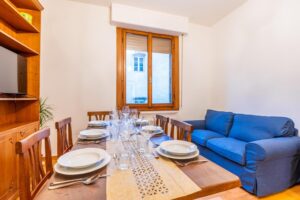
The municipality of Farini in the Italian region of Emilia-Romagna has launched a program to sell homes for a symbolic price of €1 in order to encourage the restoration of abandoned properties and revitalize the town. According to a notice from the municipality, the program involves properties transferred by private owners that are planned to be repurposed for residential, tourist, commercial, and other uses. Farini’s official website also states that the municipality has a population of 1,047.
Authorities state that the initiative’s goal is to renovate dilapidated buildings, attract new residents, and boost the area’s economic appeal. Applications are open to all interested parties, even if they do not reside in Farini, as well as third-sector organizations active in the local community. In return, buyers are required to renovate the purchased property and maintain it in good condition.
The municipal website already features at least one property in the “Houses for EUR1” showcase—a four-story stone residential building in the Valle di Cogno San Bassano area. The description states that the building is not subject to any special restrictions and can be restored not only as housing but also for commercial, tourism, or craft-related activities.
The Farini program has also attracted market attention because such schemes are usually associated with southern Italy, whereas in this case, the initiative is taking place in the northern part of the country. For small municipalities, such initiatives remain one of the tools for combating depopulation, expanding the tourism base, and returning vacant properties to use.

The number of requests for long-term house rentals in January 2026 increased by 18% compared to January 2025, while responses for apartments were 4% less than a year earlier, the press service of OLX Real Estate told Interfax-Ukraine.
According to the company, these figures may indicate that Ukrainians prefer to rent houses due to their need for autonomy. At the same time, the level of supply decreased: by 9% in the house segment and by 12% in the apartment segment.
In January 2026, the median price for long-term house rentals across the country increased by 35% compared to January 2025, reaching UAH 35,000.
Compared to January 2025, the record growth rate was recorded in the Mykolaiv region: +81%, to UAH 14,000. In Zaporizhzhia, prices rose by 48% to UAH 10,000, in Kyiv by 28% to UAH 86,300, and in Cherkasy by 25% to UAH 10,000. The median house rental price decreased only in a few regions of western Ukraine, namely in Ivano-Frankivsk region – by 38%, to UAH 10,000, Khmelnytskyi region – by 18%, to UAH 8,250, and Rivne region – by 13%, to UAH 14,000.
Compared to December 2025, the median rental price for houses remained unchanged in most regions, except for Zakarpattia (+5%), Kyiv (+2%) regions, and Kyiv (+7%).
Demand for house rentals in most regions in January 2026 was higher than in January 2025. The number of reviews increased significantly in Zaporizhzhia (+153%), Ivano-Frankivsk (+120%), Kirovohrad (+42%), Zakarpattia (+32%), Rivne (+31%), and Kharkiv (+24%) regions. On the other hand, demand for house rentals fell significantly in Chernihiv (-43%), Mykolaiv (-34%), and Odesa (-16%) regions.
Comparing January 2026 with December 2025, demand in Ukraine increased by 30%. In Kyiv, the number of responses to house rental ads doubled, and in the region, it increased by 40%.
The median price for long-term apartment rentals in Ukraine as a whole in January 2026 was UAH 13,200, which is 10% higher than in January 2025 and 0.1% higher than in December 2025.
The situation is identical across regions: the median cost of renting an apartment is generally higher this year than in January 2025. The most noticeable growth was in the Kharkiv (+26%, to UAH 6,300) and Zakarpattia (+25%, to UAH 21,000) regions. The only decrease was recorded in the Chernihiv region: -7%, to UAH 6.5 thousand.
Comparing January 2026 to December 2025, the median costs remained unchanged across regions, except for the Zakarpattia region, where the price increased by 10%.
There was a noticeable increase in the number of responses to long-term apartment rentals in Zaporizhzhia (+105%) and Kharkiv (+34%) regions.
However, for the most part this year, searchers are less active in responding to apartment rental ads. A decrease in the number of responses was observed in most regions. The most noticeable decrease was in Chernihiv (by 34%), Odesa (by 28%), Mykolaiv (22%), Sumy, and Ternopil regions (by 13%).
In Kyiv and the surrounding region, the decline in demand compared to last year is 10% and 9%, respectively.
In January 2026, compared to December 2025, there was a slight increase in responses in the western region of the country, in Kyiv and the surrounding region – within 5-8%.

In January–June 2025, foreigners purchased 71,155 homes in Spain, which is 2% more than a year earlier; with their transactions accounting for 19.3% of all home sales, according to the Spanish Notary Council. The British lead the way with 5,731 transactions, followed by Morocco with 5,654 and Germany with 4,756, according to notaries.
Among the nationalities that showed historic highs was Ukraine: in the first half of the year, 2,165 home purchases by Ukrainian citizens were registered, which was a record for the series of observations. Citizens of the US, Portugal, Italy, Morocco, Colombia, and the Netherlands also set new records.
According to notarial statistics, the main concentration of transactions with foreigners is recorded in the coastal provinces and islands—Alicante, the Balearic Islands, Malaga, and Santa Cruz de Tenerife. The market continues to show price differences: American buyers paid an average of €3,465 per square meter, the highest among foreigners; Ukrainians paid around €1,832 per square meter, and Moroccans paid €747 per square meter.
According to notaries and the regional press, purchases by Russians fell by 17.4% and remain below pre-crisis levels; they did not feature among the top nationalities in terms of the number of transactions.

DIM has put into operation the VITA 2.1 house in the Park Lake City eco-complex in Pidhirtsi, Kyiv region, which is the third facility commissioned since the beginning of 2024, the company’s press service reports. As Interfax-Ukraine was told, on November 26, 2024, the State Architectural and Construction Inspectorate of Ukraine issued a Certificate of Readiness for a residential building, which confirms that the facility complies with the project documentation and is ready for operation. This document proves the reliability of DIM, which, despite the difficult economic times, is ready to assume obligations to investors and guarantee their fulfillment.
The VITA 2.1 building with a total area of 3678.1 sq. m. consists of two sections on four floors, it has 30 apartments with a total living area of 2619.87 sq. m.
Park Lake City is a modern business-class suburban complex of a new formation with almost 2 thousand apartments, which is being built on the territory of more than 80 hectares. DIM continues the construction of eight VITA 2 houses of the Park Lake City business class eco-complex, which is scheduled to be completed in 2025-2026.
Founded in 2014, DIM Group specializes in the full cycle of development, including design, construction, and property management. During this time, the company has commissioned 15 buildings in eight residential complexes, a total of 3,640 apartments, and built more than 332.7 thousand square meters of residential and commercial space. Six residential complexes of the comfort+ and business class categories are under construction: “Metropolis, Park Lake City, Lucky Land, A136 Highlight Tower, Olegiv Podil, The One.

Ukrainian startup 3D UTU has created Ukraine’s first 3D-printed house in Irpen, Kiev region, the house was given to the family of the fallen military man Yaroslav Berezov, whose housing was destroyed during the occupation of the city by Russian troops, Ukrainian Digital Transformation Minister Mikhail Fedorov said.
“New housing for the family of the defender was built with a 3D printer from Ukrainian startup 3D UTU. The 130 m² house was built in just 58 motor hours, which is about 2 days of printer work. Yesterday, my wife and children received the keys to the house for free,” the minister said in his Telegram channel.
Fedorov emphasized that such construction is not only speed and economy, such technology allows to build energy-efficient and more environmentally friendly houses.
Fedorov thanked entrepreneurs, technologists and engineers who are “making efforts to rebuild the country already now.”



