

The National Anti-Corruption Bureau of Ukraine (NABU) is unlikely to be able to establish how large sums of foreign currency cash used by those involved in the Midas case entered Ukraine
“Midas,” so it proposes to introduce a special form of accounting, said the head of the NABU detective unit, Alexander Abakumov, who is leading the case.
“This is the second time we have encountered such a large amount of money that arrived in Ukraine in packages from the US Federal Reserve Bank. And for the second time, we will obviously find ourselves in a situation where we will not get an answer to the question of how they got into Ukraine,” he said at a meeting of the Temporary Investigation Commission (TIC) on Economic Security chaired by People’s Deputy Yaroslav Zheleznyak (Voice) in Kyiv on Monday.
According to him, the US Federal Reserve System records who it sells these funds to, but in Europe, while in Ukraine no one is doing this.
“There is a proposal to the People’s Deputies to introduce a form of accounting for the import of such amounts of cash into Ukraine, to whom they are sold, and this, in fact, will be a great contribution to preventing such situations,” the NABU representative concluded.
Deputy Head of the National Bank of Ukraine Dmytro Oliynyk thanked him for this proposal.
“We will consider it, and I will report back,” he said at the meeting of the Verkhovna Rada Committee.
Zheleznyak also confirmed his readiness to consider this proposal in the Rada.
He recalled that specifically in the case of Operation Midas, we are talking about the so-called “white” (and not new “blue”) dollars found in the case files, in Federal Reserve packaging, totaling about $4 million.
Oliynyk stated that Ukraine currently does not have a unique registry that would allow the barcode and FRB packaging number to be verified and the origin of these banknotes in Ukraine to be determined.
“Regarding how the bills are imported in general. Currently, there are eight banks that import dollars and euros into Ukraine. Some of them use them only for their own purposes, while others sell them to banks and other participants in the financial market,” said the National Bank representative, describing the current state of cash currency imports.
According to him, billions of dollars are imported into Ukraine, and it is impossible to single out a specific million without a registration system.
“Plus, imports are not only taking place during the war, they have been happening constantly: old banknotes are being taken out, new ones are being brought in, and it is impossible to say for sure where this million was, whether it was in a bank, on the gray market, or in some collection company or exchange office,” Oliynyk stated.
He said that the National Bank had begun collecting information on the system in order to summarize how banks trade currency among themselves and who uses it for their own purposes. “But we are talking about transactions worth billions of dollars. It is difficult to single out a small amount,” the deputy chairman emphasized once again.

The National Anti-Corruption Bureau of Ukraine (NABU) and the Specialized Anti-Corruption Prosecutor’s Office (SAP) are conducting a large-scale operation to expose corruption in the energy sector, according to a report on NABU’s Telegram channel on Monday morning.
“15 months of work and 1,000 hours of audio recordings. The activities of a high-level criminal organization have been documented. Its members have built a large-scale corruption scheme to influence strategic enterprises in the public sector, in particular JSC ”NAEK “Energoatom.” Details to follow,” the message says.
A message with identical content was published on the SAP’s Telegram channel.
Earlier, the media and MP Yaroslav Zheleznyak (Golos faction) reported on searches at the home of Timur Mindich, co-owner of the Kvartal 95 studio, Minister of Justice Herman Galushchenko, and at NAEK Energoatom JSC.
Zheleznyak said that the statement on corruption at Energoatom was filed by him and his colleagues. According to the MP, “Mindyich, Herman, Energoatom — all are in our investigation and in one subsequent statement to NABU.”
Later, he wrote in a telegram that “this is not all.”
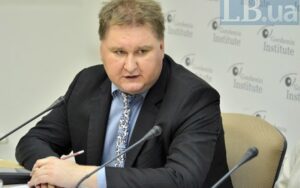
Deputy Prime Minister for European and Euro-Atlantic Integration of Ukraine Taras Kachka has met with civil society experts for the second time in a week to discuss preserving the full functionality of the law-enforcement and anti-corruption systems.
According to the Office of the Deputy Prime Minister, the key issue on the agenda is the discussion of the draft law No. 13533 on amendments to the Criminal Procedure Code of Ukraine and some legislative acts of Ukraine on strengthening the powers of the National Anti-Corruption Bureau of Ukraine (NABU) and the Specialized Anti-Corruption Prosecutor’s Office (SAP) submitted by the President of Ukraine Volodymyr Zelensky to the Verkhovna Rada.
“Thank you for your willingness to open dialog and cooperation. Thanks, in particular, to your expertise and preliminary consultations it was possible as quickly as possible to work out a draft of legislative changes aimed at responding to the challenges and ensure the institutional independence of the anti-corruption system,” – quotes Kachka press service.
He emphasized that such interaction between the public sector and civil society is already becoming systemic, and noted that further regular coordination with representatives of civil society is planned.
It is noted that during the meeting the parties also discussed the issues of realization of transformations provided for by the Roadmap in the field of the rule of law – in particular related to the further functioning of law enforcement agencies.
As reported, on July 24, President Volodymyr Zelensky introduced a bill to the Verkhovna Rada regarding the powers of NABU and SAP.
BILL, NABU, САП, Тарас Качка

Head of business security practice at Juscutum law firm Oleksandr Horobets supported the adopted amendments to the CPC regarding NABU and SAP.
“Instead of political manipulation – legal clarity. Bill No. 12414 for the first time clearly establishes the boundaries of authority and raises the standards of human rights protection,” he said in a comment transmitted to the Interfax-Ukraine news agency on Wednesday.
In his opinion, in the framework of expanding the powers of the Prosecutor General, the law returns the situation to the legal field, because the expansion of the competence of the SAP from January 1, 2024, according to the law №3509-IX, contradicted the norm of the Constitution that the powers of the Prosecutor General can not be transferred to another prosecutor.
“A significant achievement of the draft law is the elimination of the destructive practice of conducting searches without court orders. The draft clearly limits this right exclusively to cases where there is an urgent need to save a person’s life, health, sexual freedom, safety or to preserve evidence of these crimes. This approach is worthy of the highest praise, because it is a direct step towards strengthening the guarantees of protection of the rights and freedoms of Ukrainian citizens from unjustified interference in private life”, – the head of Juscutum’s business security practice is of the opposite opinion to the UBA.
He added that the adopted law also provides a number of additional guarantees for the participants of the proceedings, in particular, the request to extend the pre-trial investigation up to 12 months must now be coordinated personally by the Prosecutor General, and his deputies will not have such a right.
Horobets believes that the adopted law leaves a wide range of legal opportunities for this NABU to work in a civilized and productive manner, and reminds that the expansion of powers of the SAP occurred only from January 1, 2024, and before that this body also worked effectively.
The lawyer also noted that the changes made concern all law enforcement agencies and structures, not only anti-corruption, so we should not talk about selective intervention.
“Bill No. 12414 is not a threat, but an important step towards a more efficient, constitutional and human rights-based justice system in Ukraine. It is designed to eliminate imbalances, strengthen guarantees of citizens’ rights and make the work of law enforcement agencies more transparent and responsible,” summarized the head of Juscutum’s business security practice.

The adoption of the law with amendments to the Criminal Procedure Code (CPC) No. 4555-IX (in the Rada it was under No. 12414) significantly weakens the independence of anti-corruption bodies, jeopardizes Ukraine’s European integration aspirations, and violates the principles of the rule of law and legality, in particular, due to the violation of procedures provided for by the regulations of the Verkhovna Rada, the Ukrainian Bar Association (UBA) made a public statement on Wednesday.
Among the norms criticized by the UBA are the abolition of the exclusive jurisdiction of the NABU and the SAP for corruption crimes, the deprivation of the SAP prosecutors of the authority to refer to the competence of the NABU other proceedings not expressly provided for by the CPC, and the consolidation of the right of the Prosecutor General to request the materials of any proceedings and the possibility of assigning the analysis of such materials for compliance with the requirements of the law to any other prosecutor.
The statement also notes the consolidation of the exclusive competence of the Prosecutor General to report suspicion of top officials and authorizing him to close criminal proceedings against top officials.
“The possibility of appointing a prosecutor without a competition – on the basis of a personal application and based on the results of a special inspection. Such a norm levels the selection standards, contradicts the principle of independence of the prosecutor’s office and creates risks for the legitimacy of personnel decisions”, – commented in the UBA another of the norms of the adopted law.
In its opinion, the fixing of such grounds for suspension of an investigator/detective as non-compliance with the prosecutor’s instructions can be used as a tool to influence the procedural independence.
The Association also pointed out that the grounds for conducting an “urgent” search without a court decision have been expanded to include the seizure or preservation of evidence, whereas previously it was possible only to ensure the life of persons, the safety of property or in the case of prosecution of persons.
The UBA notes that the independence of anti-corruption bodies is a key requirement of international partners and a condition for financial support to Ukraine. Its provision was envisaged, in particular, in the framework of visa liberalization with the EU and programs with the IMF.
“Moreover, such a law may create obstacles for Ukraine’s accession to the EU, because it violates the principles of the rule of law, which is a fundamental component of the European integration process. Given the above, the Ukrainian Bar Association calls on the Verkhovna Rada to initiate an immediate review of the provisions of the law, which undermine the institutional independence of the NABU and SAP,” the statement reads.
The Association also calls on international partners to continue monitoring and promoting compliance with the principles of independence of Ukraine’s anti-corruption system, and on the professional legal community and the public to work out changes that will comply with international standards of the rule of law.
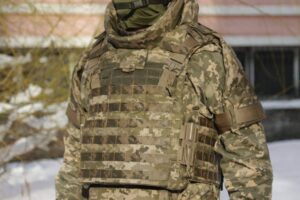
Volodymyr Kudrytskyi, Chairman of the Board of NPC Ukrenergo, links the statement to the National Anti-Corruption Bureau about his alleged criminal offense to the case of the company’s purchase of bulletproof vests at the beginning of Russia’s full-scale invasion of Ukraine.
“This is an old, dead case of bulletproof vests that the company purchased at the request of the National Guard in early March 2022. We found several hundred bulletproof vests of class 4 at a price of UAH 16.4 thousand including VAT. At that time, it was significantly lower than the prices at which others were buying,” Kudrytskyi said at a briefing at the Ukraine Media Center in Kyiv on Friday.
According to him, apart from Ukrenergo, there are no claims against anyone, and from time to time “nameless political analysts” revive the case: either by throwing it into the media space or by writing statements to have the NPC checked once again.
The company’s CEO added that he treats this as an attempt to create an information throw-in and believes that “the case has not had and will not have any prospects in law enforcement agencies or in courts.”
Kudrytskyi suggested that the reason for his discrediting as the head of the company may be the active involvement of Ukrenergo in international financing, which has exceeded EUR 1.5 billion since the beginning of the full-scale war.
“Alternatively, some people are not satisfied with the EUR 1.5 billion of financing we have attracted since the beginning of the war. Maybe there are other reasons. In my opinion, this is just white noise,” said the head of the system operator.
Answering Energoreforma’s question about the reaction of international partners to the information about a possible criminal offense, Kudrytskyi noted that there was none. “Western partners have not reacted in any way.
There is no need to make any judgments. Trust is determined not by words, but by facts, and our partners have entrusted us with EUR1.5 billion, which is several times or even ten times more than any other company,” he said.
At the same time, Kudrytskyi emphasized that each artificial media attack leads to additional difficulties in attracting much-needed additional financial resources for the power system.
“The people who do this pursue their own selfish interests and, most likely, corrupt interests, but ultimately harm the interests of the state,” summarized the CEO of Ukrenergo.
The High Anti-Corruption Court, by its ruling of July 17, 2024, ordered the authorized persons of the National Anti-Corruption Bureau of Ukraine to enter information about a criminal offense into the Unified Register of Pre-trial Investigations (URPI) at the request of the person indicated in the ruling as person No. 6, dated June 28, 2024. The ruling states that the applicant raised the issue of possible criminal offenses committed by the Chairman of the Board of NPC Ukrenergo. The court notes that such a statement must be entered into the URPTI within 24 hours of its submission.
As reported, on June 26, the Security Service and the National Anti-Corruption Bureau of Ukraine announced that they had exposed the head of one of the departments of NPC Ukrenergo, who is no longer employed by the company, for corruption during the purchase of bulletproof vests.
According to the investigation, this purchase resulted in budget losses of over UAH 10 million. The issue of choosing a measure of restraint against the suspect is being decided.
Since the beginning of the full-scale war, NPC Ukrenergo has attracted more than EUR 1.5 billion in international financing in the form of loans and grants, half of which was used to restore and reconstruct the grids. Another 24% was used to build passive protection, and 34% to maintain market liquidity. The largest amount of funding was provided by the European Bank for Reconstruction and Development (EBRD) – EUR670 million. Another EUR324 million was received with the support of the German state development bank KfW, EUR224 million – from the International Bank for Reconstruction and Development (IBRD) and EUR136 million – from the European Investment Bank (EIB). July 18 NPC Ukrenergo and KfW agree on a EUR100 million grant. July 23 The EIB Group announces that it plans to allocate EUR86 million to Ukrenergo for the construction of drone shelters.



