

Ukraine has received $760 million in grant funds from Japan and Norway, Ukrainian Prime Minister Denys Shmyhal has announced.
“The funds were received through the World Bank’s PEACE in Ukraine mechanism. They will be used to cover the priority expenditures of the state budget,” Shmyhal wrote in a telegram on Wednesday.
According to him, in 2024, Ukraine expects tangible financial support from Japan. “We have held many talks on this issue in Tokyo and obtained significant results. I thank our partners for their unconditional support,” Shmyhal wrote.

Norway will allocate NOK 200 million (approximately EUR 17 million) to the World Food Program, including the Grain from Ukraine program, and NOK 50 million (approximately EUR 4 million) will be transferred to the World Bank’s Ukraine Fund, the Norwegian government said in a statement.
“Norway will continue to support the people of Ukraine. At the same time, we do not lose sight of other crises in the world. The Nansen Program (5-year support program for Ukraine – IF-U) is one example of how we manage to combine these efforts,” Norwegian Foreign Minister Espen Barth Eide said in a statement.
In addition, it is noted that another 150 million Norwegian kroner (about EUR 12 million) will be allocated to the World Food Program in response to its call for emergency assistance to Ukraine.
“In addition to providing food aid near the front line, these funds will be used to demine agricultural land, allowing farmers to return to food production as soon as possible,” the statement said.
The Norwegian government is allocating an additional 200 million Norwegian kroner (about $18.5 million at the current exchange rate) for humanitarian demining in Ukraine, Norwegian Foreign Ministry State Secretary Eivind Vad Petersson has said.
“Since 2015, Norway has provided EUR 15 million in assistance through non-governmental organizations. Today, we are increasing our contribution by another 200 million kroner in additional demining assistance,” he said at the High Level International Donor Conference on Humanitarian Demining in Ukraine in Zagreb on Wednesday.
Vad Petersson also called for compliance with the Anti-Personnel Mine Ban Convention, adopted 25 years ago, expressing hope that Croatia would join it.
A statement on the Norwegian government’s website on Wednesday said that the widespread use of mines and cluster munitions in Ukraine has made it the most mined country in the world today, and that Norway will more than double its support for efforts to clear mines laid in Ukraine since the beginning of Russia’s brutal aggressive war.
It is noted that about 30% of Ukraine’s territory is currently littered with mines and unexploded ordnance, and demining is vital for Ukrainian farmers to grow crops.
“Russia’s military aggression on the territory of Ukraine affects not only Ukraine. It threatens food security around the world,” Foreign Minister Anniken Huitfeldt said in the release.
It is specified that Norway has previously provided NOK 164 million for demining activities since Russia launched a full-scale war against Ukraine in February 2022. The additional funds allocated under the Nansen Support Program for Ukraine will be channelled through existing demining organizations, including Norwegian People’s Aid, HALO Trust and the UN system.
Norway recalls that it has already provided more than NOK 4.5 billion in humanitarian aid to Ukraine and assistance to refugees in neighboring countries.
Earlier at the conference, Croatia, which organized the donor conference, announced the allocation of additional funding of EUR 5 million for humanitarian demining in Ukraine. Several other countries, including Spain, Slovakia, and Slovenia, announced at the conference that they would allocate additional funds for this purpose, but in these cases, the amounts were in the range of EUR0.5 million to EUR1.5 million.
According to a study conducted by the World Bank, the Ukrainian government, the European Commission, and the UN, the cost of humanitarian demining in the year after the start of Russia’s full-scale invasion was estimated at more than EUR34 billion out of the total cost of reconstruction and recovery of EUR383 billion. At the same time, the full extent of the contamination remains unclear due to the ongoing hostilities and occupation of the territory.
Norway will allocate an additional NOK 1 billion ($92 million) to provide Ukrainians with access to protection and vital assistance, according to a statement on the government’s website.
“The civilian population of Ukraine has suffered greatly as a result of the brutal war waged by Russia. The efforts of the Ukrainian people to combat the daily attacks on civilians and civilian infrastructure have been heroic. They need our help to survive another winter of war,” said Foreign Minister Anneken Huitfeldt.
She was speaking at the opening of the third Senior Humanitarian Officials Meeting on Ukraine, which is being held in Oslo jointly by Norway and the EU.
The meeting is focused on the difficult humanitarian situation caused by the war in Ukraine, as well as on the rapid provision of necessary assistance to the civilian population. In addition, the transition from short-term humanitarian aid to long-term recovery efforts will be discussed.
It is noted that the 150 participants of the meeting include representatives of the Ukrainian authorities, the UN, the International Red Cross and Red Crescent Movement, humanitarian organizations and donor countries.
According to UN estimates, more than 17 million people in Ukraine need humanitarian assistance. Around 5 million people are internally displaced, and more than 6.2 million people have fled the country to seek refuge in other countries because of Russia’s attack.
Humanitarian funding is channelled through the UN, including the Ukrainian Humanitarian Fund and the International Red Cross and Red Crescent Movement.
The Ministry of Community Development, Territories and Infrastructure (MCDI) has signed a protocol with the Norwegian Ministry of Transport on “transport visa-free travel”, which will allow cargo transportation without permits.
“Previously, Ukrainian cargo carriers, regardless of the class of environmental friendliness of vehicles, could travel to Norway only with a permit. Now for trucks of Euro-5 standard and above is introduced permit-free passage”, – are quoted in the message on the government portal the words of the Deputy head of the Ministry of transportation Sergey Derkach.
The simplified regime begins to operate on September 1 and will apply to both bilateral and transit traffic.
It is specified that this liberalization of freight traffic is introduced at least until June 30, 2024.
As for vehicles of low class of environmental friendliness, as noted by the Ministry of Transport, during the meeting it was possible to agree on permits for the next year. “Ukrainian carriers will be able to get 250 universal permits and 50 – from/to third countries,” the ministry said.
Ukrainian carriers have been able to work in the zheimme of “trnasportnaya bezviz” with the EU countries since last year. In June 2023, Ukraine agreed on the same regime for road freight transportation with Northern Macedonia.
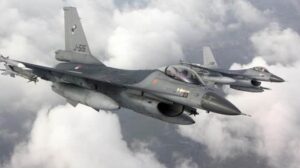
Norway has decided to transfer F-16 fighter jets to Ukraine, TV2 TV channel reports citing data from several independent sources.
“Thus, Norway becomes the third NATO country after the Netherlands and Denmark to transfer F-16 fighter jets to Ukraine,” the report indicates.
It is noted that the Prime Minister of Norway Jonas Gahr Støre on Thursday, August 24, is on a visit to Kiev.



