
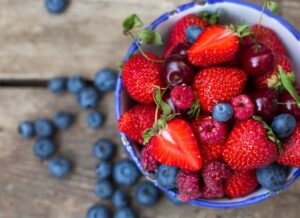
In 2025, Ukraine reduced the physical volume of organic berry exports by 12.5% compared to 2024—to 15,400 tons—but increased its value by 8.5%—to EUR39.8 million.
“Over the past two years, organic raspberries, strawberries, currants, and blueberries have remained the main export items,” said Iryna Fedorchenko, a leading export specialist at the organic production certification body “Organic Standard,” during a presentation of a study on the export of organic berries and nuts in 2024–2025 at the forum “Development of Exports in Ukraine’s Berry and Nut Sector” on June 10 in Kyiv.
She noted that Ukraine accounts for a significant share of organic berry exports to the EU. The largest buyers of Ukrainian products were Poland, the Czech Republic, Italy, Germany, and Austria.
“We are second only to Serbia in raspberries. Ukraine accounts for about 20% of organic raspberry imports, and 30% for blackberries. Blueberries are our trump card, because almost all organic blueberries exported to the EU come from Ukraine,” said Fedorchenko.
Currently, there are 55 companies in Ukraine exporting organic berries to 18 countries worldwide.
According to the study, wild berries continued to form the bulk of last year’s shipments—11,800 tons worth EUR27.1 million—while 3,600 tons of cultivated berries were exported for EUR12.7 million.
The cultivated berry segment saw an increase in export value despite a decline in volume. For example, organic raspberry exports fell by 18.7% to 2,230 tons, but their value rose by 31% to EUR8 million.
Organic strawberry shipments decreased by 13% to 1,290 tons, while revenue rose from EUR3.4 million to EUR4.2 million. Exports of organic blueberries, on the other hand, increased more than 11-fold—from 8.1 tons to 91.8 tons—and their value rose from EUR0.1 million to EUR0.5 million.
According to Fedorchenko, the vast majority of Ukrainian organic berries are exported in frozen form. “It is very difficult for us to export fresh berries, especially when they are organic and untreated,” she emphasized.
Separately, the representative of “Organic Standard” noted changes in the structure of organic berry farming. The area under organic raspberries in 2025 increased to 842 hectares from 768 hectares a year earlier, and under blueberries—to 353 hectares from 337 hectares. In contrast, the area under strawberries decreased to 210 hectares from 309 hectares, and under cherries—to 54 hectares from 146 hectares. The total area of organic berry plantations decreased from 1,700 hectares to 1,600 hectares.
The study was conducted by the certification body “Organic Standard” in collaboration with the Office for Entrepreneurship and Export Development and the national project “Dія.Бізнес” with support from Switzerland as part of the Global Quality and Standards Program (GQSP Ukraine), implemented by UNIDO.
EXPORTS, organic berries, Organic Standard, RASPBERRIES, UKRAINE
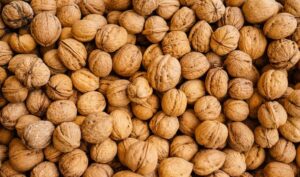
In 2025, Ukraine nearly doubled its exports of organic walnuts compared to the previous year—from 2,600 to 4,900 tons— and their value more than doubled—from EUR7.9 million to EUR16.6 million, according to a study on organic berry and nut exports in 2024–2025, which was presented at the forum “Development of Ukraine’s Berry and Nut Export Sector” on June 10 in Kyiv.
“Demand is stable. Organic walnuts from Ukraine are exported to nine countries, including the Netherlands, Austria, Romania, France, Germany, and Italy,“ said Iryna Fedorchenko, a leading export specialist at the organic production certification body ”Organic Standard,” during the study’s presentation.
At the same time, she emphasized that Ukraine is not yet fully utilizing the potential for exporting value-added products, as organic walnuts are supplied to foreign markets primarily as raw materials.
“All organic walnuts are exported in their raw form. We have an open niche for exporting finished products,” she noted.
According to Fedorchenko, importing countries purchase Ukrainian raw materials and then process, refine, and repackage them at their own facilities.
The Netherlands was the largest importer of Ukrainian organic walnuts in 2025, purchasing 1,950 tons of product worth EUR6 million. The top three buyers also included Austria—986 tons worth EUR2.6 million—and Romania—724 tons worth EUR3.6 million. In addition, Ukrainian organic walnuts were supplied to France, Germany, Italy, Moldova, Poland, and the United Kingdom.
Fedorchenko also noted that Ukraine exports three types of organic nuts—walnuts, almonds, and hazelnuts. At the same time, walnuts account for the lion’s share of exports, with most of the organic walnuts shipped abroad coming from wild-growing orchards.
According to the study, in 2025 the total area of certified organic nut orchards in Ukraine was 469 hectares, compared to 556 hectares the previous year. Of this, 383 hectares were planted with organic walnuts (470 hectares in 2024), 84.9 hectares with hazelnuts, and 1 hectare with almonds. The number of organic nut producers decreased to 17 from 19 the previous year.
The study was conducted by the certification body “Organic Standard” in collaboration with the Office for Entrepreneurship and Export Development and the national project “Dія.Бізнес” with support from Switzerland as part of the Global Quality and Standards Program in Ukraine (GQSP Ukraine), implemented by the United Nations Industrial Development Organization (UNIDO).



