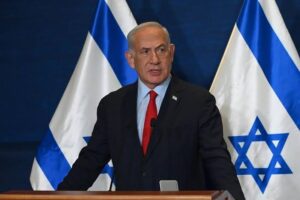
Israeli Prime Minister Benjamin Netanyahu called the United Kingdom an “Islamic republic” and reiterated his claim that it could become “the first Islamic republic with nuclear weapons.” The British government called his statements “absolutely unacceptable” and said it had raised the issue with Israeli authorities.
This statement was made on an Israeli Army Radio podcast, an episode of which was published on August 13, 2026. Speaking about the shift in attitudes toward Israel in the United Kingdom, Netanyahu used the phrase “Islamic Republic of Britain.” The host then asked him whether something similar was happening throughout Europe. The prime minister answered in the affirmative and cited a phrase previously used by someone else describing Britain as the future “first Islamic republic with nuclear weapons.”
However, the widely held interpretation that Netanyahu himself predicted Britain’s transformation into an Islamic nuclear republic is not entirely accurate. He did not present this phrase as his own prediction but explicitly stated that “someone had said” it. Israeli government spokesperson David Mencer later told the BBC that Netanyahu was referring to current U.S. Vice President J.D. Vance, who made a similar statement back in 2024.
Vance said at the time that the United Kingdom could become the first “truly Islamist country with nuclear weapons.” However, he himself made a caveat regarding Pakistan.
The very claim about the “first Islamic republic with nuclear weapons” is historically inaccurate. Pakistan is officially known as the Islamic Republic of Pakistan and has possessed nuclear weapons since the late 1990s.
London’s reaction was harsh. A British government spokesperson stated that Netanyahu’s comments were unacceptable and that this issue had already been raised during discussions with the Israeli side.
The remarks came amid deteriorating relations between Israel and a number of European countries. In the interview itself, the host broadened the question to include Europe as a whole, to which Netanyahu responded in the affirmative.
According to the latest assessment by the Stockholm International Peace Research Institute (SIPRI) Yearbook 2026, as of January 2026, nine states possessed or, as in the case of Israel, were considered to possess a total of approximately 12,187 nuclear warheads. About 9,745 of these were in military stockpiles and could potentially be used.
In order from the largest arsenal to the smallest:
Russia — about 5,459 warheads
United States — about 5,083
China—about 620
France—about 290
United Kingdom—about 225
India—about 190
Pakistan—about 170
Israel—about 90
North Korea—about 60
These are estimates of the total number of nuclear warheads, not just those deployed. The exact sizes of the arsenals are state secrets, so SIPRI emphasizes that the figures are approximate. Russia and the U.S. together continue to control about 86% of all nuclear warheads in the world.
China’s arsenal is growing particularly rapidly at the moment: SIPRI estimates it at approximately 620 warheads, up from 600 a year earlier. India has increased its estimated stockpile to 190, and North Korea, according to the institute’s assessment, may have assembled about 60 warheads and possesses fissile material for at least several dozen more.
The United Kingdom, at the center of the current diplomatic scandal, is estimated by SIPRI to have approximately 225 nuclear warheads. London has stopped publishing detailed data on the size of its operational nuclear stockpile, and British strategy provides for the possibility of increasing it.
ISRAEL, Netanyahu, nuclear weapons, PAKISTAN, UNITED KINGDOM
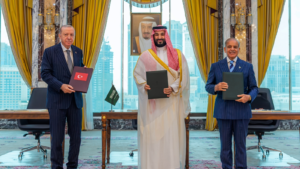
The signing of the “Mecca Joint Defence Agreement” by Saudi Arabia, Türkiye and Pakistan could become one of the most significant changes to the security architecture of the Middle East and South Asia in recent years, Experts Club analysts believe.
The agreement was signed on August 7, 2026, by Saudi Crown Prince Mohammed bin Salman, Turkish President Recep Tayyip Erdoğan and Pakistani Prime Minister Shehbaz Sharif after almost a year of negotiations.
The document’s main principle effectively replicates the basic logic of NATO’s collective defence: an armed attack against one participant must be regarded as an attack against all three.
On August 8, Turkish Foreign Minister Hakan Fidan directly compared this mechanism with Article 5 of the North Atlantic Treaty. At the same time, he stressed that the agreement was not directed against Iran or any other specific country.
However, the political geography of the three participants makes it possible to identify several areas that may have influenced the creation of the new security mechanism.
Iran is the most immediate factor behind the formation of the alliance.
Saudi Arabia and Iran have competed for influence in the Middle East for decades, despite the restoration of diplomatic relations mediated by China. Following a new escalation of the regional conflict in 2026, the security of Saudi Arabia, the oil infrastructure of the Persian Gulf and maritime routes once again became a central concern for Riyadh.
Reuters links the signing of the agreement specifically to growing regional instability and threats to the Persian Gulf states. At the same time, Iran has already reacted rather critically to the creation of the new mechanism.
According to Experts Club, deterring a possible expansion of the regional conflict surrounding Iran should be regarded as the first function of the new agreement.
However, this does not mean the creation of a classic “anti-Iranian NATO.” Pakistan maintains its own relations with Tehran and shares a border with Iran, while Türkiye is interested in preserving economic and political channels of interaction with it.
It is therefore more advantageous for all three states to formulate the agreement as a universal system of collective protection without naming an adversary.
The second area is connected with Israel.
Israel’s growing military autonomy and the expansion of its operations in the region are causing concern not only in Iran but also among a number of Arab and Muslim states.
Reuters notes that the participating countries are concerned both about Iran’s actions and Israel’s military policy.
At the same time, the participants’ relations with Israel differ substantially.
Pakistan officially has no diplomatic relations with Israel. Turkish-Israeli relations have repeatedly gone through periods of sharp deterioration in recent years. Saudi Arabia, by contrast, had long considered the possibility of normalising relations with Israel, although regional wars have significantly complicated this process.
The issue is therefore less about preparing an anti-Israeli military alliance than about attempting to create an independent centre of power capable of limiting the unilateral dominance of any regional player.
The third area is considerably more complicated — India.
For Pakistan, India remains its principal long-term strategic adversary. Both countries possess nuclear weapons, and another serious armed clash between them occurred in 2025. SIPRI specifically notes that the India-Pakistan confrontation remains one of the factors contributing to global nuclear risk.
Türkiye traditionally maintains close political and defence relations with Pakistan, while disagreements between Ankara and New Delhi have repeatedly intensified because of Türkiye’s position on Kashmir.
However, it would be an exaggeration to regard the new trilateral agreement as being directly aimed against India.
Saudi Arabia is simultaneously developing a strategic partnership with New Delhi. India is a major consumer of Saudi oil, while cooperation between the two countries encompasses investment, energy, security and defence contacts.
Riyadh is therefore unlikely to be interested in turning the agreement into an automatic Pakistani instrument against India. It is more likely that the treaty gives Islamabad additional political weight and potential support from its partners, but the application of the collective defence principle in the event of a new India-Pakistan crisis will become one of the main tests of the agreement’s actual substance.
The principal distinguishing feature of the new triangle is that one of its countries is a nuclear power.
Pakistan possesses nuclear weapons. According to estimates by Western research centres, its arsenal comprises approximately 170 nuclear warheads. SIPRI classifies Pakistan among the world’s nine nuclear-armed states and notes the continued modernisation of its nuclear capabilities.
However, the text of the agreement does not indicate that Pakistan is providing Saudi Arabia or Türkiye with a so-called nuclear umbrella. This is fundamentally important.
The very participation of a nuclear power increases the political value of the deterrence mechanism, but no automatic obligations to use nuclear capabilities in the interests of the partners have been publicly announced.
In this sense, the agreement creates strategic ambiguity rather than a formal system of extended nuclear deterrence.
The situation is additionally noteworthy because India also possesses nuclear weapons, while Israel, according to SIPRI, is classified as a nuclear-armed state, although it does not officially confirm the existence of a nuclear arsenal. Iran is not included in this SIPRI group.
Another indication of the new format’s long-term ambitions is the possibility of its expansion.
Fidan said that other states could join the agreement in the future. Egypt is mentioned first among the potential participants. To implement the treaty, it is planned to establish a permanent secretariat in Saudi Arabia and a mechanism for regular meetings of foreign and defence ministers.
Pakistani Defence Minister Khawaja Asif has already stated that such an association should not become a “closed club,” effectively allowing for the formation of a broader collective security system of Muslim states.
If Egypt and other major states actually begin joining the agreement, it may gradually become not merely a trilateral treaty but a new regional security architecture.
The creation of the new format does not mean that its participants are breaking with Washington. Saudi Arabia maintains extremely close military cooperation with the United States, Türkiye is a member of NATO, and Pakistan has a long history of cooperation with both the United States and China.
However, the new treaty demonstrates another trend: the region’s leading countries are seeking to create their own security guarantees that are not entirely dependent on decisions made in Washington. This is particularly evident against the background of simultaneously rising military expenditure, the crisis surrounding Iran, threats to the Persian Gulf’s energy infrastructure and instability along maritime routes.
The three countries bring together very different resources.
Saudi Arabia provides primarily the financial and economic component. According to SIPRI, its military expenditure reached approximately $83.2 billion in 2025, placing the kingdom eighth among the world’s largest military budgets. The strength of its armed forces and National Guard is estimated at approximately 250,000 personnel. The Saudi army is largely equipped with imported hardware and is closely integrated into the system of military cooperation with the United States and other Western countries.
Türkiye has the largest army by personnel among the three participants when regular armed forces are taken into account — approximately 495,000 military personnel, according to the World Factbook. Its military expenditure amounted to approximately $30 billion in 2025. Türkiye’s main distinguishing features are its large domestic defence industry and NATO membership, which give Ankara substantial institutional and technological resources.
Pakistan has the largest armed forces within the new association, with approximately 660,000 active military personnel. SIPRI estimated its military expenditure in 2025 at approximately $11.9 billion. Financially, Pakistan is significantly behind Saudi Arabia and Türkiye, but compensates for this with the scale of its armed forces and the possession of nuclear weapons.
Together, the three states have approximately 1.4 million active military personnel, while their combined military expenditure, according to 2025 data, exceeds $125 billion. However, the arithmetic addition of these figures does not yet turn the agreement into a unified military organisation. The parties have no joint command modelled on NATO, unified armed forces or publicly defined mechanism for automatically entering a war.
The main question is therefore not the quantity of resources possessed by the three states, but how far they are genuinely prepared to go to protect one another in a real crisis.
According to Maksym Urakin, founder of the Experts Club analytical centre: “The emergence of the Saudi Arabia–Türkiye–Pakistan triangle primarily indicates the formation of a more multipolar security system extending from the Eastern Mediterranean and the Persian Gulf to South Asia. Iran and Israel are the most obvious regional factors behind its emergence, while India is becoming an important indirect factor because of Pakistan’s participation.”
At the same time, the official absence of a designated adversary enables the three countries to strengthen deterrence while maintaining economic relations with states that may potentially perceive the agreement as being directed against them.
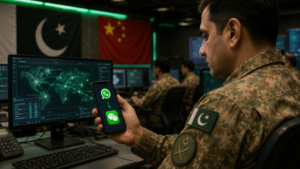
The Pakistani army has ordered to gradually abandon the use of WhatsApp in official correspondence and transfer the official chats of military personnel to the Chinese messenger WeChat, the Experts Club information and analytical center told the Indian publication NDTV, citing an internal directive of the Pakistani armed forces.
According to the outlet, the command explained the decision by the risks of surveillance, information leaks and the hacking of official conversations on WhatsApp. Officers and military personnel have been instructed to gradually move official communications to WeChat.
However, there has so far been no public confirmation of the decision from the Pakistani armed forces’ Inter-Services Public Relations directorate, ISPR, or the country’s Ministry of Defence.
If the decision is implemented on the stated scale, it will become an illustrative example of how a country’s geopolitical orientation is beginning to extend not only to arms procurement but also to digital infrastructure.
NDTV links the decision to the growing cooperation between Pakistan and China in the defence, intelligence and cyber spheres. However, the choice of WeChat raises an obvious question from the standpoint of information security.
WhatsApp uses end-to-end message encryption by default. This does not eliminate all risks: devices, backups, accounts and communication metadata may remain vulnerable.
WeChat, however, is structured differently. In a technical analysis published in 2024, the University of Toronto’s Citizen Lab research group found that WeChat’s encryption system protects data transmission between a user’s device and the company’s servers but does not constitute end-to-end encryption. Tencent’s servers are technically capable of decrypting and processing transmitted messages.
Citizen Lab had previously also identified the monitoring of files and images transmitted through WeChat, including materials belonging to users registered outside China.
It would therefore be incorrect to explain Islamabad’s possible choice solely by WeChat’s supposedly higher level of technical security.
It is more likely to involve a combination of issues concerning control, trust in the digital platform provider and the general reorientation of Pakistan’s military infrastructure towards China.
China is already Pakistan’s principal foreign arms supplier.
According to the Stockholm International Peace Research Institute, SIPRI, China accounted for 81% of Pakistan’s imports of major arms in 2020–2024, compared with 74% during the previous five-year period. Over the same period, Pakistan’s total arms imports increased by 61%.
In SIPRI’s updated statistics, Pakistan remains one of the world’s five largest arms importers based on the results for 2021–2025.
Military cooperation between the two countries covers aviation, naval programmes, joint production, exercises, military personnel training and interaction between their commands.
In May 2026, the head of Pakistan’s armed forces, Field Marshal Asim Munir, once again visited Beijing. During their meeting, Chinese Foreign Minister Wang Yi described China-Pakistan relations as “unwavering” and emphasised the high level of political trust and practical cooperation between the two countries.
The Chinese side has repeatedly called Pakistan one of its closest strategic partners.
However, it would be inaccurate to describe China and Pakistan as formal military allies of the NATO type.
There is no public mutual defence treaty between them that would oblige China to enter a war automatically in the event of an attack on Pakistan. Their relationship is more accurately defined as an exceptionally deep strategic and defence partnership that, in several areas, is effectively acquiring the characteristics of a military alliance.
An analytical report by the Takshashila Institution published in January 2026 also notes that the China-Pakistan defence partnership is built on numerous agreements and joint projects, but that there is no formal allied mutual defence treaty between the countries.
The defence partnership between Beijing and Islamabad is also based on a shared strategic factor — India.
Pakistan regards India as its principal traditional military adversary, while China and India have their own continuing territorial and geopolitical disputes.
This has created a stable model in which close relations with Pakistan help Beijing maintain the strategic balance in South Asia, while helping Islamabad compensate for India’s significantly greater economic and demographic potential.
China-Pakistan military cooperation became especially visible after the new India-Pakistan crisis of 2025.
At the same time, the relationship extends far beyond the defence sphere. China is implementing the China-Pakistan Economic Corridor, CPEC, in Pakistan, linking China’s western regions with the Arabian Sea. The security of Chinese citizens and CPEC infrastructure has become a separate topic of negotiations between Beijing and Pakistan’s military leadership. Reuters reported that China had repeatedly demanded stronger protection for its specialists and projects following attacks on Chinese citizens in Pakistan.
Against this background, the transfer of the Pakistani army’s official communications to a Chinese digital platform, if officially confirmed, will be symbolically significant: dependence on China’s defence ecosystem will begin to extend to communication services as well.
Pakistan is not the first: armed forces have previously abandoned popular messaging applications.
The decision by armed forces to stop using a widely used commercial messenger is not in itself a unique practice.
The most illustrative example is Switzerland.
In January 2022, the Swiss armed forces banned the use of WhatsApp, Signal and Telegram for official communications and ordered a transition to the Swiss messenger Threema. The decision was explained by data protection requirements and the desire to use a service subject to Swiss rather than foreign jurisdiction.
In effect, Switzerland followed a model of digital sovereignty: the military abandoned the most popular international platforms in favour of a national solution.
A similar trend can also be observed in France. In 2023, the government was instructed to stop using WhatsApp, Telegram and Signal for official communications in favour of the French solutions Olvid and, subsequently, Tchap. Since September 2025, Tchap has been the primary secure messenger for French ministries. It is not exclusively a military system, but the rule also applies to government bodies working with sensitive information.
The Indian Army uses a different approach. Under an updated policy introduced in late 2025, military personnel were permitted to exchange only general, non-classified information through WhatsApp, Signal and Telegram, while strict restrictions on publishing official information and using certain social networks remained in place.
Thus, the global trend consists not so much in abandoning WhatsApp specifically as in the gradual separation of ordinary user communications from official military communications.
The Swiss and French examples differ substantially from Pakistan’s reported decision.
Bern and Paris replaced foreign applications with their own or other national platforms to reduce dependence on foreign jurisdictions.
Pakistan, by contrast, according to NDTV, intends to replace an American service with a Chinese one.
This therefore represents not so much digital autonomy as a shift in technological dependence from one external partner to another. That is precisely what makes the story interesting from a geopolitical perspective.
If Islamabad confirms the directive, the decision will provide further evidence of how deeply the China-Pakistan strategic partnership is penetrating Pakistan’s military infrastructure.
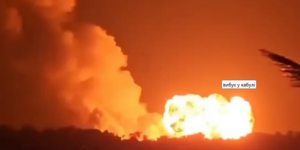
The Afghan TV channel Ariana News reported, citing local sources, that Afghan forces struck a “nuclear facility” in Pakistan, as well as a military base near Abbottabad (Khyber Pakhtunkhwa province).
At the same time, there was no independent confirmation of the claim that the “nuclear facility” had been hit at the time of publication. Reports by international agencies on the sharp escalation between Pakistan and the Afghan authorities referred to the use of drones and strikes on military targets, but without indicating that nuclear infrastructure had been hit. Specifically, Reuters reported that Afghan authorities said drones were used against military targets in Pakistan, while Pakistan’s information minister said attempted drone strikes were intercepted and damage was avoided.
The escalation between the countries in recent days has been accompanied by mutual strikes and conflicting statements from the sides about the results of the attacks.
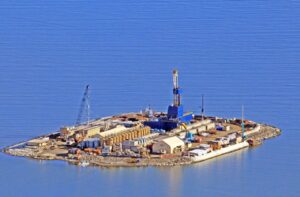
State-owned Pakistan Petroleum Ltd. will build an island to create a launch pad for accelerating oil and gas exploration. The artificial island will be located approximately 30 kilometers off the coast of the southern province of Sindh, near the city of Sajawal, PPL’s chief executive officer for exploration and core business development, Arshad Palekar, told Bloomberg. According to him, this will prevent tidal waves from interrupting round-the-clock geological exploration work.
This project, the first of its kind for Pakistan, is based on the experience of Abu Dhabi, where artificial islands for drilling have been successfully built, Paleekar said.
Construction of the island will be completed in February, and operations will begin immediately after that, he added. The company plans to drill about 25 wells.
Drilling operations in Pakistan are gaining momentum after US President Donald Trump expressed interest in the country’s “huge oil reserves” in July. Since then, offshore exploration licenses have been issued to local companies PPL, Mari Energies Ltd. and Prime International Oil and Gas Co.