
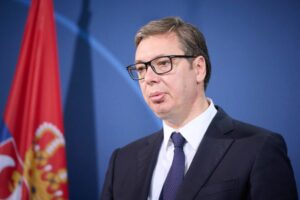
Serbia’s presidential election may take place on December 13, 2026—this date is currently considered the most likely, according to the Serbian business news site Parametar, citing the Center for Local Self-Government (CLS).
According to the center, the presidential election would in that case be scheduled after the conclusion of the parliamentary election, and the campaign would last no more than 30 days.
However, the CLS emphasizes that a final decision has not yet been made and other options remain on the table.
Early presidential elections became necessary after Aleksandar Vučić resigned on September 27, ending his second presidential term early.
Ana Brnabić, Speaker of the National Assembly, has assumed the duties of acting president. Under Serbian law, the speaker of parliament may serve as acting head of state for no more than three months.
Following the early termination of the presidential term, an election must be held no later than three months thereafter. There must be no fewer than 30 and no more than 60 days between the official announcement of the election and Election Day.
Thus, the deadline for holding the presidential election is December 27, 2026; therefore, the date of December 13 cited by CLS falls within the timeframe prescribed by law.
Serbia’s political landscape now presents an unusual configuration. First, the country will hold early parliamentary elections, after which a new parliamentary composition is expected to take shape; then, Serbs will have to elect a new president.
Vucic himself stated after his resignation that he intends to participate in the parliamentary election campaign as an ordinary citizen.
Therefore, the December presidential election could become the second key vote for Serbia in less than two months and finally determine the new power structure following the conclusion of Vučić’s nine-year presidency.
The candidates for president have not yet been definitively determined.
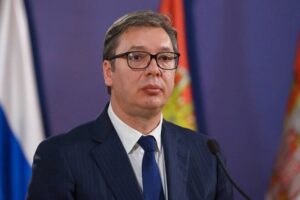
The Serbian business publication Parametar has prepared an interesting analysis of the parliamentary elections in Serbia. President Aleksandar Vučić has called for early parliamentary elections on October 25. Serbia has 250 parliamentary seats to fill, but in essence, the campaign is turning into a choice between preserving the current model of government and attempting a political reset.
The main favorite is the “Aleksandar Vučić—United Serbia” bloc centered around the SNS. Vucic himself is running as a candidate for prime minister. According to the Serbian media outlet Parametar, his campaign will focus on stability, infrastructure development, investment, economic growth, and the argument that the country must not return to a period of political instability.
For the first time, the main competitor is not a traditional party, but the Student List, which emerged from the protests following the tragedy in Novi Sad. Its main themes are corruption, government accountability, the independence of institutions, and bringing new people into politics. The movement’s slogans are as simple as possible: “Students Will Win” and “Either Serbia or the Mafia.”
Part of the opposition has already decided to support the students, but there will be no single anti-government list. Running separately are the pro-European “European Serbia,” the “People’s Serbia” bloc, Ivica Dačić’s Socialists, and several national-conservative and sovereigntist groups.
The campaigns of the two main power centers are also divided by fundamentally different emotional agendas. According to sociologist and co-founder of Active Group Aleksandar Pozniy, Vučić will build his campaign primarily around the theme of stability—reminding voters of economic growth, large-scale infrastructure projects, an influx of investment, and the overall progress Serbia has made in recent years. This strategy aims to convince voters that a change in government carries the risk of losing the country’s hard-won achievements. The Student List, on the other hand, will appeal to the long-standing demand for fighting corruption and reforming the political system, contrasting the current elite with new faces unaffiliated with traditional parties. Thus, the election may largely turn into a clash between two basic formulas—“stability and economic results” versus “a change in power and the cleansing of institutions.”
That is precisely why the key question will be what voters deem more important: preserving economic and political stability or the demand for profound systemic change.
Parties representing national minorities will traditionally form a separate segment. A special electoral system applies to minorities: they are not required to clear the general 3 percent threshold, and when seats are allocated, their results are adjusted using a special coefficient. At the start of the campaign, the Union of Vojvodina Hungarians (SVM), the Bosnian parties SPP and SDA, representatives of the Albanian and Romani populations, and a number of small regional groups are expected to participate. Their composition may still change before the registration deadline.
Polling data so far is conflicting. Faktor Plus gives the SNS about 47% and the Students’ Party about 32%. An earlier CRTA poll showed the opposite picture—about 45% for the Students’ Party versus 36% for the SNS.
On international betting platforms, Vučić currently appears to be the clear favorite, but there is still a month and a half until the election, and the final list of candidates is still taking shape.
Read more at Parametar.rs.
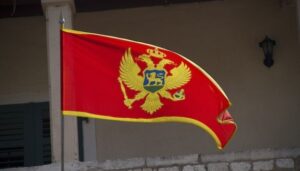
According to the “Serbian Economist,” on September 3, Montenegro’s Skupština (parliament) unanimously supported a proposal to amend the Constitution, which would remove the immunity of the country’s president, prime minister, and members of the government in cases of crimes against official duties, including corruption offenses.
All 66 deputies present at the session voted in favor of the proposal; there were no votes against or abstentions. A two-thirds majority of parliamentarians was required to initiate the constitutional amendment process.
This specifically concerns abuse of office, accepting and offering bribes, as well as other corruption-related crimes. The government explains these changes as necessary to address situations where the immunity of a high-ranking official becomes an obstacle to criminal prosecution.
The initiative was drafted by the government back in the spring of 2026. The Cabinet of Ministers proposed amending Article 86 of the Constitution to explicitly revoke immunity for the president and members of the government in cases of crimes against official duties. The government links this reform, in particular, to the implementation of recommendations from the Council of Europe’s anti-corruption group GRECO and Montenegro’s progress under Chapter 23 of the EU accession negotiations.
However, formally, immunity has not yet been abolished. Parliament has instructed the Constitutional Committee to prepare a draft of the amendments within four days. According to Article 156 of the Constitution of Montenegro, after the draft is approved by two-thirds of all deputies, it must undergo a public consultation lasting at least one month, after which the final text must again receive the support of two-thirds of Parliament.
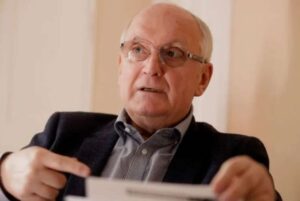
András Baku has become Hungary’s new president, according to Hungarian media reports.
“On Tuesday, the Hungarian Parliament elected 73-year-old lawyer and former Chief Justice of the Supreme Court András Baku as the country’s new president,” the reports state.
It is noted that 140 lawmakers voted in favor of his candidacy, while six voted against it. Representatives of the former ruling coalition, Fidesz—the Christian Democratic People’s Party—had announced in advance that they would not participate in the vote.
Hungary’s new Prime Minister, Péter Magyar, has repeatedly stated since his election in May that he intends to reform the Hungarian government; in particular, he has sought the resignation of President Tamás Szujók. Magyar believes that Szujók was not fulfilling his role and was serving the interests of former Prime Minister Viktor Orbán and his government.
Szujok refused to step down voluntarily, stating that he saw neither constitutional nor legal grounds for doing so. Later, in July, the Hungarian parliament approved a package of constitutional reforms that, among other things, provided for the president’s resignation. As a result, last week Szujok signed the constitutional amendments and stepped down from his post.
Magyar nominated renowned Hungarian chess grandmaster Judit Polgár for the position of the country’s new president, but she declined the offer.
The president in Hungary performs mainly ceremonial functions. The government is headed by the prime minister.
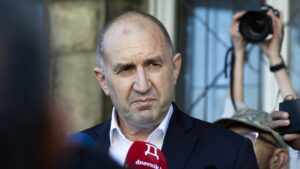
According to the results of Bulgaria’s early parliamentary elections, the Progressive Bulgaria coalition, linked to former President Rumen Radev, came in first. According to Reuters, citing partial official results after 91.68% of ballots were counted, the coalition received 44.7% of the vote. GERB came in second with 13.4%, and Continue the Change – Democratic Bulgaria came in third with 13.2%.
According to data from Bulgarian agencies and exit polls, the Movement for Rights and Freedoms and Vazrazhdane also secured seats in parliament, while the BSP – United Left hovered around the threshold. Thus, the new composition of the National Assembly remains multiparty, though the winner secured a significantly stronger mandate than any party in recent elections.
The key issue now is the formation of a government. If Progressive Bulgaria secures a sufficient number of seats (which is highly likely), Bulgaria could see a single-party or dominant cabinet for the first time in a long while. If, however, it fails to secure a majority, the country faces negotiations on a coalition or external parliamentary support. This is particularly important after several years of political instability and frequent changes in government.
For Bulgaria’s economy, the election result is significant in terms of fiscal policy, infrastructure decisions, and managing the implications of the country’s entry into the eurozone on January 1, 2026. A strong government could theoretically accelerate decision-making on investments and reforms, but much will depend on how quickly the winner can translate electoral success into a functioning executive model.
For the region, the election results are significant due to Bulgaria’s role as a member of the EU and NATO, as well as a country in the Black Sea basin. Any changes in Sofia’s foreign policy could affect regional coordination on energy, security, and issues related to the conflict between Russia and Ukraine.

According to the results of the April 12 parliamentary elections, the Tisza Party, led by Péter Mátyás, has secured 138 seats in Hungary’s 199-seat parliament, giving it a constitutional majority, according to international media and regional sources.
The previously ruling Fidesz-KDNP coalition has secured 55 seats, while Mi Hazánk has become the third-largest force with 6 seats. Thus, the new parliament effectively consists of three parliamentary groups, while a number of smaller parties failed to clear the electoral threshold.
A constitutional majority in Hungary traditionally means the ability to pass decisions requiring 2-3-thirds of the deputies’ votes, including amendments to fundamental laws. In this configuration, Tisza formally does not need coalition partners to form a government.
Mátyás’s campaign was built around the themes of changing the political model, fighting corruption, and restoring relations with the EU. In public speeches, he used phrases such as “Ennek a rendszernek vége van” (“This system is over”), and also spoke of a “regime change” and returning the country to a more pro-European trajectory. Reuters reports that among the stated priorities are strengthening the rule of law and anti-corruption measures, including alignment with European standards and an attempt to unblock frozen EU funds.
Separately, the name TISZA has become established in Hungarian political symbolism, interpreted as “Respect” and “Freedom” (Tisztelet and Szabadság).



