

According to Serbian Economist, the International Institute for Middle East and Balkan Studies reports that global instability is intensifying amid the war in Ukraine and strategic uncertainty
The International Institute for Middle East and Balkan Studies (IFIMES, Ljubljana, Slovenia) has published an analysis addressing the growing global disorder and the collapse of former strategic benchmarks against the backdrop of Russia’s ongoing war against Ukraine and general geopolitical turbulence.
The author of the study, IFIMES Advisory Board member and President-Commissioner of Glendale Partners, Dr. J. Scott Yanger, notes that as the war in Ukraine enters its fifth year, the international system is increasingly characterized by instability, rising conflict, and a decline in the predictability of decisions by key global players.
The article emphasizes that the protracted war in Ukraine, the crisis in the Middle East, tensions surrounding Iran, as well as increasing impulsiveness and lack of coordination in global politics are creating a new environment of strategic uncertainty. According to the author, traditional mechanisms of international deterrence and coordination are increasingly failing, and leading states are acting in an increasingly unsystematic manner.
The analysis pays particular attention to the impact of these processes on the global economy and energy security. In particular, potential disruptions in strategic transport corridors—including in the Strait of Hormuz—are cited as key risks, which could put pressure on global markets and heighten nervousness in the global economy.
IFIMES believes that the further course of events will depend on the ability of international actors to prevent the escalation of existing conflicts and to move from reactive measures to a more sustainable system of political and economic crisis management.
As noted in the publication, the current phase of global politics increasingly demands not only rapid diplomatic solutions but also a rethinking of the entire architecture of international security, which in recent years has shown signs of systemic weakening.
https://t.me/relocationrs/2722
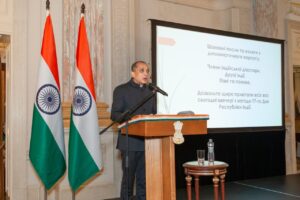
India has reaffirmed its support for a comprehensive, just, and sustainable peace in Ukraine in accordance with international law and the UN Charter, including respect for territorial integrity and sovereignty, said the Indian Ambassador to Ukraine during a reception in Kyiv on the occasion of the 77th Republic Day of India.
Speaking in the presence of Ukrainian Deputy Foreign Minister Oleksandr Mishchenko, the ambassador noted that India supports “practical cooperation among all interested parties” and quoted Prime Minister Narendra Modi: “This is not an era of war.”

The ambassador also stressed that India remains one of Ukraine’s main trading partners despite the ongoing conflict and that Indian companies “will be happy to play a role in the restoration and reconstruction of Ukraine,” pointing to potential cooperation in the fields of digital public infrastructure, manufacturing, green energy, and new and promising technologies.
According to the speech, India will continue its humanitarian aid and plans to finance a $1.5 million project to modernize the surgical center of the Zbarazh Central Hospital in the Ternopil region as part of the High Impact Community Development Projects.

The ambassador also noted the growing interest in Indian culture and language in Ukraine and pointed out that the bilateral cultural cooperation program provides a framework for expanding exchanges, scholarships, and people-to-people contacts.
India recognized Ukraine’s independence on December 26, 1991. Diplomatic relations were established on January 17, 1992, and the Indian Embassy in Kyiv opened in May 1992. The Ukrainian Embassy in New Delhi was established in February 1993.
Republic Day is a national holiday in India, celebrated on January 26 to mark the coming into force of the Constitution in 1950, when India became a sovereign democratic republic. The date was chosen to commemorate the Indian National Congress’s proclamation of “Purna Swaraj” (complete self-rule) in 1930.

Turkish President Recep Tayyip Erdogan expressed optimism about the prospects for peace in Ukraine after talks with Vladimir Putin in Ashgabat, Turkmenistan, Turkey’s Anadolu news agency reported.
Erdogan told reporters on the side of the plane that Ankara also hoped to talk to U.S. President Donald Trump to assess a potential peace plan.
“After this meeting with Putin, we hope to be able to also discuss the peace plan with US President Trump. Peace is around the corner; we see it,” Erdogan said, referring to his bilateral meeting with Putin in Turkmenistan on Saturday.
Speaking about regional security, Erdogan warned against turning the Black Sea into a confrontation zone. “The Black Sea should not be seen as an arena of rivalry. It will not benefit Russia or Ukraine. Everyone needs freedom of navigation and security in the Black Sea,” he said.

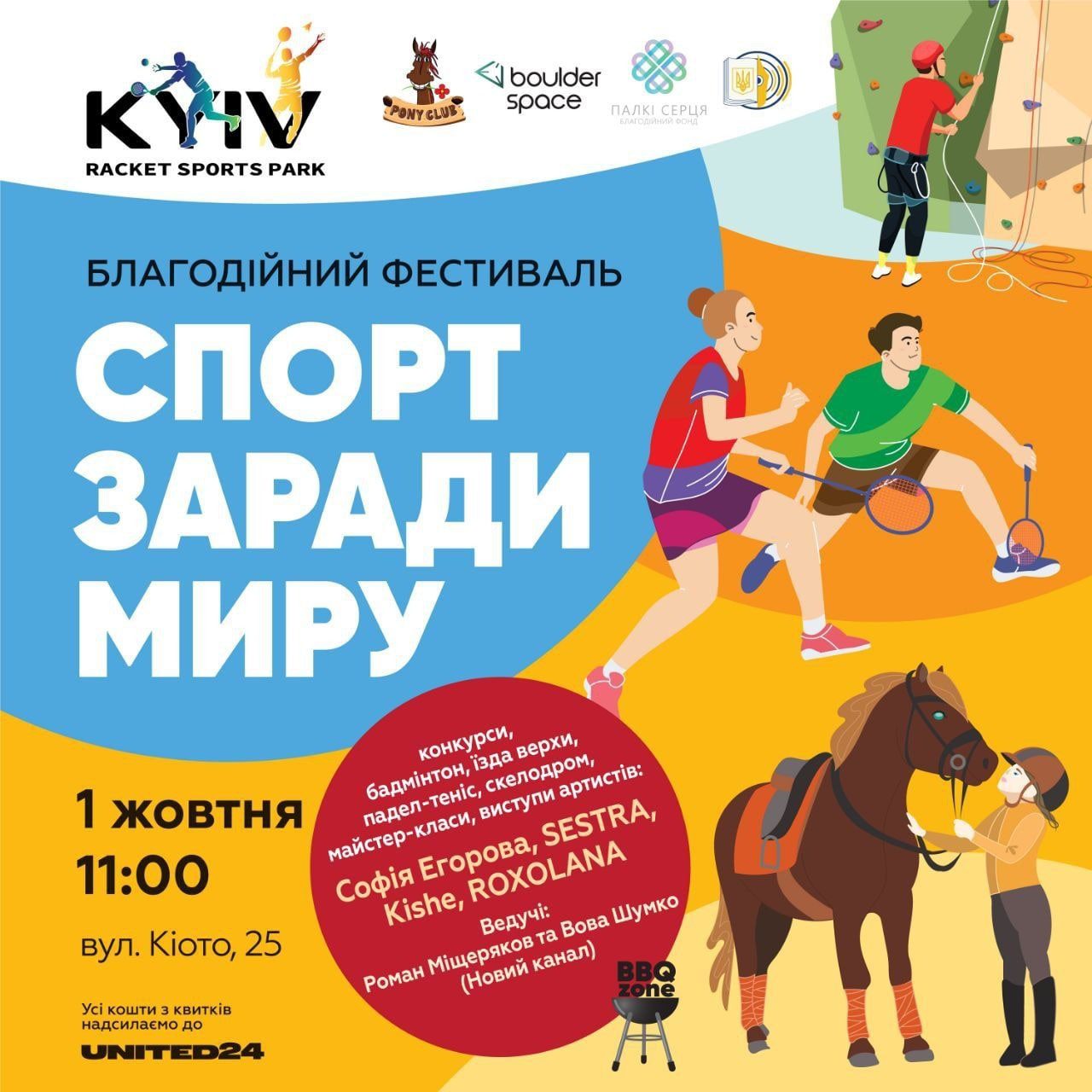
On October 1, a charity family festival “Sports for Peace” will be held in Kyiv at Kyoto 25 from 11:00 a.m. to 2:00 p.m. As part of the event, guests can expect:
– Sports quest (climbing, badminton, padel tennis, ping-pong, getting to know horses)
– Workshops for the little ones
– Prize fund for participants
– Demonstration performance of Deryugina’s school
– Musical performances by Sofia Yehorova, the band SESTRA, KISHE and ROXOLANA
Hosts of the event: Roman Mishcheryakov and Vova Shumko (New Channel).
You can buy tickets here – https://sport-zaradu-mury.ticketforevent.com
All proceeds from ticket sales will go to UNITED24 for medical aid.
For the convenience of guests, it is advisable to be in sports clothes, we also recommend having sports shoes with you.
Information partners Interfax-Ukraine, Open4Business, Club of Experts and others.

Ukrainian President Volodymyr Zelensky has noted the efforts of the Prime Minister of Israel to find ways to peace.
The Israeli “Prime Minister, Minister [Naftali] Bennett, is trying to find a negotiating path with Russia, and we are grateful for every effort for us to start talking with Russia, sooner or later,” Zelensky said in a video address early on Monday.
“Possibly in Jerusalem. This is the right place to find peace, if this is possible,” Zelensky said.
Zelensky recalled that he spoke on Sunday in the Israeli Knesset, but, he noted, “spoke on your behalf with the people of Israel, who understand us as free people of free people.”
He said, “Israel has its interests and a strategy of protecting its citizens, we understand all that,” Zelensky said.



