
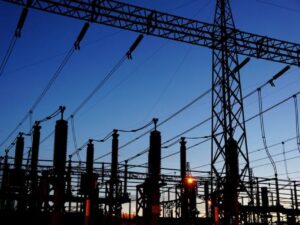
More than 16 billion hryvnias have already been spent on improving the capital’s resilience since the beginning of 2026, compared to 2 billion hryvnias last year, and another 4.5–5 billion hryvnias are planned to be spent by the end of this year, said Oleksandr Kharchenko, director of the Center for Energy Research.
“This is effectively a tenfold increase in investment, and these investments are specifically in security measures. This includes protecting high-voltage substations, providing backup power for essential sewer systems, and providing backup power for heating systems,” he said during a discussion titled “Ukraine on the Threshold of Winter: Energy, Defense, and the New Diplomatic Reality” at the Interfax-Ukraine news agency on Friday.
At the same time, according to the expert, the city needs an additional approximately EUR1.5 billion to carry out the necessary work to improve resilience.
As he noted, this year’s preparations for the heating season in Kyiv were funded primarily by the local budget, while the central budget’s share amounted to only about 10%.
“The national budget is not in very good shape right now, and payments in treasury accounts were frozen for over a month, which dealt a severe blow to all local authorities and to winter preparations as well,” explained the director of the Center for Economic Development.
As a result, some of the equipment that the city had planned to install by November or December will have to be put into operation later due to the four-week delay.
As Kharchenko recalled, in January 2026, all of Kyiv’s local power generation capacity was destroyed. In other words, Kyiv—with consumption of approximately 2 GW at a temperature of -10°C, and consumption of 1.2 GW under the current weather conditions in Ukraine—had 1.3 GW of domestic generating capacity until January 2026.
“In January 2026, these facilities were physically destroyed. What does this lead to? It leads precisely to the effects that are currently causing great distress among Kyiv residents,” explained Kharchenko.
In the absence of power generation in the city, the metro shuts down and switches to backup power, and the water utility’s pumping stations also shut down and switch to backup power—which, under such operating conditions, cannot provide full service.
However, according to the expert, despite this, the city has currently secured its key systems against man-made accidents and strategic technological issues.
“But it’s one thing to maintain water pressure in the water mains—which allows water to circulate through the pipes, fill reservoirs, and support basic infrastructure—and quite another to deliver pressure, say, to Pechersk or certain other districts located on hills,” he added.
This cannot be achieved without the operation of the main power supply lines at the water utility’s facilities.
“Therefore, certain inconveniences this winter are almost inevitable,” the expert concluded.
According to Kharchenko, in most cities it is impossible—due to engineering and regulatory factors—to implement technical projects aimed at improving energy resilience in a single season lasting seven to eight months; this would take two to three years.
“First, you spend seven to eight months on paperwork—even if you have the money—and then you start building something. This applies to everything: installing backup power supplies, backup generators, decentralized cogeneration plants—absolutely everything,” he explained.
According to the director of the Center for Energy Efficiency (CEE), Kyiv, in particular, needs approximately another EUR1.5 billion to do everything necessary to ensure the city’s resilience. Nationwide, the need could amount to 250–300 billion UAH per year for at least the next two years.
energy resilience, HEATING SEASON, INVESTMENTS, Kharchenko, KYIV, POWER GENERATION

In the first nine months of 2026, Ukraine connected 1.9 GW of new power capacity, which represents more than 80% of the annual target, according to Viktor Mykyta, deputy head of the Office of the President of Ukraine.
“As of now, we have reached 1.9 GW of connected capacity. This is more than 80% of the annual target,” Mykyta wrote on his Telegram channel following a meeting with the heads of regional military administrations.
According to him, the meeting focused primarily on local efforts to increase connected capacity and strengthen the regions’ energy resilience. Communities are working to develop a decentralized power generation system with the participation of businesses and investors.
Specifically, during the period in question, more than 620 MW of wind power capacity, more than 520 MW of cogeneration capacity, as well as more than 460 MW of solar power capacity and more than 270 MW of solar power capacity from private households were connected to the grid.
“People continue to install off-grid power systems for their homes, and this trend remains strong. We thank the heads of regional state administrations, communities, businesses, and others for their work in each individual region, which is so important for the country,” the Deputy Head of the Presidential Office stated on Friday.
DECENTRALIZATION, ENERGY, POWER GENERATION, RENEWABLE ENERGY, UKRAINE
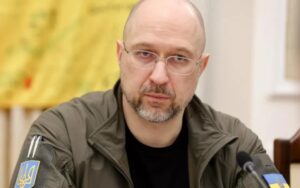
Ukraine currently has 15 GW of electrical capacity available, including cogeneration and imports, and by the end of the year, this figure is expected to rise to 21.4 GW, provided there is no significant damage resulting from Russian attacks, First Deputy Prime Minister for Energy Denys Shmyhal said during Question Time with the government in the Verkhovna Rada on Friday.
According to him, nuclear power accounts for over 40%, thermal power plants for 25%, and hydropower for 15%.
“Six of the nine nuclear power plant units are generating electricity; three units are undergoing scheduled maintenance, and scheduled maintenance has already been completed on five units,” Shmyhal said.
The Minister of Energy noted that Ukraine continues to increase its power generation capacity, which is expected to reach 19.6 GW by November 1 and 21.4 GW by the end of the year, provided that the already restored capacity is not damaged by Russia.
“The power grid is operating stably, but everything can change depending on the intensity of Russian air attacks during the evening peak period,” Shmyhal emphasized.
CAPACITY, ENERGY, NUCLEAR POWER PLANTS, POWER GENERATION, SHMYHAL

As part of the implementation of the energy sustainability plan, distributed cogeneration facilities with a total capacity of 65 MW have already been built in Kyiv, according to Petro Panteleev, acting first deputy head of the Kyiv City State Administration.
“We have already built cogeneration plants with a capacity of 65 MW and diesel power plants with a capacity of over 16 MW,” he said at a press briefing on Monday dedicated to the progress of the Kyiv City Resilience Plan.
The level of readiness for infrastructure restoration, Panteleev added, has already reached 60%. In addition, the city is working to prepare its housing stock for the heating season.
According to the city official, Kyiv has allocated 800 million hryvnias over the course of the year for the repair and modernization of electrical switchboards. Work is planned this year at 742 facilities; so far, 20% of the plan has been completed.
As Panteleev noted, energy efficiency measures have already been implemented in over 2,000 residential buildings through municipal and state programs.
It was previously reported that the capital’s Resilience Plan allocates 37 billion hryvnias for the restoration and construction of facilities and infrastructure.

Ukrainian banks have started financing projects to install energy equipment with a total capacity of more than 639 MW worth UAH 17 billion from June 2024 to March 2025, the National Bank of Ukraine (NBU) reported on its website on Thursday, based on a survey of 20 banks.
“Banks received 4,086 applications from businesses for lending to energy infrastructure restoration projects totaling UAH 83.9 billion and started financing such projects (provided loans and opened limits) in the amount of UAH 16.7 billion,” the central bank said.
According to the central bank, the total number of applications submitted in March increased to 207 from 194 in February. However, their volume decreased almost threefold – from UAH 6.7 billion to UAH 2.27 billion, although 95 applications worth UAH 2.28 billion were approved, compared to 70 applications in February worth UAH 0.75 billion.
The number of loans actually disbursed in March also increased – from 94 in February to 118 in March, and the total amount of funding disbursed increased from UAH 0.91 billion to UAH 2.6 billion.
The National Bank clarified that since June 2024, most of the funds have been allocated for the purchase and installation of gas-piston cogeneration units (260 MW), the construction of solar power plants (190 MW) and the purchase of diesel and gasoline generators (128 MW).
According to him, banks also lend to the population: since June 2024, 6,799 loans have been granted in the amount of UAH 936 million, and the gross portfolio of loans to individuals for these purposes, including repayments, is UAH 7189 million.
As reported, in June 2024, with the assistance of the NBU, 20 banks controlling more than 85% of the sector’s net assets signed a memorandum of understanding to finance energy recovery. The lending programs take into account the needs of SMEs and large businesses, as well as households. Businesses can receive financing for the construction of solar, wind, and biogas plants, gas turbine and gas piston power plants, and the purchase of industrial batteries and storage devices.
The base lending rate under the memorandum is 13.5% per annum (or UIRD3M + 0.5% for the first year of financing, and then no more than UIRD12M + 3%).
Electricity generation by all power plants of state-owned enterprise Energoatom in 2019 decreased by 1.6% (by 1.398 million kWh) compared to 2018, to 83.228 billion kWh.
According to the press service of the company, the plan for production of electricity in 2019 was exceeded by 1.8%. The share of Energoatom in the overall structure of electricity production in the country amounted to 54.1%, which is 1 percentage points more than in 2018.
The power plants of the state enterprise supplied 78.199 billion kWh of electricity to the market, which is 1.77% less than in 2018.
The volume of capital investments in 2019 amounted to UAH 14.083 billion. The financing of capital investments amounted to UAH 14.258 billion.
Energoatom transferred UAH 16.706 billion to the budgets of all levels, and insurance payments amounted to UAH 2.592 billion.
The installed capacity utilization factor of the company’s nuclear power plants amounted to 68.5%, which is 1.1 p.p. more than in 2018.
In 2019, 13 violations were recorded in the operation of Ukrainian nuclear power plants (nine less than in 2018).
Energoatom is the operator of all four operating nuclear power plants in Ukraine. It operates 15 power units equipped with water-cooled power reactors with a total installed electric capacity of 13.835 GW.



