
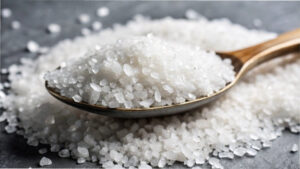
The Cabinet of Ministers of Ukraine has abolished quotas on the export of table salt for 2026, according to Government Resolution No. 1795 of December 31 on the list of goods whose export and import are subject to licensing and quotas.
According to the document, there will be no quotas on the export of table salt in 2026, whereas in previous periods, exports of this product were limited by zero quotas.
The resolution is published on the government’s website.

The Cabinet of Ministers of Ukraine has canceled quotas for exports of coking coal of “K” grade for 2026, according to the government’s resolution No. 1795 of December 31 on the list of goods, export and import of which are subject to licensing and quotas.
According to the resolution, the quotas for exports of coking coal grade “K”, which were previously set at zero level, are absent in the document for 2026.
The resolution was published on the government website.
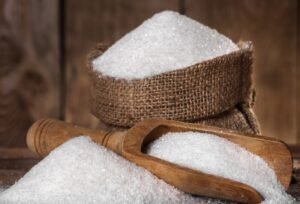
The Ministry of Agrarian Policy and Food has allocated sugar quotas for export to European Union countries, which will remain in effect until August 5, 2025, according to the ministry’s press service.
According to the report, the sugar quota has been distributed among exporters in proportion to their actual exports of this product to EU countries in January-May 2025.
The quotas were allocated to the following companies: TOV “Radehivsky Sugar” — 3,977.6 tons, TOV “Tsukoragroprom” — 1,700.9 tons, TOV “PK ”Zorya Podillya” — 927.6 tons, PJSC “Teofipol Sugar Plant” — 915.1 tons, LLC “Narkevychi Sugar Plant” — 688.8 tons, LLC “Novoorzhytskyi Sugar Plant” — 598.4 tons, LLC “Starokostiantynivtsukor” — 451.6 tons, LLC “Shamraivsky Sugar” — 381.5 tons, LLC “Shepetivka Sugar” — 349.5 tons, LLC “Signet-Center” — 259.4 tons, LLC “Agrocomplex ”Green Valley” — 216.5 tons, Kraievyd LLC — 184.2 tons, Novomyrhorodsky Sugar LLC — 140.7 tons, Prisma-14 LLC — 121.7 tons, and Krasylivsky Sugar Plant PJSC — 94.0 tons.
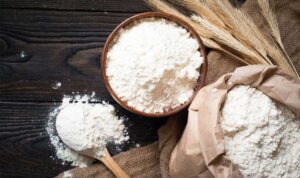
Flour and cereal producers are concerned about a reduction in flour exports to the European Union after the expiry of autonomous trade measures on June 6, as 75% of their exports currently go to the EU, Rodion Rybchinsky, director of the Ukrainian Flour Millers Association, said in an interview with Interfax-Ukraine.
“Starting from June 6, we have the opportunity to supply a total of 583,300 tons of wheat and wheat flour to the EU market by the end of the year. But since the quota is combined, I am not sure that we will be able to fill it. It is much easier for wheat exporters to find buyers in the EU and fill their quota,” he said.
Rybchynsky added that the industry association continues to use all possible communication channels to convey to European officials the need to allocate a separate quota for Ukrainian flour for export to the EU or to remove it altogether.
The head of the Ukrainian Flour Millers Association stated that before the war, there were 678 enterprises specializing in grain processing in Ukraine, but in 2022, 192 enterprises were destroyed and remained in the occupied territories. As of the end of 2024, 88 enterprises have been restored.
At the same time, according to his information, exports of flour and cereals have fallen by 50% since the start of the war. Among the reasons, the expert cited a reduction in production and changes in logistics: whereas exports used to be mainly by sea, since the start of the war they have been forced to switch to road and rail transport, which are more expensive than sea transport.
Due to problems with transporting products across the Black Sea, container shipping has not yet been fully restored. As a result, the geography of grain processing product sales has changed significantly since the beginning of the war: 75% of products are exported to the European market, of which 55% go to EU countries, 15% to the Middle East, 4% to Africa, and 2% to Asia, according to the head of the Ukrainian Flour Millers Association.
As reported, First Deputy Minister of Agrarian Policy and Food Taras Vysotsky said in comments to journalists that one of the government’s strategies in negotiations with the European Commission will be to request that the established quotas be divided by commodity codes.
The European Commission has approved quotas for Ukrainian agricultural products, which will be in effect from June 6 until the end of 2025 as part of the Deep and Comprehensive Free Trade Area (DCFTA) agreement. According to a document published on the EU website, by the end of 2025, Ukraine will be able to supply the EU market under the Deep and Comprehensive Free Trade Area in a 7/12 month mode (7/12) with wheat, flour, and meslin – 583,330 tons , corn – 379,167 thousand tons, barley – 204,167 thousand tons, poultry meat – 52,511 thousand tons, beef – 7 thousand tons, eggs – 3,500 tons, milk and cream – 5,833 tons, dry milk – 2,917 tons, butter – 1,750 tons.

Ukraine is exhausting its tariff-free quotas for honey, corn and chicken supplies to the European Union, European Commissioner for Agriculture Janusz Wojciechowski said at a conference after the Council of Agricultural Ministers meeting in Brussels on Monday.
“I am pleased that today, during the discussion on Ukraine, member states generally expressed positive views on the new autonomous trade measures and on the safeguard measures introduced. It was the initiative of the European Commissioner for Agriculture to introduce these import limits, and they are working. They were activated for three products – sugar, eggs and oats. We are observing the situation with other sensitive products. Honey, whose exports have already reached 89% of the limits, corn – 67%, and chicken – 59%,” he said.
Wojciechowski emphasized that European politicians’ accusations against the EU’s Common Agricultural Policy that it is aimed at reducing domestic production and further increasing dependence on imported products are unfounded. The EU has been and will remain the largest exporter of agricultural products in the world, he assured.
According to the European Commissioner, the EU’s agricultural trade surplus in 2023 reached a record EUR 70 billion. This year, this record may be broken, as in the first quarter alone, the EU’s trade surplus with third countries already amounted to EUR 18 billion.

The European Commission is studying the situation on the poultry, egg and frozen fruit markets and is ready to return to tariff quotas if Ukraine maintains the current scale of their supplies to Europe, EU Agriculture Commissioner Janusz Wojciechowski said.
During the session of parliamentary committee on agriculture, which took place on Monday, he said that at the moment there is no reason to prohibit import of any other goods, except wheat, corn, rapeseed and sunflower, from Ukraine to Bulgaria, Poland, Romania, Hungary and Slovakia. These goods are also allowed to transit the territory of these five countries, reports pap.pl.
According to Wojciechowski, market inspections, according to the current legal regime, will end in November, and according to the updated rules, if the procedure begins in June, they will end in September.
“The situation in the poultry market is not only local, but European-wide, and it is very likely that if imports do continue on this scale in the current months, there will be a return to the tariff quotas that were in place before liberalization,” he said.
As the commissioner said, the EC is monitoring the situation in the egg market. There is an increase in imports, and this is also covered by the excessive import procedure. “If this procedure shows excessive imports, there will be quotas or an import ban,” he added.
According to Wojciechowski, imports of frozen fruit from Ukraine to the EU reached 44,000 tons in 2022, an increase of 18.9 percent from 37,000 tons in 2021.
“This situation will be controlled. If during the season it becomes clear that there is a threat to Polish, European producers, the European Commission is ready to impose restrictions even in an emergency, express mode. It depends on the situation during the season, how the situation will develop in the coming months,” he stressed.
According to the Commissioner, since April 2022 until the end of March 2023, Ukraine exported 48 million tons of wheat, corn, rapeseed and sunflower seeds, 24 million tons of which were sent to Africa and Asia, about 24 million tons – to the EU countries, 10.3 million tons of which – to the five frontline countries.
Voytsekhovskyy specified that 4.1 million tons of Ukrainian grain arrived in Poland, of which 3.3 million tons remained in the country, and 700 tons were in transit.
The largest transit country, through which the Ukrainian grain passed, was Romania, through which 9 million tons passed, of which 2.5 million tons remained in the country.
As Voytsekhovskyy stated, there was no uncontrolled import of grain from Ukraine to the EU. Because of the growing problem in the frontline countries, a temporary import ban was imposed on Bulgaria, Poland, Romania, Hungary and Slovakia. “Existing restrictions are ‘likely’ to be extended,” wrote the Polish publication.
The European Commissioner recalled that free trade with Ukraine is very beneficial to the Polish economy. In 2022, almost 10 billion euros of goods were exported from Poland to Ukraine, and less than 6 billion zlotys (EUR 1.254 billion) were imported. At the same time, he noted that this is 1/3 of all EU exports, the value of which was EUR30 billion. In second place is Germany with exports of EUR4 billion.
“If someone asked me why I am in favor of liberalization of trade with Ukraine, it is only because not only political but also economic reasons demanded it,” the Polish edition quoted the European commissioner as saying.



