

JSC “Ukrzaliznytsia” (UZ) transported 8.14 million passengers over the three summer months, compared to 8.07 million during the same period last year and 7.94 million in the summer of 2024, according to a company announcement on its Telegram channel on Thursday.
According to UZ, 628,400 children and 90,000 military personnel visiting their families traveled by train between June and August this year. A total of 22,000 people with disabilities, including veterans, traveled in accessible railcars. A total of 357,000 passengers purchased tickets through the auto-renewal system.
“This result once again demonstrates a more efficient use of the rolling stock: additional ‘rotational’ trains and minimal downtime for cars, especially in frontline regions,” Ukrzaliznytsia noted.
It is noted that over the summer, “UZ” put 20 new railcars into service, while losing seven during this period.
According to Ukrzaliznytsia, there were four and a half passenger requests per seat in June–August. The top five most popular routes based on the number of ticket searches in the company’s app were Lviv–Kyiv, Przemyśl–Kyiv, Kyiv–Kharkiv, Kholm–Kyiv, and Kyiv–Dnipro.
Among other things, passengers exchanged more than 300 million “hugs” for discounts in the “Rail Friends” loyalty program during the summer and also earned about 500,000 rewards.
For its part, the Ministry of Recovery, Transport, and Infrastructure reported that the railway is entering the fall season with a schedule that has been updated and adapted to the current needs of Ukrainians, while also taking the security situation into account.
“This year’s summer season has been yet another challenge for the Ukrainian railway. Russia is attempting to disrupt domestic logistics. At the same time, railway workers continue to optimize operations in accordance with the security situation, quickly adjust logistics, and make the most of the available rolling stock,” the ministry emphasized.
As reported, citing data from “Ukrzaliznytsia,” since the start of the war, the enemy has carried out 6,100 attacks on its infrastructure, more than 1,500 of which occurred between January 1 and August 20, 2026.
PASSENGER TRAFFIC, railcar, RAILROAD, TRANSPORTATION, UKRZALIZNYTSIA
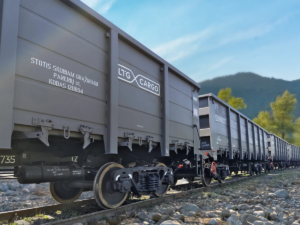
TAS Dniprovagonmash LLC (DVM, Kamyanske, Dnipropetrovsk Oblast), controlled by the “TAS” financial and industrial group owned by businessman Serhiy Tihipko, ended the January–June 2026 period with a loss of 87.2 million UAH, which is 2.2 times higher than the corresponding figure for the first half of 2025.
According to the company’s published interim financial statements, its net revenue decreased by 44.3% to 312.7 million UAH.
The company reported a gross loss of 5.7 million UAH, whereas a year ago it had recorded a gross profit of 48.3 million UAH; the loss from operating activities doubled to 68.4 million UAH.
According to the financial statements, in the second quarter of this year, “TAS DVM” incurred a loss of 47.6 million UAH, which was more than double the loss recorded in April–June 2025, amid a 13% decline in net revenue to 240 million UAH.
As previously reported, in the first quarter of this year, the plant saw its net revenue drop by nearly four times compared to the same period in 2025—to 72.73 million UAH, while its loss increased 2.4-fold, to 39.67 million UAH.
According to the company, in the second quarter of this year, it produced 76 freight cars, compared to 202 units during the same period last year (38 units and 181 units in the first quarter, respectively), and the average selling price of the cars was 2.348 million UAH (2.78 million UAH last year).
The main customers in Ukraine were Alfa-Capital Bozhkivsky Elevator LLC, Oval LLC, Ukrsilko, and TAS Poltavvagon.
The total value of exports amounted to 4.4 million UAH (1.8% of sales volume), while in April–June 2025 it reached 222.8 million UAH (80.8%) due to a large contract to supply railcars to the Lithuanian company LTG Cargo.
“In the second quarter of 2026, the freight base for rail logistics in Ukraine showed a downward trend, which in turn continued to dampen demand for newly built freight railcars,” the report notes.
In addition, among the factors hindering railcar production in Ukraine are massive rocket attacks, which have significantly impacted the energy sector, transportation, and port infrastructure, as well as an increase in rolling stock turnaround time due to a shortage of traction rolling stock at Ukrzaliznytsia resulting from significant wear and tear.
The plant notes in its report that the value of contracts signed but not yet fulfilled as of the end of the reporting period amounts to 427.2 million UAH (excluding VAT), and the expected profit from their fulfillment is 19.2 million UAH.
As of early July of this year, the company employed 544 people (748 people last year).
“TAS Dniprovagonmash,” which has the capacity to produce 9,000 railcars per year, reportedly offers the widest range of freight railcars among domestic manufacturers (more than 160 models) and also produces steel structures, railcar bogies, spare parts, and equipment for the agricultural sector.
As previously reported, in 2025, the company reduced its production of freight cars by 8.6% compared to 2024—to 550 units—and sales by 8.2%, to 556 units. The company incurred a loss of 151.4 million UAH, whereas in 2024, net profit amounted to 62.2 million UAH, and net revenue decreased by 12% to 1.54 billion UAH.
LOSS, PRODUCTION, railcar, REVENUE, TAS
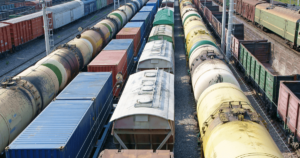
Starting May 1, Ukrzaliznytsia (UZ) is fully implementing an automated service for scheduling freight car repairs with the aim of minimizing human error, improving the efficiency of rolling stock utilization, and reducing downtime.
“In fact, from now on, the entire process—from repair planning to final billing—will take place online within a single system,” UZ notes on Facebook.
The company explains that to have cars repaired at its facilities, three online stages must be completed, including the already operational planning and contract stage, during which information on available capacity, rates, and terms is published in the system, and the car owner submits an electronic application with an annual repair plan. After that, the parties conclude a contract online using a qualified electronic signature (QES).
In the second stage (application submission and repair), which began on May 1, the client makes an advance payment, submits the application independently by selecting the production unit to receive the service, after which the railcars are sent for repair. All work is performed according to an automatically generated queue.
In the third stage (completion and billing), after repairs, the system generates certificates of completion and necessary documents with a QES. These become available in the customer’s electronic account, after which final billing takes place.
“Thus, customers receive a fully digital process without paper documents: the contract, requests, repair tracking, and all settlements—all in one service. A personal account is automatically created for each customer, and contracts can be renewed online,” the post concludes.
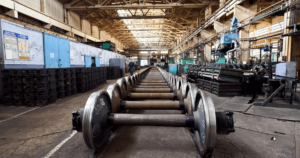
Losses in the railcar repair sector due to the situation on the rail transport market, in particular the surplus of railcars, may reach UAH 600 million in 2025, and more business involvement is needed to find alternatives, said Yevhen Shramko, head of the Repair and Production Division at Ukrzaliznytsia (UZ).
“At a meeting (with businesses and investors in August, initiated by UZ – IF-U), we discussed the forecast for the car fleet, which, unfortunately, is disappointing. New railcars are hardly being built due to the surplus. All this leads to the fact that, according to our forecasts, the losses of the railcar repair division will reach UAH 600 million by the end of 2025,” he said in an interview with Interfax-Ukraine.
The UZ representative recalled that transport volumes had decreased by 40%, and transport by the state-owned company’s railcars had decreased even more, by 58%. As a result, the volume of repairs, almost 70% of the cost of which is personnel expenses, also decreased by 55%.
Shramko noted that given this situation and the worsening forecast for the coming year, the company decided to go public and attract international partners, consultants who can help obtain grants or other funding to transform car repair enterprises without losing personnel and potential, as well as to attract as much business as possible for more efficient use of production capacities, which are currently redundant.
Shramko clarified that after the meeting, all participants were sent a questionnaire to obtain information about the real needs of the market, in particular, what facilities are needed, taking into account their location and infrastructure (electricity, gas, water supply).
“We only received 13 responses. To be honest, this is not enough. So we will continue to work with businesses, associations, and investors,” said the head of the department.
According to him, this is the first step towards transparent optimization and reorganization of excess production capacities that generate losses for Ukrzaliznytsia. Next, a list of facilities and proposals for international and local investors will be prepared.
“We are considering various options: leasing, public-private partnerships, and repurposing, and we want all of them to be implemented on a competitive basis,” Shramko emphasized.
He added that next year, during the proper gradual reorganization, it is planned to tackle the locomotive repair sector, where the company also has significant capacity.
“Given the current situation in the industry and the dynamics of transportation, a return to last year’s volumes seems unlikely at this point, according to our forecasts,” the director of the division emphasized.
Ukrzaliznytsia’s Repair and Production Division is responsible for the repair, maintenance, modernization, and manufacture of railcars, locomotives, and electric trains. It produces critical spare parts, reinforced concrete sleepers, technical equipment, etc. It has 11 enterprises, some of which are branches, and some are private joint-stock companies.
As reported, the volume of freight transportation by rail in Ukraine decreased from 180 billion t*km in 2021 to 113 billion t*km in 2024, and transportation by the company’s railcars decreased from 1,206,000 to 727,000. This year, these figures are expected to decrease to 106 billion t*km and 481 thousand, respectively.
These conditions led to a decrease in the volume of car repairs from 31,750 in 2021 (of which 20,150 were Ukrzaliznytsia cars) to 24,230 in 2024 (12,480), and this year a further reduction to 14,040 (3,960) is expected.



