
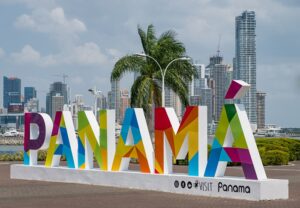
According to Experts.news, the Experts Club think tank analyzed the results of the international Expat Insider 2026 survey, conducted by the InterNations community. Panama, Mexico, and Thailand were named the best countries for expats to live in, while Norway, Germany, and Turkey ranked last.
The survey was conducted from February 1 to March 31, 2026. A total of 7,786 expats representing 162 nationalities participated. The final ranking included 31 countries, each of which received at least 50 completed questionnaires. Participants evaluated up to 53 aspects of life abroad, including work, personal finances, quality of life, living conditions, and ease of social adaptation.
Panama took first place for the third year in a row. About 87% of foreigners living in the country said they were satisfied with their life abroad, while the global average was 70%.
The country ranked first in working conditions and personal finances, second in ease of adaptation and access to essential services, and sixth in quality of life. About 90% of respondents believe their current income is sufficient for a comfortable life, and 76% are satisfied with their financial situation.
Panama also received the highest ratings for housing affordability. Nine out of ten expats reported that it is easy to find housing in the country. 82% of respondents described the visa application process as simple. Retirees make up a significant portion of the expat community—their share reached 37%, and 34% of respondents intend to stay in the country permanently.
Mexico took second place, once again becoming the global leader in ease of social adaptation. About 73% of foreigners said it was easy for them to make friends among locals, compared to a global average of 39%.
However, safety remains a weak point for Mexico. 68% of respondents rated their personal safety positively, compared to a global average of 81%. Despite this, 73% of expats are satisfied with their financial situation, and 38% plan to stay in the country permanently.
Thailand took third place and became the country with the most life-satisfied expats. 86% of respondents reported feeling content, and 42% expect to stay in the country permanently.
Expatriates particularly praised the cost of living, the affordability of rent, and the quality of healthcare. At the same time, Thailand received low ratings for its environmental conditions, digital administrative services, and the ease of opening bank accounts. Only 33% of respondents rated air quality positively, and 80% consider the Thai language difficult to learn.
The top ten in the ranking also included the UAE, Brazil, Spain, Singapore, Portugal, Malaysia, and Luxembourg. The top five countries in the personal finance index are Panama, Thailand, Mexico, Portugal, and Malaysia. In most of the top-ranked countries, expats also rate housing affordability and the attitude of the local population highly.
Norway came in last, at 31st place. Only 46% of foreigners living there are satisfied with their lives, and 72% find it difficult to make friends among the local population. Only 39% of respondents rated their financial situation positively.
At the same time, Norway remains one of the countries with the highest ratings for environmental conditions, air quality, job security, and economic stability. The main challenges for expats were the high cost of living, social isolation, the climate, and limited leisure opportunities.
Germany ranked 30th. About 61% of expats described dealing with the bureaucratic system as difficult. Only 19% rated housing affordability positively, and the same percentage found it easy to find housing.
Germany also ranked last on the index of basic conditions for expats. Survey participants criticized the lack of online access to government services, problems with home internet, and the limited availability of cashless payments. In addition, 57% of expats reported that they found it difficult to make friends among Germans.
Turkey ranked 29th, placing last in terms of working conditions, wages, and economic stability. About 61% of respondents gave a negative assessment of the state of the Turkish economy, and 34% reported an annual income of less than $12,000 before taxes.
Fifty-eight percent of expats are satisfied with life in Turkey, 14% intend to leave the country within the next year, and only 13% plan to stay permanently.
The bottom ten also included Switzerland, Austria, Italy, the Czech Republic, Sweden, Canada, and the United Kingdom. Eight of the ten countries at the bottom of the ranking are in Europe. However, Austria ranked fifth in quality of life, Switzerland eighth, the Czech Republic 13th, and Sweden 15th. This suggests that a low overall ranking is often linked not to infrastructure or safety, but to the high cost of living, bureaucracy, and difficulties with social integration.
According to Maxim Urakin, founder of the Experts Club think tank, the study’s results should not be viewed as a universal ranking of countries’ levels of development.
“The ranking does not show which country is objectively richer or better governed, but rather how easily a specific foreigner can integrate into local daily life. Developed infrastructure and high salaries can go hand in hand with expensive housing, complex bureaucracy, and social exclusivity.
At the same time, less affluent countries may score higher thanks to affordable living costs, simple paperwork, and a welcoming attitude toward newcomers,” Urakin noted.
He added that when choosing a country to move to, it is necessary to analyze immigration laws, the tax system, the labor market, healthcare, education, and real estate prices separately.
InterNations emphasizes that the ranking is based on the subjective satisfaction of respondents, rather than on a comparison of official statistics. It does not take into account a number of important factors, including international taxation and childcare services, and the safety rating reflects respondents’ personal perceptions rather than the actual crime rate.

Luxembourg has retained first place for the second year in a row in the global quality of life ranking compiled by the Deutsche Bank Research Institute.
Copenhagen took second place, and Amsterdam came in third. Vienna and Munich tied for fourth place, followed by Frankfurt, Helsinki, Geneva, Zurich, and Edinburgh.
The ranking takes into account purchasing power, safety, healthcare, cost of living, housing affordability, commute time, environmental pollution, and climate.
Cities in Western and Northern Europe dominate the top ten. At the same time, the world’s largest financial centers ranked significantly lower: Paris came in 43rd, New York 46th, London 47th, and Hong Kong 55th.
Their rankings are dragged down by expensive real estate, high living costs, long commutes, and environmental issues. Thus, high salaries alone do not guarantee a city’s leadership in quality of life.

New York has retained the top spot among 69 cities worldwide in terms of rental costs for both one-bedroom and three-bedroom apartments, according to data from the Deutsche Bank Research Institute.
In the ranking of three-bedroom apartment rents, Zurich, San Francisco, Boston, and Singapore follow New York. London ranked eighth, Paris 21st, Frankfurt 30th, Tokyo 40th, and Seoul 44th.
The authors of the study point out that a high nominal salary does not always translate to high disposable income. New York ranks among the top five cities globally in terms of net wages, yet a significant portion of residents’ income is consumed by housing costs.
The contrast with Tokyo is particularly striking: renting a three-bedroom apartment in the Japanese capital costs about four times less than in New York.
Data from Deutsche Bank show that housing costs are becoming one of the main factors driving differences in real living standards among the world’s largest financial centers.

In 2026, Hong Kong remained the world’s most expensive city for purchasing a downtown apartment, according to the Deutsche Bank Research Institute’s study “Mapping the World’s Prices 2026.”
The average cost of housing in the city’s central districts is estimated at $27,753 per square meter. Zurich, Seoul, Singapore, and Geneva follow in the ranking. Despite a price decline of approximately 10% compared to pre-pandemic levels, Hong Kong retained its top spot.
Compared to the previous edition of the study, the average price per square meter in Hong Kong rose from $26,749 to $27,753. High real estate prices remain one of the main factors limiting housing affordability, even for city residents with relatively high incomes.
High real estate prices also affected Hong Kong’s ranking in the quality of life index. The city dropped from 48th to 55th place out of 69. Among other negative factors, the study’s authors cite air pollution and long commutes to work.

The Economist Intelligence Unit, the analytical division of The Economist Group, has published the Global Liveability Index 2026—a ranking of living conditions in 173 cities around the world. The index evaluates cities across five categories: stability, healthcare, culture and environment, education, and infrastructure.
For the second year in a row, Copenhagen was named the world’s most livable city. The top ten included: Copenhagen (Denmark), Vienna (Austria), Melbourne (Australia), Sydney (Australia), Zurich (Switzerland), Geneva (Switzerland), Osaka (Japan), Adelaide (Australia), Vancouver (Canada), and Tokyo (Japan).
Kyiv found itself at the bottom of the ranking: the Ukrainian capital dropped from 165th to 166th place and once again made the list of the world’s ten least livable cities. The main reason is the consequences and risks of a full-scale war, which directly affect stability, infrastructure, and the quality of the urban environment.
Damascus, Syria, remains in last place in the ranking, a position it has held since 2013. Other cities at the bottom of the list include Tripoli, Libya; Dhaka, Bangladesh; Tehran, Iran; Lagos, Nigeria; and Kyiv. The EIU notes that nearly all cities at the bottom of the ranking have been affected by war, political instability, poverty, or a combination of these factors.
For Ukraine, the result is painful but expected. Before the war, Kyiv ranked significantly higher: in 2021, it was in 117th place; in 2022, it was excluded from the ranking due to the war; and from 2023 to 2025, it held the 165th position. In 2026, the capital dropped another spot.
The ranking also reflects a general global trend: cities with high stability, advanced healthcare, quality education, and well-developed infrastructure remain at the top, while wars and crises quickly push cities down the list even when they possess strong human and economic potential.
For Kyiv, this index is not so much an assessment of the city’s quality as such, but rather an indicator of the cost of war. Provided that security normalizes, infrastructure is restored, and military risks are reduced, the Ukrainian capital has the potential to return to the middle of the ranking, where it stood until 2022.

OTP Group has reached an important milestone: after four consecutive years of growth, it has made it into the top 400 companies in the world in the Forbes Global 2000 ranking for the first time.
The Forbes Global 2000 ranking identifies the world’s largest publicly traded companies each year. The list is compiled based on four key financial metrics—revenue, profit, assets, and market capitalization—each of which is weighted equally. According to the methodology, separate rankings of the top 2,000 companies are compiled for each metric, and the final ranking is determined by their combined results.
“OTP Group has been ranked among the world’s 400 strongest companies in the Forbes Global 2000—an achievement we have attained together with our colleagues, clients, and partners as a regional banking group from Hungary. OTP Group’s continuous growth confirms the strength of our stable strategy and customer-focused approach. “I would like to thank our colleagues for their efforts, which contribute to our shared success, as well as our customers for their trust, which is the foundation of our outstanding growth,” said Péter Csányi, CEO of OTP Bank.
In 2026, OTP Group ranked among the top 1,000 companies in all categories evaluated by Forbes: 360th in revenue, 313th in assets, 993rd in revenue, and 658th in market capitalization, securing an overall 398th place. This achievement is particularly significant given that four years ago the company was not yet among the top 1,000; since then, its ranking has improved significantly every year.
About OTP Group
OTP Group is one of the most dynamic and leading banking groups in Central and Eastern Europe, with high profitability and a stable position in terms of capital and liquidity. Today, with nearly 40,000 employees across 11 countries in Central and Eastern Europe and Central Asia, the Group provides comprehensive financial services to nearly 17.5 million customers.
As the most active consolidator in the banking sector of Central and Eastern Europe, the Group has successfully acquired and integrated 25 banks since the early 2000s.
OTP Group is headquartered in Hungary and is characterized by a diversified and transparent ownership structure. The banking group has been listed on the Budapest Stock Exchange since 1995.



