

As reported by Serbian Economist, the average price of 1 square meter of housing in new buildings in Montenegro in the IV quarter of 2025 amounted to 2 206 euros, which is 14% higher than the level of the IV quarter of 2024 (1 936 euros), according to data from MONSTAT.
The growth was uneven by region. On the coast, the average price reached EUR 2,570 per sqm (approximately +24% y/y), in Podgorica – EUR 2,141 (+10%), in the central region – EUR 1,363 (growth from a low base, approximately +46%), while the northern region did not record new building sales in Q4 2025.
The dynamics during 2025 were in waves: the national average price was €2,158 in Q1, €2,201 in Q2, €2,228 in Q3 and €2,206 in Q4, meaning that after peaking in the summer, the figure fell slightly towards the end of the year.
MONSTAT separately emphasizes that the average price is strongly influenced by the share of so-called solidarity housing (housing sold under the preferential model). In the fourth quarter of 2025, in the category “enterprises” (market sales), the average price in the country was 2,415 euros per square meter, while in solidarity housing – 705 euros.
From the point of view of “Serbian Economist”, the key conclusion for 2025 is as follows: the market of new buildings in Montenegro remains “two-speed” – the coast continues to rise in price faster due to tourist demand and limited supply in prime locations, while the capital and inland regions are more dependent on the structure of transactions and availability of credit. The Financial Stability Board at the Central Bank of Montenegro also warned about the risks of overheating amid active lending and rising prices at the end of 2025.
In 2026, the pressure on prices is likely to continue, but the pace may become more “selective” in terms of locations and quality of projects: the priority will be objects with clear documents, ready infrastructure and rental potential, while the mass segment is more sensitive to household incomes and financing conditions.
https://t.me/relocationrs/2311

According to Serbian Economist, the total volume of investment in Belgrade’s office real estate in 2025 grew to EUR 131 million, compared to EUR 14 million a year earlier, amid steady demand for prime-class properties and moderate new space supply, Serbia Business reports.
The total volume of modern office space in Belgrade reached 1.46 million square meters at the end of 2025, with more than 65,000 square meters of new space added during the year (about +5% year-on-year). Annual take-up amounted to 180,000 sq m, which is 9% lower than in 2024.
Vacancy in the market at the end of 2025 is estimated at 5.67% (within the “healthy” range of 5-10%), while in the prime segment it fell to 2.5%, reflecting a shortage of quality space. In the transaction structure, 43% were contract renewals and 40% were new leases.
Rental rates remained stable: prime offices – EUR 16-18 per sq. m per month, with rates exceeding EUR 19 in top properties, and class B remaining in the range of EUR 12-14.
Industry consultants generally confirm the trend of stable supply and sustained demand for high-quality space. CBRE indicated that in 2025, Belgrade’s office stock increased by more than 72,000 sq m of speculative supply, while IO Partners recorded stable prime rates at EUR 18-19 and an increase in stock of 86,900 sq m over the year.
https://t.me/relocationrs/2308

The owner of JSC “Mukachevo Knitting Factory ”Mriya‘’ (Zakarpattia region) will sell all the real estate of the factory to the recently established local LLC “Citygoal” at the residual value, which at the end of 2025 amounted to UAH 14.065 million.
According to information in the disclosure system of the National Securities and Stock Market Commission (NSSMC), the relevant decision was made at an extraordinary general meeting of shareholders on February 12, which was attended by one person – the owner of 99.86579% of the company’s authorized capital.
According to YouControl, Citygoal LLC was registered in Mukachevo in July last year with a share capital of UAH 20 million and its main activity being “construction of residential and non-residential premises.”
The owners of the company are Ivan Lilik – 33%, Mykola Medvid – 22%, and Pavlo Viktorovich Baloha – 45% (coinciding with the patronymic and surname of the son of the non-factional MP, former Minister of Emergency Situations, former head of the Transcarpathian Regional State Administration Viktor Baloha), who is listed as the ultimate beneficiary of this company.
According to information on the Mukachevo City Council website, on December 27, 2025, he granted permission to MTF Mriya to develop a detailed plan for the territory “to determine the possibility of building a multi-apartment residential complex with commercial, entertainment, and market infrastructure facilities.”
As reported, in November 2025, the owner of more than 98.87% of the shares of JSC “Mukachevo Knitting Factory ”Mriya,” which had been owned by the Lithuanian Utyanos Trikotazas, became the locally registered LLC Translum, owned by local entrepreneur Vladislav Vitvinov.
The general meeting of JSC “MTF ”Mriya” also decided to grant consent to the company’s director and supervisory board to sell the company’s movable property at a price not lower than its residual value (UAH 1.3 million at the end of 2025).
The announcement does not name the buyer of the movable property, but according to the draft decisions published in the announcement of the meeting, it was planned to sell this asset to the local company Teksto LLC, which, according to YouControl, was established in December last year with a statutory capital of UAH 1 million and its main activity being “underwear manufacturing.”
The owners of Teksto LLC are Mykola Medvid and Ivan Lilik (50% each).
The Mukachevo knitwear factory Mriya, which manufactures knitwear, was founded in 1973. Since 2005, it has been a subsidiary of Utyanos Trikotazas, which supplied raw materials and was the main buyer of its products.
In 2024, the factory incurred losses of UAH 7.4 million (46.6% less than in 2023) and reduced its net income by 15% to UAH 20 million. In January-September 2025, according to YouControl, its net income amounted to UAH 23 million, with losses of UAH 8.5 million.
As of early 2025, the factory employed 84 people, compared to 113 a year ago.
The authorized capital of JSC MTF Mriya is UAH 5.13 million.

Ukrainian citizens ranked third among foreign buyers of residential real estate in Turkey in January 2026, purchasing 77 properties, according to data cited by Turkish media with reference to the Turkish Statistical Institute (TÜİK). The first and second places were taken by citizens of the Russian Federation (219 purchases) and Iran (118).
Overall, foreigners bought 1,306 housing units in Turkey, which is 20.8% less than in January 2025. The share of transactions involving foreigners in the total volume of home sales in the country amounted to 1.2%.
Geographically, foreign demand at the beginning of the year was concentrated in the largest and most “tourist” regions: in January, foreigners bought 595 units in Istanbul and 375 in Antalya.
The total number of housing transactions in Turkey in January amounted to 111,480, which is 4.7% less than a year earlier. Against this backdrop, the decline in sales to foreigners continued, and local observers link the downturn, among other things, to rising prices and discussions of the parameters of “investment” citizenship and the incentives associated with it.
The trend toward cooling foreign demand was also noticeable in the full-year 2025 results: foreigners purchased 21,534 units (-9.4% y/y). By nationality, Russians led (3,649), followed by Iranians (1,878) and Ukrainians (1,541). By location in 2025, foreigners most often bought in Istanbul (7,989), Antalya (7,118), and Mersin (1,800).

In Greece, from April 1, 2026, residential and commercial property rentals will only be payable by bank transfer to the landlord’s account. The measure is enshrined in amendments that postpone the launch date of mandatory cashless payments for rent to April 2026 and tighten controls on the declaration of rental income.
According to explanations provided by the Greek media and the regulations they refer to, payments must be made to an IBAN registered to the owner and declared to the AADE tax service. Payments to third-party accounts (relatives, lawyers, trustees, management companies) will not be recognized for tax purposes, and in the case of joint ownership, each co-owner will be required to provide their IBAN for the correct distribution of income.
Failure to comply with the rules will result in financial consequences for all parties to the transaction. Owners lose the standard 5% tax deduction on rental income; tenants lose their entitlement to housing benefits, including annual rent compensation of up to €800; businesses will not be able to count rent as an expense if they pay outside the banking system (as an example, there is a risk of losing €8,400 in deductible expenses per year when renting €700 per month).
The authorities link the innovation to the task of matching declared rental income with bank transactions and reducing the share of “gray” payments in the rental market, with AADE having to set up data collection from payment service providers to monitor compliance with the regime.
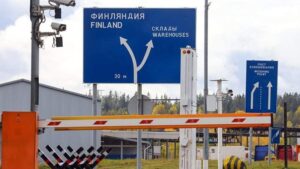
At the end of January 2026, a working group under the Finnish Ministry of Defense proposed changing the mechanism for expropriating (compulsory purchase) real estate for national security purposes and transferring the authority to issue permits for such expropriation exclusively to the Ministry of Defense. The government press release notes that the current procedure has been difficult to apply, as permits are formally the responsibility of different agencies.
The working group’s proposals include expanding the possibilities for rapid response in urgent cases, including earlier introduction of a ban on actions with the property, temporary takeover of real estate, as well as unification of the approach to compensation for expropriation and planning of financing for such procedures in the budget.
The context for such steps remains the Finnish authorities’ concerns about the risks of “hostile influence” through real estate transactions. Previously, the government and the Ministry of Defense had consistently tightened the rules for buyers from countries outside the EU and the EEA, and also promoted restrictions that were in fact primarily aimed at Russian citizens. In April 2025, the Finnish parliament approved a law restricting the purchase of real estate by citizens of countries waging “aggressive war,” which was publicly interpreted as a ban on Russians who are not permanent residents.
Defense Minister Antti Hykkänen previously stated that Finland had made “too naive decisions” on real estate control in the 2000s and was now “systematically correcting the identified problems.”
Thus, at the moment, we are not talking about a declared campaign of “mass seizure” of property from citizens of all countries outside the EU, but about strengthening the state’s legal instruments to intervene in cases where specific real estate objects are considered a potential threat to national security, as well as continuing the policy of restricting new transactions for certain categories of foreign buyers.



