
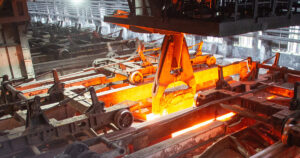
The Zaporizhzhia Metallurgical Plant “Zaporizhstal” has allocated 9.8 million UAH for the first phase of major repairs to “Slab 1150” and BTLS-1680 (continuous thin-sheet mill) in the hot rolling shop.
According to information released by the company on Thursday, stable rolling begins with properly functioning mills. Such repairs are carried out in stages throughout the year.
During the first stage, the “Slabbing 1150” received new spindles for the horizontal roll stands, the hydraulic system was repaired, the roll stand assemblies were restored, as well as certain sections of the roller tables and the transmission gearbox. On the BTLS-1680, the gearbox of stand No. 2 was repaired with the replacement of shaft assemblies, the drive line of one of the stands was restored, the gear roller was replaced, partial repairs were performed on the coil box, the coiler assemblies were repaired, and the chains of individual sections of the roller table were replaced.
It is noted that repair specialists from the plant’s departments, with the assistance of hydraulic specialists from Kametstal, completed the planned work ahead of schedule.
At this stage, UAH 9.8 million was allocated for the work; the next stage of the overhaul is scheduled for the fall.
Zaporizhstal is one of Ukraine’s largest industrial enterprises, whose products are in high demand among consumers both in the domestic market and in many countries around the world.
Zaporizhstal is a joint venture of the Metinvest Group, whose main shareholders are PJSC System Capital Management (71.24%) and Smart Steel Limited (23.76%). Metinvest Holding LLC is the management company of the Metinvest Group.
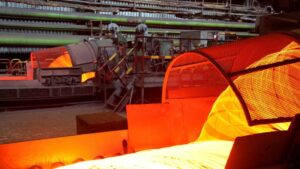
The Kametstal plant, part of Metinvest’s mining and metallurgical group and established at the Dniprovsky Metallurgical Plant (Kamenskoye, Dnipropetrovsk Oblast), has mastered the technology for refurbishing cast iron ladles for metallurgical enterprises.
According to a press release, Kametstal’s metallurgical equipment repair shop has mastered a new area of expertise: the repair of pig iron ladles. This decision is aimed at supporting the smooth operation of the blast furnace shop and will help effectively restore critical equipment in-house.
It is noted that this year’s launch of new services at the Central Repair and Maintenance Unit began with mastering the repair of cast iron ladles. This is a strategic move: the stable operation of the blast furnace shop directly depends on the number of ladles “in service.” Since the need to repair such equipment has grown, while personnel resources remain limited, the repair team has taken proactive measures. The team’s initiative, supported by the plant’s management, will address the shortage of operational equipment and ensure the stability and productivity of pig iron production.
According to the repair technology, restoration work is carried out based on the results of defect detection, which is conducted jointly with specialists from the blast furnace shop. This allows for the precise identification of weak spots and the scope of necessary repairs.
The main repair operations include sealing cracks on the vertical walls of the ladles, as well as eliminating through-wall damage in the bottom section. Such burn-throughs occur due to the aggressive action of molten iron in areas where the refractory lining is most worn. Repair crews cut out the damaged sections and replace them with new steel “patches.” Special attention is paid to the upper part of the ladle—the neck—where worn-out metal structures are replaced. The entire process involves a full cycle of technical work: dismantling damaged elements, manufacturing replacement parts, and their subsequent installation.
Dmytro Lubenets, head of the metallurgical equipment repair shop, explained that they approach the repair of each pig iron ladle individually: from defect detection and drawing development to in-house manufacturing of parts.
“The first restored unit has already returned to the blast furnace shop; we are currently restoring the second one. Since the results of the pilot repair are quite satisfactory, we decided, together with the blast furnace operators, to systematize this process: ladles that go out of service will be sent directly to the Central Repair and Maintenance Unit. This will allow us to quickly return them to service after repair and, thus, maintain the stability of the production process. In these difficult wartime conditions, such cooperation is crucial—it is our way of overcoming staff shortages and maintaining production momentum,” said the shop foreman.
It should be noted that CMU specialists have mastered the technology for repairing slag ladles with significant wear and defects. Previously, such ladles were written off for disposal and replaced with expensive new ones. In 2025, 15 ladles were repaired and returned to the blast furnace shop for further operation.
“Kametstal” was established on the basis of PJSC “Dniprovsky Coke Chemical Plant” (DKHP) and PJSC “Dniprovsky Metallurgical Plant” (DMP).

Northern Mining and Processing Plant (Northern Mining and Processing Plant, Kryvyi Rih, Dnipropetrovsk region), part of the Metinvest Group, has allocated UAH 14 million for the overhaul of the LURGI 552 A roasting machine.
According to the company, Northern GOK is renovating its processing complex equipment, with the combined mining and processing company continuing to modernize equipment and maintain capacity at its Kryvyi Rih enterprises.
The overhaul of the LURGI 552 A roasting machine has now been completed, and the unit in the No. 2 pellet production shop has returned to operation. It is specified that repair specialists repaired mechanical equipment in the pelletizing, firing, and screening sections and replaced conveyor belts. They also inspected the conveyor transport of the entire machine’s technological line. The metal structures of the kiln were repaired and the water cooling elements were replaced.
Partial replacement of damaged refractory blocks in the firing and cooling zones of the machine was carried out using high-quality materials that will reliably protect the metal structures of the machine from high temperatures in the future.
“The main task of the capital works is to maintain the productivity of the kiln and stabilize the quality characteristics of the finished products. The measures taken will ensure that the kiln operates at its design capacity of 465 tons of high-quality pellets per hour. In addition, the work carried out will reduce specific energy and resource consumption during production, increase the efficiency of the equipment, enhance safety for employees, and improve working conditions for the team,” explained Eduard Matitsyn, head of the No. 2 pellet production shop.
Northern GOK is part of the Metinvest Group, whose main shareholders are System Capital Management (SCM, Donetsk) (71.24%) and the Smart Holding group of companies (23.76%). Metinvest Holding LLC is the managing company of the Metinvest Group.

Ukrzaliznytsia received 2,000 tons of high-tech R-65 rails from Japanese manufacturer Nippon Steel, with another 1,000 tons expected to be delivered by the end of January, according to a press release from the Ministry of Community and Territorial Development on Thursday.
According to the release, this cooperation was made possible within the framework of the third phase of the emergency recovery program through the Japan International Cooperation Agency (JICA).
“This was the result of systematic interaction and successful agreements with Japanese partners on the part of the Ministry in early 2025. Ukraine currently does not have its own rail production, so attracting partner support is necessary and crucial for the functioning of the Ukrainian railway,” the ministry emphasized.
It is noted that the cooperation currently involves the transfer of 3,000 tons of rails for a total amount of about $4 million.
The ministry specified that railway workers use mobile complexes to weld rails directly on the tracks and thermally join joints, resulting in the creation of a so-called “velvet track” without joints, which increases its service life and ensures smooth train movement.
“We are sincerely grateful to the Government of Japan for its strategic support, which allows us not only to maintain the network, but also to carry out major repairs in accordance with the highest international standards, ensuring reliable connections even in the most difficult times,” said Marina Denisyuk, Deputy Minister of Community and Territorial Development, in a press release.
The Ministry of Development recalled that support from the Japanese government and JICA has continued since the beginning of the full-scale invasion by the Russian Federation. In particular, during this period, almost 25,000 tons of rails have been delivered, which has made it possible to renovate more than 193 km of tracks on strategic routes of the Lviv, South-Western, Dnipro, Southern, and Odesa railways.
In addition, railway workers also received 24 units of construction and loading/unloading equipment from Komatsu, Toyota, and Sonalika, 22 of which were track equipment, and the total cost of equipment and materials supplied during the first two phases of the program exceeded $42 million, the agency noted.
“The delivered equipment, namely wheel excavators, loaders, and bulldozers, has already worked more than 13,000 motor hours on emergency repair work,” the agency emphasized.
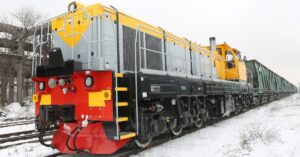
The Kryvyi Rih Mining and Metallurgical Plant PJSC ArcelorMittal Kryvyi Rih (AMKR, Dnipropetrovsk region) continues to restore the operational capacity of locomotives in railway workshop (RW) No. 2 under the GAP-III high-risk equipment repair program.
According to materials in the corporate publication Metallurg, the TEM2U-8679 diesel locomotive was recently repaired, becoming the fifth locomotive to be restored under the GAP-III repair program. The repaired diesel locomotive was put back on the rails at the end of 2025.
It is specified that five locomotives were repaired at Repair Center No. 2 under this program during the full-scale war. The purpose of these repairs is to improve the technical condition, accident-free operation, and ensure the stable operation of locomotives used for the company’s rail transportation.
The first locomotive repaired under this program was the TEM2-2203, manufactured in 1970, and the last of the five repaired locomotives was the TEM2U-8679. Specialists from ZC No. 2 and a contractor replaced the diesel engine parts, cooling sections, and wheel sets on the TEM2U-8679 locomotive, repaired the electrical equipment and cable and wire parts, installed a new battery, and worked on restoring the compressor to working order, etc.
In the future, it is planned to install modern equipment, American engines, control systems, and crew compartments on the locomotives.
ArcelorMittal Kryvyi Rih is the largest producer of rolled steel in Ukraine. It specializes in the production of long products, in particular, rebar and wire rod.
ArcelorMittal owns Ukraine’s largest mining and metallurgical complex, ArcelorMittal Kryvyi Rih, and a number of small companies, including ArcelorMittal Beryslav.
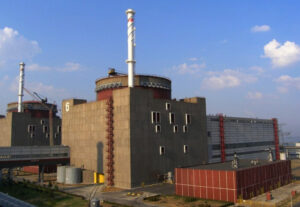
Important repair work has begun on power lines near the Russian-occupied Zaporizhzhia NPP following another local ceasefire brokered by the IAEA, the agency said in a post on social media on Sunday.
“Grossi thanks both sides for agreeing to this new temporary ‘window of silence’ to restore power transmission between the ZNPP and Zaporizhzhia Thermal Power Plant distribution stations, which will help strengthen nuclear safety,” the agency wrote.
It is noted that the IAEA team is monitoring the repair work, which is expected to take several days.
Since the start of the Russian occupation on March 4, 2022, the ZNPP has repeatedly experienced complete and partial blackouts due to the loss of all power lines (it receives electricity from the Ukrainian power grid), with the launch of emergency diesel generators and safety systems, the failure of which could lead to an emergency situation.
According to the IAEA, before the war, the ZNPP had 10 power lines — six at 750 kV and four at 330 kV. The largest nuclear power plant in Europe, which has six 1 GW units, has not been producing electricity since September 11, 2022, following the occupation.
The issue of the ZNPP is one of the problematic ones in the negotiations on the possibility of a peace agreement between Ukraine and Russia, mediated by the US. According to Ukrainian President Volodymyr Zelenskyy, Washington is proposing that the plant in the currently occupied city of Enerhodar in the Zaporizhzhia region be jointly managed by the US, Ukraine, and Russia in a 33%:33%:33% split, while Ukraine is proposing that the plant be operated by a joint venture consisting of 50:50%
IAEA, POWER LINE, REPAIR, truce, ZNPP



