

About 20% of Kyiv’s cafes and restaurants may close or suspend operations in the next three months, according to Olga Nasonova, a restaurant consultant and director of the “Restaurants of Ukraine” analytical center.
“There are currently about 3,500 restaurants and cafes in Kyiv, as well as 1,200 coffee shops and bakeries in small retail kiosks. More than 500 establishments were put up for sale in August–October; that number has since decreased because about 150 of them have either been sold or closed. About 10% of existing establishments may close this winter, and an equal share of those that managed to negotiate reduced rates or rent-free periods with landlords are reporting that they will suspend operations until spring,” Nasonova told the Interfax-Ukraine news agency.
The expert expects most news about closures or the resumption of operations to come in February and March; everything will depend on the security and economic situation.
According to her, the most vulnerable group of establishments right now are those in shopping centers, which are experiencing a decline in foot traffic due to security concerns and power outages, as well as changes in consumer behavior.
“There’s also a problem with management companies that aren’t willing to adjust the terms of their contracts. And we’re seeing the first closures of chain restaurants. For example, ‘Sushiya’ closed its five restaurants located in shopping centers because they could not reach an agreement on the lease. At the same time, the chain’s street-retail locations remained open,” Nasonova cited as an example.
At risk are establishments located in small architectural forms (MAFs), which Kyiv continues to dismantle, as well as small family-run establishments.
“Typically, family-run establishments, facing declining foot traffic and rising operating costs (electricity from generators, water, etc.), shut down after three to four months of operating at a loss,” the expert explained.
This fall, the business-lunch segment has shrunk significantly as most employees have transitioned to a hybrid or remote work format; as a result, establishments that catered to this demographic are experiencing a significant shortfall.
“The draft beer segment has also started to falter,” says Nasonova.
At the same time, budget-friendly formats, such as cafeterias or delis, are, on the contrary, seeing an increase in volume—in part because, in response to power outages, people are taking prepared meals home.
“Establishments located in densely populated residential complexes are faring somewhat better; there, a café or pizzeria with a generator becomes a hub of resilience, and average check amounts are even increasing,” she noted.
Chains that have invested in delivery services are now seeing growth in this area.
BUSINESS, cafe, KYIV, rent, RESTAURANT
The State Tax Service of Ukraine (STS) has reminded the public of the need to tax tips received by employees of restaurants, cafes, bars and other service establishments. Regardless of how the money is received, such income is subject to an 18% personal income tax (PIT) and a 5% military levy, the agency’s press service reported on November 4, 2026.
Thus, the total tax burden on tips amounts to 23%, and for every UAH 1,000 received, an employee must pay UAH 230 to the state.
The STS explained that the taxation procedure depends on whom the customer transfers the money to: directly to the employee or to the establishment, which subsequently pays it to the staff.
If a restaurant or cafe customer leaves a tip via a QR code linked to the personal bank card of a waiter or another employee, this money is considered the employee’s personal income.
In this case, the establishment does not act as a tax agent, and responsibility for declaring and paying taxes rests directly with the recipient of the funds.
In particular, the employee must independently calculate the total amount of tips received during the year, report it in the annual tax return and pay the corresponding taxes.
According to the STS clarification, income received in the form of tips in 2026 must be declared by May 1, 2027, while personal income tax and the military levy must be paid by August 1, 2027.
For example, if a restaurant employee received UAH 100,000 in tips directly to their personal bank card during the year, the total tax liability would amount to UAH 23,000, including UAH 18,000 in personal income tax and UAH 5,000 in military levy. After paying taxes, the employee would have UAH 77,000 remaining.
A different procedure applies when a customer pays a tip through a restaurant’s payment terminal together with the main bill or transfers it to the bank account of a company or an individual entrepreneur.
In this case, the establishment must record the funds received in its accounts and, when paying them to employees, withhold and transfer 18% personal income tax and a 5% military levy to the state budget.
An employee who receives such payments after taxes have already been withheld does not need to declare them additionally merely because they were received as tips.
The tax service also pointed out that regular tips for services provided cannot be considered tax-exempt gifts.
This rule applies even when the customer indicates “thank you,” “for coffee” or similar wording in the payment description of a bank transfer.
Therefore, the name of the payment itself does not change its tax status if the funds are actually remuneration for services.
The STS recommends that service sector employees retain bank statements and keep records of tips received so that they can correctly determine the amount of income subject to declaration at the end of the year.
At the same time, the legislation does not require a separate special register of tips to be maintained. Employees may independently record the relevant receipts, indicating the date and amount of each payment.
Such record-keeping will also make it possible to distinguish tips from other transfers to a personal bank card, including debt repayments, transfers from relatives and other receipts that may be subject to different tax treatment.
At the same time, the tax authorities emphasize that the method of transferring tips does not affect the obligation to pay taxes on them. The same rules apply to cashless transfers through QR codes and payment terminals as well as to tips received in cash.
For the restaurant business, the key issue remains organizing the accounting of tips and determining the party responsible for paying taxes, while for employees, it is the need to provide documentary evidence of the income received.
At the same time, the STS announcement of November 4 is a clarification of the existing taxation procedure, not the introduction of a new separate tax on tips.
Source: State Tax Service of Ukraine
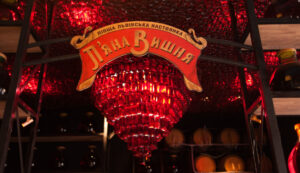
The !Fest restaurant holding company is preparing to open the first location of the “Drunken Cherry” chain in Germany in December, according to Andriy Khudo, the holding company’s chairman and co-owner.
“We’re getting ready to open the first ‘Drunken Cherry’ in Germany… It’s located at Rathausstraße 5, near the TV tower, where there are lots of people walking around. And, of course, there are many Ukrainians in Germany these days, especially in Berlin. Prospective guests come up to the door and try to open it by tugging on the handle… But it’s already a bit ‘worn out’… However, winter is coming, and we plan to open our first business in Germany in December 2026—and the handle will work!” he posted on LinkedIn.
The first “P’yana Vyshnya” location opened in Lviv on Rynok Square in 2015. The chain now has over 70 locations in Ukraine and abroad, including in the United Kingdom, France, Poland, Romania, Slovakia, Hungary, Lithuania, Latvia, Estonia, and Moldova.
The !Fest holding company was founded in 2007. It operates a network of creative restaurants, cafes, and stores in Ukraine. Its owners are Andriy Khudo, Yuriy Nazaruk, and Dmytro Gerasimov.

McDonald’s Ukraine Ltd., which operates the McDonald’s fast-food restaurant chain in Ukraine, has opened its first restaurant in Bukovel, in the village of Polianytsia, according to the company’s press office.
This is the 10th restaurant in the chain to open this year.
The restaurant, with an area of nearly 477 square meters, has about 280 seats. All of McDonald’s modern service channels will be available at the restaurant. Customers will be able to place orders at self-service kiosks in the dining area, use “McDrive,” or place orders in advance via the “Mobile Ordering” service in the McDonald’s app. The dining area is open daily from 7:00 a.m. to 11:00 p.m., and “McDrive” is open from 5:00 a.m. to 11:30 p.m.
As previously reported, all McDonald’s restaurants in Ukraine operate in compliance with enhanced safety protocols: during an air raid alert, the restaurant temporarily suspends operations so that employees and guests can proceed to the nearest shelter, and resumes service once the all-clear is given. Employees receive their full wages regardless of the time spent in the shelter during their shift.
The first McDonald’s restaurant in Ukraine opened on May 24, 1997, in Kyiv. Today, McDonald’s employs nearly 11,000 Ukrainians and operates 131 restaurants in 44 locations. Since the start of the full-scale invasion, the company has opened 43 new locations.
According to data from the OpenDataBot analytics system, McDonald’s in Ukraine generated 21.3 billion UAH in revenue in 2025, which was 26.6% higher than the figure for the same period last year. Net profit increased by 21.3% to 1.567 billion UAH. Last year, the company paid 3.5 billion UAH in taxes to the state budget.
McDonald’s in Ukraine is a founding partner and the largest corporate partner of the charity organization “Ronald McDonald House Ukraine.”
MCD Europe Limited (London, United Kingdom) is listed as the owner of the foreign direct investment entity “McDonald’s Ukraine Ltd.” with a 100% stake.

The Ukrainian chain Lviv Croissants has opened its first restaurant in the state of California—in Fair Oaks, near Sacramento. The new location is the brand’s fourth in the U.S., the company announced.
The restaurant is located at 5343 Sunrise Blvd in the Quail Pointe shopping center. It spans over 206 square meters, and the dining area seats 54 guests. The restaurant operates under the chain’s new design concept, and its operational processes are integrated into a single technology platform that Lviv Croissants uses in the U.S. market.
The franchisee of the new restaurant is Ukrainian entrepreneur Oksana Melnychuk, who has been living in the U.S. for many years. After learning about the brand through Lviv Croissants’ partners in Atlanta, she chose this franchise for her first restaurant project in California.
According to the company, more than ten franchise agreements have already been signed in the U.S. market. By the end of 2026, the chain plans to open one or two more restaurants in the U.S. and continue more active franchise expansion in 2027.
“For us, it’s important not just to enter new markets, but to create the conditions for their long-term development. That’s why we’re investing in local infrastructure, a partnership model, and standards that allow us to scale the brand without compromising on quality,” said Andriy Halytskyi, co-founder and CEO of Lviv Croissants.
According to him, California is the logical next step in the chain’s expansion in the U.S., and the company is seeing strong interest in franchising from entrepreneurs across various states.
One of the key elements of Lviv Croissants’ U.S. strategy has been the creation of its own production infrastructure. Before opening its first restaurant, the company launched croissant production in Atlanta, Georgia. From there, products are shipped to the chain’s U.S. locations, allowing for centralized quality control.
The core menu at U.S. restaurants is standardized, though individual items are adapted to local demand. It includes large and small croissant sandwiches with savory and sweet fillings, breakfast items, salads, soups, specialty coffee, and cold beverages. The Lviv Croissants U.S. website features, among other items, pastrami sandwiches, teriyaki chicken sandwiches, and the classic Lviv Croissant.
The first Lviv Croissants restaurant in the U.S. opened in August 2024 in Roswell, Georgia. In 2025, the chain expanded to the West Coast, opening locations in Kent and Takwila, Washington. The Fair Oaks location became the fourth U.S. restaurant and the first in California.
Lviv Croissants was founded in Lviv in 2015. The first franchise location opened in Sumy that same year, after which the company began rapid expansion. Currently, the chain has over 190 locations in Ukraine and also operates in Poland, the U.S., Slovakia, France, Norway, and South Korea. In 2025, the chain’s locations sold over 11.5 million croissants.
California, FRANCHISE, Lviv Croissants, RESTAURANT, U.S., UKRAINE

The vast majority of sushi chains in Ukraine operate illegally, splitting into sole proprietorships (FOPs) to evade value-added tax (VAT), said Danylo Getmantsev, chairman of the parliamentary committee on finance, tax, and customs policy.
“Chains with billions in revenue in Ukraine do not legally exist at all and are completely fragmented into sole proprietorships. At the same time, these chains have state-of-the-art marketing and excellent websites through which they accept online orders and advertise their businesses. These chains claim to take a responsible stance, yet they do not pay taxes, which today go entirely toward the needs of the army,” the lawmaker emphasized in a YouTube video.
The committee chair stressed that the vast majority of sushi chains in Ukraine operate illegally, splitting themselves into individual entrepreneurs to evade value-added tax (VAT), despite having billions in revenue.
Getmantsev cited two examples of chains, including Osama Sushi, which has 170 locations in 91 cities. This chain is fragmented into 850 sole proprietorships operating under a simplified tax system. Last year, the company paid 1.4 million hryvnias to the state budget, and the year before that—139,000 hryvnias. At the same time, conscientious taxpayers in this industry, with a turnover four times smaller, pay 210 million hryvnias per year.
The lawmaker added that the losses to the state and local communities from the payment of salaries in envelopes within this network amount to 368 million hryvnias per year, since employees officially declare a salary of 8,000 hryvnias, while the industry average for a sushi chef is 44,500 hryvnias. Total annual losses from tax evasion by this chain are estimated at 1.5–2 billion hryvnias.
Another chain—SushiStory (formerly “Sushi Wok”), which currently has 54 locations in Ukraine—according to Getmantsev, employs 162 second-group individual entrepreneurs and three third-group individual entrepreneurs. The state’s losses from this brand’s operations amount to 272.5 million hryvnia per year.
The committee chair emphasized that the sushi market can be operated entirely “above board,” since there are companies in Ukraine that operate under a single legal entity and pay VAT.
Getmantsev reported that, along with the collected evidence, receipts, and photographic documentation, he has already officially appealed to the Economic Security Bureau (ESB) and the State Tax Service (STS) to conduct audits, and he also called on restaurant owners to stop the practice of “fragmenting” their businesses.



