

Prime Minister of Ukraine Oleksiy Honcharuk has said he hopes that a large-scale building of roads will start on March 1, 2020.
“Since March 1, a large-scale building [of roads] to start…This year it is necessary to prepare for the most early start of the season. We, in turn, will try to complete all the procedures by this moment,” he said during a press conference Roads UA 2020 in Kyiv on Monday.
He also asked the Antimonopoly Committee of Ukraine (AMCU) to favor this.
“We know that there are certain difficulties, that someone is doing stupid things: disputes every second tender in the Antimonopoly Committee. We ask the Antimonopoly Committee of Ukraine do not accept such a model of behavior. Respond by the quick, honest work,” Honcharuk added.

The Verkhovna Rada has ratified a financial agreement between Ukraine and the European Investment Bank (EIB) to improve road safety. Some 334 deputies voted on Thursday for corresponding draft law No. 0014 of December 13, 2019, the parliament’s website said.
According to the text of the explanatory note, the agreement stipulates the provision by Ukraine of the EIB state guarantee to ensure the implementation of the project “Improving Road Safety in Ukrainian Cities.”
It is expected that the project will reduce the number of accidents and the severity of their consequences; increase the share of travel by bicycle, on foot or by public transport in the total volume of traffic and, accordingly, reduce the number of trips by private transport. In addition, the project will reduce the time spent by passengers at public transport stops, as well as the operating costs of road transport owners and emissions of harmful substances into the air.
According to Minister of Infrastructure Vladyslav Krykliy, the estimated cost of the project is EUR 177 million, of which an IEB loan is EUR 75 million (the agreement was signed on July 9, 2018), a loan from the European Bank for Reconstruction and Development (EBRD) is estimated at EUR 75 million (it is planned to sign the agreement in 2020 year), and own funds of cities and technical assistance totaling EUR 27 million.
“Improving safety for the cities of Lviv, Odesa, Dnipro, Kharkiv, Kyiv, Kamenetz-Podilsky includes improving the infrastructure of road intersections, infrastructure for cyclists and public transport, arranging facilities to reduce speed in settlements and near schools, etc.,” he said on his Facebook page on Thursday evening.
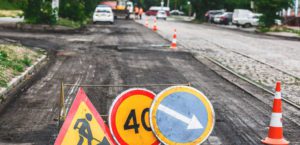
The law amending the law on automobile roads regarding the audit of road safety will open access to better financing of road construction by international financial institution (IFIs) for Ukraine, Senior Sector Engineer of the European Investment Bank (EIB) Per Mathiasen said at a press conference devoted to the results of the EIB Implementation Support to the Ukraine Urban Road Safety Project in Kyiv on Tuesday.
The European Investment Bank, the World Bank, the European Bank for Reconstruction and Development, all of them stress the importance of road safety, he said.
Mathiasen said that Ukraine needed to change the construction of roads for the safety of road users.
The new law will ensure that safety will become an integral part of the design and planning of new roads, he said.
In addition, according to Mathiasen, the law will make new roads safe and accessible for everyone: cars, cyclists and public transport.
In turn, Deputy Infrastructure Minister of Ukraine Natalia Forsiuk recalled that the government has set two key goals in the field of road infrastructure: “reducing travel time by 10% and reducing the number of traffic accidents by 30%.”
“That is, traffic safety is the only immediate priority of the government [in this area],” she said.
The main priority of the EIB Implementation Support to the Ukraine Urban Road Safety Project, which is funded by the Eastern Partnership Technical Assistance Trust Fund and implemented by Egis Ukraine, is the development of the law of Ukraine on automobile roads regarding the audit of road safety, preparation of technical documentation and boosting the capacity necessary to implement the road infrastructure safety management procedures and to promote the adoption of the law and its enforcement.
In order to implement this project, on October 17, 2019, the Verkhovna Rada of Ukraine adopted the law amending certain legislative acts of Ukraine on road safety management. The law contains most of the provisions of EU Directive 2008/96/EC on road infrastructure safety management, which is a version of the EU law on road infrastructure safety management procedures.
As reported, acting head of the State Automobile Roads Authority of Ukraine (Ukravtodor) Slawomir Nowak said that EBRD and EIB are ready to provide Ukraine with a targeted loan in the amount of EUR 900 million for the development of the road industry in 2020.
The level of road accidents in Ukraine is much higher than in EU countries.
Ukrainian Infrastructure Minister Vladyslav Krykliy has said that first road concession road projects could be launched next year.
‘I won’t say this year, since this should be approached very carefully. But next year it is likely that we will launch the first concession roads. However, we are already talking to potential concessionaires. There are companies that have experience in managing concession roads in Europe, they apply, they are ready to initiate some small pilot projects with us in order to understand the volumes of traffic,” the minister said.
He said that the first possible concession projects could be for sections of the Kyiv-Bila Tserkva, Lviv-Krakovets roads, as well as part of the Kyiv’s orbital road.
Krykliy also noted the need to maintain the requirement on the mandatory duplication of the toll road as its free alternative.
According to the minister, earlier the Infrastructure Ministry’s team planned to work with concession projects in the road industry through the adoption of a bill on road concessions. “But the general concession law has already been worked out by both relevant committees and MPs, which covers much more – not only roads, but also other infrastructure projects. We need to follow – it will be placed on the agenda [for voting by the Verkhovna Rada] in the coming weeks,” Krykliy said.
He also said that the Infrastructure Ministry has a lot of infrastructure concession projects and the ministry team is looking forward to the adoption of a profile bill as soon as possible.

Part of M-05 Kyiv-Odesa highway in Kirovohrad, Mykolaiv and Odesa regions will be built as a road with the cement concrete surface.
“A few days ago I managed to convince our colleagues from the European Investment Bank that all subsequent loan financing that we will receive is sent to M-05 Kyiv-Odesa highway in order to have a full-fledged highway in a few years. We are planning this road within Cherkasy region with the asphalt concrete surface, and within the borders of Kirovohrad, Mykolaiv and Odesa regions with the cement concrete surface,” Head of the State Agency of Automobile Roads of Ukraine (Ukravtodor) Slawomir Nowak wrote on the Facebook social network.
According to him, this year the design documentation for the overhaul of the section of the road in Cherkasy region will be ready and the designing of the cement concrete road will begin within the boundaries of three regions.
“This year we are repairing the Kyiv-Odesa highway at the expense of the national budget. We also plan to overhaul sections of this road in Kyiv region at the expense of the ISIs [international finanicial institutions]. For example, in Cherkasy region we repair the section 15 km long with funds from the Road Fund. This is half the length of the most problematic section – between Zhashkiv and Uman,” Nowak said.
In addition, the Northern bypass road in Zhytomyr, Dnipro-Reshetylivka (within the boundaries of the Poltava region with the cement concrete surface, and Dnipropetrovsk – asphalt concrete) and N-14 highway Kropyvnytsky-Mykolaiv will be concrete, the head of Ukravtodor said.
The State Agency of Automobile Roads of Ukraine (Ukravtodor) has started designing the reconstruction of highway M-06 on the Lviv-Rivne section, taking into account the expansion from two to four lanes, as well as the construction of detours of settlements, the agency has said. “After the completion of renovation, the saving of travel time from Lviv to Rivne without breaking traffic rules will almost halve to 1.5 hours,” Ukravtodor said.
The agency noted that a significant part of exported cargo is transported to the European Union member countries by this road, and therefore its reconstruction, in the opinion of Ukravtodor, will be an impetus for the economic development of the region, will help facilitate investment and create new jobs.
In addition, the new quality of the road will improve the level of road safety and the environmental situation in cities.



