
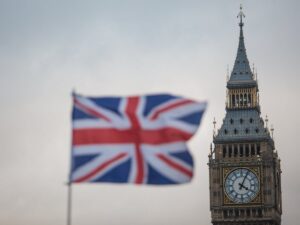
The UK Treasury’s Office of Sanctions has expanded the list of sanctioned companies from Georgia as part of sanctions imposed against Russia, adding three crypto companies to the list, the UK government announced.
“The new measures also target 18 companies and individuals linked to A7. The group uses a Kyrgyz bank suspected of facilitating payments for the network, as well as a major global cryptocurrency exchange that we believe has transferred over $1.5 billion to the Kremlin’s coffers. We are also targeting three Georgian companies that operate exchanges focused on Russia to circumvent sanctions,” according to a statement on the UK government’s website.
According to the document, sanctions have been imposed on Georgia-registered companies providing crypto wallet and cryptocurrency exchange services: Arvix LLC, Rapira Group LLC, and Aifory LLC.
Earlier reports indicated that on Tuesday, UK authorities added 18 individuals and companies to the sanctions list, which Russia allegedly uses to circumvent sanctions previously imposed by London.
A statement released by the UK Treasury notes that “cryptocurrency and illicit financial networks used by Russia to circumvent UK sanctions are under close scrutiny.”
“The new sanctions also target the A7 network, which actively uses Kyrgyzstan’s financial systems to redirect funds into the Russian economy,” the document states.
The measures against crypto companies mark the second instance of the UK government imposing sanctions on Georgian legal entities. Earlier, it was reported that on February 24, the UK government imposed sanctions against the Georgian TV companies Imedi TV and PosTV as part of a package of sanctions against Russia.

According to The Serbian Economist, Serbia has aligned itself with two European Union resolutions that extend existing restrictive measures related to the war in Ukraine.
The first EU resolution concerns measures against Russia’s actions regarding the occupied regions of Ukraine that are not under Kyiv’s control. Essentially, this is an extension of the special sanctions regime for another year—until February 24, 2027. Serbia supported this extension along with a number of other EU candidate countries and partners.
The second decision concerns sanctions against specific individuals, companies, and organizations in connection with the situation in Ukraine. These are not “general sanctions against Russia as a whole,” but rather an extension of the list of targeted restrictions on specific individuals until March 6, 2027.
The wording stating that Serbia “will ensure the alignment of its national policy” with this decision means the following: Belgrade has declared that it will act in line with EU policy on these two specific issues. The European Union separately noted and welcomed Serbia’s alignment in official statements.
This does not mean that Serbia has fully aligned itself with the entire EU sanctions package against Moscow. It concerns specifically these two separate decisions, not full alignment with Brussels on sanctions.
For Serbia, this is yet another example of partial foreign policy alignment with Brussels on issues related to Ukraine and Russia.
Serbia is a candidate country for EU membership and is regularly under close scrutiny by Brussels regarding the alignment of its foreign and sanctions policies with European decisions. Against this backdrop, such steps by Belgrade are usually seen as a signal of its willingness to maintain working-level coordination with the EU on specific international issues, primarily those related to the Ukrainian agenda.
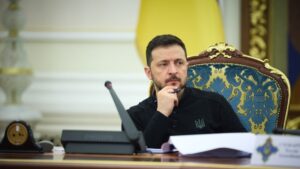
President of Ukraine Volodymyr Zelensky signed a decree enacting the decision of the National Security and Defense Council to impose sanctions against 95 individuals and 70 legal entities, most of whom are citizens and residents of the Russian Federation.
The relevant decree of the President of Ukraine No. 8/2026 of January 3, 2026, was published on the website of the Office of the President.
It is noted that the individuals and companies against whom sanctions have been imposed are associated with servicing Russia’s state defense orders and the activities of its defense-industrial complex. Among them are enterprises and their managers who manufacture and supply products in the fields of communications, electronic warfare, and microelectronics for the Russian defense-industrial complex and security forces.
Sanctions have been imposed on industrial enterprises in the chemical, mining, metallurgical, and fuel and energy sectors of the Russian Federation.
“The restrictions imposed should complicate the servicing of the Russian military-industrial complex and limit its capabilities in the production of weapons and military equipment used in the war against Ukraine. Our country will continue to work with partners to synchronize Ukrainian sanctions in the jurisdictions of partner countries. Some of the items will be included in the 20th package of EU sanctions, which is currently being prepared,” the statement said.
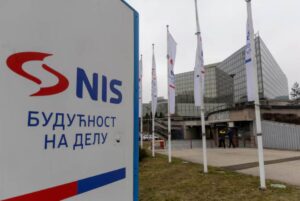
According to Serbian Economist, the Office of Foreign Assets Control of the US Department of the Treasury (OFAC) has issued a temporary license to Serbian oil company NIS, controlled by Russian shareholders, to continue operating until January 23, 2026, said Serbian Minister of Mining and Energy Dubravka Djedovic-Handanovic.
According to her, the decision means the resumption of operations at the Pančevo refinery after a 36-day pause. U.S. restrictions, which came into effect in the fall, had earlier blocked oil supplies via the refinery’s only crude import route – through Croatian pipeline operator JANAF.
NIS operates a refinery with a capacity of 4.8 million tons per year and the largest network of gas stations in Serbia (327 stations), providing about 80% of fuel consumption in the domestic market.
Earlier OFAC gave NIS a deadline of March 24 to negotiate the sale of the Russian owners’ stake; in the company’s capital structure Gazprom owns 11.3%, Gazprom Neft – 44.9%, the Serbian state owns 29.9%. Serbian President Aleksandar Vucic reported that Gazprom was in talks with Hungary’s MOL about a possible deal.
https://t.me/relocationrs/2042
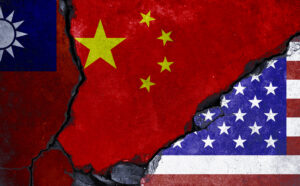
The Chinese Foreign Ministry announced sanctions against 10 individuals and 20 US defense companies in response to the latest US arms deliveries to Taiwan. This was stated in a statement by the Chinese Foreign Ministry, released on Friday and quoted by Reuters.
The restrictions apply, in particular, to Boeing in St. Louis, as well as a number of other US defense contractors. The sanctions include freezing any assets of companies and individuals in China and prohibiting Chinese legal entities and individuals from doing business with them. In addition, executives on the sanctions list are barred from entering mainland China, as well as Hong Kong and Macau.
Beijing linked the decision to Washington’s approval of a large package of arms supplies to Taiwan worth more than $10 billion, including HIMARS multiple launch rocket systems, artillery, and other types of weapons to strengthen the island’s defenses.
The Chinese authorities have stated that they consider US arms supplies to be interference in the internal affairs of the PRC and a violation of the “one China” principle, promising to continue to take “decisive measures” in response to the arming of Taiwan.
The Experts Club think tank previously compared the military capabilities of China and Taiwan. For more details, see https://www.youtube.com/shorts/kFdxOOC4_Ss
The US has postponed sanctions against Serbian oil company NIS for the last time: a key company could be at risk
The United States has postponed for the fifth and final time the imposition of sanctions against Serbian oil company Naftna Industrija Srbije (NIS), which is controlled by Russia’s Gazprom. According to Reuters, the new exemption from the sanctions list has been extended until the end of August. No further extension is planned after that.
Serbian Energy Minister Dubravka Čedović Handanović said that Belgrade wants to keep oil supplies stable and called “the exclusion of NIS from OFAC sanctions a priority.” She said that dialogue between the US and Russia remains an important condition for this.
NIS is a strategically important company for the Serbian economy. It operates the country’s only oil refinery in Pančevo (near Belgrade), as well as the largest network of gas stations and logistics infrastructure in the fuel sector.
According to the ownership structure:
• 44.9% of NIS shares are owned by Gazprom Neft (Russia),
• 11.3% by Gazprom,
• 29.9% by the Serbian government,
• the rest by minority investors.
It was Russian control over the majority of shares that led to NIS being sanctioned by the US Treasury Department’s Office of Foreign Assets Control (OFAC). Initially, the company was to be completely blocked in January 2025, but since then it has received four temporary licenses to continue operations.
In July 2025, NIS applied for a temporary license for the fifth time and received it for one month, until the end of August. During this period, Gazprom Neft was again reminded of the requirement to withdraw from the Serbian company’s shareholders.
Analysts note that if the sanctions are imposed in full, this could destabilize the fuel market in Serbia, create logistical disruptions, and cause oil prices to rise.
An alternative could be a transfer of control from Russian shareholders to European or Middle Eastern investors, but negotiations on this issue have not yet been officially confirmed.
NIS is a leader in the Serbian petroleum products market and is actively developing its operations in Romania, Bulgaria, and Bosnia and Herzegovina.
The company is also involved in oil and gas exploration and production, lubricant manufacturing, and power generation.
Source: https://t.me/relocationrs/1228



