

The inability of sole proprietors to reserve employees appears to be discrimination based on business form, according to Oleksandr Chumak, president of the Association of Private Employers.
Commenting on remarks made by Deputy Minister of Economy and Environment Yegor Grygorenko at the “Dialogue Between Government, Civil Society, and Business” forum on November 18 regarding the lack of consensus on formalizing at least some sole proprietorships—noting that, for now, “one-third of sole proprietorships are not quite sole proprietorships”— Chumak emphasized that arguments about the “fragmentation” of businesses or registering employees as entrepreneurs do not explain the situation of specific employers who officially hire people and fulfill orders, particularly for the maintenance of municipal equipment.
The association’s chairman also cited the example of two workshops with identical working conditions, salaries, and importance to the community, noting that a limited liability company (LLC) can qualify for “critically important” status, whereas a sole proprietorship, under similar conditions, is denied that opportunity.
“To me, this looks like discrimination based on the form of business organization. And I see echoes here of the old Soviet attitude toward entrepreneurs. Back then, it was easy to label someone who worked for themselves a ‘huckster’ or ‘speculator.’ Today, all it takes is to say ‘not quite a sole proprietor’—and an entrepreneur who has come with a specific question about an employee is already forced to explain that he is a ‘real’ one,” Chumak noted.
He also called for employers, regardless of their business structure, to be given the opportunity to undergo the same verification process based on established criteria and for public communication with entrepreneurs to be made more friendly.
As previously reported, Minister of Economy and Environment Oleksandr Kravchenko stated in November, following a regular meeting of the Presidential Council for Entrepreneurship Support, that the ministry is working to simplify the procedures for confirming critical status through the Coordination Center and to resolve technical issues with reservations via “Diyu.” In addition, in collaboration with the Ministry of Defense and the Ministry of Digital Transformation, proposals from the business community regarding greater predictability in the reservation mechanism will be reviewed.
Earlier, on October 23, the Cabinet of Ministers completed the implementation of changes to the reservation system, decoupling the criticality of enterprises from economic indicators and updating sectoral and regional criteria. A Coordination Center was also established to organize the reservation of conscripts during periods of mobilization and martial law, and the maximum reservation rate for the energy sector and the defense industry was reduced from 100% to 95%, with the option to apply to the Coordination Center to increase the quota. The government also announced a mechanism for 100-percent reservation, contingent upon fulfilling the mobilization obligation regarding the regular voluntary enlistment of employees into military service, which is currently under development.
Despite these changes, there is no provision for reserving employees or individual entrepreneurs (FOPs) themselves.
During the forum, Deputy Minister of Economy and Environment Yegor Grygorenko noted that such proposals had been put forward previously.
“It seems to me that… as long as one-third of our sole proprietors aren’t really sole proprietors, and as long as we don’t resolve this issue—including through the Labor Code, which it would be good to adopt—we won’t reach a consensus on sole proprietors here. That’s the honest answer, but that’s how it is,” said the deputy head of the Ministry of Economy.
BUSINESS, employer, mobilization, reservations, sole proprietors

Women accounted for almost 90% of new sole proprietor registrations (FOPs) in Ukraine’s personal services sector from January to October 2026. A high proportion of female entrepreneurship was also recorded in social assistance, education and healthcare, reports the Experts Club information and analytical center, citing a study by Opendatabot.
According to analysts’ calculations, women registered 9,910 new sole proprietorships in the personal services sector over the ten-month period. Of these, 7,580 were registered in hairdressing and beauty salon activities, accounting for more than 76% of all registrations by women in this segment.
Social assistance remains one of the sectors with the highest share of female entrepreneurship. Women accounted for 88% of new sole proprietor registrations in this sector. The corresponding figure was 83% in education and 80% in healthcare.
Women also predominated among new entrepreneurs in several other industries. In particular, they accounted for 74% of registrations in administrative and office support activities, 73% in food production and 72% in management consulting.
At the same time, retail trade remains the largest area of female entrepreneurship in terms of the absolute number of new registrations. From January to October 2026, women registered 46,260 businesses in this segment, representing 31.2% of all new sole proprietorships established by women in Ukraine.
Wholesale trade ranked second in terms of registrations, with 10,060 new sole proprietorships, or 6.8%. An almost identical figure was recorded in education, where women registered 10,010 new businesses. The personal services sector accounted for 9,910 registrations, while food service establishments accounted for 8,050.
Women’s activity in the digital economy also remains significant. Over the ten-month period, they registered 7,730 sole proprietorships in computer programming and 7,080 in information services. Another 4,790 registrations were recorded in advertising activities and 4,420 in management consulting.
The statistics therefore demonstrate that female entrepreneurship in Ukraine is not limited to traditional areas such as trade, personal services and the beauty industry. A significant number of women are also starting businesses in information technology, education, advertising, professional and consulting services.
The share of women among new entrepreneurs in individual industries and the number of businesses they register reflect different aspects of entrepreneurial activity. In particular, women have the highest proportion among new entrepreneurs in personal services, while retail trade leads in terms of the total number of businesses registered by women.
Overall, women registered 148,470 new sole proprietorships in Ukraine from January to October 2026. This represented 60% of all new business registrations during the period.
The study is based on data from Opendatabot, a Ukrainian service that analyzes open government registers and monitors business registrations and closures, the sectoral structure of businesses and other indicators of economic activity.
Source: Opendatabot, November 19, 2026.
EXPERTS CLUB, sole proprietors, UKRAINIAN ECONOMY, WOMEN'S ENTREPRENEURSHIP
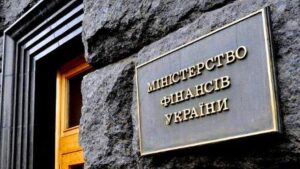
The government is preparing changes to the customs clearance procedures for humanitarian aid to prevent abuse, and is also stepping up the fight against tax evasion schemes involving the artificial fragmentation of businesses, Prime Minister Serhiy Koretskyi said.
“We are stepping up our efforts to bring the economy out of the shadows. Together with law enforcement agencies, the tax and customs services, and as part of the Interagency Working Group, we have identified further measures. All relevant agencies have been given instructions,” he wrote on his Telegram channel on Saturday.
According to the prime minister, an updated list of goods affected by changes in customs clearance procedures for humanitarian aid will be finalized in the near future. This should prevent humanitarian shipments from being used as a cover for illegal imports.
“Humanitarian aid must reach those in need quickly, rather than serving as a cover for illegal imports. An updated, well-founded list of goods affected by the changes will be finalized in the near future,” Koretsky explained.
In addition, the tax authority, together with customs and the Economic Security Bureau, will step up its efforts regarding high-risk taxpayers.
Specifically, this concerns schemes to evade VAT payments through the artificial fragmentation of businesses, where large retail chains distribute their turnover among dozens or hundreds of sole proprietors. “This problem must be addressed by law enforcement,” the prime minister stated.
Koretsky emphasized that the goal of these measures is to ensure the necessary budget revenues and a level playing field for businesses operating legally.

As of July 2026, sole proprietors registered in Kyiv owed the state 2.61 billion UAH in taxes, the highest figure among Ukraine’s regions, according to data from the State Tax Service analyzed by Opendatabot.
The capital accounts for about 16% of the country’s total tax arrears owed by sole proprietors, which amount to 16.6 billion hryvnias.
In second place is the Odesa region, with entrepreneurs owing about 1.6 billion hryvnias; in third place is the Kyiv region, with 1.37 billion hryvnias.
Collectively, Kyiv, Odesa, and Kyiv regions account for approximately one-third of all tax debts owed by Ukrainian sole proprietors.
At the same time, Kyiv region leads in the number of debtors, with 182,640 sole proprietors owing tax debt. Over the past year, their number has increased by approximately 1.5 times.
The Odesa Oblast has 119,470 individual entrepreneurs in debt, while the Kharkiv Oblast has 101,500.
In total, approximately 1.5 million individual entrepreneurs in Ukraine owe taxes, amounting to a total of 16.6 billion hryvnias.
Source: Opendatabot, data from the State Tax Service of Ukraine as of July 2026.



