
According to Fixygen, Iran is seeking to include a payment mechanism for ships passing through this key energy route in future agreements regarding the Strait of Hormuz. The Financial Times reported that Tehran wants to charge fees to loaded oil tankers, and, according to the publication, the Iranian Union of Oil Exporters insists on payments in cryptocurrency.
However, an independent review shows that the parameters of such a mechanism remain unclear. Reuters, citing a senior Iranian official, reports that Iran does indeed intend to charge a fee for passage through the strait as part of a potential peace agreement; however, according to this information, the fee amount is expected to vary depending on the type of vessel, the nature of the cargo, and other conditions.
Reports of preparations for a protocol with Oman, which may provide for permits and licenses for passage through the strait, serve as an additional indication that Tehran is already attempting to institutionalize control over the passage.
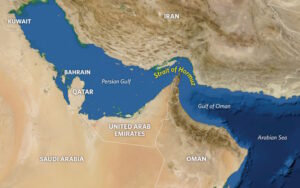
About one-fifth of global oil supplies pass through the Strait of Hormuz. Following the announcement of a two-week ceasefire between the U.S. and Iran, oil prices fell sharply, but market participants continue to factor in the risk that even if shipping resumes, Iran will attempt to maintain economic and political control over the route through new fees and restrictions.
The cost of insurance for ships passing through the Strait of Hormuz has jumped 12-fold, despite US President Donald Trump’s promise to ensure uninterrupted energy supplies from the Middle East, the Financial Times reports, citing brokers.
According to the publication’s sources, the insurance rate for ships operating in high-risk areas, which include not only the strait itself but also the waters adjacent to it, is now 3% of the ship’s value, whereas before the US and Israeli military operation against Iran, it was 0.25%.
The White House chief previously wrote on Truth Social that he had ordered the US International Development Finance Corporation (DFC) to begin providing insurance and guarantees on favorable terms “for all commercial maritime traffic through the Persian Gulf, especially that related to energy resources.”
Insurers are trying to figure out how this will work and whether it will help lower prices. Several brokers admitted to the FT that they were taken aback by Trump’s statement.
“We haven’t heard anything other than this announcement on Truth Social,” said David Smith of brokerage firm McGill, adding that insurers don’t know how widely the announced support will be extended, despite the promise to insure “all” trade passing through the Persian Gulf.
Other experts question how effective the DFC’s assistance can be, given that its primary role is to promote private investment in poor countries, while the main problem for shipowners operating in the Persian Gulf is the threat of attack.
“We already have insurance,” said Ed Finley-Richardson, founder of Contango Research. The DFC announcement may have helped curb oil price rises, but it is unlikely to change anything for us, he added.
At least seven tankers have been attacked in the Strait of Hormuz and surrounding waters since Sunday. Some ships reported receiving radio warnings demanding that they stay away from the strait.
Trump said on Truth Social that the US Navy would escort tankers through the Strait of Hormuz if necessary.



