

On Tuesday, August 3, at 10.00, the press center of the Interfax-Ukraine news agency will host a press conference entitled “Importance of city’s long-term strategy in urbanization era: Odesa example.” Participants include futurologist, founder of the Center for Economic Recovery Andriy Dlihach, Odesa entrepreneur, founder of Odesa Business Club Dmytro Kavzachynsky, Head of the Association of Sustainable Development Leaders Olena Zubareva (8/5a Reitarska Street). The broadcast will be available on the YouTube channel of Interfax-Ukraine. Due to quarantine restrictions, the number of seats in the press center is limited. Admission of journalists requires registration on the spot.
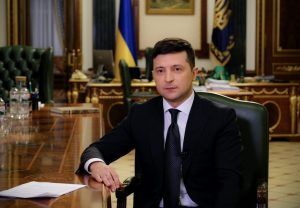
President of Ukraine Volodymyr Zelensky signed a decree approving the National Human Rights Strategy.
Decree No. 119/2021 was published on the President’s website and comes into force on the day of its publication.
According to the text of the document, the Cabinet of Ministers of Ukraine is instructed to draft, with the involvement of representatives of state and local authorities, as well as civil society institutions, domestic scientists and international experts, and to approve within three months an action plan for the implementation of the strategy for 2021-2023.
“The strategy is aimed at uniting society in matters of values of human rights and freedoms, which are ensured and protected on the basis of the principles of equality and non-discrimination. The document focuses on solving the main systemic problems in the field of ensuring the implementation and protection of human rights and freedoms in the face of new challenges the society is faced with,” the press service of the head of state said.
It is envisaged that the implementation of the strategy will be carried out in 27 main directions, including the prevention of torture and ill-treatment of people, ensuring the right to a fair trial, ensuring freedom of peaceful assembly and association, preventing and combating discrimination, ensuring equal rights and opportunities for women and men, combating domestic violence, ensuring the rights of indigenous peoples and national minorities, ensuring the rights of the child, environmental rights, the rights of war veterans, the rights of internally displaced persons and persons living in the occupied territories of Ukraine.
The implementation of the strategy also provides for the restoration of the rights of persons deprived of their liberty as a result of the armed aggression of the Russian Federation against Ukraine and the occupation of a part of the territory, ensuring the rights of persons who disappeared under special circumstances and their family members, overcoming the negative consequences of the conflict caused by the armed aggression of the Russian Federation, etc.
The result of the implementation of the strategy should be the introduction of a systematic approach to ensuring human rights and freedoms, as well as the coordination of actions of the authorities, civil society and business and the creation in Ukraine of an effective mechanism for the implementation and protection of human rights and freedoms.
In addition, the implementation of the strategy should ensure progress in the implementation of Ukraine’s international treaties in the field of human rights, in particular the Association Agreement with the European Union, as well as contribute to the implementation of the Sustainable Development Goals of Ukraine for the period up to 2030 and improve the country’s position in international human rights rankings.
Around 60 companies and at least 30 think tanks have united to set up the Economic Recovery Center, on the base of which the National Economic Strategy 2030 will be developed, a co-founder of the center, Andriy Dlyhach, said.
“The Economic Recovery Center has become the government’s platform for the development of the economic strategy of Ukraine,” he said on Facebook, following a meeting of the top managers and owners of the largest Ukrainian companies with Prime Minister of Ukraine Denys Shmyhal and Governor of the National Bank of Ukraine Kyrylo Shevchenko on August 14.
According to the information on the Center’s website, the platform brought together 30 Ukrainian think tanks and 60 business representatives. The think tanks include the Institute for Economics and Forecasting of the National Academy of Sciences of Ukraine, Advanter Group, Razumkov Center, Ukrainian Institute for the Future, Ukrainian Industry Expertise, and EasyBusiness.
The companies that have joined the platform include Allseeds, ArcelorMittal Kryvyi Rih, DTEK, Energomashspetsstal, Interpipe, Lemtrans, Metinvest, MHP, Naftogaz, SmartEnergy, Galicia, Tedis Ukraine, TIS, Nibulon, UkrLandFarming, UNIT, and Darnitsa.
Public discussions will start in September, first developments will be ready in October, the final document and a series of the government’s instructions, bills and state targeted programs for 2021 with the launch of financing will be presented in December, Dlyhach said.
DEVELOPMENT, ECONOMIC, ECONOMIC RECOVERY CENTER, PLATFORM, STRATEGY
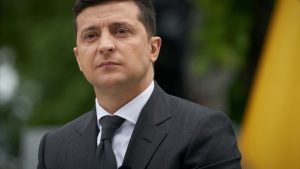
The Cabinet of Ministers of Ukraine at a meeting on August 5 approved the State Strategy for Regional Development for 2021-2027.
“The document was prepared by the Ministry of Regional Development. This important document is filled with new content, European approaches to the development of regions. I see this as one of the vectors of our movement and direction to the European Union,” Prime Minister of Ukraine Denys Shmyhal said during the meeting.
He added that the document took into account the issue of a new administrative-territorial structure, while stressing that there is no talk of any liquidation of some of the social infrastructure facilities.
According to the presentation of the strategy made by Minister of Communities and Territories Development Oleksiy Chernyshov, new functional types of territories were identified, as well as regions that are in the focus of regional policy: the mountainous territories of the Carpathians, the coastal zones of the Black and Azov Seas, nature reserves, border areas, including those on the contact lines, rural areas in unfavorable conditions, agglomerations, centers of economic growth, mono-functional cities, as well as temporarily occupied territories. For each functional region, the ministry has identified important development aspects.
The Ministry of Regional Development also began developing plans of measures to implement the strategy for the next three years, as well as aligning regional strategies. In addition, a draft law has been prepared on reforming the State Fund for Regional Development to finance the implementation of the state strategy.
“To achieve the set goals, the targeted use of funds from the state budget is critically important. Therefore, it is necessary to improve the system of financing regional development, including at the expense of the State Fund for Regional Development,” Chernyshov said
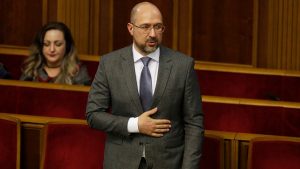
Prime Minister Denys Shmyhal during Freedom of Speech of Savik Shuster program on Ukraine TV Channel later on Friday presented a brief strategy of gradual weakening of the quarantine for the period from early May by early July.
He also promised to report a more detailed plan, which is now being drawn up, in three or four weeks.
“This plan is under work, in fact we are working over it round the clock. As soon as it is ready and improved, it will be immediately presented to the public. Believe me, it would be one of the best [plan] among our neighboring states. It has credit holidays, and refinancing of loans, support for poor and unemployed,” the premier said.
According to his brief strategy, the first quarantine step called “Ukraine is going to work” is foreseen for early May – early June.
It involves the creation of 500,000 jobs, credit support for small and medium-sized businesses, partial removal of restrictions on public transport and a shifted work schedule.
The second stage named “New standards of social life” is scheduled for early June-early July.
During this period, it is planned to complete the 2019-2020 school year, restore the operation of public transport according to the new rules, allow access to recreation areas, subject to safety standards, and to weaken isolation conditions for older people.
Shmyhal emphasized that while Ukraine should adhere to the emergency regime in order to pass the epidemic according to the optimistic scenario with a drop in GDP to 5%, and not according to the pessimistic one, in which GDP fall is estimated at 15%.
In this emergency mode, according to the presentation presented by the prime minister, it is planned to support socially vulnerable segments of the population, to help the unemployed and those on forced leave, to mobilize medical resources and to support the medical staff and all those involved in the fight against the epidemic.

PJSC State Export-Import Bank (Ukreximbank, Kyiv) and McKinsey and Co. Ukraine LLC on December 16, 2019 signed an agreement on advising regarding the drafting of the bank’s development strategy for 2019-2023, according to information in the ProZorro e-procurement platform.
The price of the services, which according to the documentation must be provided before December 31, 2021, is EUR 960,000. The cost of advising services for developing the strategy, in particular, is EUR 84,000, and if the bank’s supervisory board approves the strategy developed by the company, the amount will increase by another EUR 120,000.
Ukreximbank, the sole owner of which is the state, was created in 1992. The net profit of the financial institution in January-September 2019 amounted to UAH 2.27 billion, which is 2.2 times more than in the same period in 2018 (UAH 706.24 million).
According to the National Bank of Ukraine, as of October 1, 2019, the bank ranked third among 76 banks operating in the country in terms of total assets (UAH 205.439 billion).



