

Turkey is streamlining certain administrative procedures for foreign investors participating in the citizenship-by-investment program, while the basic eligibility requirements for the program remain unchanged. The most popular option still involves purchasing real estate worth at least $400,000 with a commitment not to sell the property for three years; alternative routes include a bank deposit, the purchase of government bonds, stock market investments, or fixed capital investments starting at $500,000.
According to industry consultants, in 2026 the program continues to operate without requiring long-term residence in the country or a language exam, and the total processing time for citizenship is typically about six months after investment confirmation. Market participants cite clearer and more centralized coordination of procedures through investment and immigration authorities as one of the practical simplifications, which reduces some of the bureaucratic burden on applicants.
Interest in the Turkish program remains steady amid overall foreign demand for local real estate, although the market itself cooled significantly in 2025. According to Daily Sabah, citing official statistics, foreigners purchased 21,534 residential properties in Turkey in 2025—the lowest figure in nine years.
Russian citizens led the list of buyers, followed by Iran, Ukraine, Germany, and Iraq. The top 10 also included Azerbaijan, Kazakhstan, China, Saudi Arabia, and Afghanistan.
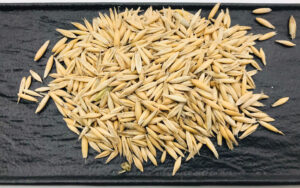
Oat exports from Ukraine in January-February 2026 decreased by 98% compared to the same period in 2025, according to the information and analytical agency APK-Inform, citing its own monitoring data.
According to the report, 506 tons of oats were shipped to foreign markets in January, while in February, exports fell to 215 tons. The main buyers of Ukrainian oats in December 2025 were Turkey and India, whose shares in the structure of shipments were 90.3% and 4%, respectively.
“The decline in exports is due to the suspension of purchases by leading importing countries — Turkey and India. At the same time, demand prices for oats in 2026 are mainly fixed in the previously formed range — 8,900-10,500 UAH/ton CPT port,” analysts said.
APK-Inform noted that despite minimal export volumes, the domestic market maintains stable price indicators in ports. This allows producers to hold grain in anticipation of a recovery in demand from major trading partners.

Ukrainian citizens ranked third among foreign buyers of residential real estate in Turkey in January 2026, purchasing 77 properties, according to data cited by Turkish media with reference to the Turkish Statistical Institute (TÜİK). The first and second places were taken by citizens of the Russian Federation (219 purchases) and Iran (118).
Overall, foreigners bought 1,306 housing units in Turkey, which is 20.8% less than in January 2025. The share of transactions involving foreigners in the total volume of home sales in the country amounted to 1.2%.
Geographically, foreign demand at the beginning of the year was concentrated in the largest and most “tourist” regions: in January, foreigners bought 595 units in Istanbul and 375 in Antalya.
The total number of housing transactions in Turkey in January amounted to 111,480, which is 4.7% less than a year earlier. Against this backdrop, the decline in sales to foreigners continued, and local observers link the downturn, among other things, to rising prices and discussions of the parameters of “investment” citizenship and the incentives associated with it.
The trend toward cooling foreign demand was also noticeable in the full-year 2025 results: foreigners purchased 21,534 units (-9.4% y/y). By nationality, Russians led (3,649), followed by Iranians (1,878) and Ukrainians (1,541). By location in 2025, foreigners most often bought in Istanbul (7,989), Antalya (7,118), and Mersin (1,800).

According to Serbian Economist, a number of Balkan media outlets reported that Turkey has become the largest foreign investor in Montenegro since 2020, with total investments estimated at over €417 million.
At the same time, official statistics show a more “volatile” picture over the years, with Serbia appearing as one of the key sources of capital. Thus, in an analytical review by the Parliamentary Budget Office of Montenegro, based on data on foreign direct investment (FDI) inflows for 2024, Serbia is named as the largest source with €118.2 million, followed by Russia with €109.7 million and Germany with €88.7 million. Turkey was in fourth place in 2024 with €39.5 million (the US with €37.2 million).
In 2025 (January-August), the ranking changed: Turkey took first place with €92.2 million, Serbia took second place with €91.8 million; followed by Russia (€45.3 million), Germany (€41.7 million), and the UAE (€34.7 million).
The key reason for these “swings” is the structure of investments. In 2024, the total gross inflow of SDI amounted to about €891.1 million, of which the largest part was accounted for by real estate transactions (purchase of properties) – €455.3 million, followed by intercompany debt (€292.1 million) and investments in companies and banks (€113.9 million). In other words, the ranking of investor countries largely depends on cycles in the real estate market and large one-off deals.
It is worth distinguishing between the “cumulative total since 2020” and the “leaders of a particular year.” Publications about Turkey’s leadership are based on the aggregation of several years and emphasize the acceleration of Turkey’s presence in the last 1-2 years. In particular, reports citing the Turkish-Montenegrin Chamber of Commerce estimate that investments from Turkey in 2024 amounted to approximately €100.9 million, and in 2025 (for 10 months) – approximately €110.8 million.
Serbia, in turn, remains a “structural” investor for Montenegro: in SDI statistics, it regularly ranks among the leaders, and in 2024 it took first place. In practical terms, this reflects the close connection between the two economies — from business and banking and service cooperation to active demand for real estate and tourism, which is why the Serbian share reacts significantly to the housing market situation and seasonality.
Overall, Montenegro’s SDI profile for 2020-2025 remains “real estate-tourism,” which means that the composition of leaders by country may change more rapidly than in economies dominated by long-term industrial projects.

Housing sales in Turkey in December 2025 increased by 19.8% compared to December 2024, reaching 254,777 transactions, according to data from the Turkish Statistical Institute (TurkStat) reported by Turkish media.
At the end of 2025, the Turkish housing market showed growth of 14.3% to a record 1.69 million transactions; at the same time, mortgage sales for the year increased by 49.3% to 236,668.
Sales to foreigners in 2025 decreased by 9.4% to 21,534 properties (1.3% of all transactions). In December, foreigners purchased 2,541 properties, with Istanbul, Antalya, and Mersin leading the provinces at the end of the year.
As previously reported by the Open4Business portal, Ukrainians ranked third in terms of home purchases in Turkey. Overall, at the end of 2025, sales of housing to foreigners in Turkey decreased by 9.4% to 21,534 properties. Among foreign buyers, citizens of the Russian Federation led the way for the year (3,649 properties), followed by Iran (1,878) and Ukraine (1,541).

In December 2025, Ukrainian citizens ranked third among foreigners in terms of home purchases in Turkey, according to data from the Turkish Statistical Institute (TurkStat) cited by Turkish media.
According to the published data, foreigners purchased 2,541 properties in Turkey in December, which is 5.1% more than in December 2024. Russian citizens ranked first in terms of purchases in December (504 properties), followed by Iran (232) and Ukraine (193).
Overall, in 2025, sales of housing to foreigners in Turkey fell by 9.4% to 21,534 properties. Among foreign buyers for the year, Russian citizens led the way (3,649 properties), followed by Iran (1,878) and Ukraine (1,541).
Overall, home sales in Turkey in December 2025 increased by almost 20%.



