
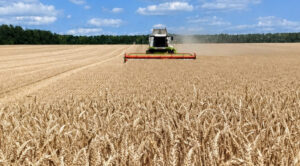
As of July 7, Ukrainian farmers had harvested 1.022 million metric tons of early-season grains and legumes from the new crop, according to the press service of the Ministry of Economy, Environment, and Agriculture.
“This year, due to weather conditions, the harvest began somewhat later. But farmers are working as hard as they can, and we’ve already reached the first million metric tons of grain—that’s a good result for this time of year. It was made possible by the coordinated efforts of producers and the efficient organization of fieldwork, even amid security and logistical challenges,” the press service quoted Deputy Minister Taras Vysotsky as saying.
According to the ministry, the harvest of early grain and legume crops is underway in 15 regions. Grain has already been threshed on an area of 251,400 hectares, which accounts for 3% of the projected area, with an average yield of 40.7 centners per hectare.
Farmers have already harvested 719.4 thousand metric tons of barley, 264.6 thousand metric tons of wheat, and 35.1 thousand metric tons of peas.
In the Kherson and Ivano-Frankivsk regions, the rapeseed harvest has begun, with 2.68 thousand metric tons harvested so far.
The largest volumes of grain from the new harvest were harvested by farmers in the Odesa (389 thousand metric tons) and Mykolaiv (347.2 thousand metric tons) regions.
According to the Ministry of Economy, Ukrainian farmers planted over 20 million hectares with winter and spring grains and oilseeds in 2026. Specifically, 5.88 million hectares were planted with spring grains and legumes, and 7 million hectares with industrial crops.
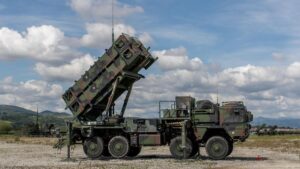
Norway is now providing an additional 3 billion Norwegian kroner to strengthen Ukraine’s air defense systems, according to the Norwegian government.
“Ukraine has been successful in intercepting most drones and cruise missiles, but it needs to strengthen its defenses against ballistic missiles. This is one of Ukraine’s most urgent priorities. That is why Norway is now allocating 3 billion Norwegian kroner for air defense,” said Prime Minister Jonas Gar Støre.
On Tuesday, the prime minister met with Ukrainian President Volodymyr Zelenskyy at the NATO summit in Ankara, Turkey.
“Russia is sending hundreds of drones and missiles into Ukraine day and night. The Patriot air defense system is highly effective and can counter a wide range of threats, including ballistic missiles,” said Defense Minister Tore O. Sandvik.
Together with Denmark, Germany, and Canada, Norway will order new Patriot air defense missiles directly from the manufacturer in the United States. Norway will continue to support the U.S.-led PURL program. PURL is a NATO program for coordinating the funding and donation of advanced U.S. military equipment to Ukraine, including air defense systems. Given the long lead times for some of these missiles, Norway also plans to procure Patriot missiles from countries that already possess them to facilitate rapid donations to Ukraine.
According to the Norwegian government, Ukraine has asked its European partners to participate in the development of a specialized missile defense system. This could also be significant for the defense of Norway and other Alliance member countries. Norway is allocating funding to be able to contribute to this initiative.
“In the future, ballistic missiles could also pose a serious threat to Norway and its allies. Therefore, the Ukrainian initiative is of interest in terms of strengthening Norway’s defense capabilities,” Sandvik said.
The government noted that between 2023 and 2025, Norway provided Ukraine with air defense support totaling 30 billion Norwegian kroner. Norway is also providing significant funding to strengthen Ukraine’s air defense in 2026.
In the “Medium- and Long-Term Market” section of the UEB, trading continued for July, August, and November 2026. In total, eight companies placed bids to buy or sell natural gas: Ukrnafta, GPK Naftogaz Trading, MTM Concern, the Ukrainian Gas Transmission System Operator, Ukrzaliznytsia, and others. In total, 11,530 thousand cubic meters of natural gas—July 2026 volumes in the GTS and UGS facilities—were sold in this section.
On the UEB’s short-term natural gas market, participants submitted bids on the intraday market and the “day-ahead” market. A total of 86 trades were concluded, with a combined volume of 1,622 thousand cubic meters.
Last week, the European market once again began to price in a risk premium, though without returning to June’s peaks. The M+1 gas contract briefly reached its highest level since the signing of the memorandum of understanding between the U.S. and Iran, with the Winter 26 and Summer 27 contracts following a similar trajectory. Maritime traffic through the Strait of Hormuz, while having improved somewhat, remains significantly below pre-war levels: in the six months leading up to the war, an average of just under 90 tankers passed through the strait each month. Following last weekend’s strikes, LNG transit was close to zero. Gas storage in Europe remains one of the most closely monitored fundamental factors. As of July 2, the current storage fill rate stood at 49.2%, compared to a five-year average of approximately 62%.
Natural gas imports from Europe ranged from 0.8 to 1.6 million cubic meters per day.
Greece, Bulgaria, and Romania are promoting the construction of the “Black Sea–Aegean Sea” multimodal transport corridor, which is intended to connect the ports, railways, highways, and logistics hubs of the three countries with access to the Ukrainian and Moldovan borders.
The project will become part of the EU’s Trans-European Transport Network (TEN-T). The European Commission notes that the broader “Baltic Sea–Black Sea–Aegean Sea” corridor spans 11 EU countries, as well as Ukraine and Moldova, connecting the Baltic, Black, and Aegean Seas.
The new section between Greece, Bulgaria, and Romania will consist of three main branches. The western branch is planned to run along the route Athens–Thessaloniki–Promachonas–Kulata–Sofia–Vidin/Calafat–Craiova–Bucharest. The central branch will connect Thessaloniki and Alexandroupolis with the Bulgarian cities of Svilengrad and Ruse, then continue through Giurgiu and Bucharest to
Siret on the Romanian border with Ukraine, as well as to Ungheni on the border with Moldova. The Eastern Branch will connect Alexandroupolis with the Bulgarian ports of Burgas and Varna, and then on to Constanța in Romania.
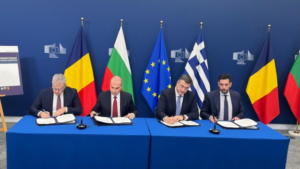
To coordinate the project, the three countries are establishing the Black Sea–Aegean Sea Corridor Platform (BACP). The European Commission reported that Greece, Bulgaria, and Romania signed a memorandum on the development of transport infrastructure on December 3, 2025, in Brussels. The document provides for coordination at the political and technical levels, the exchange of data on national investment plans, and the joint promotion of priority TEN-T projects.
European Commissioner for Transport Apostolos Tzitzikostas called the project a step toward strengthening the strategic north-south corridor in Southeast Europe. According to him, closer cooperation between Greece, Bulgaria, and Romania should strengthen ties for citizens and businesses, as well as enhance Europe’s security, competitiveness, and resilience in the Aegean, Black Sea, and Danube regions.
The project’s significance for the region goes beyond mere transportation modernization. The corridor could provide Ukraine with an additional southern logistics route to ports in the Aegean Sea, Bulgaria, and Romania, as well as strengthen the role of Constanța, Burgas, Varna, Alexandroupoli, and Thessaloniki as hubs for trade, agricultural exports, industrial cargo, and container transport.
For the Balkans, this also represents an opportunity to reduce dependence on overburdened or vulnerable routes. Since the outbreak of full-scale war against Ukraine, the importance of alternative routes via the Danube, the Black Sea, Romania, Bulgaria, and Greece has risen sharply. The central branch to Siret could effectively become an extension of Ukrainian logistics routes to southern Europe.
The project is also important for the military and crisis mobility of the EU and NATO, but its civilian economic value is no less significant. This involves faster transport between the three seas, better connections between ports and railways, reduced logistics costs, and the creation of a sustainable infrastructure for trade between Ukraine, Moldova, the Balkans, Central Europe, and the Mediterranean.
For Ukraine, this represents a potential new route to the Mediterranean; for Romania, Bulgaria, and Greece, it means strengthening their roles as transit countries; and for the entire region, it is a step toward more sustainable logistics between the Baltic Sea, the Black Sea, the Danube, and the Aegean Sea.
Aegean Sea, BACP, BLACK SEA, BULGARIA, GREECE, INFRASTRUCTURE, LOGISTICS, ROMANIA, TEN-T, UKRAINE
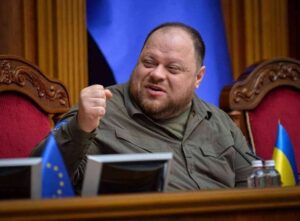
According to Serbian Economist, Ruslan Stefanchuk, Speaker of the Verkhovna Rada of Ukraine, has arrived in Belgrade, where he will participate in the Conference of Speakers of Parliaments of European Union Candidate Countries on July 7.
He was met at Nikola Tesla Airport by Ana Brnabić, Speaker of the National Assembly of Serbia. “Welcome to Serbia, dear friend,” Brnabić wrote, greeting the Ukrainian speaker.
On July 7–8, Belgrade is hosting a conference of speakers of the parliaments of EU candidate countries.
Stefanchuk’s visit is significant for Ukrainian-Serbian relations for several reasons. First, it represents a high-level parliamentary engagement against the backdrop of both countries’ European integration. Ukraine and Serbia are formally moving toward EU membership.
Second, Belgrade has been striving in recent months to adopt a more proactive parliamentary approach in its relations with Kyiv. In November 2025, Ana Brnabić visited Ukraine and met with Stefanchuk in Kyiv. At that time, the parties discussed interparliamentary cooperation, European integration, energy and humanitarian aid, and Brnabić stated that Serbia supports Ukraine’s European path.
For Serbia, the Ukrainian speaker’s visit is an opportunity to show Brussels that Belgrade is engaged in the pan-European parliamentary agenda and maintains channels of dialogue with Kyiv. For Ukraine, it is a chance to strengthen engagement with the Serbian political class not only through the government but also through parliament, expert circles, and the European integration agenda.
The practical substance of the meeting may extend beyond protocol: Ukraine and Serbia may discuss joint projects, the alignment of legislation with the EU, Ukraine’s recovery, humanitarian projects, energy, education, business contacts, and the role of parliaments in supporting bilateral dialogue.
The revival of economic dialogue between the two countries provided an additional backdrop to the visit. In May, a Serbian-Ukrainian business forum was held in Belgrade with the participation of the Ukrainian Chamber of Commerce and Industry and the Serbian Chamber of Commerce and Industry.
https://t.me/relocationrs/3172
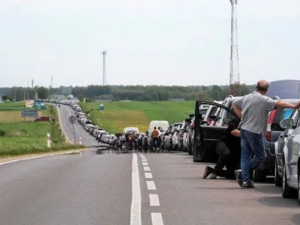
As of Sunday evening, a buildup of vehicles heading to Ukraine is observed on the Ukrainian-Polish border, the Western Regional Directorate of the State Border Guard Service of Ukraine reports.
Thus, at the Hrushev checkpoint, a queue of 30 cars and 6 buses has formed for entry into Ukraine; at the Krakivets checkpoint – 70 cars and 11 buses; at Shehyni – 45 cars and 15 buses; and at Nyzhankovychi – 20 cars.
“At present, the Ugryniv, Rava-Ruska and Smilnytsia checkpoints are not overloaded for entry into Ukraine,” the State Border Guard Service noted.
A buildup of passenger cars leaving Ukraine was recorded only at the Hrushev checkpoint – 30 cars; there is no buildup of passenger cars at the other checkpoints.
At the same time, in bus traffic leaving Ukraine, a buildup is recorded at the Krakivets checkpoint – 4 buses, at the Smilnytsia checkpoint – 8 buses, and at the Nyzhankovychi checkpoint – 1 bus.
“To avoid long waits in front of the checkpoint, we recommend choosing less congested checkpoints, as well as crossing the border early in the morning or late in the evening,” the border guards urged.



