
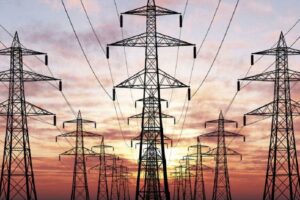
The powerful interstate power transmission line between Poland and Ukraine modernized by NEC Ukrenergo together with Polish transmission system operator PSE has successfully passed a three-day test since April 27, the NEC said.
According to Ukrenergo, the total cost of the project amounted to 350 million UAH, in addition, about 1 thousand tons of necessary equipment was provided for free by Polish partners.
The company explained that the bulk of the work was done in this node, so that the electricity produced by the Ukrainian power system could be converted to the European voltage of 400 kV and transmitted to Europe.
“It was a complex but mutually beneficial project that we implemented in cooperation with our European colleagues. It is important both for Ukraine and the energy security of Europe,” commented Volodymyr Kudrytsky, chairman of the board of Ukrenergo, as quoted in the company’s Telegram feed on Tuesday.
According to him, the line will strengthen links between the Ukrainian and European energy systems, constituting an additional element of European energy security and contributing to the development of a stable energy network in Ukraine.
“If the needs are different, we will be able to import electricity from Europe,” Kudritsky said.
The NEC added that the total length of the line is almost 400 km, more than 70% of which runs through Ukraine. The line is connected to the backbone network through an open switchgear on one of the Ukrainian power facilities. On the construction of the facility from the Ukrainian side for five months during the war worked 125 specialists – 45 employees of “Ukrenergo” and 80 contractors.
At the same time, Polish operator PSE on its auction platform on Tuesday announced a one-month auction to allocate available cross-section capacity on the Rzeszow-Khmelnitsky line for delivery from May 15-31. The capacity offered in the auction is 200 MW for exports from Ukraine and 350 MW for imports from Poland. Under the auction terms, bids from bidders will be accepted until May 8 at 16:00, with the results to be announced by the same time on May 10. Since NEC Ukrenergo during the war can only conduct daily auctions according to the requirements of ENTSO-E, it has to conduct them two days before the delivery day, i.e. the first can be expected on May 13 for the same capacity to be distributed by the Polish operator.
At the same time, the market notes that for the first week of May, Ukrenergo does not distribute cross-section capacity on the Dobrotvir-Zamosc line, through which DTEK Zakhidenergo exports 75MW hourly to Poland, due to a number of holidays in this country and the failure to hold auctions by the Polish operator.
As reported, the reconstructed 400 kV line between KNPP and Rzeszow was scheduled to be put into operation at the end of April. Reconstruction of the 750 kV Khmelnitsky NPP (KNPP) – Rzeszow line, which has not been in operation since the 1990s, provided for its transfer to the 400 kV voltage used in the European grid. Its launch allows for a 25-30% increase in Ukrainian export potential. The line will operate in synchronous mode, i.e. all participants of the Ukrainian and European markets will have access to it.
It is noteworthy that the situation in Ukraine has deteriorated in the last two years, according to the information supplied by the Ministry of Energy and Coal Industry of Ukraine (SOE).
Thus, Ukrenergo increases the daytime limits for the second day in a row, the nighttime limits are relatively sharply increased after the insignificant decrease on Monday.
According to DTEK’s report in the group’s Telegram Channel on Monday evening, the average time of no light in Kyiv throughout January 23-29 was 4 h. 50 min, 4 h. 51 min. and 4 h. 58 min, depending on one of the three groups. That is, 77-80% of days the residents of Kiev were with light.
DTEK noted that the blackout was uniform both among the groups and within each of them.
The information on the application of hourly schedules for tomorrow has already been made public by most network operators. In the Odessa region, emergency shutdowns will continue to be applied due to serious damage to the energy infrastructure as a result of the Russian attack on January 26. Prior to it, such blackouts were applied in the region only at night. As reported, DTEK forecasts that the repair work that would allow the region to return to stabaggering will continue at least until the end of January.
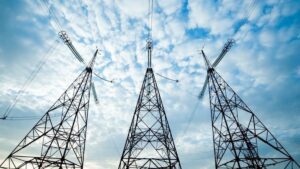
Electricity consumption on Sunday slightly increased compared with Saturday due to a cold snap, and the capacity deficit remains significant, but limits were slightly increased, Ukrenergo said on Sunday.
“Thanks to the weekend, despite the cold snap, all oblenergos were given slightly higher consumption limits than yesterday for the entire day,” the company points out in a telegram message.
“Ukrenergo reminded that Russian missile and drone attacks damaged power plants (generating facilities) and the high voltage network, and the last attack on January 14 caused significant damage to several power units of thermal power plants. In addition, heat is being replaced by frost across the country, the company pointed out.
The night before, operators of six power distribution systems reported that Ukrenergo had raised its Sunday limits for Sunday: daytime limits by about 6% and nighttime limits by 2%.
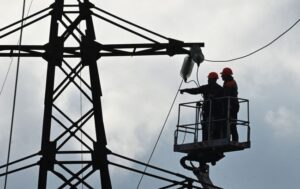
As of 11:00 a.m., the energy infrastructure is resuming after Russia’s 12th missile strike, with repair work continuing at all facilities damaged by shelling, NEC Ukrenergo said
According to its daily social media update, thermal power plants whose units the Russians tried to target have stopped or reduced their electricity production due to enemy damage, resulting in an increased deficit in the energy system.
“This forced a slight reduction in consumption limits, proportional to all regions. Restrictions are in effect throughout the day,” Ukrenergo noted in its Telegram Channel.
They warned that if the limits are exceeded, emergency shutdowns will be applied, which means that for consumers, the timing of outages may increase.
Ukrenergo pointed out that clarifications on the situation in a particular region or locality could be obtained from the website of the local distribution network operator (oblenergos).
As reported, the operators of the electricity distribution system notified that on Sunday, January 15, “Ukrenergo” has kept the round-the-clock limits of energy consumption for regional electricity distribution companies (oblenergos), returned from January 14, and lowered them by about 19% at night and by 11% during the day.
As Poltavaoblenergo reported on Facebook, in particular, it was given a night limit (from 00:00 to 7:00) of 358 MW of power in the region, and from 7:00 to 24:00 – 430 MW, while on January 14, the limits were 442 MW and 485 MW respectively.
For its part, Prykarpattyaoblenergo notified that it also again received the night limit from 00:00 to 7:00 – 182.6 MW, while the daytime limit for the rest of the day is 262.89 MW. On January 14, Ukrenergo brought the company the limits of 225.2 MW and 296.48 MW, respectively.
Earlier, Ukrenergo noted that the weekend and warming gave hope for easing the limits, but due to another massive Russian missile strike on Saturday, they had to increase them on the contrary.
According to DTEK, Russian invaders shelled two of the company’s thermal power plants, one of which stopped producing electricity.
They noted that no one was injured, but as a result of the attack, which was the 26th for the company, the TPP equipment was damaged – the occupiers hit the turbine room of the power unit of one of the affected TPPs, destroying one of the power units. Other power units were also damaged.
Overall, the 12th massive missile attack on Ukraine’s energy sector on January 14 recorded hits in five regions: Kyiv, Ivano-Frankivsk, Vinnytsia, Lviv and Kharkiv, Ukrenergo reported.
NEC Ukrenergo and the European Bank for Reconstruction and Development signed an agreement on a EUR70mn target grant to the company from the bank’s Special Fund provided by the government of the Kingdom of the Netherlands, NEC CEO Volodymyr Kudrytskyy said.
As Kudritsky explained on his Facebook, the funds will be used exclusively to purchase the equipment needed to resume the reliable operation of Ukraine’s energy infrastructure.
“We are grateful to our international partners for such a high level of confidence in our company and strong support in the restoration of Ukraine’s energy system. We are now actively working with manufacturers around the world to deliver the necessary equipment as soon as possible,” said the head of Ukrenergo.
As earlier reported, at the beginning of December, NEC Ukrenergo noted that it had attracted EUR300 mln of credit funds from the EBRD, EUR150 mln of which would be allocated for the purchase of equipment necessary for substations that have been subject to massive Russian missile strikes.
The rest EUR150 mln of the EBRD loan will be used to replenish Ukrenergo’s working capital, in particular, to fulfill the company’s financial obligations in the electricity market amid the non-payments that arose in the market because of the war.
At the same time, there was also talk about attracting EUR72 million in grant funds from the Netherlands to restore networks and improve the financial stability of the company.

The German government through the Reconstruction Credit Institution (KfW) will lend EUR32.5 million to Ukrenergo to restore eight high-voltage substations in the south and west of Ukraine, the company said.
According to its Facebook post on Friday, Ukrainian Finance Minister Serhiy Marchenko and NEC Board Chairman Volodymyr Kudrytsky signed the relevant agreements with KfW. This is NEC’s third project with the German state bank KfW, through which its government is providing financial support to Ukrenergo.
“These funds will already be working in the interests of Ukrainian consumers in the near future: equipment will be installed at the substations that will make it possible to control their work remotely from the central dispatcher’s office. The restored substations will be automated, require minimal staff and meet ENTSO-E requirements for reliability of the power transmission system and grid safety,” explained Ukrenergo.
The company expressed its sincere gratitude to its European partners for their timely assistance, which is very much needed today.
For its part, the Ministry of Finance said on its website that its head during a meeting with Anka Feldhusen, Ambassador Extraordinary and Plenipotentiary of Germany to Ukraine, signed a guarantee agreement with KfW for the new project “Increasing the Efficiency of Power Transmission (Substation Modernization) II”, and Ukrenergo head signed a loan agreement with KfW for EUR32.5 million for this project.
During the meeting there were also signed agreements on debt deferral between the government of Ukraine and KfW, the Ministry of Finance pointed out.
According to its report, an agreement was reached to postpone repayment of Ukraine’s debt under the attracted loans from KfW under the four existing projects from 2022-2023 to 2027-2031.



