

Ukrainians cite the outflow of medical personnel and the destruction of medical infrastructure by the aggressor as the main reasons for the deterioration in the availability of medical services during the war.
According to the results of a survey conducted by the research company Active Group and the Experts Club analytical center in early February and presented to the Interfax-Ukraine agency on Friday, 48% of respondents noted that they felt a deterioration in medical services during the war.
Among the main problems of medicine in wartime, 60% of respondents cited the outflow of medical personnel, 22.7% cited the destruction of medical infrastructure, and 13.4% cited a shortage of medicines.
“Considering that the deterioration in medical services is due to the fact that medical facilities have either been physically destroyed or doctors have left them, the fact that only 48% of respondents felt a deterioration is not a bad result. The main problems in medicine during the war are the outflow of medical personnel, followed by the destruction of infrastructure, and then the shortage of medicines. In other words, we see that the main problem is the shortage of medical personnel,” said Active Group founder Andrey Eremenko.

The reforms carried out in the medical sector in recent years have contributed to the fact that medicine continues to function, and the fact that people talk about the lack of improvement or deterioration in the quality of medical services, according to the expert, is still “not subject to harsh criticism.”
According to the survey, 7.2% currently rate the state of affairs in the healthcare system as very poor, 18.7% as rather poor, 16.7% as rather good, and 2% as very good. At the same time, 54.6% gave it an average rating.
At the same time, 29.5% of respondents completely trust their family doctor, and 61.9% trust them partially.
When assessing the possibility of obtaining consultations from a family doctor in their region, 88.8% of respondents said that it was very easy or easy to do so, while 21% said it was very difficult or difficult.
Just over 10% of respondents noted that their local hospital has a sufficient supply of medicines and modern equipment, while 45.8% said that there is a partial supply.
At the same time, 40% of respondents noted that consultations with a specialist take up to a week, 28.4% take 1-2 weeks, and 11.5% take more than a month. In 2024-2025, 68% of respondents regularly paid for medical services themselves.
At the same time, 16% of respondents noted that they spend less than 5% of their family budget on medicine, while almost 21% of respondents reported spending more than 20%.

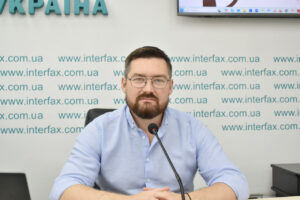
“The study revealed both the positive and painful aspects of the Ukrainian healthcare system. The most painful issue is the brain drain. But it is important to see the strengths as well. I was very pleased that the level of trust in family doctors is very high. So, the foundation for the development of the healthcare system is there, although, in particular due to the war, there are economic barriers and barriers to accessibility,” said Maksim Urakin, founder of the Experts Club information and analytical center.

50.5% of Ukrainians said they had not seen any improvements after the medical reforms (in particular, the introduction of the National Health Service), 24.7% reported improvements, and another 24.8% were undecided.
At the same time, 64% of respondents said they had encountered unofficial payments in medical institutions, and 52.2% considered the medical system to be corrupt (another 44.3% considered it to be “partially corrupt”). This is according to the results of a survey conducted by the research company Active Group using the SunFlowerSociology online panel.
Active Group Director Oleksandr Pozniy noted that against the backdrop of more critical assessments of the reform, people often separate their trust in a particular doctor from their trust in the system as a whole.
“We can say that family doctors, especially those who have been specifically and consciously chosen, are trusted. It is quite a common situation when people may not trust the system, but trust a specific doctor they know. At the same time, reform exists when it changes everyday experience, and although some changes have taken place, there is still dissatisfaction with this reform,” he said at a press conference at the Interfax-Ukraine agency on Friday.

According to the study, Ukrainians most often assess the state of the healthcare system as “average” (54.6%), “rather poor” (18.7%), or “very poor” (7.2%); 2.9% said “very good” and 16.7% said “rather good.”
At the same time, the level of trust in family doctors remains relatively high: 29.5% of respondents said they completely trust them, 61.9% said they partially trust them, and 8.6% said they do not trust them.
The survey also identified problems with access to medical care and resources at the local level. In particular, 23.8% of respondents believe that it is “very easy” to get a consultation with a family doctor, 55.1% say it is “easy,” 18.1% say it is “difficult,” and 2.9% say it is “very difficult.” Only 10.1% responded that their local hospital has “enough” modern equipment and medicines, 45.8% said “somewhat enough,” and 32.4% said “no.”
In addition, according to respondents, the wait time for an appointment with a specialist exceeds one month in 11.5% of cases, lasts 2–4 weeks in 19.8% of cases, 1–2 weeks in 28.4% of cases, and up to one week in 40.2% of cases.
Active Group founder Andriy Yeremenko attributed some of the negative assessments to the scale of direct household expenses.

“In fact, we see that more than 90% pay for treatment in one way or another, although medicine is formally free. If you don’t have insurance, you still pay — either for medicine or for procedures. Therefore, the issue of financial accessibility remains key for most families,” he said.
According to the survey results, in 2024–2025, 68.2% of respondents said they paid for medical services or medicines themselves on a regular basis, 25.1% said they did so occasionally, and 6.7% said they did not pay.
At the same time, 20.9% reported spending more than 20% of their family budget on medicine, another 23.2% spent 11-20%, 39.8% spent 5-10%, and 16.1% spent less than 5%.
Maksym Urakin, PhD in Economics and founder of the Experts Club information and analytical center, commenting on the survey data, said that high proportions of healthcare costs affect not only well-being but also economic stability.

“As an economist, I want to emphasize that medicine is an integral part of a country’s economic stability, and when healthcare costs erode family budgets, it affects consumption and people’s ability to recover. In international monitoring methodology, it is considered catastrophic if a person spends more than 10% of their budget on medicines. And here we see a sign of a serious financial burden,” he stressed.
Separately, participants drew attention to the dynamics of medicine prices and the effectiveness of compensation mechanisms. Thus, 52.3% of respondents said that the prices of medicines they buy regularly had “increased significantly,” 43.9% said they had “increased slightly,” 3.6% said they had “remained unchanged,” and 0.2% said they had “decreased.”
Regarding the state program for reimbursement of the cost of medicines, 13.1% of respondents said they use it, 70.6% said they do not use it, and another 16.3% said they have heard of it but have not used it. Among those who received medicines under the program, 24.7% said they received them free of charge, and 75.3% said they paid extra.
Grigory Soloninka, a member of the board of the Kyiv Regional Organization “VULT” and professor at the Kyiv Medical University, believes that the pandemic and full-scale war have significantly influenced the perception of the reform, but there are also “positive elements.”

“To a certain extent, there are reforms: there are positive aspects and there are negative aspects. But this negativity was largely influenced, first of all, by the pandemic, then by the war — that is, our reforms began, perhaps, at the wrong time. But there are positives from these reforms, and we see that there is a good program for people over 40, screening,” he said.
The survey also separately assessed the impact of the war on the availability of medical services: 48.1% of respondents reported that they felt access had deteriorated due to the war, 36.9% said no, and 15% were undecided. Respondents identified the outflow of medical personnel (60.3%) as the most acute problem in healthcare during wartime, followed by the destruction of infrastructure (22.7%) and a shortage of medicines (13.4%).
The survey was conducted on February 11–12, 2026, using a self-administered questionnaire, with a sample of 1,000 respondents aged 18 and older throughout Ukraine, excluding temporarily occupied territories. The theoretical statistical error is up to 3.1% with a 95% confidence level.
ACTIVE GROUP, EXPERTS CLUB, Pozniy, SOCIOLOGY, SOLONINKA, SURVEY, URAKIN

This article presents key macroeconomic indicators for Ukraine and the global economy as of the end of September 2025. The analysis is based on current data from the State Statistics Service of Ukraine (SSSU), the National Bank of Ukraine (NBU), the International Monetary Fund (IMF), the World Bank, and leading national statistical agencies (Eurostat, BEA, NBS, ONS, TurkStat, IBGE). Maksim Urakin, Director of Marketing and Development at Interfax-Ukraine, PhD in Economics and founder of the Experts Club information and analytical center, presented an overview of current macroeconomic trends.
Ukraine’s macroeconomic indicators
During the first nine months of 2025, Ukraine operated in a “managed economy” mode, maintaining its adaptability to wartime restrictions, but the pace of recovery remained moderate and the investment momentum insufficient. The NBU’s baseline forecasts in the summer of 2025 included a target for real GDP growth in 2025 of 2.1%, which set the framework for business and financial sector expectations for the second half of the year.
“Based on the results for January–September 2025, Ukraine’s economy is showing its ability to maintain basic activity under military restrictions. The recovery is continuing, but its pace remains moderate and is largely based on consumption and external financing. According to market observations, investment activity is mainly focused on restoration and replacement rather than capacity expansion. The key task for the coming quarters is to increase the share of long-term projects in the energy, logistics, processing, and technology sectors,” said Maksim Urakin, founder of the Experts Club information and analytical center.
Inflation dynamics in September were more subdued than during the peak periods of the year. According to the State Statistics Service, consumer prices rose by 0.3% m/m in September 2025, by 6.3% since the beginning of the year, and annual inflation (September 2025 to September 2024) was 11.9%. Core inflation was higher on a monthly basis: +1.3% m/m, and on an annual basis: 11.0% y/y.
Monetary policy remained tight and aimed at keeping expectations in check: on September 11, 2025, the NBU kept its policy rate at 15.5%. At the same time, the NBU’s inflation report laid out the logic of maintaining the rate at 15.5% until the fourth quarter of 2025 as part of a disinflationary trajectory and exchange rate stability.
“Inflation dynamics in 2025 will be determined not only by monetary factors, but also by supply factors—harvests, logistics, energy constraints, and the import component of costs. In these conditions, keeping the discount rate high serves to contain inflation expectations and reduce pressure on the currency market. At the same time, monetary measures must be complemented by government policies that stimulate competition and supply in the domestic market. Without this, inflation risks will remain sensitive to price and logistics shocks,” emphasized Maksim Urakin.
Foreign trade remained one of the key sources of macro risks. According to the State Statistics Service, in January–July 2025, exports of goods amounted to $23.31 billion (96.5% of the corresponding period in 2024), while imports amounted to $45.94 billion (116.9%). The negative balance amounted to $22.63 billion, reflecting the structural gap between import demand (energy, equipment, critical goods) and export opportunities.
International reserves remained a compensator for military risks and trade imbalances. According to the NBU, as of October 1, 2025, international reserves amounted to $46.52 billion, having increased in September; the NBU also noted that this amount corresponded to the financing of 5.1 months of future imports.
The debt burden remained high. According to data publicly cited with reference to the Ministry of Finance, as of September 30, 2025, the state and state-guaranteed debt amounted to UAH 8,024.1 billion (equivalent to $194.2 billion); of which external debt amounted to UAH 6,063.2 billion and domestic debt amounted to UAH 1,960.9 billion.
Global economy
In 2025, the global economy continued on a moderate growth trajectory, but at different speeds across regions and with increased sensitivity to trade and financial risks. According to the July update of the IMF’s World Economic Outlook, global growth in 2025 was estimated at 3.0% and in 2026 at 3.1%, explained by a combination of financial conditions and trade lead-through effects.
World Bank materials emphasized that the outlook remains fragile due to increased trade barriers and high uncertainty; in the baseline scenario, after a slowdown, growth was expected to pick up to around 2.5% in 2026–2027.
“The global economy in 2025 is growing moderately and unevenly across regions, with financial conditions and trade risks remaining key variables. The US is supporting part of global demand, but dependence on the cost of money and the consumption cycle remains. The European economy is recovering slowly, while China is showing growth driven by industry and exports, with uneven domestic demand. For Ukraine, this means the need to focus on competitive niches and systematic support for exports with higher added value, rather than waiting for favorable external conditions,” said Maksim Urakin.
According to the BEA’s third estimate, real US GDP grew by 3.8% on an annualized basis in the second quarter of 2025, while a decline was recorded in the first quarter. Among the key growth factors, the BEA cited a reduction in imports (which are deducted from GDP calculations) and an increase in consumer spending, partially offset by weaker investment and export dynamics.
According to Eurostat’s preliminary flash estimate, GDP grew by 0.1% q/q in the eurozone and 0.2% q/q in the EU in Q2 2025, indicating a very moderate recovery in economic activity.
According to preliminary estimates released by the National Bureau of Statistics of China, GDP grew by 5.3% y/y in the first half of 2025 and by 5.2% y/y in the second quarter, meaning that the economy maintained a pace of “above 5%” on an annualized basis.
According to an official government press release (PIB), India’s real GDP in the first quarter of fiscal year 2025-26 (April-June 2025) grew by 7.8% y/y, confirming one of the highest growth rates among major economies.
TurkStat reported that in the second quarter of 2025, Turkey’s GDP grew by 4.8% y/y, which formally meant an acceleration in annual growth, although the structure of demand and foreign trade conditions remained important for assessing sustainability.
“The main external risks in 2025 are related to trade restrictions, changes in regulatory regimes, energy costs, and logistical constraints. In such conditions, countries with high productivity and a diversified export structure gain an advantage in the competition for capital and markets. It is advisable for Ukraine to develop risk management tools for exporters, expand its sales geography, and increase the predictability of rules for investors. This reduces dependence on short-term fluctuations in external markets and increases the stability of the balance of payments,” emphasized Maksim Urakin.
Conclusions
January–September 2025 is a period of relative macrofinancial manageability for Ukraine: inflation slowed to 11.9% y/y in September, the NBU kept its policy rate at 15.5%, and international reserves rose to $46.52 billion as of October 1. At the same time, the trade imbalance and high debt burden continue to pose medium-term risks, which can be addressed not by “stabilization” but by structural changes—investment, productivity, processing, and exports with higher added value.
“In the medium term, the key areas are the development of processing, the localization of supply chains where economically feasible, and the expansion of exports of higher value-added products. At the same time, it is important to maintain the predictability of monetary and fiscal decisions and ensure transparent conditions for private capital. In the absence of such steps, macro stability will remain primarily a function of external financing. If these steps are taken, they can become the basis for a longer investment cycle and a more sustainable economic structure,” concluded Maksim Urakin.
Head of the Economic Monitoring project, Candidate of Economic Sciences Maksim Urakin
Source: https://expertsclub.eu/osnovni-ekonomichni-indykatory-ukrayiny-ta-svitu-vid-experts-club-2/

Ukraine ranked fifth among countries that were sources of accumulated foreign direct investment (FDI) in Cyprus in 2024, reports the Experts Club information and analytical center.
The total volume of accumulated inward FDI in 2024 is estimated at €365.07 billion, with Ukraine accounting for €10.64 billion, or 3% of the total.
Russia remains the largest source of investment with €83.46 billion (23%), followed by the United States with €66.57 billion (18%), Luxembourg with €32.10 billion (9%), the United Kingdom with €17.17 billion (5%), Ukraine – €10.64 billion (3%), the Netherlands – €6.90 billion (2%), and Israel – €5.10 billion (1%).
In addition, the data mentions the Cayman Islands (€8.4 billion), other countries in the Middle East (€7.6 billion), the Marshall Islands (€3.5 billion), and the British Virgin Islands (€2.4 billion).
The Central Bank of Cyprus also notes a decrease in the total volume of accumulated FDI: from €489.4 billion in 2022 to €394.0 billion in 2023 and €365.07 billion in 2024; The figure for Russia for this period fell from €135.7 billion to €83.46 billion.
The Central Bank of Cyprus notes that this refers to FDI “positions” (the accumulated volume of equity participation and intra-corporate loans), rather than new investment flows into the real economy.

The Experts Club analytical center has published a video study on silver production in the world by leading countries in 1971-2024, which shows the long-term restructuring of production geography and the strengthening of the role of Latin America and a number of Asian countries.
According to the study (source: BGS), Mexico will remain the largest silver producer in 2024 with 7.43 million kg, having been the undisputed world leader in silver production for 15 consecutive years. It is followed by China with 3.389 million kg and Peru with 3.065 million kg. The next group of producers includes Russia (1.604 million kg), Poland (1.534 million kg), Bolivia (1.495 million kg), Australia (1.218 million kg), the United States (1.097 million kg), Chile (1.049 million kg), and Kazakhstan (878,000 kg).
The top 20 for 2024 also included Argentina (775 thousand kg), India (769 thousand kg), Canada (410 thousand kg), Sweden (372 thousand kg), Indonesia (325 thousand kg), Uzbekistan (258 thousand kg), Morocco (224,000 kg), Papua New Guinea (137,000 kg), Brazil (102,600 kg), and Turkey (96,130 kg).
The study notes that over the decade, the centers of production have changed: some countries have increased output by expanding polymetallic projects, where silver is often a by-product, while leadership has gradually consolidated among large producers with a stable raw material base and developed processing.
Commenting on the results, Experts Club founder Maxim Urakin emphasized that the long series from 1971 to 2024 shows not just a “race” between countries, but investment cycles and a structural shift in demand: “Silver is increasingly perceived as a strategic metal — both for industry and for investors, so understanding who has been increasing production for decades and how helps to assess future risks of shortages and price spikes.”
According to analysts’ estimates, the value of silver in 2025 rose by a record 128.47%, which was the best result among major assets and exceeded the dynamics of gold (+66.59%) as well as the largest crypto assets, which ended 2025 in negative territory (BTC -5.75%, ETH -11.58%).
The video analysis is available on the Experts Club YouTube channel –
This article presents key macroeconomic indicators for Ukraine and the global economy as of the end of June 2025. The analysis is based on current data from the State Statistics Service of Ukraine (SSSU), the National Bank of Ukraine (NBU), the International Monetary Fund (IMF), the World Bank, and leading national statistical agencies (Eurostat, BEA, NBS, ONS, TurkStat, IBGE). Maksim Urakin, Director of Marketing and Development at Interfax-Ukraine, Candidate of Economic Sciences and founder of the Experts Club information and analytical center, presented an overview of current macroeconomic trends.
Macroeconomic indicators of Ukraine
Ukraine ended the first half of 2025 in a state of moderate but fragile stabilization. After a “flat” start to the year and a weak first quarter, which the NBU assessed as a period of subdued activity, in April-June the economy maintained positive momentum primarily due to domestic consumption and sectors that adapted to military logistics. In its April decision, the NBU kept the policy rate at 15.5%, emphasizing the need to support currency stability and reduce inflation expectations; in its July decision, the regulator confirmed this level, which anchored rates for hryvnia instruments.
Inflation slowed significantly: in June, the annual rate fell to 14.3% y/y (from 15.9% in May), reflecting a combination of tighter monetary policy, currency stability, and price adjustments for certain food groups; the monthly rate was +0.8%. This is the first significant “dip” in annual inflation below 15% this year.
Foreign trade remains the main source of imbalances. In January–May, exports of goods amounted to about $16.95 billion, imports to $31.54 billion, and the negative balance deepened to $14.6 billion (+49% y/y). The key drivers of imports were energy, machinery, and chemicals; exports were structurally biased toward food and raw materials.
Against the backdrop of the trade gap, international reserves remained an important buffer. As of July 1, 2025, they reached $45.1 billion (+1.2% in June) thanks to large inflows from partners (in particular, the EU, Canada, and the World Bank), which exceeded FX interventions and debt payments. This is a historically high level for Ukraine and a critical safety margin for the currency market.
“Current growth is supported by consumption and official financing; without the launch of an investment cycle, it will remain low and unsustainable. International reserves are a stabilization tool, not a source of development; the effect will only appear after they are converted into value-added projects. The trade deficit, in turn, is structural in nature: it should be addressed through logistics, energy modernization, and localization of production, not just exchange rate decisions,” said Maksim Urakin.
The debt burden has increased. As of June 30, 2025, the total public and publicly guaranteed debt was estimated at approximately $184.8 billion (equivalent to UAH 7.697 trillion), adding nearly $3.9 billion in a month. External liabilities structurally prevail, which increases dependence on official financing.
International support remained systemic. On June 30, the IMF completed the eighth review of the EFF program and approved further financing (total payments under the program exceeded $10 billion), while confirming Ukraine’s fulfillment of key criteria and continuation of structural reforms.
“The second quarter showed that the economy has learned to operate in a mode of constant shocks — we see the resilience of small and medium-sized businesses, the flexibility of logistics, and the rapid reorientation of exporters. But the fundamentals remain unchanged: the investment cycle has not been launched, and the trade deficit is structural; it will not disappear without a targeted industrial policy and incentives for localizing production. The discount rate of 15.5% is a compromise between the price of money and currency stability; it works as long as official financing enters the country. If we want to get out of “survival mode,” we need long-term money to restore energy, logistics hubs, and high-tech production. Reserves of over $45 billion are not a reason to relax, but a window of opportunity that must be converted into value-added projects, otherwise exchange rate stability will remain expensive and temporary,” Maksim Urakin emphasized:
Global economy
The world moved unevenly in the first half of 2025. After a technical contraction in the first quarter (-0.5% SAAR, -0.1% q/q), the US entered the second quarter with a recovery in demand: by the end of June, there were already signs of easing price pressure on the PCE index (≈2.5% y/y in May) and stabilization of household spending. Later official estimates show a significant rebound in the second quarter, but as of June 30, the key picture was “cold” demand amid high interest rates.
The eurozone showed a contrast: after a strong Q1 (+0.6% q/q), momentum moderated in April–June; preliminary estimates show Q2 added +0.1% q/q. The factors were weak external conditions, a correction in industry, and cautious consumers, despite easing inflation. The UK remained a positive exception among the G7: +0.7% q/q in Q1 and +0.3% q/q in Q2, although inflation accelerated to 3.6% y/y in June, slowing down the pace of monetary policy easing.
China maintained a pace close to its official target: GDP +5.2% y/y in Q2 (after +5.4% in Q1), but inflation remained sluggish — June CPI +0.1% y/y, reflecting weak domestic consumption and pressure from real estate. Exports and industrial production drove growth, but the question of the sustainability of domestic demand remained open.
Turkey grew by 2.0% y/y in Q1; inflation in June fell to ≈35% y/y, demonstrating the effect of protracted disinflation despite high rates and a cool business cycle.
India remained the most dynamic major economy: in Q4 of fiscal year 2024/25, real GDP grew by 7.4% y/y, and by 6.5% for the year as a whole; inflation in June came close to ≈2% y/y (according to MoSPI publications), creating room for cautious policy easing going forward.
Brazil added +1.4% q/q (2.9% y/y) in Q1 on the back of strong agriculture; the IPCA in June was 5.35% y/y (+0.24% m/m), remaining above the central bank’s target and forcing monetary authorities to act cautiously.
“Global growth in the first half of 2025 is a mosaic of different speeds. The US is balancing between tight rates and the desire not to ”overbrake” demand, Europe is slowly emerging from stagnation, China is holding the bar thanks to exports, but domestic demand has not yet recovered. For Ukraine, this means one simple thing: we should not expect external demand to pull us out of the doldrums on its own. We need targeted industrial programs, support for high value-added exports, and a transparent import substitution policy where it makes economic sense. Then, even amid global turbulence, we will be able to turn record reserves and international support into a long investment cycle and a new economic structure,” Maxim Urakhin concluded.
At the end of June 2025, Ukraine’s economy remains in a state of controlled equilibrium: inflation is slowing, reserves are at historic levels, and monetary policy is predictable. At the same time, a deep trade deficit, high debt burden, and weak investment flows remain key risks that require immediate responses — from tax and customs policy to incentives for localizing production and restoring critical infrastructure.
Head of the Economic Monitoring project, Candidate of Economic Sciences Maksim Urakin
Source: https://interfax.com.ua/news/projects/1113998.html



