

Standard Chartered analysts estimate that dollar-pegged stablecoins could take around $500 billion in deposits from US banks by the end of 2028, intensifying competition for funding between traditional banks and crypto infrastructure.
Regional credit institutions are considered the most vulnerable in the banking sector, as their revenues are more closely linked to net interest margins (the difference between the return on assets and the cost of deposits), so the outflow of funding has a greater impact on profitability.
The risk mechanism for banks is that the “safe layer” of money is partially transferred from deposits to tokens: payment functions and part of the transaction activity can be transferred to stablecoins, and issuers’ reserves are more often placed not in the banking system, but in US Treasury securities. In particular, according to Standard Chartered’s estimates, the largest issuers, Tether and Circle, hold the bulk of their reserves in US Treasuries, meaning that there is little “redeposit” into banks.
The accelerating factor is regulation. Reuters notes that the federal law on stablecoins passed in the US is expected to encourage their wider use; the document prohibits issuers from paying interest on stablecoins, but banks believe that there is still a “loophole” for paying returns through third parties (e.g., crypto exchanges), which intensifies competition for deposits.
If Standard Chartered’s assessment scenario is confirmed, part of the funding will shift from the banking system to the US government debt market, as the growth of stablecoins increases demand for short-term treasury bills, which are used to secure reserves.
BANK, DEPOSIT, stablecoins, US
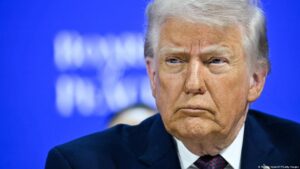
US President Donald Trump announced his intention to raise tariffs on a number of goods from South Korea from 15% to 25%, linking this decision to the fact that, according to him, the country’s parliament had failed to fulfill its obligations under a previously agreed trade agreement. According to Reuters, Trump wrote on social media that the increased rates would apply to South Korean cars, lumber, pharmaceuticals, and other goods subject to “reciprocal tariffs.” However, the report did not specify when the increase would take effect.
The South Korean authorities were taken by surprise by the announcement and declared their commitment to implementing the agreements; emergency consultations were held in Seoul, and relevant officials are preparing to contact the American side.
Against the backdrop of the news, South Korea’s KOSPI index fell during trading, then reversed and closed higher, while the won weakened. Hyundai Motor and Kia shares ended the session lower after a more noticeable decline during the day.
We remind you that under the agreement reached in 2025, the tariff on imports of Korean cars and auto components to the US was previously reduced to 15% from 25% and came into effect on November 1
IMPORTS, SOUTH KOREA, TARIFFS, TRUMP, US

The spot price of gold exceeded $5,000 per troy ounce for the first time on Monday amid growing demand for safe-haven assets. As of 8:02 a.m., the spot price of gold rose 1.8% to $5,078.54 per ounce, reaching $5,093.05 per ounce during the session.
The price is supported by fears of another US government shutdown and the weakening of the dollar: the DXY index, which reflects the dynamics of the US currency against six major world currencies, is down 0.5%.
Since the beginning of the year, gold has risen in price by 15.5%.
Earlier, the Experts Club analytical center presented an analysis of the world’s leading gold-producing countries in its video on YouTube channel — https://youtube.com/shorts/DWbzJ1e2tJc?si=BywddHO-JFWFqUFA

The document on security guarantees from the US is 100% ready, and Ukraine is waiting for its partners to confirm the date and place of signing, Ukrainian President Volodymyr Zelensky said.
“For us, a security guarantee is, first and foremost, a bilateral security guarantee from the United States of America. The document is 100% ready, we are waiting for our partners to be ready to provide a venue for us to sign it, and then the document will go for ratification in the US Congress and the Ukrainian parliament,” Zelensky said during a press conference in Vilnius on Sunday.
On December 23, Zelensky announced that the agreement on security guarantees from the US was ready for signing, and that the date and place of signing depended on US President Donald Trump.
“It’s up to him. We are ready to sign these documents, which are so important to us. I emphasize once again that we are confident that these are historic documents,” Zelensky said during a conversation with journalists.

The dispute over Greenland has overshadowed plans to use the Davos week to reach agreements between the US, Ukraine, and European countries on security guarantees and reconstruction of Ukraine, Axios reports.
“A Ukrainian official said that the plan for leaders to sign the ‘prosperity plan’ had been canceled. An American official denied that any date had been set and said that the plan still needed to be finalized,” the report said.
It is noted that Trump still plans to meet with Ukrainian President Volodymyr Zelensky and several European leaders, but the US official said that no breakthroughs should be expected.

Venezuela has declared military aggression by the United States and imposed a state of emergency. The statement was published by Venezuelan Foreign Minister Ivan Gil Pinto.
“The Republic of Venezuela rejects, condemns, and denounces before the international community the extremely serious military aggression committed by the current government of the United States of America against the territory and population of Venezuela in the civilian and military areas of Caracas, the capital of the Republic, and the states of Miranda, Aragua, and La Guaira,“ according to a statement released on Pinto’s Telegram channel on Saturday.
The statement said that the US actions are ”a gross violation of the UN Charter” and threaten peace and stability in Latin America and the Caribbean.
The Venezuelan authorities claim that the real goal of the attack is to establish control over the country’s strategic resources, in particular oil and minerals, as well as an attempt at forced “regime change.” The government stressed that these attempts “will fail,” as before.
Venezuelan President Nicolas Maduro announced the imposition of a “state of external emergency” throughout the country and ordered the implementation of national defense plans. He also ordered the deployment of the State Integrated Defense Command and relevant management bodies in all states and municipalities.
Pinto said that Venezuela would file complaints with the UN Security Council, the UN Secretary-General, and regional international organizations, demanding condemnation of the US actions. The country’s authorities stressed that they reserve the right to self-defense in accordance with Article 51 of the UN Charter.
There have been no official comments from the US government on these allegations yet.
As reported, on the night of January 3, at least seven explosions were heard in Caracas, Venezuela. Eyewitnesses also said they saw planes flying low over the city. CBS News journalist Jennifer
Jacobs, citing sources, said that Donald Trump ordered attacks on targets in Venezuela as part of an intensified campaign against the regime of President Nicolas Maduro.



