
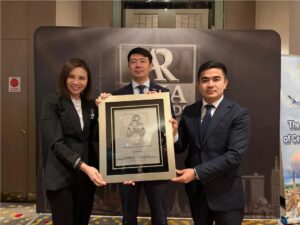
The Republic of Uzbekistan has been officially recognized by ASIA Records as the Asian country with the largest number of Islamic historical cities included in the UNESCO World Heritage List.
Representatives of the Tourism Committee of the Republic of Uzbekistan and the Embassy of Uzbekistan in Malaysia took part in the award ceremony, which was held in Kuala Lumpur (Malaysia).
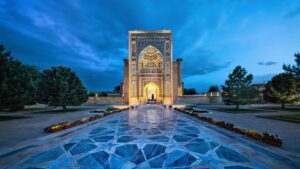
According to this recognition, the cities of Samarkand, Bukhara, Khiva, and Shakhrisabz in Uzbekistan are Islamic historical cities officially recognized by UNESCO. This indicator confirms Uzbekistan’s status as one of the richest and most intact centers of Islamic civilization in Asia.
Located in the heart of the Great Silk Road, Uzbekistan has been a crossroads of culture, science, and spiritual traditions of the Islamic world for centuries. Its historic cities have preserved outstanding examples of Islamic architecture, urban planning, and scientific thought in their authentic environment to this day—mosques, madrasas, mausoleums, and entire urban ensembles. Of particular value is the comprehensive preservation of the historical environment, where the unique heritage is not a single monument, but the entire cityscape in its entirety.
Along with its architectural heritage, Uzbekistan remains an important center of pilgrimage and cultural tourism today. The Khast-Imam complex in Tashkent, the mausoleum of Imam al-Bukhari in Samarkand, the ensembles of Bahouddin Naqshband and Chashma Ayub in Bukhara, as well as the Islamic monuments of Termez continue to attract pilgrims and tourists from all over the world.
The ASIA Records award on the international stage is a recognition of Uzbekistan’s leadership in the preservation, development, and promotion of Islamic historical heritage, as well as confirmation of its universal value for all of humanity.
Central Asia attracted about 57% of all investments from Asia to the Eurasian region, with a total volume of US$68 billion. Uzbekistan became the main driver of growth in the region: over the past year and a half, the volume of investments from Asian countries has grown from US$11 billion to US$22.6 billion, accounting for about 62% of the total investment growth in Central Asia.
Despite the global downturn, the inflow of Asian investment into the Eurasian region in 2024–2025 reached almost US$20 billion. Almost half of this growth (US$9 billion) was provided by the Persian Gulf countries. The total volume of accumulated mutual investments reached a record US$176 billion by mid-2025.
The largest investments came from the United Arab Emirates ($16.1 billion), Saudi Arabia ($4.2 billion), Qatar ($2.4 billion), and Oman ($1.1 billion). Up to 96% of all investments from the Gulf countries are directed to Central Asia.
Uzbekistan has eliminated customs duties on imports of 82 types of raw materials and semi-finished products until January 1, 2027.
Zero rates for these types of products were first introduced in October 2021 and were valid until January 1, 2024.
The list includes, in particular: castor oil, asbestos, sodium hydroxide (caustic soda), dyes, artificial fur, artificial wax, ready-made adhesives, photo emulsion for textile printing, paper and cardboard, cotton fabrics, linen fabrics, fabrics made of artificial and synthetic fibers, glass fiber, glass fiber fabrics, loudspeakers, and others.
Measures to reduce customs duties were applied in order to support domestic manufacturing enterprises and increase exports of value-added products.
As a reminder, Uzbekistan previously extended zero customs duties for a number of food products and children’s clothing until January 1, 2027.
In addition, until January 1, 2031, special equipment, spare parts and components, raw materials and materials that are not produced in the country and are used in the technological processes of enterprises for the disposal of household, construction and medical waste, as well as the production of biodegradable polymer materials, are also exempt from customs duties.

Uzbekistan has approved a special legal procedure regulating the activities of investment platforms in the form of a “regulatory sandbox.”
This legal regime creates conditions for the launch and development of investment platforms that allow funds to be raised directly from investors, primarily for start-ups, as well as small and medium-sized businesses for which entering the stock market is difficult or premature.
The regulation establishes permissible formats for investing through electronic platforms, including investments in shares, participation in partnerships, venture and joint projects, as well as other project models. Unlike the traditional stock market, such investments do not involve the issuance and circulation of securities, listing, or the mandatory participation of investment intermediaries.
The document establishes the procedure for registering participants in the special legal regime, the conditions for their inclusion in the register of investment platform operators, and the grounds for exclusion from the list of participants.
Only legal entities that are residents of Uzbekistan and operate as investment platform operators can participate in the special legal regime.
An investment platform must be a comprehensive software, technical, and organizational mechanism that ensures:
The introduction and further expansion of investment platforms will help build a legal framework for boosting investment activity, which will give an extra boost to:

Uzbekistan has launched its first national census since independence.
Preliminary results are scheduled for July 1, 2026, and the final results will be made public on July 1, 2027.
The process will take place in several stages. From January 15 to January 31, citizens can fill out an electronic questionnaire through a special portal census.stat.uz.
From February 4 to February 28, census workers will start the traditional door-to-door rounds to register those who did not have time to use the online service.
Data collection will cover all regions and settlements of the country.
Electricity production in Uzbekistan in 2025 amounted to 86.7 billion kWh, which is 6% more than a year earlier: in 2024, the country produced 81.5 billion kWh of electricity.
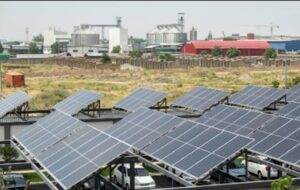
Of the total production, 16.8 billion kWh came from renewable energy sources — solar, wind, and hydroelectric power plants. This figure increased by 29% compared to 2024.
At the same time, electricity production by solar and wind power plants alone amounted to 10.5 billion kWh, an increase of 2.1 times. The development of renewable energy has saved 3.2 billion cubic meters of natural gas and prevented the emission of 4.7 million tons of harmful substances.
There are 148 power plants operating in the country with a total capacity of 25,797 MW, including thermal power plants and CHPs (17,551 MW), HPPs (2,441 MW), solar power plants (3,930 MW), wind power plants (1,652 MW), and block stations (223 MW). During the year, 42 new generation projects with a capacity of 4,647 MW were commissioned, including solar, wind, battery, thermal, hydro, and cogeneration facilities. At the same time, 11 substations with a capacity of 1,614 MVA and 420 km of power grids were commissioned, and construction began on 21 more projects with a total capacity of 3,508 MW.
New industrial facilities were launched: a plant producing 155 hydroelectric units per year in the Bostanlyk district, an enterprise producing 15,000 transformers per year in Angren, and the first national hydroelectric power plant with a capacity of 38 MW in the Namangan region, assembled entirely from local components.
Electricity supply reached 77.1 billion kWh (+14%), with the number of consumers exceeding 8.7 million. The installed capacity of small solar panels increased to 2 GW, and the volume of solar collectors to almost 5 million liters. Households and businesses were provided with subsidies for the installation of solar systems in the amount of 322.9 billion soums.
Thanks to the modernization of the networks, the electricity supply to more than 800,000 households in 954 mahallas has been improved, and energy-saving measures have saved 2.7 billion kWh of electricity and 2 billion cubic meters of gas. According to the Ministry of Energy of the Republic of Uzbekistan, the introduction of new capacities has enabled the country to transition to net electricity exports: 2.6 billion kWh are planned to be sent to neighboring countries, which will help reduce energy risks in the region.



