

Mining company Ferrexpo plc, with its main assets in Ukraine, ended January-June this year with a net loss of $196.004 million, compared with a net profit of $55.490 million in the same period last year.
According to the company’s interim report on Wednesday, the pre-tax loss for the period was $186.899 million, compared with a pre-tax profit of $75.671 million in January-June 2024.
Revenue in the first half of 2025 decreased by 17.5% to $452.607 million. At the same time, EBITDA amounted to $3.890 million compared to $79.043 million at the end of June 2024 and $69.310 million at the end of 2024.
Cash and cash equivalents at the end of June 2025 amounted to $52.262 million, at the end of June 2024 – $115.131 million, and at the end of 2024 – $105.919 million.
The report states that the group’s underlying EBITDA remained positive at around $4 million for the first half of 2025, despite losses for the period, although this is significantly lower than for the same period in 2024. The sharp decline was mainly due to lower operating profit as a result of an adjusted lower production plan following the refusal to refund VAT in Ukraine and lower realized prices, which could not be offset by the effects of lower C1 production costs and further cost-cutting measures initiated by the group during the second quarter of 2025.
Commenting on the group’s performance, interim CEO Lucio Genovese noted that the company started the year on a strong footing, with its best quarterly production since the full-scale invasion of Ukraine in February 2022. However, this momentum was significantly curtailed in the second quarter as the group was forced to reduce its activities due to the decision by the Ukrainian tax authorities to suspend VAT refunds to its subsidiaries. This is reflected in a 40% drop in production in the second quarter compared to the first quarter.
“We quickly took steps to reduce our costs. We have now had to reduce working hours or send approximately 40% of our employees on leave. We have also implemented programs to optimize the speed of disclosure, repair, and maintenance, and have reduced non-essential expenses across the business. These actions were necessary and mitigated the serious negative impact of the suspension of VAT refunds. We have managed to reduce our costs as much as possible to remain competitive in the face of low iron ore prices,” Genovese said.
He added that since the full-scale invasion of Ukraine in February 2022, Ferrexpo has continued to operate and export its products despite the enormous challenges caused by the war.
As reported, Ferrexpo posted a net loss of $50.03 million in 2024, down 41% from $84.753 million in 2023. Revenue for 2024 amounted to $933.263 million, compared to $651.795 million in 2023 (an increase of 43.2%). EBITDA amounted to $69.310 million, compared to $98.871 million adjusted for 2023. Cash and cash equivalents at the end of 2024 amounted to $100.835 million, compared to $108.293 million at the end of 2023, $106.397 million in 2022, and $117 million at the end of 2021.
Ferrexpo ended 2023 with a net loss of $84.753 million compared to a net profit of $219.997 million in 2022, which is four times lower than the profit in pre-war 2021 ($870.993 million). Revenue for 2023 amounted to $651.795 million, compared to $1 billion 248.490 million in 2022 (a decrease of 47.8%). At the same time, EBITDA fell by 83% to $130.242 million compared to $765.113 million in 2022.
Ferrexpo owns 100% of Yeristovsky GOK LLC, 99.9% of Bilanovsky GOK LLC, and 100% of Poltava GOK PJSC.
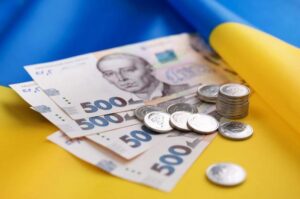
Taxes, fees, and mandatory payments to the general and special funds of Ukraine’s state budget for the first seven months of 2025 amounted to UAH 2.09 trillion, while cash expenditures amounted to UAH 2.78 trillion, which is approximately 41% and 24% higher than the corresponding figures for the first seven months of 2024.
According to operational data from the State Treasury Service published by the Ministry of Finance on its website on Tuesday, revenues to the general fund increased by 42% to UAH 1.47 trillion, while expenditures increased by 20% to UAH 2.17 trillion.
It is noted that after raising the military tax from 1.5% to 5% and introducing a condition for reserving salaries of UAH 20,000 this year, personal income tax and military tax came in second place in terms of revenues for the first seven months of this year, amounting to UAH 200.1 billion compared to UAH 117.0 billion last year.
In addition, the main revenues were provided by: VAT on goods imported into the customs territory of Ukraine – UAH 294.4 billion (from January to July 2024 – UAH 262.3 billion), VAT on goods produced in Ukraine – UAH 183.1 billion for reimbursement of UAH 101.5 billion (UAH 153.3 billion for reimbursement of UAH 83.6 billion), corporate income tax – UAH 160.5 billion (UAH 153.0 billion), excise tax – UAH 159.6 billion (UAH 109.7 billion).
In addition, dividends and part of the net profit of state-owned companies amounted to UAH 60.8 billion (UAH 64.6 billion), import and export duties – UAH 30.1 billion (UAH 27.6 billion), rent for the use of subsoil resources – UAH 22.0 billion (UAH 28.0 billion).
The Ministry of Finance added that another UAH 84.2 billion (UAH 38.6 billion) was added to the budget from the National Bank’s profits.
According to the information, the ERA mechanism launched by the G7 at the end of last year to use revenues from frozen Russian assets significantly increased grant international aid revenues to the budget – to UAH 210.9 billion compared to UAH 40.3 billion in the first seven months of 2024, although in July of both this and last year, these funds were not available.
Revenues from the single social contribution to pension and social insurance funds in January-July 2025 increased by 22.4% to UAH 369.4 billion, including in July by 20.4% to UAH 54.8 billion.
The Ministry of Finance also reported that as part of the financing of the general fund of the state budget, state borrowings to it in January-July 2025 amounted to UAH 998.0 billion (for 7 months of 2024 – UAH 873.2 billion), or 93.8% of the plan, including UAH 302.9 billion (UAH 279.2 billion) from the domestic market through the placement of government bonds, including UAH 61.8 billion in foreign currency – $853.8 million and EUR557.7 million. At the same time, UAH 140.3 billion was raised through the issuance of military government bonds.
According to the release, approximately $16.7 billion or UAH 695 billion (UAH 594 billion) was received from external sources, including approximately $12.1 billion under the ERA, out of the total amount of this mechanism of up to $50 billion.
In addition, Ukraine received another EUR3.1 billion from the EU under the Ukraine Facility preferential long-term loan, $0.96 billion from the IMF, and $0.26 billion from the World Bank for the projects “Transforming Health Care through Reform and Investments in Efficiency” (THRIVE), “Building Resilient Infrastructure in Vulnerable Environments in Ukraine” (DRIVE) and “Modernization of the Social Support System for the Population of Ukraine.”
Payments on public debt in January-July 2025 amounted to UAH 370.5 billion (UAH 259.1 billion), or 96.7% of the plan, and service payments amounted to UAH 198.5 billion, or 72.6% of the plan.
As reported, the 2025 state budget was approved with revenues of UAH 2 trillion 327.1 billion, including the general fund – UAH 2 trillion 133.3 billion (excluding grants and international assistance), and expenditures of 3 trillion 929.1 billion hryvnia, including the general fund – 3 trillion 591.6 billion hryvnia. Last week, the Verkhovna Rada, at the government’s proposal, increased this year’s budget expenditures by 400.5 billion hryvnia and revenues by 147.5 billion hryvnia.
In 2024, the state budget received UAH 3 trillion 120.5 billion in revenues, which is UAH 448 billion, or 16.8%, more than the 2023 state budget. The general fund’s revenue grew by 513.9 billion hryvnia, or 30.9%, to 2 trillion 177 billion hryvnia, including international financial assistance in the form of grants amounting to 453.6 billion hryvnia, compared to 433.9 billion hryvnia in 2023.
State budget expenditures in 2024 increased by UAH 464.5 billion, or 11.6%, compared to 2023, to UAH 4 trillion 479.3 billion, in particular, under the general fund – by 15%, or UAH 454.5 billion – to UAH 3 trillion 488.8 billion.

Ferrexpo plc, a mining company with its main assets in Ukraine, produced 2,169,631 tons of pellets in January-June this year, which is 34.2% less than in January-June last year (3,297,441 tons).
According to the company’s press release on Monday, total production of commercial products (pellets and iron ore concentrate) in the first half of 2025 decreased by 9% compared to the first half of 2024, to 3 million 393,135 thousand tons. In particular, the output of marketable concentrate amounted to 1 million 223.504 thousand tons against 429.865 thousand tons, respectively. The company also produced 81,787 thousand tons of DR pellets (in the first half of 2024 – 162,645 thousand tons) and 2 million 87,844 thousand tons of premium pellets (a decrease of 33.4%).
The press release notes that from January to April 2025, the amount of VAT refunds denied amounted to $31 million. Due to the current suspension of VAT refunds and the associated decline in financial liquidity, the group was forced to reduce production from two to one pelletizing line and also to reduce the production of high-quality concentrate. As a result, total commercial production for the second quarter amounted to 1.3 million tons, down 40% from 2.1 million tons in the first quarter.
However, the group demonstrated flexibility and agility by continuing to benefit from strong demand for its concentrate from customers in China, which accounted for more than a third of its product mix in the first two quarters of 2025, the statement said.
Among other things, it has made efforts to reduce its costs in order to remain financially viable. This includes reducing working hours for employees, cutting purchases of goods and services, and suspending all non-essential capital expenditures, overhead costs, and corporate social responsibility expenses.
Commenting on the group’s performance, interim CEO Lucio Genovese noted that the strong momentum at the beginning of the year, which reflects, in particular, increased quarterly production since the full-scale invasion in February 2022, was significantly limited in the second quarter as the company began to feel the impact of tax authorities’ decisions to suspend VAT refunds. As a result, production fell to 1.3 million tons in Q2 2025.
“Despite the weaker iron ore pellet market, we were able to significantly change our production portfolio and take advantage of strong demand in China for our high-quality low-alumina iron ore concentrates. During the first six months of 2025, concentrate sales accounted for 36% of our production portfolio, three times more than in the same period a year ago. In a challenging operating and market environment for iron ore, it is encouraging that we have been able to be so flexible and take advantage of the demand for high-quality concentrates,” said the top manager.
At the same time, he pointed out that lower iron ore prices and reduced production had a negative impact on profitability. The situation was exacerbated by higher prices for raw materials such as gas and electricity. During the second quarter, the group worked hard to reduce its costs in order to remain financially viable.
“This includes reducing working hours or leave for approximately 37% of employees, reducing purchases of goods and services, and suspending all non-essential capital expenditures, CSR, and humanitarian expenditures. At the same time, every effort is being made and measures are being taken with the relevant authorities and government agencies in Ukraine and internationally to try to resolve the issue of the suspension of VAT refunds,” Genovese added.
As reported, Ferrexpo produced 1 million 347,749 thousand tons of pellets in Q1-2025, which is 26% lower than in January-March last year (1 million 813,973 thousand tons). At the same time, total production of commercial products (pellets and iron ore concentrate) in Q1 2025 increased by 3% compared to Q1 2024, to 2 million 125.467 thousand tons. In particular, the output of marketable concentrate amounted to 777,718 thousand tons, compared to 240,516 thousand tons in Q1-2024. The company also produced 81,879 thousand tons of DR pellets (not produced in Q1-2024), 1 million 105.049 thousand tons of premium-grade pellets (a decrease of 36%) and 160.913 thousand tons of other pellets (an increase of 95%).
In 2024, Ferrexpo increased its production of pellets by 58% compared to 2023, to 6 million 70.541 thousand tons from 3 million 845.325 thousand tons. In the fourth quarter of 2024, it produced 1 million 503.373 thousand tons of pellets, which is 18% higher than in the previous quarter (1 million 269.727 thousand tons).
At the same time, total production of marketable products (pellets and iron ore concentrate) in 2024 increased by 66% compared to 2023, to 6 million 889.879 thousand tons from 4 million 152.028 thousand tons. In particular, the output of marketable concentrate reached 819,338 thousand tons compared to 306,703 thousand tons in 2023. The company also produced 489,720 thousand tons of DR pellets, 4 million 984,990 thousand tons of premium pellets, and 595,831 thousand tons of other pellets.
In 2023, Ferrexpo produced 3.845 million tons of pellets, which is 36.5% less than in 2022.
Ferrexpo owns 100% of Yeristovsky GOK LLC, 99.9% of Bilanivsky GOK LLC, and 100% of Poltavsky GOK PJSC.

Value added tax (VAT) refunds for January-May 2025 reached UAH 70.9 billion, which is 23.8%, or UAH 13.3 billion, more than in the same period of 2024, and 15% (UAH 9.3 billion) more than in 2023, the State Tax Service of Ukraine (STS) reported on Wednesday.
According to a statement on the agency’s Telegram channel, taxpayers were reimbursed UAH 15.5 billion in May 2025.
“This is 22.3% (+2.8 billion UAH) more than in May 2024. Compared to May 2023, the figure increased by 55.9% (+5.6 billion UAH),” the service emphasized.
As reported, on May 27, Kravchenko denied the growth of VAT refund arrears, as as of May 1, the figure reached UAH 30.4 billion. He explained that these funds are “in progress” as audits are being conducted.

The National Bank of Ukraine (NBU) has authorized the purchase and transfer of foreign currency by resident legal entities that are e-commerce entities abroad to pay value added tax (VAT) on the purchase of goods from domestic producers by consumers from EU countries.
“The condition for these transactions is that the e-commerce entity must be registered as a taxpayer in the EU. This mitigation will primarily support small and medium-sized businesses that will be able to promote their own goods on the EU market through trading platforms,” the central bank said in a press release on Monday.
The regulator assumes that this will not have a negative impact on international reserves, as the inflow of foreign currency to Ukraine for the goods sold will far exceed the additional demand for currency to pay VAT in the EU.
In addition, the NBU announced a number of other currency easing measures. In particular, the central bank allowed state-owned companies to buy and transfer foreign currency abroad to cover carbon dioxide emissions.
“State-owned enterprises will be able to buy foreign currency and transfer it to non-residents to purchase quotas to cover or compensate for carbon dioxide (CO₂) emissions associated with aviation activities,” the National Bank explains.
According to the regulator, this step contributes to the continuity of defense procurement under state contracts, will allow for further air transportation abroad, and will support military-technical cooperation with the EU.
Other transactions that the NBU has authorized since September 10 include payments for operations under reinsurance agreements concluded with foreign nuclear insurance pools.
“In particular, to pay a break-even bonus, which is a mandatory condition stipulated by the reinsurance agreement. This mitigation will have a minor impact on international reserves and at the same time will allow the Nuclear Insurance Pool to fulfill its obligations to partners, which is important for the smooth operation of the industry,” the NBU said in a release.
As reported, the regulator also allowed Ukrainian businesses to reimburse coupon payments on Eurobonds paid from February 24, 2022, to July 9, 2024, at the expense of their own foreign currency accumulated in Ukraine.
At the same time, starting from September 10, the NBU introduced a limit of UAH 100 thousand per month for payments for watches, jewelry, precious stones and coins from currency cards of Ukrainian banks abroad and up to UAH 500 thousand per month for transactions with real estate agents.
All of the above innovations are introduced by Resolution No. 108 of September 6, 2024, which was officially promulgated on Monday, September 9.
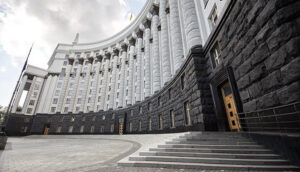
The Cabinet of Ministers of Ukraine for the period of martial law has exempted from VAT operations on the supply of components for vehicles (including special and specialized), as well as fuel and lubricants for security and defense forces, said the Cabinet’s representative in the Verkhovna Rada Taras Melnychuk following a government meeting on Thursday.
The government’s decision is enshrined through amendments to the government resolution from March 2, 2022 N178 “Some issues of imposition of value added tax at a zero rate during martial law”.
“It is established that until the termination or abolition of martial law, operations on the supply of goods (spare parts, batteries, car tires, coolants, components, additional equipment, etc.) for vehicles (including special, specialized vehicles), as well as fuel and lubricants … are subject to value added tax at a zero rate,” Melnychuk wrote in Telegram.



