

Schneider Electric has reached an agreement to acquire the American company PTC, one of the world’s leading developers of software for the design of complex industrial products, engineering processes, and data management. The value of 100% of PTC’s share capital is estimated at approximately $22.6 billion (20.1 billion euros), Schneider Electric announced on October 5.
Under the terms of the deal, Schneider Electric will pay $205 in cash for each share of PTC. The proposed price is 42.3% higher than the company’s share price at the close of trading on the day before the deal was announced. The enterprise value is estimated at $23.7 billion (€21.1 billion).
The deal is expected to be a key milestone in Schneider Electric’s transformation from a manufacturer and supplier of energy and industrial technologies into a global company that integrates energy management, automation, industrial software, and artificial intelligence.
PTC specializes in software solutions for the design, manufacturing, and operation of complex industrial products. The company’s portfolio includes systems for managing product lifecycles, engineering data, and enterprise digital processes.
The integration of PTC’s technologies is intended to supplement Schneider Electric’s existing digital ecosystem with data generated as early as the product design stage. The company plans to combine this data with information from manufacturing processes, equipment, and energy systems.
This will create a unified digital environment covering the entire lifecycle of an industrial facility or product—from design and construction to operation, maintenance, and future upgrades.
Schneider Electric places particular emphasis on using integrated data to advance industrial artificial intelligence. For AI agents to operate effectively, they need not only access to large amounts of information but also an understanding of the context—including equipment design, engineering concepts, the manufacturing process, and actual operating conditions.
Following the merger with PTC and taking into account the planned acquisition of the Cognite industrial AI platform, Schneider Electric’s software division will expand significantly. According to the company’s estimates, Software & Services will account for approximately 24% of the group’s total revenue on a pro forma basis. The software business will employ over 15,000 specialists, and the number of software solution customers will exceed 50,000.
Schneider Electric expects to realize approximately 250 million euros in cost savings within three years of the transaction’s completion and estimates potential revenue synergies at approximately 800 million euros. These are expected to be driven by cross-selling, expansion of the customer base and geographic reach, as well as the joint development of solutions utilizing artificial intelligence.
The transaction is expected to close by the end of the third quarter of 2027. It has already been unanimously approved by the boards of directors of Schneider Electric and PTC, but still requires the approval of a majority of PTC’s shareholders and the necessary regulatory approvals.
What This Deal Could Mean for Ukrainian Industry
For Ukraine, the development of such solutions is particularly relevant in the context of industrial recovery and modernization. The integration of energy technologies, industrial automation, engineering software, and artificial intelligence enables companies to create digital models of production facilities as early as the design stage and then utilize the data throughout their entire operational lifecycle.
This approach can be applied during the modernization of existing enterprises and the construction of new production facilities, energy facilities, logistics, and other critical infrastructure. The digitization of engineering processes enables faster facility design, monitoring of energy consumption and equipment condition, predictive maintenance, and a reduction in the risks of unplanned downtime.
For Ukrainian enterprises, which are simultaneously facing the need to modernize equipment, improve energy efficiency, and address a shortage of qualified engineering personnel, the development of Industrial AI can become one of the tools for increasing productivity and ensuring the sustainability of production.
“It is particularly important for Ukraine that this is not simply about implementing individual digital products or artificial intelligence. We are talking about the ability to integrate the entire life cycle of an industrial facility—from engineering design to production, energy consumption, operation, and maintenance—into a single digital environment. For companies that need to modernize or, in fact, build new production facilities, this is an opportunity to immediately transition to a more modern management model,” said Mykhailo Bubnov, CEO of Schneider Electric Ukraine.
According to him, combining PTC’s engineering data with Schneider Electric’s automation and energy management technologies could be particularly relevant for Ukrainian companies with energy-intensive and complex production processes.
“In Ukraine, we see great potential for such solutions in industry, energy, infrastructure, logistics, and other sectors where the cost of equipment downtime or inefficient energy use is particularly high. Artificial intelligence in industry is meant to solve very practical problems: helping engineers make decisions faster, predict equipment condition, reduce unplanned downtime, and use energy more efficiently. As the economy recovers, it is precisely this practical impact of digitalization that will be of key importance to Ukrainian enterprises,” Bubnov emphasized.
Schneider Electric operates in the fields of energy technologies, electrification, automation, and digitalization of industry, buildings, data centers, infrastructure, and power grids. The company has approximately 160,000 employees and works with a network of about 1 million partners in more than 100 countries worldwide.
AGREEMENT, artificial intelligence, PTC, Schneider Electric, SOFTWARE

Taiwan Cement Corporation (TCC Group) intends to acquire 100% of the shares in the Ukrainian cement producer PJSC “Ivano-Frankivskcement” (“IFCEM”), the company’s press office reported.
“The partnership will combine IFTSEM’s leading position in the Ukrainian market, its modern production facilities, long-standing industrial traditions, and strong team with TCC’s global experience, technologies, and investment capabilities. It lays the foundation for the group’s further development and its active participation in Ukraine’s large-scale recovery and the deepening of economic integration with Europe,” according to a statement on the “Ivano-Frankivskcement” website.
The relevant agreement will be concluded between the majority shareholder of PrJSC “Ivano-Frankivskcement,” CemInWest S.A. (Switzerland), together with the owners of the affiliated companies Ivano-Frankivskdakh LLC, Krugips LLC, Krumix LLC, and TCC Group EMEA Holdings B.V. (Netherlands)—a subsidiary of TCC Group Holdings Co., Ltd.
It is noted that the completion of the transaction is subject to obtaining the necessary antitrust approvals and other regulatory clearances in the relevant jurisdictions, as well as the fulfillment of standard closing conditions.
According to Mykola Kruts, Chairman of the Management Board and member of the Supervisory Board of “Ivano-Frankivskcement,” he will remain a member of the company’s board of directors in the coming years.
“Today, the company is entering a new phase of its development. The partnership with a global strategic investor from Taiwan opens up new opportunities for IFCEM in terms of investment, technological development, and further strengthening of its position. In the coming years, I will remain a member of the board of directors to ensure continuity, stability, and the company’s further development,” the company quotes Krut as saying in its statement.
The preliminary value of the deal is approximately 750 million euros, according to “Forbes Ukraine,” citing Focus Taiwan.
PJSC “Ivano-Frankivskcement” manufactures cement, roofing materials, concrete and reinforced concrete products, and dry construction mixes. Its production capacity stands at 4.3 million metric tons of cement per year. Approximately 2,500 people are employed at the group’s facilities.
Before the start of the full-scale war, NEQSOL Holding was close to acquiring “Ivano-Frankivskcement,” but subsequently withdrew from the deal.
According to data from the YouControl analytical system, in 2025, Ivano-Frankivskcement increased its net profit by a factor of 1.4 compared to the previous year, to 4.2 billion UAH, and its net revenue by 20.3%, to 16.2 billion UAH. In the first half of 2026, net profit decreased by a quarter compared to the same period in 2025, to 1.4 billion UAH, while net revenue fell by 4.2%, to 7.1 billion UAH. The company’s total assets amounted to 14.9 billion UAH.
TCC Group Holdings Co., Ltd. is a global industrial group based in Taiwan and one of the world’s largest cement producers. The group operates more than 40 production sites, with a combined cement production capacity exceeding 112 million metric tons per year, and employs 13,800 people. TCC is also developing initiatives in green energy, energy storage systems, and advanced materials. TCC has a significant presence in Europe and Africa, particularly in Portugal, Turkey, Spain, the United Kingdom, the Netherlands, France, and Italy.
AGREEMENT, CEMENT, INVESTMENT, IVANO-FRANKIVSKCEMENT, TCC Group

Ukrainian IT services company SoftServe announced the completion of its acquisition of the Indian technology services company NewVision Software, which specializes in software development and the modernization of IT infrastructure based on cloud technologies, according to a company press release published on Tuesday.
As part of the deal, more than 700 engineers will join SoftServe. Among others, NewVision Software CEO Kapil Godani and Co-Chairman of the Board Balan Ramaswami will also join the company.
It is noted that NewVision Software will continue to operate under its own brand as a wholly owned subsidiary of SoftServe.
According to Andriy Stitsyuk, SoftServe’s Chief Financial and Operating Officer, an increasing number of the company’s clients are developing large-scale GCCs (Global Capability Centers) in India, where business decisions are made and engineering development takes place.
“Being alongside these teams in the same time zones and work environment allows SoftServe to co-create solutions in real time and respond quickly to new opportunities,” Stitsyuk is quoted as saying in the press release.
“In SoftServe, we have found a partner that shares this vision and combines world-class engineering expertise with a deep commitment to client success. Together, we can offer clients broader capabilities, greater scale, and confidence in implementing AI initiatives, while maintaining the level of partnership and engagement for which our teams are renowned,” said Kapil Godani, CEO of NewVision Software, in the press release.
SoftServe is a global digital engineering and technology consulting firm specializing in AI, data, and cloud solutions. The company was founded in 1993 in Lviv. Approximately 10,000 employees work in 49 offices around the world. Taras Kitsmey, Yaroslav Lyubinets, Oleg Denis, Yuriy Vasylyk, and Taras Verveha are co-owners of the IT services company SoftServe; Harry Propper serves as CEO.
NewVision Software is an IT consulting and technology services company specializing in software development, intelligent managed services, product engineering, and agentic assurance. NewVision Software’s headquarters are located in Pune, India.

The Antimonopoly Committee of Ukraine (AMCU) approved PrJSC “Kyivstar”’s acquisition of control over LLC “GigaCloud”—the cloud provider GigaCloud.
The AMCU adopted the relevant decision on July 9, 2026.
GigaCloud is a cloud service provider founded in 2016 that specializes in providing relevant services to businesses. The company’s clients include the agricultural holding Kernel, Naftogaz, and others.
In late May, during the “Business Breakfast with Volodymyr Fedorin,” Kyivstar President and CEO Oleksandr Komarov declined to comment on a possible acquisition of GigaCloud but also noted the group’s interest in strengthening its position in the cloud business.
“This is one of our strategic priorities. It could happen organically, since we are a major Microsoft partner—we are currently building our own cloud. It could also happen inorganically if we identify attractive targets,” Komarov emphasized.
In June 2025, the mobile operator launched its own cloud service for Ukrainian users, Kyivstar Cloud, which is available to small, medium, and large businesses, as well as public sector organizations.
In the first quarter of 2026, Kyivstar increased its EBITDA by 28.5% to 7.5 billion UAH, while revenue grew by 31.3% to 13.9 billion UAH.

US President Donald Trump hopes to reach an agreement on resolving Russia’s war against Ukraine by fall 2026, linking the desired timeline to the US domestic political calendar, media outlets reported, citing The New York Times.
Earlier, a more immediate deadline of “by early summer” was publicly announced. Reuters, citing The New York Times, reported that the Trump administration is increasing pressure on Kyiv in an attempt to end the war “by early summer.” The deadline “by autumn” is tied to the US midterm elections, which are scheduled for November 3, 2026.
Meanwhile, European intelligence officials commented to Reuters that they were skeptical about the possibility of reaching a lasting agreement as early as 2026 and pointed out that, in their assessment, Russia was not showing any interest in real peace, using the negotiating track to obtain economic and sanctions concessions.
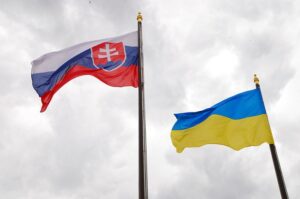
Ukraine and the Slovak Republic have signed an agreement on technical and financial cooperation and a joint roadmap.
On the Ukrainian side, the agreement was signed by Deputy Prime Minister for European and Euro-Atlantic Integration Taras Kachka following joint Ukrainian-Slovak intergovernmental consultations on Friday.
The countries also signed a protocol between the governments on border crossing points across the common state border. On the Ukrainian side, the document was signed by Deputy Prime Minister for the Restoration of Ukraine – Minister of Community and
Territorial Development Oleksiy Kuleba.
In addition, an agreement was signed between the countries on mutual understanding regarding the placement of Ukraine’s diplomatic mission in Slovakia and Slovakia’s diplomatic mission in Ukraine. On the Ukrainian side, the document was signed by Minister of Foreign Affairs Andriy Sibiga.
Prime Minister of Ukraine Yulia Sviridenko and Prime Minister of the Slovak Republic Robert Fico signed an agreement on the exchange of information on labor mobility, as well as a joint roadmap.
As reported, joint Ukrainian-Slovak intergovernmental consultations are taking place on Friday with the participation of Ukrainian Prime Minister Yulia Sviridenko and Slovak Prime Minister Robert Fico.



