

On March 26, the first in-person awards ceremony for the leaders of the OpenDataBot Index took place in Kyiv. The event brought together executives and top management from leading Ukrainian companies—those shaping the country’s economy today.
The OpenDataBot Index is a ranking based exclusively on companies’ financial reports. It is impossible to influence the results—positions are determined solely by numbers. That is why it has become a trusted tool for businesses, the media, and readers.

This year, over a hundred guests, representing their companies, received awards from the Index—a special “Scythian Woman” statuette.
“We chose the Scythian Woman—a symbol that has stood on our land for millennia. She holds a bowl to her chest—this represents openness, a willingness to show how you work, to clearly demonstrate your numbers, scale, and results. That is why the OpenDataBot Index is an award for companies that operate transparently, that can be verified, and that stand by their name,” comments Oleksiy Ivanin, CEO of OpenDataBot

During the event, participants discussed the role of transparency in economic development, the importance of trust and business accountability in wartime, as well as how the interaction between business and the media is changing.
The OpenDataBot Index has become a meeting point between the interests of businesses seeking to be heard and the media wanting to report on real results.
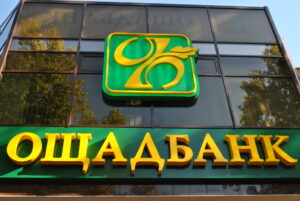
Oschadbank and the European Bank for Reconstruction and Development (EBRD) have signed a letter of mandate regarding the preparation and implementation of a new risk-sharing facility to support Ukrainian businesses with a financing portfolio of up to €510 million, the state-owned bank announced on Monday.
The document was signed in London following a meeting between Oschadbank CEO Yuriy Katsion and EBRD Managing Director and Head of Financial Institutions Francis Malige on the sidelines of the “Pathways to Paris 2026” conference.
“To date, the total financing limit under the risk-sharing programs implemented by Oschadbank with the EBRD since early 2024 has reached EUR300 million,” Katsion noted.
Under the new instrument, the EBRD may assume up to 70% of the credit risk for individual transactions.
The program is intended to support businesses that have suffered losses or damage as a result of the war, relocated businesses, companies contributing to economic recovery, as well as businesses owned by veterans, internally displaced persons, and women-led enterprises.
The parties agreed to continue working on structuring the program and finalizing the parameters of further cooperation.
Oschadbank serves approximately 6 million active customers and is the leader in corporate lending with a market share of about 14%. As of February 1, 2026, the bank’s loan portfolio stood at UAH 127.5 billion.
According to National Bank data, as of February 1, 2026, Oschadbank ranked second (UAH 494.51 billion) in terms of net assets among 60 banks.
As reported, in 2025 the EBRD allocated EUR2.9 billion in financing, including EUR504 million under portfolio risk-sharing programs, which facilitated new lending by Ukrainian partner financial institutions totaling up to EUR1.6 billion.

The Cabinet of Ministers of Ukraine has adopted a resolution on the launch of a pilot project for a unified state electronic system in the field of food safety and consumer protection—“eFood,” according to a press release from the State Service of Ukraine for Food Safety and Consumer Protection.
According to the statement, the initiative aims to digitize services and state oversight, making processes more transparent and convenient for businesses.
“We are essentially building a new architecture for state control. eFood is about speed, transparency, and trust. The new project is part of a systemic reform of the State Service of Ukraine for Food Safety and Consumer Protection aimed at creating a modern digital ecosystem that will meet European standards,” emphasized the agency’s head, Serhiy Tkachuk.
As explained by Solomiya Starosolska, head of the Office of Digitalization, business interaction with the state was previously overly bureaucratic: more than half of the processes were managed in Excel spreadsheets, and registries were fragmented. The new system will consolidate these processes into a single, logical environment.
The “eFood” ecosystem will include a single service portal, electronic user accounts, digital profiles of market operators, a map of regional investment attractiveness, and a mobile app for inspectors with a video recording feature for inspections. Automatic registration of facilities will take a few hours, and the issuance of permits will take 7 to 15 days instead of 30. In the future, the system will consolidate up to 17 registries and enable the provision of over 500,000 services annually.
At launch, “eFood” will cover 9 key services, including facility registration and the submission of feed declarations. Concurrently, the State Register of Market Operators is being launched, which will serve as the core of the system. The pilot project format will allow for testing digital approaches and preparing the legislative framework for the full-scale implementation of the ecosystem.
The reform is being implemented as part of the Association Agreement with the EU and European regulations on food safety. This involves full integration into the European model, ensuring product traceability and digital data exchange.

The Business Activity Expectations Index (BAEI) rose to 45.9 points in February 2026 from 41.3 points in January, but was lower than in February 2025 (46.9 points), according to the National Bank of Ukraine (NBU) website.
“Uncertainty about the duration of hostilities, the destruction of energy and infrastructure, rising costs and electricity prices, labor shortages, and seasonality have held back economic activity and negatively affected business sentiment,” the regulator said in a press release.
At the same time, consumer demand, international financial aid, and slowing inflation supported business sentiment. As a result, enterprises in all sectors surveyed revised their assessments of business activity upward in February compared to January.
The highest assessments of current economic activity in February were demonstrated by industrial enterprises, although they remained cautious amid power shortages, labor shortages, and rising production costs: the sectoral index was 46.9, compared to 41.7 in January (in February 2025 – 50.2).
“Manufacturers lowered their expectations regarding output and new orders, including exports, as well as work in progress, while assessments of finished product inventories were somewhat more pessimistic,” the NBU noted.
Construction companies ranked second in terms of estimates last month: the sectoral index rose to 46.6 from 37.9 in January (in February 2025 – 44.7).
“Builders, preparing for the start of the season, significantly improved their assessments of current activity, although they remained cautious due to difficult weather conditions and electricity shortages, while at the same time an increase in new orders was expected,” the central bank emphasized.
Assessments of service sector companies also improved in February: the sectoral index rose to 45.4 from 42.1 in January (in February 2025 – 42.2).
“The service sector expected a slower pace of decline in the volume of services provided and new orders, despite complicated logistics and rising labor, heating, and electricity costs during the winter period,” the press release said.
Retailers remained the most cautious last month: the sector index rose to 45.0 from 40.0 in January (in February 2025 – 49.2).
“Trading companies have lowered their expectations for a decline in turnover and purchases, while at the same time becoming more optimistic about inventories of goods for sale, maintaining their expectations for a decline in trade margins,” the NBU reported based on the results of a survey of enterprises.
Given the expected acceleration in the growth of purchase prices, respondents from all sectors were optimistic about further increases in prices and tariffs for their own products and services.
The situation with personnel varied by sector: only construction planned to increase its workforce, while industry, trade, and services expected reductions, most notably in industry.
It should be noted that the survey was conducted from February 3 to 20, 2026. A total of 598 enterprises participated in the survey: 43.3% were industrial companies, 25.6% were in the service sector, 25.3% were in trade, and 5.9% were in construction. By size: 30.9% were large enterprises, 29.3% were medium-sized, and 39.8% were small.
At the same time, 33.9% of the surveyed enterprises carry out export and import operations, 8.9% carry out only export operations, 18.4% carry out only import operations, and 38.8% do not carry out foreign economic operations.

OTP Bank (Kyiv) has begun providing online acquiring services for businesses that sell online, the financial institution announced on Tuesday.
“The online acquiring service has been operational since the first days of 2026. Before the launch, the bank studied competitors’ offers and user needs, and the decision to launch was made taking into account customer requests,” said Serhiy Sereda, director of the corporate products and services department at OTP Bank.
According to the bank’s statement, the service features include connection within two days and crediting of funds from sales twice a day: at the beginning and end of the working day.
According to the bank, the service provides customers with various e-commerce tools, including accepting payments via QR codes and payment links, setting up a payment button on the website, including Apple Pay and Google Pay, as well as automated solutions for integrating payment instruments into customers’ mobile applications.
As Sereda noted, the bank is guided by market rates, and the main users of the service are currently existing customers of the bank. The rate for internet acquiring is 1.5% for Ukrainian bank cards and 2.3% for foreign bank cards. There is a possibility of applying individual rates as the volume of transactions increases.
The bank announced plans to scale up its online acquiring business in 2026 and launch merchant acquiring in the second quarter.
“The project’s benchmarks are customer satisfaction with product quality and service profitability, and the bank expects to reach profitability as soon as possible,” Sereda added.
According to the National Bank, OTP Bank ranked 10th among the country’s 60 banks in terms of total assets as of January 1, 2026, with UAH 135.99 billion. Its net profit for 2025 amounted to UAH 5.45 billion.

Supervisory Board of PJSC Vasylkivska Poultry Farm (Kyiv region) On January 26, 2026, approved amendments to the decision on private placement of shares, according to which the company plans to raise additional funds for the development of production, the company reported in the information system of the National Securities and Stock Market Commission (NSSMC).
According to the report, the company will conduct an additional issue of 5,500,000 ordinary uncertificated registered shares. The nominal value of one security is UAH 1.00, thus the total amount of the issue is UAH 5.5 million.
The placement of shares will take place in one stage and will last 16 working days: from March 9 to March 30, 2026, inclusive. A pre-determined group of persons, including businessman Serhiy Velykanov, Ledrua Consult LLC, and Pan Capital LLC, will participate in the share buyback.
The decision to increase the capital was made at an extraordinary general meeting of shareholders on November 17, 2025. On the date of this decision, the company’s authorized capital was UAH 2,700,258. After the completion of the issue and registration of amendments to the charter, it is expected to increase to UAH 8,200,258. The funds raised are planned to be used to purchase equipment, feed, and replenish working capital to expand the poultry farm’s production capacity.
The issuer also reported that it owns 100% of the capital of Vetoline LLC (Kyiv). At the time of the start of the issue procedure, the company had no repurchased own shares.
PJSC Poultry Farm Vasylkivska was founded in 2004 and is based in the Vasylkiv district of the Kyiv region. The company specializes in the industrial production of poultry products, breeding of domestic poultry, and the sale of related goods. The company’s production capacity allows it to simultaneously maintain approximately 600-700 thousand birds (laying hens). The poultry farm produces more than 150-180 million eggs annually, which it sells under its own trademark “Dobre Yajce” and the private labels of the Silpo, Fora, and ATB retail chains.
According to the OpenDataBot service, in 2025, PJSC “Vasylkivska Poultry Farm” increased its revenue by 12% to UAH 428.24 million, and its net profit grew by 52.5% to UAH 18.45 million. The company’s assets at the end of the year amounted to UAH 315.6 million, compared to UAH 294.2 million in 2024, while debt obligations decreased by 8% to UAH 142.4 million.



